
The nose is one of the most challenging areas to perfect when applying foundation. Its unique shape, high oil production, and textured surface often lead to patchiness, creasing, or uneven blending—especially by midday. Many people apply foundation confidently in the morning only to find their nose looking blotchy, cakey, or separated hours later. The good news: this common issue isn’t a makeup flaw—it’s a solvable skincare and application challenge. With the right prep, product selection, and technique, you can achieve a seamless, long-lasting finish that stays intact from morning coffee to evening plans.
Why Foundation Patches on the Nose
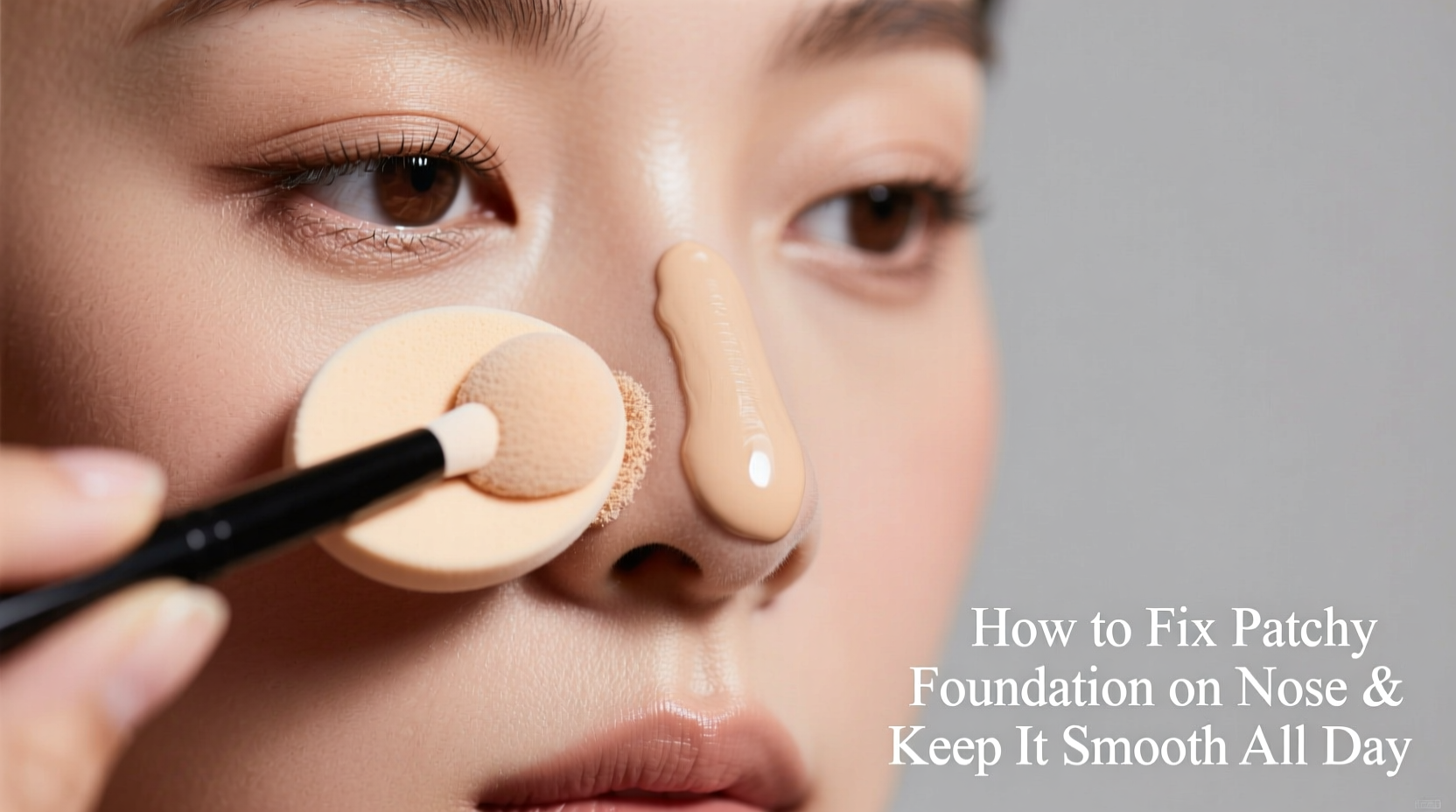
The nose presents several structural and biological factors that make it prone to foundation issues. First, it has a convex, three-dimensional shape with multiple planes—sides, bridge, tip—that require careful blending. Second, the T-zone, which includes the nose, produces more sebum than other facial areas. This excess oil breaks down foundation over time, leading to separation and patchiness. Third, many people have enlarged pores, blackheads, or slight textural irregularities on the nose, which trap product and create visible buildup.
Additionally, improper skincare prep—such as skipping moisturizer or using overly drying products—can leave the skin flaky, especially around the sides of the nose. When foundation is applied over dry patches, it clings unevenly, resulting in a patchy appearance. On the flip side, applying too much product or not setting it properly invites shine and slippage.
“Foundation failure on the nose usually starts before makeup even touches the skin. It’s less about the formula and more about preparation.” — Lila Chen, Celebrity Makeup Artist & Skincare Consultant
Step-by-Step Guide to Fix and Prevent Patchy Foundation
Fixing patchy foundation isn’t just about touch-ups—it’s about creating a lasting solution through a structured routine. Follow this timeline for optimal results:
- 60 Minutes Before Makeup: Begin with a gentle cleanse using a pH-balanced face wash. Avoid harsh scrubs that strip natural oils, as this triggers rebound oil production.
- 45 Minutes Before: Apply a lightweight hydrating toner followed by a mattifying yet non-drying moisturizer. Focus on the sides of the nose where dryness often occurs.
- 30 Minutes Before: Use a pore-minimizing primer specifically designed for oily areas. Look for silica or dimethicone-based formulas that blur texture and control shine.
- 15 Minutes Before: Allow all products to fully absorb. Rushing this step causes pilling and poor foundation adherence.
- Application: Use a damp beauty sponge or a dense buffing brush to apply foundation in thin layers. Start from the center of the face and blend outward, paying extra attention to the nasal folds.
- Immediately After: Set the nose area with a translucent powder using a small fluffy brush. Press—not swipe—to lock in the base without disturbing the finish.
- Throughout the Day: Carry blotting papers and a pressed powder compact. Reapply only if necessary, focusing on oil control rather than adding more foundation.
Product Selection: What Works Best for the Nose
Choosing the right foundation and supporting products plays a critical role in preventing patchiness. Not all formulas behave the same on the nose’s oily, textured surface. The goal is balance: enough coverage to conceal imperfections, but light enough to resist caking.
| Foundation Type | Best For | Avoid If… |
|---|---|---|
| Matte Liquid (e.g., Fenty Pro Filt’r, Estée Lauder Double Wear) | Oily or combination skin; long wear needed | You have dry patches or flakiness on nose sides |
| Hybrid Dewy-Matte (e.g., NARS Sheer Glow, Lancôme Teint Idole) | Balanced finish; normal to combo skin | Your nose gets shiny within 2 hours |
| Tinted Moisturizer / BB Cream | Dry or sensitive skin; low coverage days | You need full coverage for redness or blemishes |
| Stick Foundation | Spot correction; travel-friendly | You tend to over-apply and cake product |
In addition to foundation, invest in a targeted primer. A study published in the *Journal of Cosmetic Dermatology* found that silicone-based primers reduce pore visibility by up to 68% and extend foundation wear by 3–5 hours. Apply only a pea-sized amount, warming it between fingers before pressing onto the nose.
Common Mistakes That Worsen Patchiness
Even with quality products, incorrect habits sabotage results. These are the most frequent errors that lead to patchy foundation on the nose:
- Skipping moisturizer – Especially in air-conditioned or heated environments, dehydration leads to flaking under makeup.
- Using expired or incompatible products – Old foundation can separate or oxidize, while mixing water-based and silicone-heavy formulas causes pilling.
- Over-powdering – Applying too much powder traps oil underneath, eventually causing cracking and uneven wear.
- Touching the face throughout the day – Hands transfer oil, dirt, and bacteria, breaking down the foundation layer.
- Applying foundation with dry hands or brushes – Dry tools increase friction and drag, disrupting the smooth application.
Real Example: Transforming a Daily Struggle into a Flawless Base
Sophia, a 29-year-old marketing executive, struggled daily with her foundation separating on the nose by 11 a.m., despite reapplying during lunch. She blamed her “problematic skin” and rotated expensive foundations hoping for a miracle. After consulting a dermatological esthetician, she discovered the root cause: she was using an alcohol-based toner that stripped her skin, followed by a heavy cream that didn’t absorb well. Her primer and foundation were also incompatible—one water-based, the other silicone-heavy.
She adjusted her routine: switched to a hydrating mist, used a lightweight gel moisturizer, and chose a silicone-based primer paired with a matte hybrid foundation. She began applying foundation with a damp sponge and set only the bridge of her nose with a light dusting of powder. Within a week, her foundation stayed intact until 6 p.m. without touch-ups. The change wasn’t in the brand—it was in compatibility and consistency.
Checklist for Flawless, Long-Lasting Nose Coverage
Use this checklist every time you do your makeup to prevent patchiness:
- ✅ Cleanse gently with a non-stripping cleanser
- ✅ Apply hydrating toner to balance pH
- ✅ Use an oil-free moisturizer suited to your skin type
- ✅ Wait 10–15 minutes for absorption
- ✅ Apply a pore-blurring, mattifying primer
- ✅ Choose a foundation that matches your skin’s oil level
- ✅ Apply in thin layers using a damp sponge or buffing brush
- ✅ Blend thoroughly along the sides and tip of the nose
- ✅ Set lightly with translucent powder using a pressing motion
- ✅ Carry blotting papers and a minimal touch-up kit
Frequently Asked Questions
Can I use concealer to fix patchy foundation on my nose?
Yes, but only as a spot correction. Dab a tiny amount of creamy concealer over patchy areas, then gently press with your fingertip or sponge to blend. Avoid layering too much, as this increases cakiness. For best results, use a concealer that matches your foundation exactly.
Why does my foundation look patchy only on the nose and not elsewhere?
The nose differs from other facial areas due to higher sebum production, larger pores, and constant movement from facial expressions. It’s also frequently touched (adjusting glasses, wiping), which disrupts the makeup. Combined with improper prep or product mismatch, these factors isolate the nose as a trouble zone.
Is there a way to set foundation so it never moves on the nose?
No product is completely immovable, but you can maximize longevity. After applying and setting with powder, use a setting spray with a “freeze” or “lock” formula. Hold the bottle 8–10 inches away and mist in an “X” and “T” pattern. Let it dry naturally—don’t fan or blot. This creates a flexible film that resists oil and movement.
Final Tips for All-Day Smoothness
Long-lasting, even foundation on the nose comes down to synergy: the right prep, compatible products, and precise application. Don’t underestimate the power of waiting between steps—rushing leads to pilling and poor adhesion. Also, consider your environment: humidity, pollution, and indoor heating all affect wear. Adjust your routine seasonally—for example, switching to a lighter moisturizer in summer or using more hydrating layers in winter.
If you wear glasses, clean the nose pads regularly. Oils and residue from frames can degrade foundation and cause smudging. Additionally, avoid heavy SPF creams under foundation unless they’re specifically formulated as makeup primers—many sunscreens pill when layered.
“The nose should blend seamlessly into the rest of the face. If it stands out, the issue isn’t coverage—it’s harmony.” — Marcus Reed, Editorial Makeup Artist
Conclusion
Patchy foundation on the nose is a common but fixable concern. By addressing skincare first, selecting compatible products, and refining your technique, you can achieve a smooth, natural-looking finish that lasts. It’s not about using more product—it’s about working smarter. Small adjustments in your routine can lead to dramatic improvements in how your makeup performs throughout the day. Start tonight by auditing your current products and tomorrow morning, follow the step-by-step guide. Notice the difference. Share your progress, ask questions, and help others discover the secret to a flawless nose—because great makeup isn’t magic, it’s method.




 浙公网安备
33010002000092号
浙公网安备
33010002000092号 浙B2-20120091-4
Comments
No comments yet. Why don't you start the discussion?