
Every holiday season begins with the same familiar struggle: pulling out last year’s Christmas lights only to find them hopelessly knotted into a glowing bird’s nest. Hours of untangling, broken bulbs, and mounting frustration follow—until now. There’s a simple, nearly foolproof technique that takes less than 90 seconds and uses nothing more than a cardboard tube from a used paper towel roll. This method isn’t just fast—it prevents future tangles, saves time year after year, and protects your lights from damage.
The paper towel roll method works by creating structure during storage, ensuring each strand wraps cleanly and consistently. It's not magic—it’s physics, patience, and a little bit of holiday wisdom combined. Whether you’re decorating a small apartment tree or draping lights across a two-story home, this approach will change how you handle seasonal lighting forever.
The Science Behind Tangles—and Why They Happen
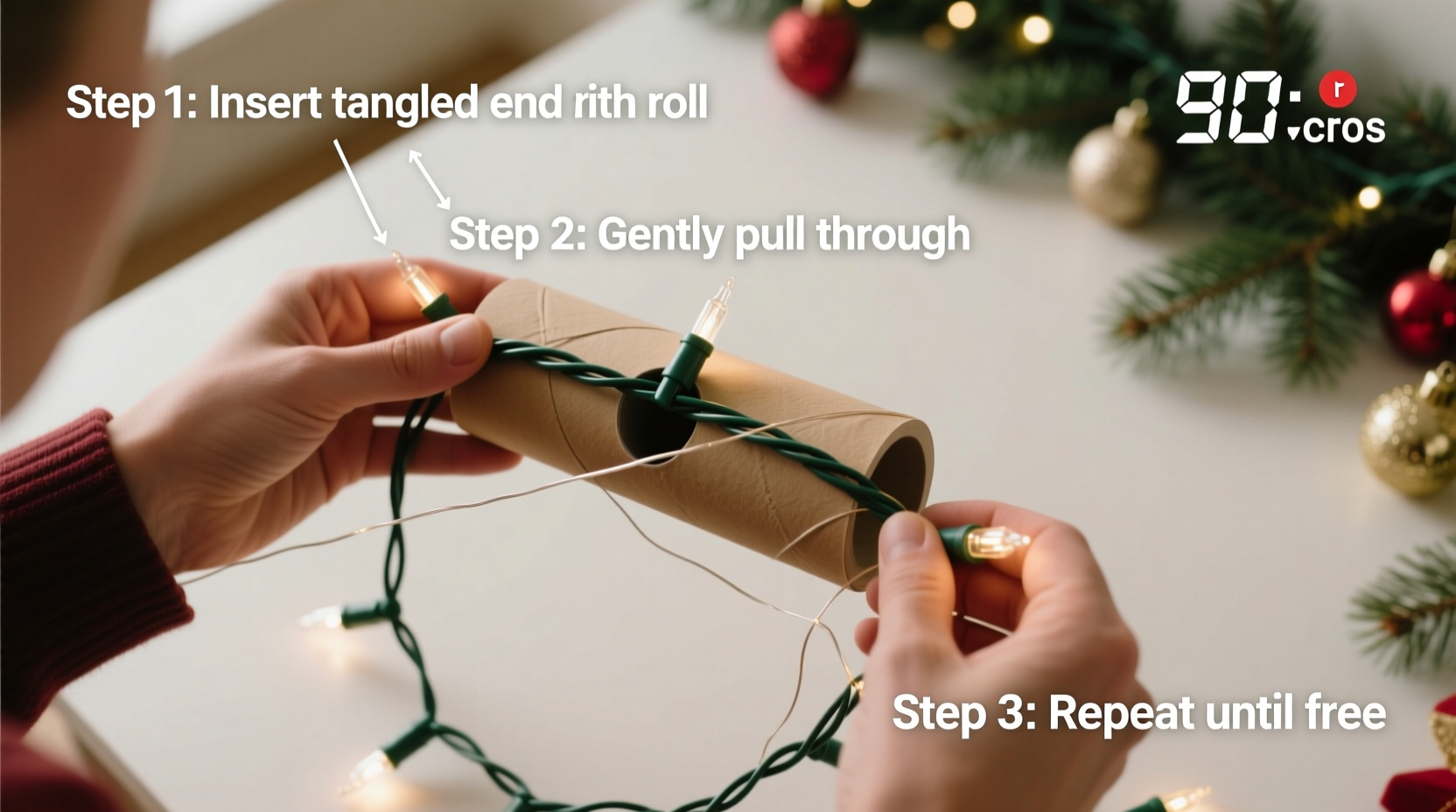
Before diving into the fix, it helps to understand why lights tangle so easily. When flexible wires are tossed loosely into a box or drawer, they behave like long polymer chains in a liquid state—constantly shifting, folding, and knotting due to random motion. The longer the strand and the more it’s jostled during storage, the higher the chance of complex entanglements forming.
According to research published in the Proceedings of the National Academy of Sciences, even short lengths of cord can spontaneously form knots when agitated. In fact, scientists found that cords longer than 1.5 feet have a significant probability of self-knotting within seconds of tumbling. Most standard Christmas light strands are 25 to 100 feet long—making them prime candidates for chaos.
“Random coiling is the enemy of organized storage. Any cord left to flop around freely will eventually tie itself in knots.” — Dr. Dorian Raymer, Physicist and Co-Author of *Spontaneous Knotting of an Agitated String*
This explains why simply stuffing lights into a bin rarely works. Without guided tension and alignment, every movement introduces new crossings and loops. The result? A frustrating mess come November.
Why the Paper Towel Roll Method Works
The paper towel roll method combats spontaneous knotting by introducing order at the point of storage. By anchoring one end of the strand and wrapping it evenly around a rigid core, you eliminate slack, reduce twisting, and maintain consistent orientation throughout the coil.
Cardboard tubes are ideal because they’re:
- Inexpensive (often free, if you save used rolls)
- Lightweight and easy to store
- Rigid enough to hold shape but soft enough to cut if needed
- Perfect diameter (typically 1.5–2 inches) for managing most light gauges
When wrapped properly, the wire follows a helical path with minimal crossover. Each loop lies adjacent to the previous one, preventing the kind of layer-to-layer snags that lead to deep knots. Plus, since the tube keeps the entire bundle intact, there’s no chance for the ends to slip through gaps or get crushed under heavier items in storage.
Step-by-Step Guide: Fixing & Preventing Tangles in Under 90 Seconds
If your lights are already tangled, don’t panic. The paper towel roll method doubles as both a repair tool and a preventive system. Follow these steps to untangle and re-wrap any strand quickly and safely.
- Unplug and inspect – Always ensure the strand is unplugged. Check for broken bulbs or frayed wires before handling further.
- Cut open a paper towel roll lengthwise – Use scissors to make a single straight cut down the side of the tube. This allows you to insert a tangled clump without pulling the entire strand through.
- Insert the tangled mass into the slit – Place the worst part of the knot inside the opened tube. Let the roll support the bulk while you begin loosening outer loops.
- Peel off outer layers gently – Work clockwise or counterclockwise, never both. Pull loops outward from the center, feeding them onto the tube surface as you go. The rigidity of the cardboard prevents new snags.
- Anchor one end to the roll – Once the strand is mostly free, secure the male plug end with tape to the side of the tube.
- Begin wrapping tightly and evenly – Hold slight tension and wrap the strand in parallel coils, keeping each loop snug against the last. Avoid overlapping or zigzagging.
- Secure the final loop – Use a rubber band, zip tie, or adhesive dot to keep the female end in place.
- Store upright or horizontally in a dry bin – Stack multiple rolls neatly in a labeled container away from moisture and rodents.
Total time: typically between 60 and 90 seconds for a 50-light strand, depending on initial tangle severity.
| Do | Don’t |
|---|---|
| Maintain consistent tension while wrapping | Pull too hard and stretch or kink the wire |
| Wrap all strands in the same direction (e.g., always clockwise) | Alternate directions between seasons—this increases confusion and tangling risk |
| Label each roll clearly with room/area use | Assume you’ll remember which strand goes where |
| Use soft ties like fabric strips or twist ties | Use metal wire or tight plastic zip ties that can cut into insulation |
| Inspect bulbs annually before storing | Store damaged strands without repair—they degrade faster |
Real-Life Example: How One Family Cut Setup Time by 70%
The Thompson family in Portland, Oregon, had spent over four hours each December untangling lights before adopting the paper towel roll method. With three trees, a staircase railing, and exterior roof lines to decorate, their collection included 18 different strands ranging from mini incandescents to LED icicles.
“We used to start decorating on a Friday night and wouldn’t finish until Sunday,” said Sarah Thompson. “Half the time was just sitting on the floor picking apart knots. My kids would lose interest immediately.”
In 2022, she learned about the paper towel roll trick from a neighbor. Over one Saturday morning, she and her husband unwrapped and rewound every strand using salvaged tubes and masking tape labels. Last holiday season, they unpacked everything, plugged in each roll directly, and were fully decorated—including outdoor displays—in under 75 minutes.
“It wasn’t just faster—it was peaceful,” Sarah added. “No yelling, no scissors cutting wires by accident. We actually enjoyed the process for the first time.”
Pro Tips for Long-Term Success
To maximize the benefits of this method beyond a single season, integrate these habits into your annual routine:
- Keep a supply of empty rolls: Designate a kitchen drawer or garage shelf for collecting used paper towel and toilet paper tubes throughout the year.
- Pre-cut slits ahead of time: If you expect tangles, pre-slit several rolls and store them with your decorations for quick access.
- Group by voltage and type: Wrap LED strands separately from incandescent ones. Mixing types can lead to uneven wear and compatibility issues later.
- Replace worn rolls annually: Cardboard degrades over time. Swap out cracked or bent tubes each year to maintain structural integrity.
- Use the right wrap count: For optimal organization, aim for no more than 100 bulbs per roll. Longer strands become heavy and unwieldy; split them across two cores.
“The key to stress-free holiday decorating isn’t buying more lights—it’s respecting the ones you already own. Proper storage is the most underrated part of the tradition.” — Marcus Bell, Holiday Lighting Designer and Owner of Evergreen Illuminations
Frequently Asked Questions
Can I use toilet paper rolls instead of paper towel rolls?
Yes, but with limitations. Toilet paper rolls are shorter and narrower, making them suitable only for very short strands (under 25 lights). For standard 50- or 100-light sets, paper towel rolls provide better support and prevent bulging at the ends.
What should I do if the wire is already damaged?
If you notice exposed copper, melted sockets, or flickering sections, set the strand aside for repair or replacement. Never wrap compromised wiring around a roll and assume it’s safe. Address electrical issues first—either replace the faulty section or retire the strand altogether.
Will this method work for net lights or rope lights?
Net lights (used on bushes or walls) can be flattened and rolled around larger cores like gift wrap tubes. Rope lights, being stiffer, benefit less from this method but can still be coiled around sturdy cylinders. The paper towel roll technique is best suited for traditional string lights with flexible wire.
Checklist: Master Your Light Storage in One Afternoon
Follow this actionable checklist to implement the paper towel roll method across your entire collection:
- ☐ Gather all used paper towel rolls and clean them if necessary
- ☐ Cut a lengthwise slit in each roll
- ☐ Unplug and sort all light strands by size and location
- ☐ Inspect each strand for damage; repair or discard faulty ones
- ☐ Anchor the plug end and wrap each strand tightly and evenly
- ☐ Secure the final loop with a soft tie
- ☐ Label each roll with its intended use (e.g., “Mantle,” “Porch Left”)
- ☐ Store rolls vertically in a labeled bin or hang them on a pegboard
- ☐ Add a note to next year’s calendar: “Check rolls in October”
Conclusion: Turn Frustration Into Festivity
Tangled Christmas lights don’t have to be an inevitable part of the holidays. With the paper towel roll method, what once took hours now takes less than a minute. More importantly, you’re investing in a system that pays dividends every single year—less stress, safer handling, and more time enjoying the glow rather than fighting the snarl.
This isn’t just about convenience; it’s about reclaiming the joy of the season. When setup becomes smooth and predictable, you create space for connection, music, laughter, and memories. So before you pack away this year’s decorations, take one extra hour to wrap each strand the right way. That small effort will echo through every holiday to come.




 浙公网安备
33010002000092号
浙公网安备
33010002000092号 浙B2-20120091-4
Comments
No comments yet. Why don't you start the discussion?