
Denim is a timeless fabric, prized for its durability and evolving character. Over time, however, repeated wear and washing can lead to uneven fading—especially in high-friction areas like the thighs, knees, and seat. While some embrace this as part of denim’s charm, others find patchy discoloration unappealing or inconsistent with their style. The good news: uneven fading doesn’t mean your favorite jeans are beyond saving. With the right techniques, you can restore balance to your denim’s appearance and extend its life.
This guide covers practical, tested methods to address and correct uneven fading, from simple home remedies to advanced dyeing techniques. Whether you're aiming to refresh a beloved pair or prevent future issues, these strategies will help you maintain clean, consistent denim wear.
Understanding Why Denim Fades Unevenly
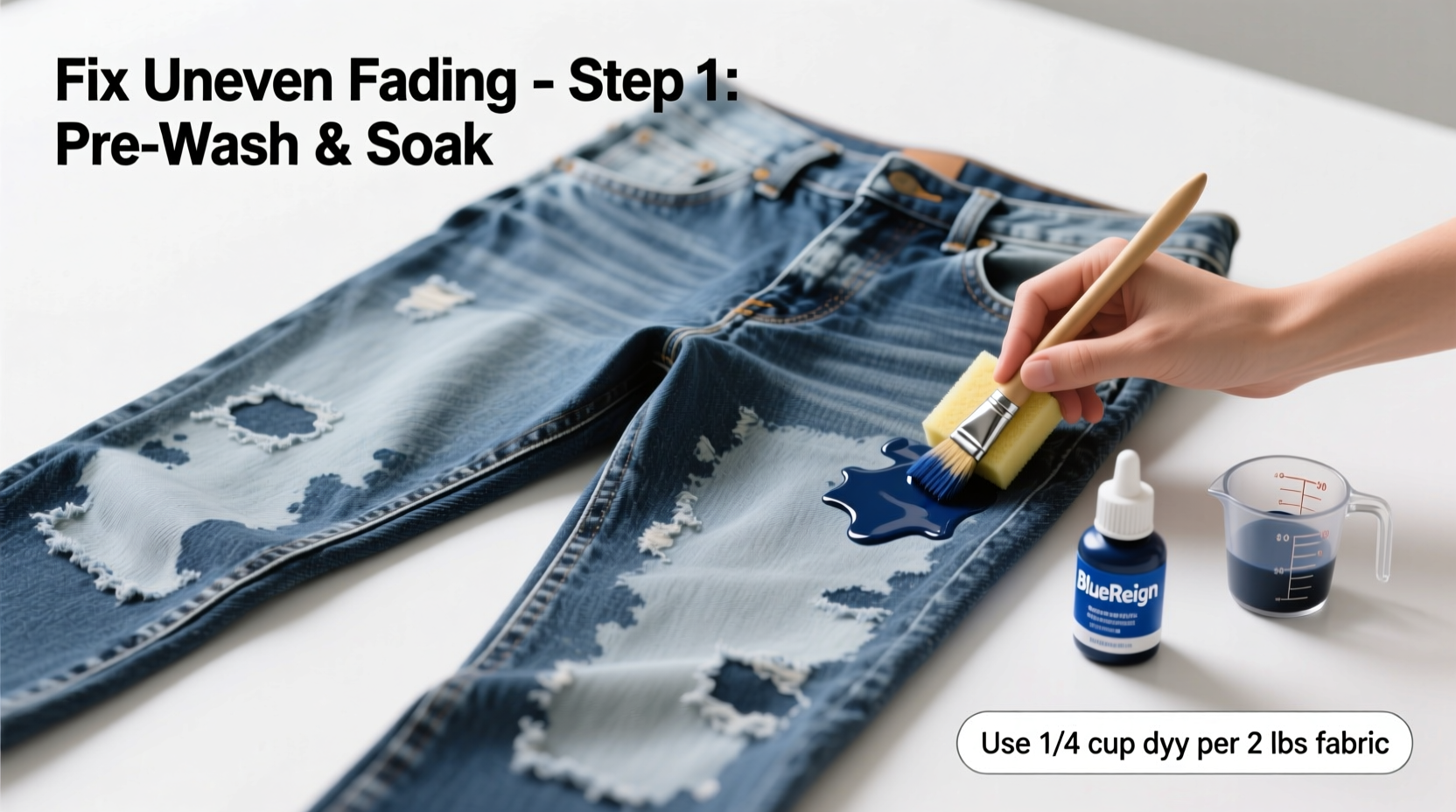
Fading occurs when indigo dye breaks down due to abrasion, sunlight, and washing. But why does it happen unevenly? Several factors contribute:
- Body contact: Areas that rub against furniture, car seats, or bike pedals fade faster.
- Sweat and oils: Natural skin secretions accelerate dye loss, particularly around the crotch and inner thighs.
- Washing habits: Turning jeans inside out, using hot water, or over-washing strips color inconsistently.
- Denim construction: Stretch denim with synthetic fibers fades more unpredictably than 100% cotton.
Uneven fading often starts subtly but becomes more pronounced over time. Recognizing the cause helps determine the best corrective approach.
Step-by-Step Guide to Restoring Color Balance
Correcting uneven fading requires patience and precision. Below is a detailed process to safely even out your denim’s appearance using accessible materials.
- Assess the damage: Lay your jeans flat under natural light. Identify the most faded zones and compare them to darker areas.
- Pre-wash gently: Wash your jeans inside out in cold water with a mild detergent. Avoid bleach or fabric softener. This removes surface grime and prepares the fabric for treatment.
- Dry completely: Air-dry your jeans flat or hang them. Do not use a dryer, as heat can further set color differences.
- Choose a restoration method: Based on severity, select one of the following techniques—spot dyeing, full re-dyeing, or toning.
- Test first: Always perform a patch test on an inconspicuous area (like the inside seam) to ensure compatibility.
- Apply treatment: Follow the specific method carefully, ensuring even application.
- Rinse and dry: After treatment, rinse thoroughly in cold water until runoff is clear. Air-dry away from direct sunlight.
- Post-treatment wash: After 48 hours, do a gentle wash to remove any excess dye residue.
This timeline ensures minimal risk to your denim while maximizing color correction. Rushing steps may lead to blotchiness or permanent damage.
Three Effective Methods to Fix Uneven Fading
Depending on your comfort level and tools available, choose from these three primary approaches:
1. Spot Dyeing with Fabric Markers or Liquid Dye
For minor fading, spot dyeing targets only the lightest areas. Use a denim-specific fabric marker or liquid dye applied with a fine brush.
- Pros: Precise, low-cost, minimal fabric exposure.
- Cons: Hard to match exact shade; risk of over-application.
Hold the jeans taut over a rolled towel to avoid bleeding through layers. Apply dye in thin layers, letting each dry before adding more. Blend edges outward to prevent harsh lines.
2. Toning with Rit Dye More or Similar Products
Toning involves submerging the entire garment in a diluted dye bath to darken faded areas without fully re-dyeing. This method evens out contrast while preserving some character.
“Toning is the smart middle ground between doing nothing and full re-dyeing. It respects the jeans’ history while correcting imbalance.” — Daniel Reyes, Textile Restoration Specialist
Mix 1/4 to 1/2 the recommended amount of liquid dye in warm water (not hot). Submerge jeans for 10–20 minutes, stirring constantly. Rinse in cold water until clear, then air-dry.
3. Full Re-Dyeing for Severe Cases
If fading is extreme or the original indigo is nearly gone, full re-dyeing restores a deep, uniform blue. This requires more effort but delivers dramatic results.
Use a large pot or bathtub. Follow dye manufacturer instructions precisely. For best results, pre-soak jeans in warm water, then immerse in a well-mixed dye bath for 30–60 minutes. Agitate frequently to prevent pooling.
After dyeing, rinse in gradually cooling water, then wash separately with a dye-fixing agent to improve longevity.
Do’s and Don’ts of Denim Color Correction
| Do’s | Don’ts |
|---|---|
| Always test dye on a hidden seam first | Never use undiluted dye directly on fabric |
| Work in a well-ventilated area when using dyes | Avoid applying heat during or immediately after dyeing |
| Use gloves to prevent stained hands | Don’t expect 100% original color return—some patina remains |
| Wash treated jeans separately for the first few cycles | Don’t skip the post-dye rinse; residual dye can transfer |
| Store dyed jeans away from sunlight to preserve color | Avoid chlorine bleach at all costs—it destroys indigo permanently |
Real Example: Reviving a Pair of Vintage 501s
Mark, a vintage clothing collector, owned a pair of 1990s Levi’s 501s with heavy thigh fading and dark back pockets. The contrast made them look mismatched and worn beyond charm. He decided to try toning instead of full re-dyeing to preserve the original wear pattern.
Using Rit Dye More in “Midnight Blue,” he mixed a weak solution (1/3 strength) in a plastic tub. After pre-soaking the jeans, he submerged them for 15 minutes, stirring every two minutes. Upon rinsing, the faded front panels darkened noticeably, while the back retained character. After drying and a gentle wash, the jeans looked balanced yet still authentic.
“It wasn’t about making them look new,” Mark said. “It was about harmony. Now they wear evenly and fit my wardrobe better.”
Preventing Future Uneven Fading
Once you’ve corrected fading, maintaining consistency is key. Prevention beats repair every time.
- Wash less frequently: Denim doesn’t need washing after every wear. Aim for once every 5–10 wears unless soiled.
- Turn inside out: This protects the outer indigo layer during washing.
- Use cold water and gentle cycle: Hot water accelerates fading. Cold water preserves color.
- Air-dry only: Tumble drying causes shrinkage and accelerated wear.
- Rotate your pairs: Give each pair 24–48 hours to rest between wears to reduce stress on fibers.
- Spot clean when possible: Use a damp cloth and mild soap for small stains instead of full washes.
Additionally, consider storing jeans folded rather than hanging, which can stretch the waistband and alter fit over time.
Checklist: How to Fix and Prevent Uneven Fading
Follow this actionable checklist to restore and protect your denim:
- ☐ Inspect jeans monthly for early signs of uneven wear
- ☐ Pre-wash jeans before any dye treatment
- ☐ Test dye on an internal seam
- ☐ Choose spot dyeing, toning, or full re-dyeing based on severity
- ☐ Wear gloves and work in a ventilated space
- ☐ Rinse thoroughly until water runs clear
- ☐ Air-dry away from direct sunlight
- ☐ Wash treated jeans separately for first 2–3 cycles
- ☐ Reduce washing frequency moving forward
- ☐ Store jeans folded in a cool, dry place
FAQ: Common Questions About Fixing Faded Denim
Can I fix uneven fading without dye?
Not effectively. While steaming or ironing might temporarily darken fibers, only dye-based methods provide lasting, visible correction. Natural remedies like coffee or tea lack the binding agents needed for cotton and yield inconsistent results.
Will re-dyeing make my jeans stiff?
Potentially, yes—especially with heavy dye applications. However, stiffness usually fades after one or two gentle washes. To minimize rigidity, avoid overdyeing and always follow up with a fabric conditioner designed for colored clothes.
How long will the restored color last?
With proper care, re-toned or re-dyed denim can retain improved color for 6 months to a year. Longevity depends on wear frequency, washing habits, and exposure to sunlight. Using color-safe detergents extends results.
Conclusion: Take Control of Your Denim’s Appearance
Uneven fading doesn’t have to signal the end of your favorite jeans. With careful assessment and the right technique, you can rebalance color, restore confidence in your wardrobe, and prolong the life of well-loved denim. Whether you opt for subtle toning or full re-dyeing, the process empowers you to take ownership of your clothing’s evolution.
Start small—try a spot test, then build confidence with each successful treatment. Over time, you’ll develop a personal system that keeps your jeans looking intentional, not neglected.




 浙公网安备
33010002000092号
浙公网安备
33010002000092号 浙B2-20120091-4
Comments
No comments yet. Why don't you start the discussion?