
Uneven nail polish is one of the most common frustrations in at-home manicures. Whether it’s streaks, pooling near the cuticles, or accidental smudges on the skin, imperfections can ruin an otherwise flawless look. Reapplying polish isn’t always practical—it takes time, risks chipping the base coat, and often leads to thicker, clumpy layers. But there’s a faster, smarter solution: cuticle oil cleanup. This simple technique not only removes polish from the skin but also smooths out uneven edges, blending streaks seamlessly for a professional finish—all in under a minute.
Cuticle oil isn’t just for hydration; it’s a secret weapon in precision nail care. Its emollient properties break down dried polish slightly at the surface level, allowing for gentle manipulation without damaging the manicure. When applied correctly, it lifts excess color from the cuticles and sidewalls while softening harsh lines, giving nails a clean, even appearance. With the right tools and technique, you can turn a flawed mani into a polished masterpiece in seconds.
The Science Behind Cuticle Oil and Polish Cleanup
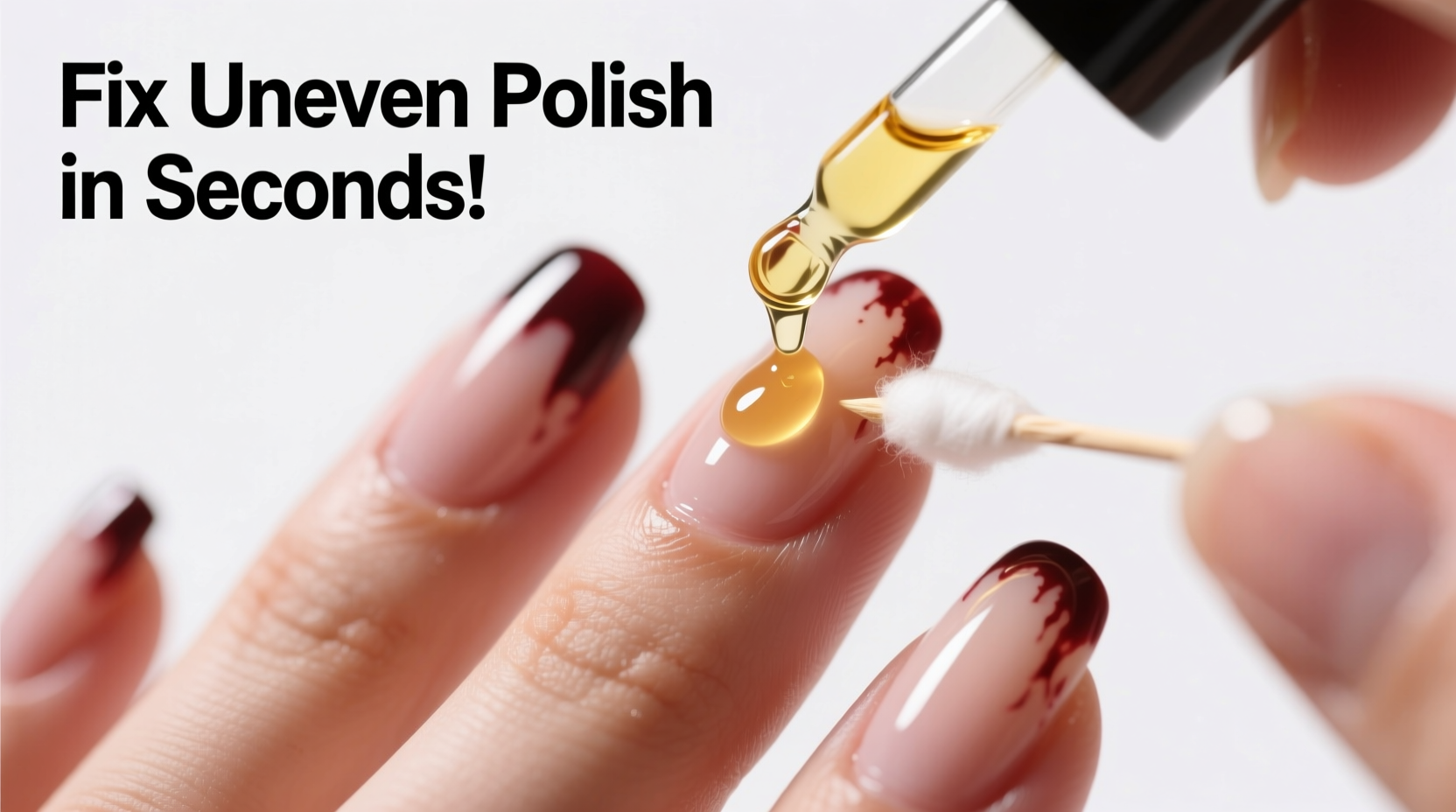
Cuticle oils are typically made from carrier oils like jojoba, sweet almond, or grapeseed oil, often blended with vitamin E and essential oils. These ingredients are naturally non-polar, meaning they don’t mix well with water but readily dissolve pigments and resins found in nail polish. When applied to the skin around the nail, the oil gently penetrates the top layer of dried polish residue, softening it just enough to allow removal with light pressure.
This process doesn’t affect the polish on the nail plate itself because the coating has fully cured and bonded to the nail surface. However, on the surrounding skin—where polish sits loosely—the oil acts like a mild solvent, lifting the pigment without smearing or spreading. This selective action makes it ideal for correcting mistakes without disturbing the manicure.
“Cuticle oil does more than nourish—it enhances precision. I use it daily in my salon to perfect clean lines and fix minor application errors.” — Lila Torres, Master Nail Technician & Educator
Unlike acetone wipes, which can dry out the skin and risk thinning the actual nail polish if they make contact, cuticle oil is safe, hydrating, and targeted. It’s especially effective for fixing issues that appear after the polish has dried, such as hazy streaks or blurred cuticle lines.
Step-by-Step Guide: Fixing Uneven Polish in Seconds
Follow this proven method to correct uneven nail polish quickly and effectively using only cuticle oil and a few basic tools.
- Let the polish dry slightly. Wait 2–3 minutes after your final coat so the polish is tacky but not wet. Fully hardened polish works too, but semi-dry polish responds better to blending.
- Apply a small drop of cuticle oil. Using the applicator brush or a wooden stick, place a tiny amount of oil precisely where the polish is uneven—typically along the cuticle line or side walls.
- Gently massage the oil into the edge. Use the tip of a cuticle pusher or orangewood stick to lightly buff the oil over the uneven area. The friction helps blend the polish edge into the skin, softening sharp lines.
- Wipe away excess. After 10–15 seconds, use a cotton swab or microfiber pad to gently remove any lifted pigment and excess oil. Wipe in one direction to avoid smudging.
- Repeat if necessary. For stubborn streaks or thick patches, reapply a smaller amount of oil and repeat the process. Avoid over-saturating the area.
- Finish with hydration. Once the polish is even, apply a fresh layer of cuticle oil to nourish the skin and add shine to the overall manicure.
Do’s and Don’ts of Cuticle Oil Cleanup
| Do’s | Don’ts |
|---|---|
| Use high-quality, non-greasy cuticle oil with fast absorption. | Don’t flood the cuticle with oil—too much can spread polish or delay drying. |
| Work one nail at a time to maintain control. | Don’t use metal tools aggressively; they can scratch the nail or push back wet polish. |
| Wait until the final coat is set before cleaning up edges. | Don’t substitute olive oil or coconut oil—they’re too thick and may leave residue. |
| Store cuticle oil in a cool, dark place to preserve its potency. | Don’t skip the final hydration step—dry cuticles detract from even the best polish job. |
| Use a lint-free wipe for cleanup to avoid fibers sticking to nails. | Don’t attempt this technique with gel polish unless using a specialized oil-based cleanser. |
Real-Life Example: From Home Manicure Disaster to Flawless Finish
Sophia, a graphic designer based in Portland, had been struggling with her DIY manicures for months. She loved experimenting with bold colors and intricate designs but often ended up frustrated by messy cuticle lines. “I’d spend 45 minutes painting my nails perfectly, only to ruin it all when I tried to clean up the edges with a q-tip and acetone,” she recalls.
After watching a tutorial on cuticle oil cleanup, she decided to try it with her next at-home session. She applied a deep plum shade that tended to bleed near the cuticles. After the final coat dried slightly, she placed a single drop of jojoba-based cuticle oil along the base of each nail and used a fine-tipped orangewood stick to gently blend the edges. To her surprise, the streaks disappeared, and the polish looked airbrushed.
“It took less than two minutes for all ten nails,” Sophia says. “No chipping, no redoing, and my nails looked like I’d spent $50 at a salon. Now I do this every time—it’s become part of my routine.”
Her experience highlights how a small shift in technique can produce dramatic improvements. By replacing harsh cleanup methods with a gentler, oil-based approach, she achieved consistent, high-end results without extra time or cost.
Essential Tools for Perfect Cleanup
While cuticle oil is the star of this technique, having the right supporting tools ensures precision and efficiency. Here’s what you need:
- Cuticle oil with a fine brush applicator: Allows controlled delivery without spills.
- Orangewood sticks or silicone cuticle pushers: Ideal for blending edges without scratching.
- Fine-point cotton swabs: Perfect for removing residue from tight spaces.
- Lint-free wipes or microfiber pads: Prevent fibers from adhering to tacky polish.
- Nail buffer (optional): Use lightly after cleanup to smooth any texture differences.
Expert Tips for Flawless Results Every Time
Professional nail artists rely on subtle techniques to achieve perfection. Incorporate these advanced tips into your routine for consistently even polish:
- Prep the cuticle first. Gently push back cuticles before polishing to create a clean canvas and reduce the chance of polish pooling.
- Use thin coats. Thick layers are harder to fix and more likely to wrinkle or streak. Two to three thin coats yield a smoother base for cleanup.
- Angle your brush properly. Hold the polish brush at a 45-degree angle when approaching the cuticle to minimize overspill.
- Work in natural light. Bright, shadow-free lighting helps you see imperfections clearly during cleanup.
- Choose fast-absorbing oils. Look for formulas with jojoba or squalane—they penetrate quickly without leaving a greasy film.
“The difference between a good manicure and a great one is in the details. A 30-second oil cleanup can elevate your entire look.” — Marcus Reed, Editorial Nail Artist for Vogue Beauty
Frequently Asked Questions
Can I use any type of oil for nail polish cleanup?
No—not all oils work effectively. Stick to dedicated cuticle oils formulated for nail care. Household oils like coconut or olive oil are too viscous and may not absorb quickly, increasing the risk of smudging. They can also degrade the polish over time. Jojoba oil is ideal because its molecular structure closely mimics human sebum, making it highly compatible with skin and polish alike.
Will cuticle oil make my polish peel off?
No, when used correctly, cuticle oil will not lift polish from the nail. It only affects loose pigment on the skin. The nail plate forms a strong bond with the polish, especially after it has dried for a few minutes. However, avoid applying oil directly onto wet polish, as it may interfere with adhesion and cause wrinkling.
How soon after polishing can I do a cleanup?
Wait at least 2–3 minutes after your final coat to allow the surface to set. If the polish is still wet, the oil may cause it to smear. For best results, perform the cleanup when the polish is slightly tacky but not sticky. If you're working with fully dried polish, the oil will still lift surface residue from the skin, though blending won’t be as seamless.
Final Checklist: Your Quick Fix Routine
Before putting away your polish, run through this checklist to ensure a flawless finish:
- ✅ Final coat applied and slightly dry (2–3 minutes elapsed)
- ✅ Cuticle oil ready with precise applicator
- ✅ Orangewood stick or silicone tool nearby
- ✅ Cotton swabs and lint-free wipes prepared
- ✅ One drop of oil applied per nail near uneven areas
- ✅ Gently blended using light circular motions
- ✅ Excess pigment wiped away cleanly
- ✅ Fresh cuticle oil applied for hydration and shine
Conclusion: Elevate Your Manicure Game Instantly
Fixing uneven nail polish doesn’t require a redo, special tools, or professional training. With a simple bottle of cuticle oil and the right technique, you can transform a flawed finish into a flawless one in seconds. This method saves time, preserves your manicure, and delivers results that rival salon treatments. It’s proof that sometimes, the smallest adjustments yield the biggest improvements.




 浙公网安备
33010002000092号
浙公网安备
33010002000092号 浙B2-20120091-4
Comments
No comments yet. Why don't you start the discussion?