
There’s nothing more frustrating than pulling up your jeans only to feel the waistband drop seconds later. A zipper that won’t stay up isn’t just inconvenient—it can be embarrassing in public and uncomfortable during daily wear. While many assume this means the jeans are beyond repair, most zipper issues stem from minor misalignments or worn components that can be fixed at home with everyday tools. Whether you're dealing with a slider that slips down immediately or a fly that won’t catch properly, practical solutions exist that don’t require professional tailoring or costly replacements.
The good news is that fixing a slipping zipper often takes less than 10 minutes and uses items already found in most households. From tightening the slider tension to reinforcing stitching, these methods restore functionality without altering the look of your favorite denim. Understanding why zippers fail—and how to address each cause—is key to choosing the right fix.
Why Your Jeans Zipper Keeps Falling Down
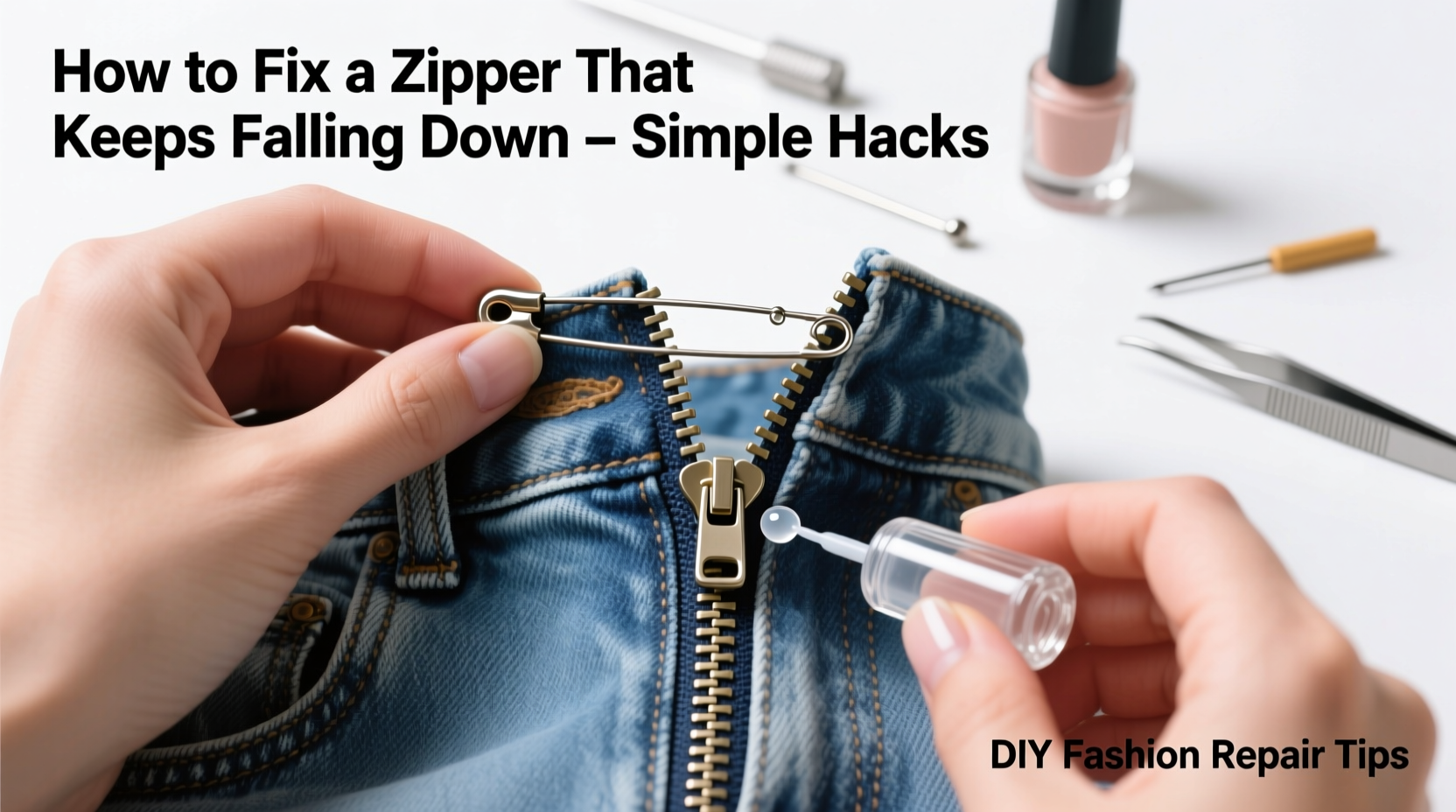
A zipper that won’t stay closed typically results from one or more mechanical failures. Identifying the root cause ensures you apply the correct solution instead of wasting time on ineffective fixes.
- Worn or loose slider: Over time, the metal pull (slider) loses its grip on the teeth due to repeated use, causing it to slide open under minimal pressure.
- Stretched fabric around the fly: Denim stretches with wear, especially near stress points like the waistband and placket, which pulls the zipper apart.
- Misaligned teeth: If the left and right rows of zipper teeth aren’t meeting properly, the slider can't lock them together securely.
- Loose or broken stitches: The seam anchoring the zipper to the fabric may have frayed or snapped, allowing movement that compromises closure.
- Damaged or bent teeth: A single bent or missing tooth prevents full engagement, making the zipper prone to separation.
Before attempting repairs, inspect the entire length of the zipper. Run the slider up and down slowly, checking for resistance, gaps between teeth, or visible damage. Note whether the problem occurs immediately at the top or after partial zipping. This diagnostic step determines which hack will work best.
Simple Hacks to Fix a Slipping Zipper Without Sewing
Not everyone owns a sewing kit or knows how to thread a needle—but that doesn’t mean you’re out of options. These non-sewing techniques offer quick relief and can last weeks or even months depending on usage.
1. Tighten the Slider with Pliers
If the slider has become too loose to grip the teeth firmly, gently compressing it restores tension. Use smooth-jawed pliers to avoid scratching the metal.
- Unzip the jeans completely.
- Position the slider so it's free from the teeth.
- Place the jaws of the pliers around the sides of the slider body (not the pull tab).
- Squeeze lightly—just enough to reduce the internal gap by 0.5–1mm.
- Test the zipper. Repeat if necessary, but avoid over-squeezing, which can jam the slider.
This method works best on metal sliders and may need repeating every few weeks with heavy use.
2. Add a Keyring or Safety Pin as a Lock
Create an external locking mechanism using common household items.
- Keyring method: Hook a small metal keyring through the zipper pull and the buttonhole just above the fly. When zipped, loop the ring into place to prevent downward movement.
- Safety pin trick: Insert a tiny safety pin horizontally through the fabric behind the zipper stop and engage it with the pull tab. It acts as a physical barrier against sliding.
These are temporary but highly effective fixes ideal for travel or emergencies.
3. Use a Rubber Band or Hair Tie
Wrap a thin rubber band around the zipper pull and anchor it to a belt loop or nearby fabric. The tension holds the slider in place. Choose a discreet color to minimize visibility.
“Many people overlook mechanical tension loss as the main culprit. A slightly compressed slider can perform like new.” — Luis Mendez, Garment Repair Technician with 18 years of experience
Permanent Fixes That Last: Reinforcement and Stitching
For long-term reliability, structural reinforcement addresses both the zipper mechanism and surrounding fabric. These solutions take slightly longer but dramatically extend the life of your jeans.
1. Re-Stitch Loose Zipper Anchors
The top and bottom stops of a zipper are sewn directly to the denim. When these stitches break, the entire unit shifts, preventing proper alignment.
- Lay the jeans flat and fully unzip the fly.
- Inspect the top stop where the slider rests when closed. Look for loose threads or gaps in stitching.
- Thread a sturdy needle with double-stranded polyester thread (color-matched to your jeans).
- Sew tight zig-zag or box-shaped stitches across the original seam lines to re-anchor the zipper tape.
- Repeat at the bottom stop if it shows similar wear.
This process stabilizes the zipper frame and costs nothing if you already own basic sewing supplies.
2. Install a Zipper Dock (Zipper Helper)
A “zipper dock” is a small fabric loop sewn above the fly that holds the pull tab in place once zipped. Though factory-installed on some brands, it can be added retroactively.
- Cut a 1-inch strip of stretchy fabric or elastic.
- Fold it into a small loop and position it centered above the top of the zipper.
- Sew the loop securely to the waistband lining so the open end faces downward.
- After zipping, hook the pull tab into the loop to lock it in place.
This not only prevents slippage but also reduces strain on the zipper teeth by eliminating lateral movement.
Comparison Table: Quick Fixes vs. Long-Term Solutions
| Solution | Time Required | Tools Needed | Durability | Best For |
|---|---|---|---|---|
| Tighten slider with pliers | 5 minutes | Pliers | Days to weeks | Loose metal sliders |
| Rubber band lock | 2 minutes | Rubber band/hair tie | One-time wear | Emergency fix |
| Safety pin anchor | 3 minutes | Safety pin | Single day | Travel situations |
| Re-stitch anchor points | 15–20 minutes | Needle, thread, scissors | Months to years | Worn stitching |
| Add zipper dock | 10 minutes | Fabric scrap, needle | Permanent | Preventive upgrade |
Real-Life Example: Saving a Favorite Pair After Daily Wear Failure
Jamie, a bike courier in Portland, relied on a single pair of durable black jeans for work. After six months of constant riding, the zipper began slipping within hours of being zipped. Initially, he used a rubber band wrapped around the pull and a belt loop, which worked temporarily but looked unprofessional during client meetings.
Upon closer inspection, Jamie noticed the top stitching had unraveled by nearly half an inch, allowing the entire zipper to shift downward when seated. He spent 15 minutes re-sewing the top anchor with reinforced thread and added a discreet zipper dock made from an old shoelace loop. The fix held through eight more months of rigorous use, proving that targeted repairs can match factory durability.
His experience highlights a common oversight: focusing only on the slider while ignoring underlying fabric stability. Addressing both elements ensured lasting performance.
Do’s and Don’ts When Fixing a Jeans Zipper
- Do:
- Check alignment before applying force to the slider.
- Use fine-grit sandpaper to clean debris from zipper teeth.
- Apply beeswax or bar soap to stiff zippers for smoother operation.
- Store jeans unzipped to reduce tension on the fly.
- Don’t:
- Over-tighten the slider—this can crush it and make it immovable.
- Wash jeans with a damaged zipper; it may worsen the tear.
- Ignore early signs of stitch loosening—small repairs now prevent big problems later.
- Force a stuck zipper upward without inspecting for bent teeth.
FAQ: Common Questions About Fixing Jeans Zippers
Can I fix a plastic zipper with the pliers method?
No. Plastic sliders are brittle and will crack under pressure. Instead, check for misalignment or broken teeth, and consider replacing the entire zipper if damaged.
How do I know if my zipper needs replacement?
If multiple teeth are missing, the slider is corroded, or the tape is torn, replacement is the safest option. Persistent misalignment after tightening and re-stitching also indicates a failing unit.
Is it worth fixing an old pair of jeans?
Absolutely—if the denim is still strong and fits well, repairing the zipper extends wearability and reduces textile waste. High-quality jeans often outlast their zippers, making replacement cost-effective.
Final Checklist: How to Fix a Slipping Jeans Zipper
- Diagnose the issue: Is it the slider, stitching, fabric stretch, or misalignment?
- Try the pliers method for loose metal sliders (avoid plastic).
- Secure the pull tab temporarily with a rubber band, keyring, or safety pin.
- Inspect and re-sew any loose stitching at the top or bottom stops.
- Consider adding a zipper dock for permanent prevention.
- Test the zipper while standing and sitting to ensure full function.
- Practice preventive care: store unzipped, avoid over-washing, and lubricate occasionally.
Conclusion: Keep Your Jeans Functional and Comfortable
A zipper that falls down doesn’t mean the end of your favorite jeans. With a few smart interventions, you can restore secure closure and continue wearing them with confidence. Whether you opt for a quick field fix or invest time in a lasting repair, each method empowers you to take control of garment maintenance. These skills not only save money but also support sustainable fashion by extending the lifecycle of your clothing.




 浙公网安备
33010002000092号
浙公网安备
33010002000092号 浙B2-20120091-4
Comments
No comments yet. Why don't you start the discussion?