
Folding a fitted sheet has long been considered one of the great household mysteries—right up there with untangling earphones or matching mismatched socks. The elastic edges, loose corners, and floppy fabric make it seem like an unsolvable puzzle. But with the right method, anyone can master this laundry room challenge. No more crumpled heaps in the closet or awkwardly stuffed drawers. This guide breaks down the process into clear, repeatable steps that transform chaos into crisp order. Whether you’re preparing for guest room turnover or simply aiming for a tidier home, learning to fold a fitted sheet properly is a small skill with big impact.
The Problem with Fitted Sheets
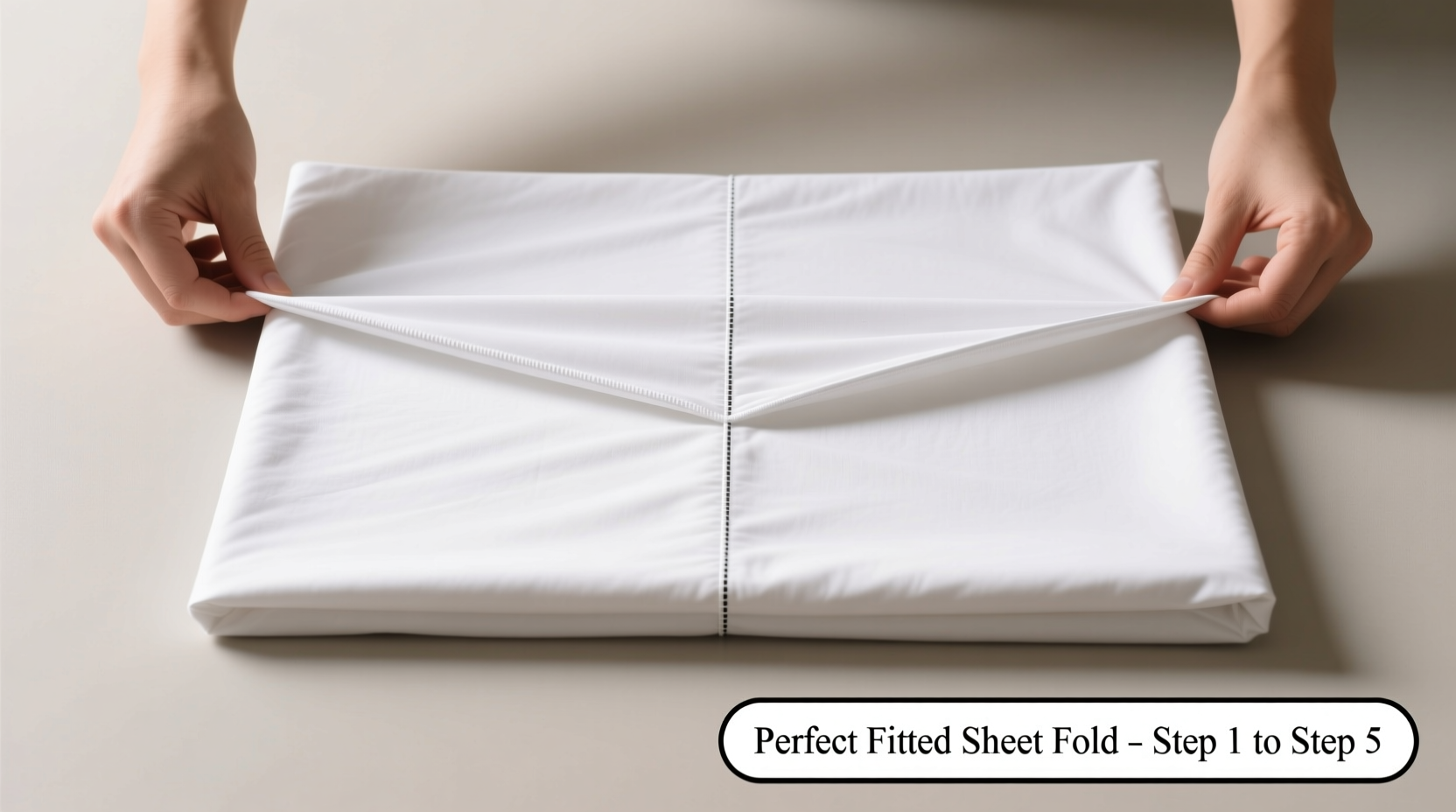
Unlike flat sheets, fitted sheets have deep pockets and stretchy corners designed to hug mattresses tightly. That same elasticity works against them when folding. Without structure, they collapse into shapeless bundles that resist neat stacking. Many people resort to tossing them loosely into storage bins, creating clutter and making matching sets difficult. Over time, poorly stored sheets develop permanent creases and are harder to iron or smooth out when used.
The core issue isn’t the sheet itself—it’s the lack of a consistent folding system. Once you understand how to control the corners and align the edges, folding becomes intuitive. The key lies in reversing the function: instead of stretching over a mattress, you bring the corners together inward, eliminating slack and creating symmetry.
Step-by-Step Guide to Folding a Fitted Sheet Perfectly
The following sequence transforms a rumpled fitted sheet into a compact, rectangular fold. Practice each step slowly at first. With repetition, the motion becomes second nature.
- Start with the sheet inside out. Hold the sheet so the elastic edges face outward and the fabric interior is visible. This orientation makes corner alignment easier because you can see where the seams meet.
- Identify two adjacent corners. Use your hands to locate one corner of the short edge. Pinch it between your fingers. Then find the corner connected to it along the same side. Bring these two corners together in one hand, tucking one inside the other so their points align.
- Repeat with the opposite side. Turn the sheet around and locate the two remaining corners on the other short edge. Match them the same way—nesting one inside the other until both sets of corners are securely paired.
- Connect the matched corners. Now hold one pair of joined corners in each hand. Flip one set over the other so they stack neatly. You should now have all four corners aligned in one bundle, with the elastic edges forming a clean top line.
- Lay the sheet flat on a surface. Place it on a bed, table, or any large flat area. Smooth it out gently, keeping the corner bundle at the top. The backside (which was originally the outer side) should now be facing up.
- Fold the sides inward. Take the left and right edges and fold them toward the center, about one-third of the way in. This creates straight vertical borders and eliminates ruffles along the long sides.
- Fold the top down. Starting from the corner end, fold approximately one-third of the sheet downward. Keep the edge even with the smoothed bottom edge beneath.
- Continue folding into thirds. Fold the bottom up to meet the previous fold, then fold the top down again. You’ll end up with a compact rectangle.
- Store immediately. Place the folded sheet in your linen closet or drawer while the shape holds. If needed, give it a light press with your palm to flatten any puffiness.
Common Mistakes to Avoid
Even with instructions, certain missteps can sabotage your results. Awareness helps prevent frustration.
- Skipping the inside-out step. Trying to match corners with the right side out often leads to misalignment. Working inside out gives better visibility of seams and edges.
- Rushing through smoothing. A few seconds spent flattening the fabric before folding make a dramatic difference in the final result.
- Over-folding too early. Don’t attempt multiple folds until the corners are fully secured and the base layer is flat. Premature folding traps air and creates bulk.
- Using a cramped space. Folding on a narrow countertop or chair arm limits movement. Always use the largest available surface.
“Folding is not just about storage—it’s about respect for your textiles. A well-folded sheet lasts longer, resists pilling, and stays fresh between uses.” — Lena Ruiz, Home Organization Consultant
Do’s and Don’ts When Folding Fitted Sheets
| Do’s | Don’ts |
|---|---|
| Do start with the sheet inside out | Don’t try to fold immediately after drying if still warm and wrinkled |
| Do pair corners precisely before laying flat | Don’t twist or flip sections unevenly during folding |
| Do use a large, clean surface | Don’t store unfolded or bunched sheets long-term |
| Do fold in thirds for uniform sizing | Don’t force folds that create lumps or trapped fabric |
| Do practice regularly until muscle memory develops | Don’t expect perfection on the first try—consistency matters more |
Real-Life Example: From Chaos to Calm
Sarah, a mother of three in Portland, used to dread laundry day—not because of the washing, but because of putting it away. Her linen closet resembled a textile avalanche: half-folded sheets, mismatched pairs, and stacks that toppled whenever she reached for a pillowcase. After watching a quick tutorial online, she decided to apply the inside-out corner-matching method described here.
She began with her oldest twin sheet set, taking five full minutes to complete the first fold. It wasn’t perfect, but noticeably neater than her usual ball-up-and-shove-it-in approach. By the third attempt, she completed the fold in under two minutes. Within a week, she had reorganized her entire closet, pairing each fitted sheet with its corresponding flat sheet and pillowcases, all uniformly folded.
“It sounds silly,” she said, “but seeing everything lined up so cleanly actually made me enjoy changing beds. I even taught my kids the method—they now compete to see who can fold the neatest!”
Checklist: Master Your Fitted Sheet Folding Routine
Use this checklist every time you fold a fitted sheet to build consistency:
- ☐ Lay the sheet on a large, flat surface
- ☐ Turn the sheet inside out
- ☐ Match two adjacent corners by nesting them together
- ☐ Repeat with the opposite two corners
- ☐ Stack both corner pairs so all four are aligned
- ☐ Flip the sheet right-side out and smooth completely
- ☐ Fold long edges toward the center (one-third each side)
- ☐ Fold top down in thirds
- ☐ Store immediately with matching bedding
- ☐ Repeat with different sizes to build confidence
Frequently Asked Questions
Can I fold a fitted sheet without turning it inside out?
Yes, but it's significantly harder. Turning it inside out allows you to see the seam junctions clearly, making corner alignment more accurate. Without this visual cue, it’s easy to twist or mismatch corners, leading to lopsided folds.
What if my sheet doesn’t lie flat after folding?
If the final rectangle puffs up or won’t stay closed, check whether all corners are truly nested. Often, one corner slips partially out during transfer. Reopen the fold, realign the corners, and refold with deliberate pressure along each crease.
Does sheet size affect the folding method?
No—the technique remains identical regardless of size. However, larger sheets (queen, king) benefit from being folded on a bed rather than a small table. Extra space prevents dragging or bunching as you work across the fabric.
Expert Tips for Long-Term Linen Care
Folding is just one part of maintaining high-quality bedding. How you wash, dry, and store sheets also impacts their longevity and ease of handling.
- Wash in cool water. High heat degrades cotton fibers and weakens elastic bands over time. Cool cycles preserve texture and fit.
- Avoid over-drying. Remove sheets while slightly damp to reduce stiffness and static cling. This also makes folding smoother.
- Rotate your sets. Using the same sheet set continuously causes uneven wear. Rotate between 3–4 sets to extend overall lifespan.
- Store in breathable containers. Plastic bins trap moisture and encourage mildew. Opt for cotton storage bags or open shelves in dry areas.
“The act of folding is mindfulness in motion. When we care for our linens with intention, we elevate everyday routines into rituals of comfort.” — Dr. Miriam Chen, Lifestyle Psychologist
Conclusion: Transform a Tiny Task into Lasting Order
Folding a fitted sheet perfectly isn’t magic—it’s method. Once you internalize the rhythm of corner pairing, surface smoothing, and structured folding, what once seemed impossible becomes routine. More than just a neat trick, this skill contributes to a more organized, peaceful home environment. Imagine opening your linen closet to find every set stacked like library books, ready for use without hassle.




 浙公网安备
33010002000092号
浙公网安备
33010002000092号 浙B2-20120091-4
Comments
No comments yet. Why don't you start the discussion?