
Folding a fitted sheet has long been considered one of the great household mysteries—right up there with untangling Christmas lights or assembling flat-pack furniture without losing your mind. The elastic corners, the awkward stretch, and the way it seems to resist neatness at every turn make it a chore many avoid altogether. But it doesn’t have to be this way. With a clear, repeatable method, you can fold a fitted sheet into a tidy rectangle that stacks neatly with the rest of your linens. No more crumpling it into a ball and shoving it in the closet. This guide breaks down the process into manageable steps, shares expert insights, and offers practical tips so you can finally conquer this laundry room nemesis.
The Problem with Fitted Sheets
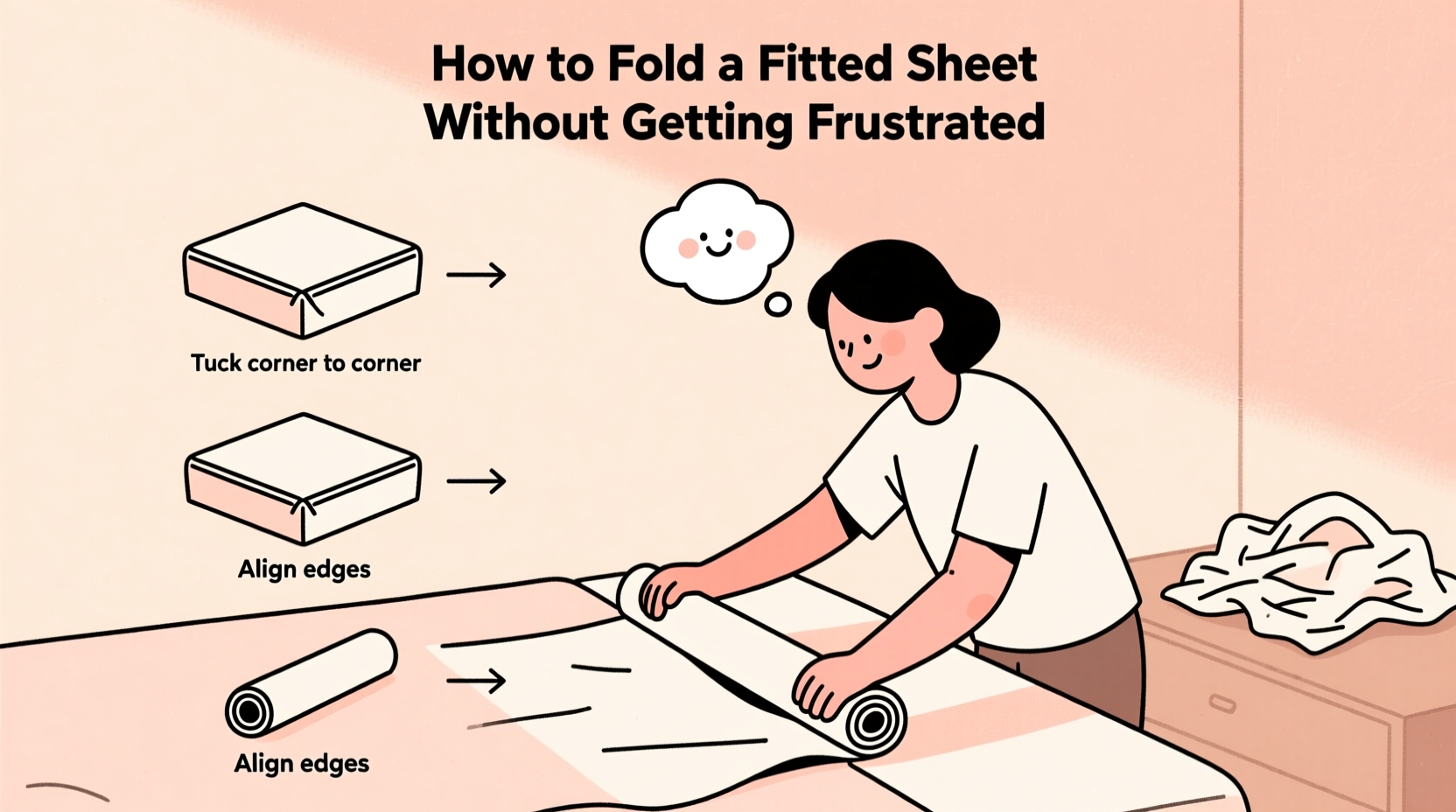
Fitted sheets are designed for function, not folding. Their elasticized edges grip mattress corners tightly, which is excellent when making a bed—but problematic when storing. Unlike flat sheets, which lie smooth and predictable, fitted sheets have dimension. When tossed into a pile, they collapse into a shapeless tangle that looks like a failed origami project. Over time, this leads to frustration, inconsistent storage, and even reluctance to change bedding regularly.
The root of the issue isn't complexity—it's misinformation. Many people attempt to fold fitted sheets the same way they do flat ones, leading to lopsided results. Others give up after one try, assuming only experts or obsessive organizers can manage it. But the truth is, anyone can learn this skill with the right approach.
A Step-by-Step Guide to Folding a Fitted Sheet
The key to success lies in controlling the elastic corners and gradually flattening the three-dimensional shape into a two-dimensional rectangle. Follow these steps carefully, and practice once or twice—you’ll soon develop muscle memory.
- Hold the sheet by two adjacent corners. Turn the sheet inside out by grasping one hand in each of two connected corners (like the top left and top right). Keep the elastic edges facing inward.
- Find the second pair of corners. With the first two corners secured in one hand, reach inside the sheet with your other hand and pull the opposite two corners (bottom left and bottom right) over them. You should now have all four corners aligned, nested together, with the elastic tucked inside.
- Lay the sheet flat on a surface. Place the bundled corners down gently on a bed or table. Smooth the fabric outward, ensuring no wrinkles or twists remain. The sheet should now resemble a loose rectangle with no visible elastic.
- Fold in the sides. Take the left and right edges and fold them toward the center, about one-third of the way in. This helps create clean vertical edges and prepares the sheet for stacking.
- Fold lengthwise. Fold the bottom edge up toward the top, creating a horizontal rectangle. Depending on the size of the sheet, you may need to do this in two or three folds to achieve a compact shape.
- Store neatly. Once folded, place the sheet with its matching set—either tucked inside the flat sheet or stored alongside pillowcases in a coordinated stack.
This method works for all standard sizes—twin, full, queen, and king. The larger the sheet, the more care you’ll need when smoothing and folding, but the process remains the same.
Common Mistakes That Lead to Frustration
Even with instructions, many people struggle because of small missteps. Recognizing these pitfalls can prevent repeated failure.
- Trying to fold while standing. Without a stable surface, it’s nearly impossible to smooth and align the fabric properly.
- Not aligning corners correctly. If opposing corners aren’t fully nested, the sheet will bulge and resist folding.
- Rushing the smoothing step. Skipping this leads to trapped air pockets and uneven layers that won’t fold cleanly.
- Using too much force. Yanking or pulling stretches the fabric and distorts the shape, making folding harder.
Do’s and Don’ts of Fitted Sheet Folding
| Do | Don’t |
|---|---|
| Use a flat surface like a bed or table | Fold in mid-air or on an uneven surface |
| Start with the sheet inside out | Begin with the right side out |
| Smooth fabric thoroughly before folding | Skip smoothing to save time |
| Fold matching sets together | Store fitted sheets separately from their sets |
| Practice regularly until it becomes routine | Give up after one unsuccessful attempt |
Expert Insight: Why Proper Folding Matters
Folding might seem trivial, but it impacts both longevity and usability of your linens. Experts agree that consistent, careful folding prevents unnecessary wear and keeps bedding organized and accessible.
“Taking the time to fold fitted sheets properly isn’t just about aesthetics—it’s about fabric preservation. Neat folding reduces creasing stress and minimizes fiber breakdown over time.” — Dr. Lena Peterson, Textile Care Specialist, Home Fabric Institute
According to Dr. Peterson, improperly stored sheets are more likely to develop permanent creases, especially in cotton blends. These micro-tears accumulate with each wash and fold cycle, shortening the lifespan of your bedding. A well-folded sheet also ensures you’re more likely to rotate your linens evenly, preventing some sets from wearing out prematurely while others sit unused.
Real-Life Example: From Chaos to Calm
Sarah, a mother of three in Portland, used to dread laundry day—not because of the volume, but because of the linen closet. “Every time I opened it, fitted sheets spilled out like tangled ghosts,” she says. “I’d spend ten minutes trying to match them, only to shove them back in half-folded.”
After watching a short tutorial based on the method described here, Sarah decided to reorganize her entire linen storage system. She pulled everything out, refolded each fitted sheet using the corner-nesting technique, and stacked them with their corresponding flat sheets and pillowcases. “It took an hour the first time,” she admits, “but now, folding a fitted sheet takes me under two minutes. My closet looks like something out of a catalog.”
More importantly, her family uses fresh sheets more consistently. “When it’s easy to grab a set, we actually do it. No more excuses.”
Checklist: Master Fitted Sheet Folding in 6 Steps
Keep this checklist handy for your next laundry session:
- ☐ Lay the fitted sheet on a flat, clean surface
- ☐ Grasp two adjacent corners and turn them inside out
- ☐ Nest the opposite two corners over the first pair
- ☐ Smooth the entire sheet to eliminate wrinkles
- ☐ Fold side edges toward the center
- ☐ Fold lengthwise into a compact rectangle
Repeat this process with each fitted sheet in your collection. Over time, it will become second nature.
Frequently Asked Questions
Can I fold a fitted sheet without a table or bed?
While possible, it’s significantly harder. A stable surface allows you to smooth and align the fabric properly. If no surface is available, consider draping the sheet over a couch or countertop edge for partial support.
What if my sheet still comes out lumpy?
Lumpiness usually means corners aren’t fully nested or fabric wasn’t smoothed completely. Go back and check that all four corners are securely paired and that no hidden folds remain underneath. Re-smooth the sheet before continuing.
Should I store fitted sheets inside out?
Not necessarily. Once folded, the orientation doesn’t matter. However, starting the folding process inside out makes alignment easier. After folding, you can flip the final bundle right-side out if preferred.
Final Thoughts: Make Order Out of Chaos
Folding a fitted sheet isn’t a test of intelligence or dexterity—it’s a test of patience and method. The frustration most people feel stems not from inability, but from attempting the task without a reliable system. Now that you have one, there’s no reason to keep avoiding it.
Think of it as a small act of daily mindfulness. In a world full of complex problems, mastering something as simple as a fitted sheet can bring unexpected satisfaction. It’s not just about tidiness; it’s about reclaiming control over the little things that add up to a more organized, peaceful home.




 浙公网安备
33010002000092号
浙公网安备
33010002000092号 浙B2-20120091-4
Comments
No comments yet. Why don't you start the discussion?