
After the holiday season ends, one of the most overlooked yet essential tasks is storing your Christmas decorations properly. Among these, the Christmas tree skirt often poses a challenge—especially when it’s large, made from delicate fabric, or features intricate embellishments. Folding it incorrectly can lead to stubborn creases, stretched seams, or frayed edges that diminish its appearance year after year. With the right technique, however, you can preserve its shape, color, and texture for many seasons to come.
Whether your tree skirt is velvet, felt, lace-trimmed, or hand-embroidered, the folding method matters as much as the storage environment. This guide walks you through a meticulous, damage-free process that protects the integrity of your decor while making it easy to store and retrieve next holiday season.
Why Proper Folding Matters for Large Tree Skirts
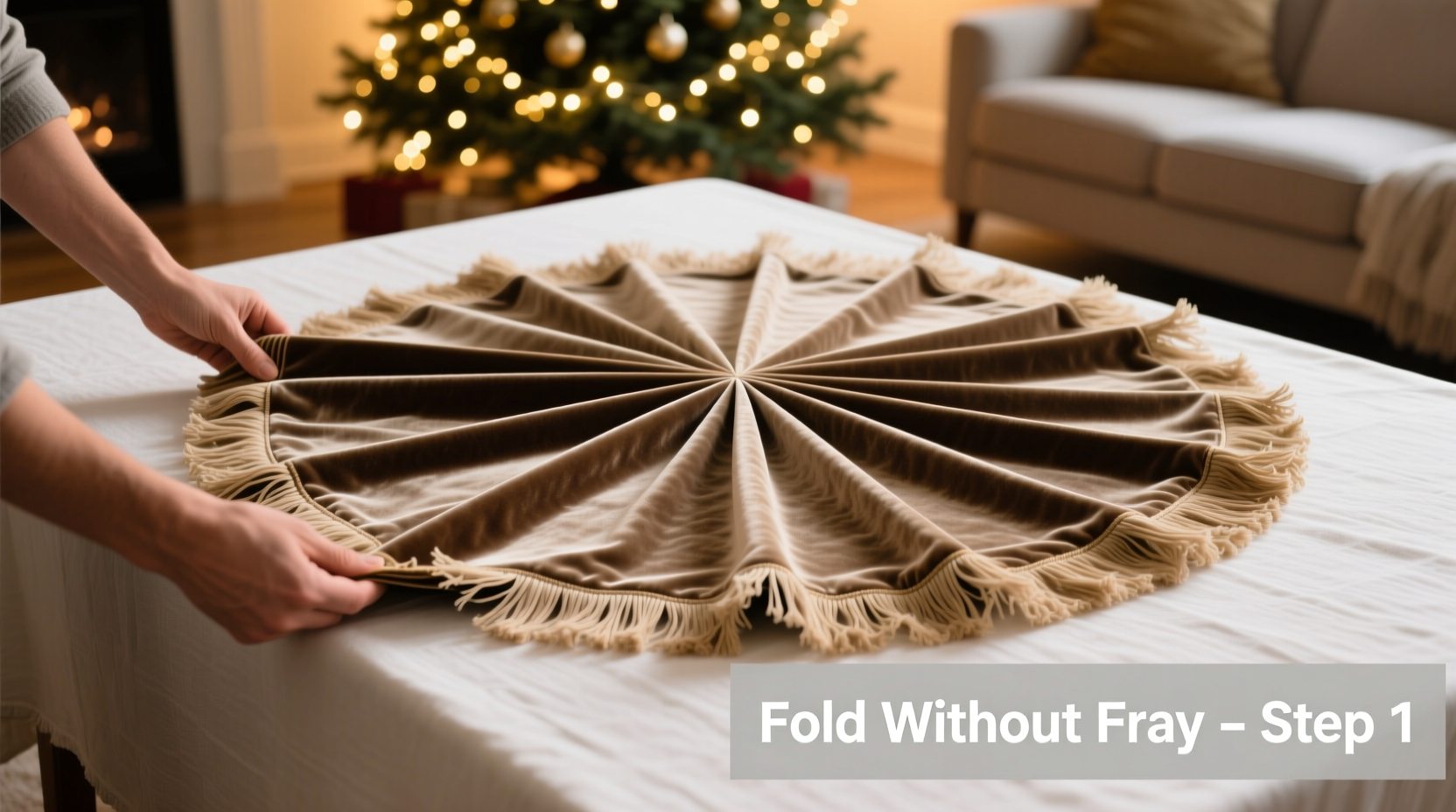
A large Christmas tree skirt typically measures 72 inches in diameter or more, designed to drape fully around a standard or oversized tree. Due to their size and frequent use, these skirts are prone to deep folds, pressure marks, and edge wear if not handled carefully. Unlike smaller textiles, they cannot be casually tossed into a box or drawer without consequence.
Poor folding habits contribute to several long-term issues:
- Permanent creasing: Especially in fabrics like cotton blends or synthetic velvets, repeated folding along the same lines creates memory in the fibers, leading to visible ridges that don’t relax even after laying out.
- Fraying edges: Raw or loosely woven borders—common in handmade or vintage skirts—can unravel over time if folded too tightly or exposed to friction during storage.
- Color transfer and staining: When compressed with other items or stored in humid conditions, dark fabrics may bleed or attract mildew.
- Distorted shape: Improper folding stresses seams and corners, causing warping that affects how the skirt lays under the tree.
Preserving the skirt isn’t just about aesthetics—it’s about honoring an often sentimental or costly piece of holiday tradition. A well-maintained tree skirt enhances the entire tree display, grounding it with elegance and cohesion.
Step-by-Step Guide to Folding Without Damage
The goal is to minimize sharp folds, distribute stress evenly, and protect vulnerable areas. Follow this sequence carefully for best results.
- Prepare a clean, flat surface. Use a cleared floor area, bed, or large table—preferably larger than the skirt itself. Ensure no dust, pet hair, or debris is present.
- Inspect and clean the skirt. Check for loose threads, stains, or signs of insect activity. If needed, spot-clean according to care instructions. Let dry completely before folding.
- Lay the skirt flat, pattern-side down. Position it so the opening (if applicable) faces away from you. Smooth out all wrinkles gently with your palms, working from center to edge.
- Fold in quarters, not halves. Bring one side toward the center, then the opposite side over it—avoid aligning the edges exactly. Offset each fold slightly to prevent deep crease formation in the same spot annually.
- Roll, don’t fold again. Instead of a second set of folds, gently roll the quartered section from one end to the other like a scroll. This eliminates additional creases and reduces strain on seams.
- Secure loosely with acid-free tissue paper. Wrap the rolled bundle in archival-quality tissue to buffer against light and humidity. Tie with cotton ribbon or twill tape—never elastic.
- Store horizontally in a breathable container. Place the roll in a cotton garment bag or cardboard box lined with unbleached muslin. Avoid plastic bins unless they have ventilation slits.
This method prioritizes fiber relaxation and minimizes compression points. Rolling is especially effective for heavy materials like wool-blend or brocade skirts, which resist sharp folds and benefit from even tension distribution.
Material-Specific Considerations
Not all tree skirts respond the same way to folding. The fabric type dictates how aggressively you can compress or manipulate the piece. Refer to the following guidelines based on common materials:
| Material | Folding Recommendation | Special Notes |
|---|---|---|
| Felt (synthetic or wool) | Quarter-fold + roll | Resists fraying but holds creases; avoid folding at the same angles repeatedly. |
| Velvet or velour | Roll only, no folding | Crushing the pile causes shine spots; always roll with nap aligned. |
| Cotton or linen blend | Fold in eighths with tissue interleaving | Prone to wrinkling; place acid-free paper between layers. |
| Lace or embroidered | Roll with padding | Use soft batting or muslin strips to cushion raised designs and prevent imprinting. |
| Vintage or handmade | Custom roll with support | Consult a textile conservator if fragile; consider museum-style storage. |
For skirts with metallic threads, sequins, or beadwork, extra caution is required. These elements add weight and create stress points. Always roll with the decorative side outward to prevent inward pressure on embellishments.
“Textiles stored with consistent folding lines develop fatigue fractures in the fibers over time. Rotating fold positions annually extends longevity by up to 15 years.” — Dr. Lydia Chen, Textile Preservation Specialist, National Holiday Archives
Tips for Long-Term Storage and Maintenance
Folding is only half the battle. How and where you store the skirt determines whether it emerges pristine or compromised months later.
Follow these best practices to ensure lasting quality:
- Control humidity: Ideal storage environments maintain 45–55% relative humidity. Too dry causes brittleness; too moist invites mold. Use silica gel packs in sealed boxes.
- Avoid sunlight exposure: UV rays fade dyes and weaken fibers. Store in a dark closet or under-bed container, not in an attic or garage.
- Rotate fold position yearly: Each holiday season, shift the initial fold direction by 30 degrees. This prevents permanent memory in any single area.
- Unroll and air out mid-year: Around June or July, remove the skirt briefly, unfurl it in a clean space, and let it breathe for a few hours. This releases trapped moisture and resets fiber alignment.
- Label clearly: Mark the container “Fragile – Do Not Stack” and include the year of storage. This helps track usage and identify older items needing inspection.
If your home lacks climate control, consider investing in a vacuum-sealed textile storage bag with a breathable inner liner. These allow compression without direct contact between plastic and fabric.
Real Example: Preserving a Family Heirloom Skirt
Sarah M., a collector from Vermont, inherited a 1940s red velvet tree skirt from her grandmother. Measuring 84 inches across, it featured hand-stitched holly motifs and a satin binding that had begun to fray at the edges. Each year, she noticed deeper creases forming near the center, and by the fifth holiday season, the pile showed flattened patches where the fabric had been folded repeatedly.
Determined to restore and preserve it, Sarah consulted a local museum conservator who recommended switching from folding to rolling. She began interleaving the skirt with acid-free tissue, rolling it around a cardboard tube wrapped in muslin, and storing it in a cedar-lined trunk. Within two years, the creases softened significantly, and no further fraying occurred. Today, the skirt remains a centerpiece of her holiday setup—handled with care, but still joyfully used.
Her experience underscores a vital truth: preservation doesn’t mean hiding away cherished items. It means enabling them to be enjoyed, safely and sustainably, across generations.
Checklist: Fold & Store Your Tree Skirt Like a Pro
Use this concise checklist every post-holiday season:
- ☐ Clean and inspect the skirt for damage
- ☐ Choose a surface larger than the skirt diameter
- ☐ Smooth fabric flat, pattern-side down
- ☐ Fold in offset quarters to vary crease placement
- ☐ Roll instead of secondary folding
- ☐ Wrap in acid-free tissue or unbleached cotton
- ☐ Secure with soft cotton tie—no elastic or wire
- ☐ Store in ventilated, dark, temperature-stable location
- ☐ Label container and note storage date
- ☐ Air out once per year, even if unused
Frequently Asked Questions
Can I hang my Christmas tree skirt instead of folding it?
Hanging is generally not recommended for large skirts, especially those made of heavy fabric. Gravity can stretch the material over time, distorting the circular shape. Hanging also exposes more surface area to dust and light. Rolling or flat storage is safer for maintaining structure.
What should I do if my skirt already has deep creases?
Gently steam the creased areas from the back using a handheld steamer on low heat. Hold the nozzle 6–8 inches away and avoid saturating the fabric. Then lay the skirt flat under light weight (like books covered in cloth) for 24 hours to help it relax into shape. Repeat if necessary.
Is it safe to store a tree skirt in a plastic bin?
Only if the bin is specifically designed for textile storage—with UV protection, ventilation holes, and an airtight seal that allows minimal gas exchange. Standard plastic totes trap moisture and promote yellowing. For long-term safety, use archival boxes or wrap the rolled skirt in breathable fabric first.
Conclusion: Preserve Tradition with Care
A Christmas tree skirt is more than a decorative base—it’s a symbol of continuity, warmth, and seasonal ritual. How you care for it reflects how you value those traditions. By adopting a thoughtful folding technique and mindful storage habits, you protect not just fabric, but memories embedded within it.
Take the time this January to fold your large tree skirt with intention. Rotate the folds, cushion the edges, and store it in a place that honors its role in your home. These small acts of diligence ensure that when the holidays return, your tree will rise not just on a stand, but on a foundation of care, history, and enduring beauty.




 浙公网安备
33010002000092号
浙公网安备
33010002000092号 浙B2-20120091-4
Comments
No comments yet. Why don't you start the discussion?