
Every holiday season, the same frustration repeats: pulling out last year’s garlands only to find them knotted beyond recognition. Untangling strands of greenery, lights, or tinsel can take longer than decorating itself. The solution lies not in faster untangling—but in smarter storage. One of the most effective, low-cost methods uses a simple household material: PVC pipe. By repurposing PVC into custom spools, you can preserve your garlands in perfect condition, ready to drape effortlessly year after year.
This method works for all types of garlands—real or artificial evergreen, beaded chains, lighted strands, or fabric ribbons. The key is consistency in winding and a rigid core that prevents collapse and twisting. Below is a complete guide to building and using PVC pipe spools, with practical tips, real-world examples, and expert insights to ensure success.
Why Garlands Tangle—and How Spools Prevent It
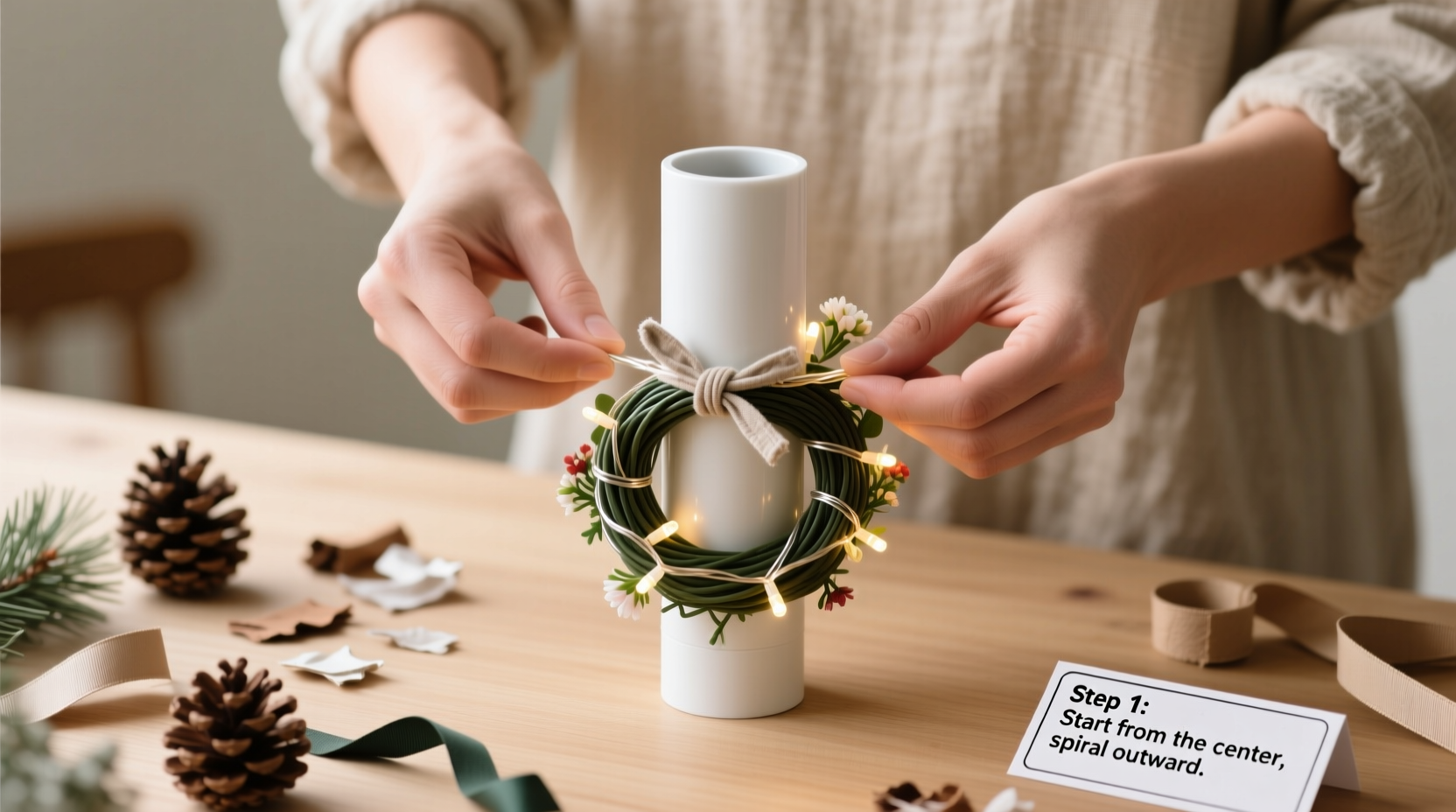
Garlands tangle due to three primary factors: random coiling, pressure from stacking, and lack of structural support during storage. When garlands are loosely wrapped or stuffed into bins, adjacent loops shift and interlock. Over time, even slight movement creates knots that tighten when pulled. Flexible materials like wire-edged ribbon or thin LED strands are especially prone to this.
A spool solves these issues by providing:
- Uniform tension – Each loop is wound at consistent tightness, reducing slippage.
- Rigid support – A solid core prevents compression, keeping loops separated.
- Controlled release – Unwinding begins at one end without snagging adjacent coils.
PVC pipe is ideal for homemade spools because it’s lightweight, weather-resistant, inexpensive, and available in multiple diameters. Unlike cardboard tubes (which crush) or wooden reels (which splinter), PVC maintains shape over years of seasonal use.
“Using a spool system cuts garland setup time by at least half. Once people see how fast it is to deploy a pre-wound strand, they never go back to stuffing them in boxes.” — Daniel Reeves, Holiday Display Coordinator, Midwest Events Group
Step-by-Step Guide: Building Your PVC Garland Spool
Creating a functional, durable spool takes less than 30 minutes and costs under $15. Follow this sequence for reliable results.
- Select the right PVC diameter – Choose a pipe with an outer diameter of at least 4 inches. Larger garlands (over 6 feet) benefit from 6-inch pipes. Avoid anything smaller than 3 inches, as tight curves increase stress on materials.
- Cut the pipe to length – Use a hacksaw or PVC cutter to slice a 12-inch section. This provides ample surface area for wrapping while remaining compact for storage.
- Add end caps for retention – Attach two slip-fit PVC end caps (matching the pipe size). These prevent loops from sliding off the sides during winding or transport.
- Drill a starter hole (optional) – Near one end, drill a ¼-inch hole through the pipe wall. Thread the garland’s starting end through it and tie a knot inside to anchor the first loop securely.
- Sand sharp edges – Smooth any rough cut areas with fine-grit sandpaper to protect delicate garland surfaces.
How to Wind Your Garland Correctly
The effectiveness of the spool depends entirely on proper winding technique. Rushing this step defeats the purpose. Take time to wrap slowly and deliberately.
Pre-Winding Preparation
Lay the garland out straight on a clean floor or table. Check for damage, broken bulbs, or loose embellishments. Repair or replace sections now rather than discovering issues mid-decorating.
Winding Process
- Secure the starting end either through the drilled hole or by taping it lightly to the center of the spool.
- Begin rotating the spool with one hand while guiding the garland with the other. Keep tension moderate—snug but not stretched.
- Ensure each new loop lies flat against the previous one, forming neat, adjacent coils without overlapping.
- For heavy or bulky garlands (like pine boughs with cones), wind in single layers and consider using wider spools (up to 18 inches long).
- Once fully wound, secure the final end with a twist tie, Velcro strap, or reusable zip tie. Avoid metal wires that can scratch or cut the material.
If the garland has directional elements—such as lights facing one side or asymmetrical decorations—always wind in the same rotational direction to maintain orientation.
Drying Natural Garlands First
If storing real evergreen or floral garlands, allow them to dry completely before winding. Moisture trapped in coils leads to mold and deterioration. Hang them in a garage or shed for 2–3 days in a well-ventilated space before spooling.
Storage Best Practices After Winding
Even perfectly wound garlands degrade if stored improperly. Environment and placement matter just as much as the spool itself.
| Do | Don’t |
|---|---|
| Store in a cool, dry place away from direct sunlight | Leave garlands in attics or damp basements |
| Place spools upright or horizontally on shelves | Stack heavy items on top of spooled garlands |
| Use clear plastic bins with lids for pest protection | Store near rodents or insects (e.g., garages with nests) |
| Check spools annually for cracks or warping | Reuse damaged PVC that could break during unwinding |
Elevate storage containers off concrete floors using plastic pallets or shelves. Concrete absorbs moisture, which can wick into bins and promote mildew growth—even in sealed units.
Long-Term Maintenance of PVC Spools
PVC lasts decades if maintained. Clean spools annually with mild soap and water. Inspect end caps for tight fit; replace if cracked. Consider painting or labeling spools by room or display area (e.g., “Front Porch,” “Stair Rail”) to streamline future decorating.
Real Example: A Church Decorating Team’s Transformation
The St. Anne’s Christmas Committee once spent nearly eight hours untangling garlands before their annual service. With 120 feet of mixed evergreen and light strands, volunteers wrestled with knots, broke several bulb sockets, and delayed setup by a full day.
In 2022, the team built six PVC spools using donated plumbing scraps. They assigned two members to carefully rewind each garland post-holiday, following the method described here. The next year, they deployed all garlands in under 90 minutes—with zero tangles and no damage.
“It changed everything,” said volunteer coordinator Maria Lopez. “We used to dread decoration day. Now we finish early and have time to adjust draping for better visual flow. The spools paid for themselves in saved labor.”
Checklist: Garland Storage Success
Follow this checklist each season to ensure lasting organization:
- ☐ Inspect garlands for wear or damage before storage
- ☐ Dry natural materials completely
- ☐ Select appropriately sized PVC spool (diameter ≥ 4”)
- ☐ Cut PVC to 12” length and attach end caps
- ☐ Anchor starting end securely (hole or tape)
- ☐ Wind slowly with even tension and no overlaps
- ☐ Secure final end with soft tie (Velcro or fabric)
- ☐ Label spool clearly with contents and length
- ☐ Store in ventilated, climate-stable location
- ☐ Recheck spools and ties before next use
Frequently Asked Questions
Can I use PVC spools for lighted garlands?
Yes—this method is especially effective for light strands. The rigid core prevents wire kinking and reduces strain on solder joints. Just ensure lights are cool before winding and avoid sharp bends near plug ends.
What if I don’t have tools to cut PVC?
Most hardware stores will cut PVC pipe to your specifications for free or a small fee. Bring a note specifying length (e.g., “Twelve 12-inch sections of 4-inch diameter PVC”). Alternatively, purchase pre-cut plumbing fittings or adapt pool noodles as temporary cores (though less durable).
Are there alternatives to PVC?
Yes, but with trade-offs. Cardboard tubes are cheap but compress over time. Wooden reels work well but are heavier and cost more. ABS plastic is durable but harder to modify. PVC remains the best balance of cost, durability, and ease of customization.
Conclusion: Invest Time Once, Save Hours Every Year
The ritual of holiday decorating should inspire joy, not frustration. Spending one focused hour building PVC spools and properly winding your garlands pays exponential dividends each season. No more wasted time untangling, fewer replacements due to damage, and faster, more elegant setups become the norm.
Whether you’re managing a single strand for your mantel or coordinating displays for an entire community, this method scales effortlessly. The materials are affordable, the process is simple, and the results are immediately noticeable.




 浙公网安备
33010002000092号
浙公网安备
33010002000092号 浙B2-20120091-4
Comments
No comments yet. Why don't you start the discussion?