
A well-organized dresser doesn’t just look better—it saves time, reduces decision fatigue, and extends the life of your clothing. Yet most people still pile or crumple garments into drawers, only to face wrinkled shirts and buried socks every morning. The solution lies in mastering professional folding techniques that optimize space, maintain visibility, and make getting dressed effortless. This guide reveals the exact methods used by hotel staff, military personnel, and organization experts to keep drawers tidy, accessible, and efficient.
The Problem with Traditional Folding
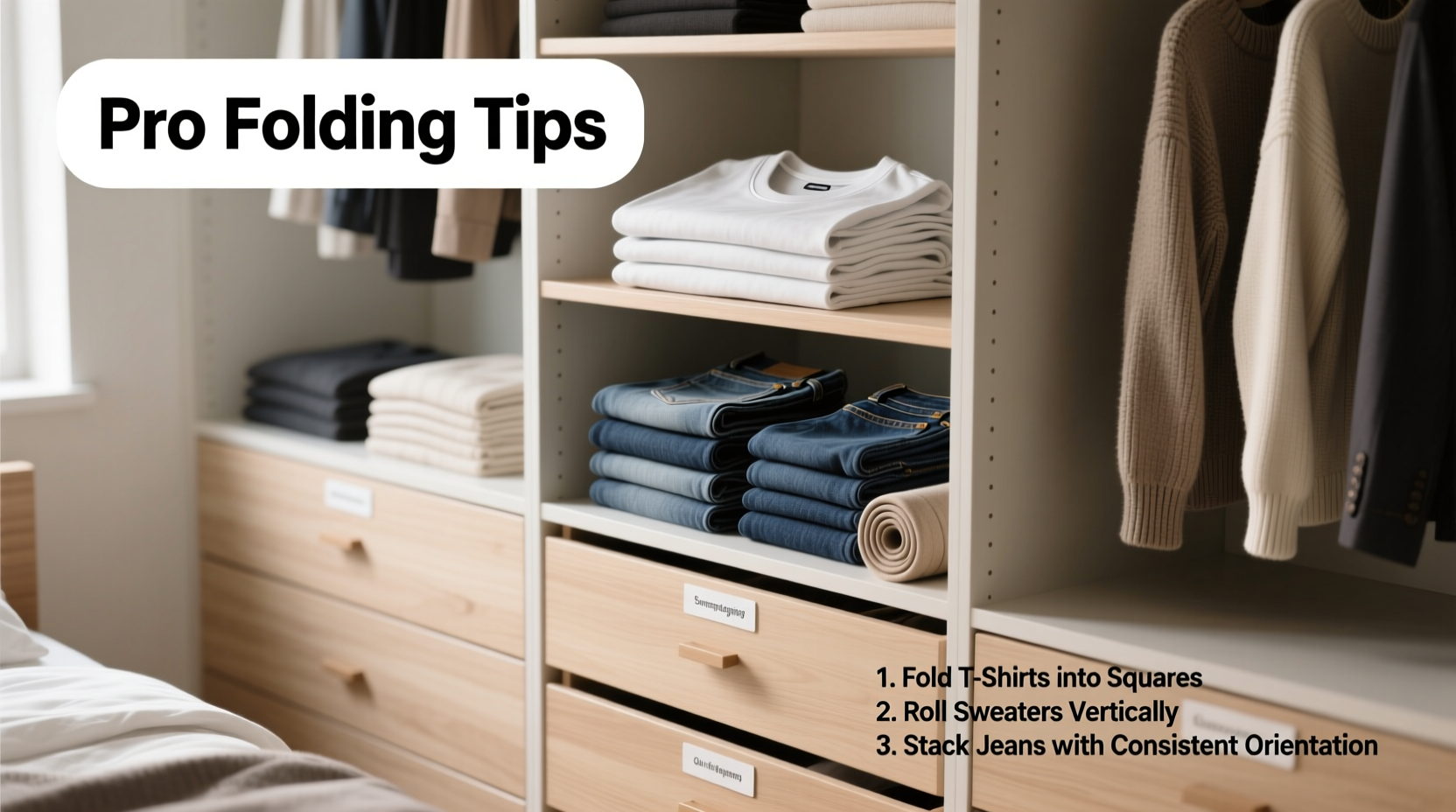
Most people fold clothes using outdated methods: rolling sleeves, stacking items haphazardly, or simply stuffing them into drawers. These habits lead to several issues:
- Lost items: Socks, undershirts, and accessories disappear under bulkier pieces.
- Wrinkles and creases: Improper folds create unnecessary pressure points.
- Poor visibility: Only the top layer is visible, forcing you to dig through layers.
- Underutilized space: Gaps and uneven stacks waste valuable drawer real estate.
Professional folding isn’t about perfectionism—it’s about function. When done correctly, each garment stands vertically or lies flat in a way that allows you to see everything at a glance, access any piece without disturbing others, and protect fabric integrity over time.
The KonMari Fold: Vertical Visibility System
Popularized by organizing expert Marie Kondo, the vertical folding method revolutionizes drawer organization. Instead of stacking clothes flat, they’re folded into compact rectangles that stand upright, allowing full visibility of every item.
This technique works best for t-shirts, pajamas, underwear, and casual wear. Here’s how to do it:
- Lay the garment flat on a smooth surface.
- Fold one side inward about one-third of the way.
- Repeat with the opposite side so the two folds meet in the center.
- Fold the bottom up about one-third, then fold the top down to create a tight rectangle.
- Place the folded item upright in the drawer, facing forward.
The result? A “file drawer” effect where each piece is visible like books on a shelf. No more digging. No more mess.
“Folding clothes vertically transforms drawers from storage units into curated systems. You see what you own, use what you need, and eliminate duplicates.” — Sarah Lin, Professional Organizer & Author of *Effortless Order*
Fabric-Specific Folding Techniques
Not all fabrics respond the same way to folding. Delicate materials can crease, heavy knits lose shape, and dress shirts require precision. Tailoring your folding method to fabric type ensures longevity and presentation.
| Fabric Type | Recommended Fold | Avoid |
|---|---|---|
| Cotton (T-shirts, Underwear) | KonMari vertical fold | Rolling loosely or stacking horizontally |
| Wool & Knits (Sweaters, Cardigans) | Flat fold with acid-free tissue between layers | Hanging long-term (stretches shoulders) |
| Silk & Blouses | Butterfly fold or padded flat fold | Folding sharply at collar or cuffs |
| Denim (Jeans, Jackets) | Half-fold vertically or rolled for travel | Over-folding thick seams causing bulk |
| Dress Shirts | Military roll or board-assisted flat fold | Random folding leading to collar damage |
For example, wool sweaters should never be hung for extended periods—the weight pulls fibers downward, distorting the shape. Instead, fold them flat and place tissue paper between layers to prevent pilling and friction.
Step-by-Step: Master the Military Roll for Travel and Space Saving
Used by armed forces worldwide, the military roll maximizes packing efficiency while minimizing wrinkles. It’s ideal for t-shirts, pants, and lightweight jackets when drawer space is limited or during travel.
How to perform the military roll:
- Lay the garment flat—preferably on a bed or table.
- Smooth out all wrinkles with your hands.
- Fold the item in half lengthwise (sleeves in for shirts, legs together for pants).
- Starting from the bottom hem, tightly roll upward toward the top.
- Press gently as you roll to eliminate air pockets.
- Store vertically in drawer compartments or stack horizontally if needed.
This method compresses clothing significantly, prevents shifting in drawers, and makes items easy to pull out individually. Rolled clothes also resist wrinkles better than folded ones because there are no sharp creases.
Drawer Optimization: Layout and Zoning Strategy
Folding is only half the battle. How you arrange folded clothes determines long-term success. Think of your drawer as a modular system with designated zones.
Create functional zones based on frequency and category:
- Front zone: Daily essentials (underwear, socks, favorite t-shirts).
- Middle zone: Occasional wear (loungewear, secondary work shirts).
- Back zone: Seasonal or rarely used items (holiday pajamas, formal blouses).
Use drawer dividers or small boxes made from recycled cardboard to maintain separation. Avoid overfilling—leave about 1 inch of clearance at the top to allow smooth opening and closing.
If your drawer lacks built-in compartments, consider adjustable acrylic organizers or repurpose shoebox inserts. The goal is to prevent migration—where one item’s movement disrupts the entire layout.
Mini Case Study: From Chaos to Clarity in One Weekend
Jamie, a graphic designer and parent of two, struggled with a perpetually messy dresser. Mornings were chaotic—socks vanished, favorite shirts were buried, and laundry piled up due to re-wearing \"lost\" but actually misfolded items.
Over a single Saturday, Jamie applied the KonMari fold to t-shirts and underwear, used the military roll for gym clothes, and installed DIY cardboard dividers in three main drawers. Within a week, morning routines shortened by 7 minutes on average. More importantly, Jamie reported feeling less stressed and more in control of daily choices.
“I can now see every pair of socks I own,” Jamie said. “It sounds small, but not having to dig through a mess changes how I start my day.”
Checklist: Fold Like a Pro in 5 Steps
Follow this actionable checklist to transform your drawer organization permanently:
- Empty all drawers completely and wipe them down.
- Sort clothes by type and fabric—group t-shirts, pants, underwear, etc.
- Apply the appropriate fold: KonMari for cottons, military roll for travel items, flat fold for knits.
- Assign zones in each drawer based on usage frequency.
- Install dividers or use containers to maintain structure.
Reassess every 3–4 months, especially during seasonal transitions. Remove worn-out items and refold remaining pieces to maintain order.
Common Mistakes That Waste Space
Even with good intentions, many people sabotage their efforts with subtle errors. Watch out for these pitfalls:
- Folding too loosely: Bulky folds create gaps and instability.
- Ignoring drawer depth: Deep drawers encourage vertical stacking instead of front-to-back zoning.
- Mixing categories: Combining underwear with scarves or belts creates visual clutter.
- Skipping maintenance: Failing to refold after laundry resets progress.
One frequent issue is overestimating capacity. A drawer that looks “half-full” may actually be inefficiently packed. If you can’t slide your hand smoothly across the top layer, it’s overcrowded.
FAQ: Your Folding Questions Answered
Can I mix folded and rolled clothes in the same drawer?
Yes—many people combine vertical folds for shirts and rolls for pants. Just separate them with a divider to maintain clarity. The key is consistency within each category.
How often should I reorganize my drawers?
Every season is ideal. However, a quick refresh after laundry day—refolding any collapsed items—keeps systems intact. Major overhauls should happen 3–4 times per year.
Is folding better than hanging for most clothes?
For drawers, yes. Hanging is best for structured garments like suits and dresses. But for everyday wear, folding preserves shape, saves closet space, and improves visibility. Most wardrobe experts recommend reserving hanging for outerwear and formal attire only.
Final Thoughts: Turn Routine Into Ritual
Folding clothes isn’t just housekeeping—it’s an act of self-respect. When you take a few extra seconds to fold properly, you invest in smoother mornings, longer-lasting garments, and a calmer mindset. The techniques used by professionals aren’t secret or complicated; they’re systematic, repeatable, and deeply practical.
Start with one drawer. Master the vertical fold. Add a divider. Notice how much faster you find what you need. Then expand. Over time, this small habit compounds into a lifestyle of clarity and efficiency.




 浙公网安备
33010002000092号
浙公网安备
33010002000092号 浙B2-20120091-4
Comments
No comments yet. Why don't you start the discussion?