
Most people spend years folding clothes the same way—piling them in drawers, cramming shirts into tight spaces, and constantly battling wrinkles or disorganization. But what if there was a better way? The KonMari Method, developed by Japanese organizing consultant Marie Kondo, transforms not just how you fold, but how you relate to your belongings. At its core is a revolutionary folding technique that saves space, reduces clutter, and brings clarity to your daily routine. When done correctly, this method turns your wardrobe into a calm, accessible space where every item is visible and valued.
The secret isn’t just in folding—it’s in intention. Each fold becomes an act of mindfulness, reinforcing gratitude for the clothes you own and helping you maintain a curated closet. More than a cleaning hack, the KonMari fold is part of a larger philosophy: keep only what sparks joy, store items vertically, and treat your possessions with care. This guide breaks down exactly how to fold clothes like a pro using the KonMari method—step by step, garment by garment—so you can achieve lasting order in your home.
Why the KonMari Fold Works Better Than Traditional Folding
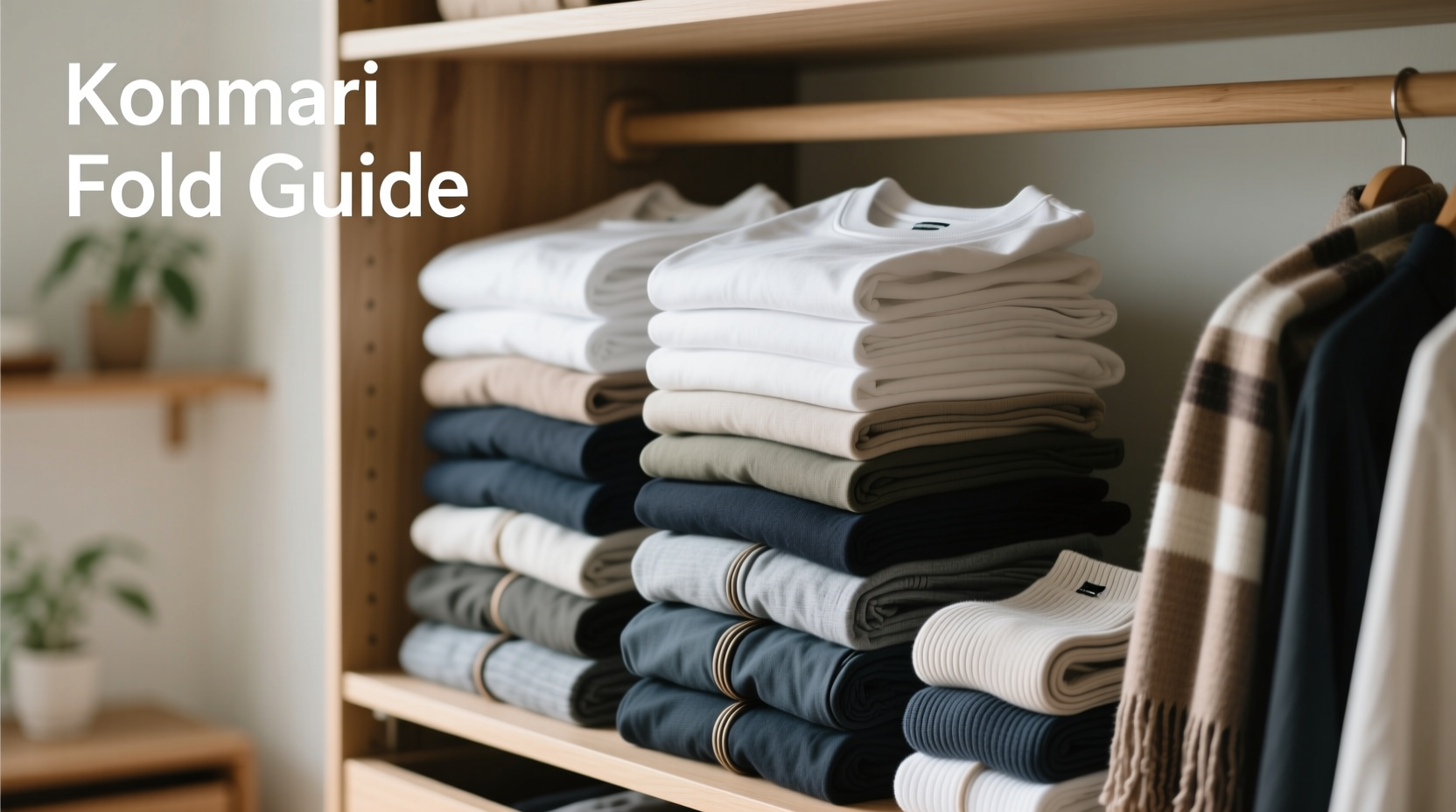
Traditional folding often leads to stacks of clothes buried beneath one another. You pull out one shirt, and the entire pile collapses. The KonMari Method eliminates this chaos by encouraging vertical storage. Instead of stacking clothes flat, they stand upright like files in a drawer, making each piece fully visible at a glance.
This visibility does more than make selection easier—it reinforces awareness. When you see every top, every pair of socks, you’re less likely to forget what you own or buy duplicates. It also discourages over-purchasing because your drawer reflects reality, not a hidden mess beneath layers of fabric.
Marie Kondo emphasizes that how you store your clothes affects your mindset. “The objective of cleaning is not just to clean, but to feel happiness living within your space,” she writes in *The Life-Changing Magic of Tidying Up*. The KonMari fold supports this by creating order that feels intentional and peaceful.
“The objective of cleaning is not just to clean, but to feel happiness living within your space.” — Marie Kondo, *The Life-Changing Magic of Tidying Up*
Step-by-Step Guide to the KonMari Fold
The KonMari fold follows a consistent pattern across most garments: rectangular shape, compact size, and self-supporting structure. Here’s how to master it for everyday clothing types.
Folding a T-Shirt (or Any Casual Top)
- Lay the shirt face-up on a flat surface, smoothing out wrinkles.
- Fold one side inward so the sleeve edge aligns with the center of the back. Repeat on the other side.
- Fold the bottom up about one-third of the way, tucking any excess fabric neatly.
- Fold the top down, overlapping the bottom fold slightly to create a compact rectangle.
- Stand the folded shirt upright in your drawer, front-facing outward.
Folding Long-Sleeve Shirts and Button-Ups
These require extra attention to prevent bulkiness.
- Follow the same side folds as with a t-shirt.
- Instead of folding sleeves back, fold them straight inward after the side folds to avoid lumps.
- Fold the bottom up higher—about halfway—to balance proportions.
- Fold the top down to meet the bottom edge.
- If storing in a drawer, place vertically. For dress shirts you wear frequently, consider hanging—but only if folding causes creases that affect wearability.
Folding Pants and Jeans
Unlike traditional folding (where pants are folded in half or thirds), KonMari uses a width-wise approach.
- Lay pants flat, legs aligned.
- Fold one leg toward the center, then the other, so both outer seams meet in the middle.
- Fold the waistband down to the hem, creating a compact rectangle.
- For longer pants, fold once more from bottom to top.
- Store standing upright, preferably by type (jeans, chinos, etc.) and color.
Folding Underwear and Socks
Small items benefit the most from vertical organization.
- Socks: Lay flat, match pairs, roll from toe to cuff. Stand rolled socks upright in a small box or compartment.
- Underwear: Fold briefs or boxers into neat rectangles. For bras, lay flat, fold straps inward, and stack gently—never crush.
Do’s and Don’ts of KonMari Folding
| Do’s | Don’ts |
|---|---|
| Fold all similar items the same way for consistency | Stack folded clothes horizontally like pancakes |
| Store items vertically so you can see everything | Overfill drawers to the point where folds lose shape |
| Sort by category first (e.g., all tops together) | Mix different clothing types in the same compartment |
| Use drawer dividers made from recycled boxes | Invest in rigid organizers before testing the system |
| Fold mindfully, acknowledging each item | Rush through folding without focus |
A Real Example: Transforming a Cluttered Drawer
Sarah, a busy graphic designer from Portland, had long struggled with her dresser. Her t-shirts were buried under sweaters, socks disappeared into corners, and she routinely wore the same three shirts because finding others felt overwhelming. After reading Marie Kondo’s book, she decided to try the KonMari Method on one drawer at a time.
She started by removing everything and sorting by category. She held each item, asking if it sparked joy. Out went two oversized band tees she hadn’t worn in years and a wrinkled hoodie that no longer fit. Then, she folded each remaining piece using the KonMari technique—t-shirts, tank tops, and sleepwear all transformed into neat, upright rectangles.
She used cut-down cereal boxes to create simple dividers. When finished, she opened her drawer to find every shirt clearly visible, colors grouped harmoniously. “It felt like I’d reclaimed my closet,” she said. “Now I actually enjoy getting dressed. I see what I have, and nothing gets forgotten.”
Within a week, she applied the method to her entire wardrobe. The change wasn’t just visual—it reduced decision fatigue and helped her appreciate her clothing more deeply.
Checklist: Mastering the KonMari Fold
Follow this checklist to ensure you're applying the method correctly:
- ☐ Empty your drawer completely and sort clothes by category (tops, bottoms, underwear, etc.)
- ☐ Hold each item and ask: Does this spark joy? Keep only what truly serves you.
- ☐ Lay each garment flat on a smooth surface before folding.
- ☐ Fold into a compact rectangle that can stand upright without support.
- ☐ Store items vertically, facing forward, like books on a shelf.
- ☐ Group similar items together (e.g., short-sleeve vs. long-sleeve tops).
- ☐ Use DIY dividers (cardboard, shoeboxes) to maintain sections.
- ☐ Maintain the system by refolding any misshapen items weekly.
Frequently Asked Questions
Can I use the KonMari fold for thick sweaters?
Yes, but with caution. Heavy knits may slump if stored upright. Fold them using the standard KonMari method, but consider placing them in a shallow drawer or on a shelf. Avoid stacking too many high-weight items vertically. Alternatively, fold and lay flat in a single layer, still facing forward for visibility.
What if my drawer is too deep?
If your drawer depth makes vertical folding impractical, use a second divider to create front and back rows. Place frequently used items in the front row, seasonal or occasional pieces behind. The goal is visibility—not cramming more in, but seeing what you own.
Do I need special containers or bins?
No. One of the strengths of the KonMari Method is its accessibility. Start with what you have: repurpose shoeboxes, tissue boxes, or old packaging. Only invest in organizers once you’ve determined your ideal layout. Often, simple paperboard dividers work perfectly.
Expert Insight: Why Vertical Folding Changes Behavior
Professional organizers and psychologists alike note that visibility influences behavior. Dr. Emily Tran, a behavioral researcher specializing in habit formation, explains: “When items are hidden, they become abstract. But when you see ten identical black t-shirts standing in a row, you recognize abundance. That awareness naturally curbs unnecessary shopping.”
“When you see what you own, you stop buying what you don’t need.” — Dr. Emily Tran, Behavioral Researcher
The KonMari fold leverages this principle. By making every garment visible, it fosters accountability and appreciation. It’s not just about neatness—it’s about cultivating a mindful relationship with consumption and space.
Conclusion: Turn Folding Into a Ritual of Care
Folding clothes like a pro using the KonMari method isn’t about achieving Instagram-perfect drawers—it’s about creating a sustainable system that respects your time, your space, and your belongings. Once mastered, the fold takes seconds and delivers lasting benefits: faster mornings, fewer laundry repeats, and a wardrobe that feels light and intentional.
The real magic lies in consistency. Do it once, and it’s a novelty. Do it daily, and it becomes a ritual of care—a small act of respect for the things that clothe and comfort you. Whether you start with a single sock drawer or overhaul your entire closet, the process invites clarity and calm.




 浙公网安备
33010002000092号
浙公网安备
33010002000092号 浙B2-20120091-4
Comments
No comments yet. Why don't you start the discussion?