
Folding fitted sheets has long been considered one of the great household mysteries—right up there with untangling necklaces or finding matching socks. For many, it’s a source of mild dread, often resulting in crumpled heaps stuffed into linen closets. But it doesn’t have to be that way. With the right technique, anyone can fold a fitted sheet smoothly and consistently, transforming what feels like chaos into order. The secret isn’t magic; it’s method. Once you understand the logic behind the folds, you’ll wonder why you ever struggled.
This guide breaks down the process into clear, repeatable steps, shares expert insights, and offers practical tips so you can fold fitted sheets like a professional—every single time. Whether you’re preparing for storage, organizing your closet, or simply aiming to elevate your laundry game, this is the definitive solution to a common household challenge.
The Science Behind the Struggle
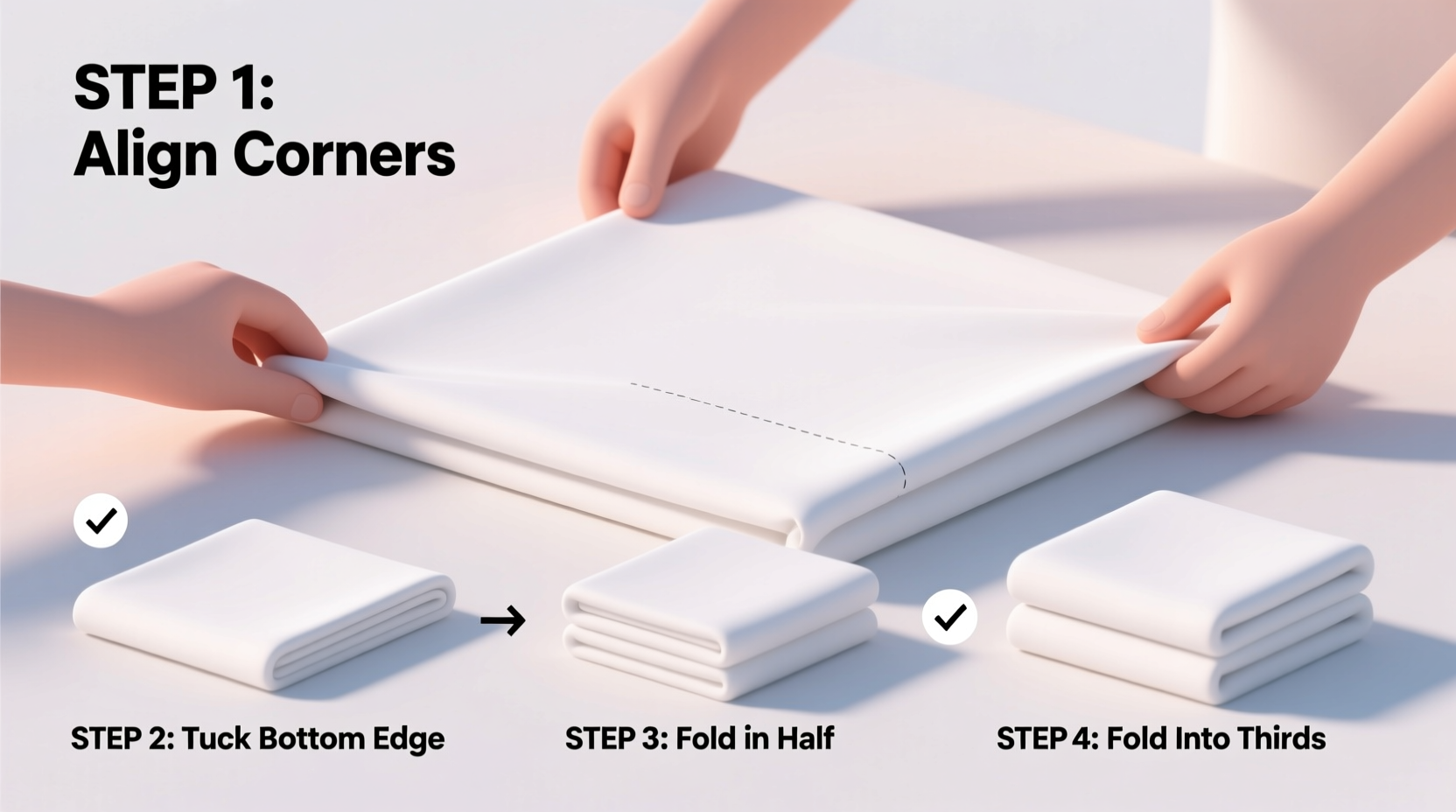
Fitted sheets are uniquely difficult to fold because of their elastic edges and three-dimensional shape. Unlike flat sheets, which lie flush and predictable, fitted sheets have corners designed to stretch over mattress corners. This elasticity creates tension, making them resistant to neat folding. When tossed into a pile, they trap air and resist compression, leading to bulky, uneven bundles.
The key to overcoming this lies in neutralizing the elasticity first. By aligning the corners and smoothing out the tension, you convert the sheet from a 3D object back into a 2D surface—one that behaves more like a flat sheet. This principle is used by hotel housekeeping staff, linen professionals, and organized households worldwide.
“Folding fitted sheets isn’t about strength—it’s about structure. Control the corners, and you control the sheet.” — Maria Thompson, Professional Organizer & Home Efficiency Consultant
Step-by-Step Guide: Folding a Fitted Sheet Like a Pro
The following method is proven, efficient, and works for all standard sizes—from twin to king. It takes less than two minutes once mastered and results in a compact, rectangular fold that stacks neatly with other linens.
- Start with the inside out. Hold the fitted sheet by two adjacent corners of the elastic edge. Turn it inside out by flipping one hand over the other so the printed or smooth side faces inward. This hides the messy elastic and sets up clean outer edges later.
- Match the top two corners. Still holding the first two corners, reach inside with your free hands and locate the opposite two corners (the bottom ones). Pinch them together so all four corners are held in two hands—two per hand. Align them precisely so the elastic edges nest together.
- Lay it flat and smooth. Place the sheet on a large, flat surface like a bed or table. Gently lower it down while keeping the corners matched. Use your palms to smooth out wrinkles from the center outward. At this point, the sheet should resemble a rectangle with all elastic tucked neatly along the edges.
- Fold in the sides. Take the left and right edges and fold them toward the center, about one-third of the way in. Smooth each fold as you go. This reduces the width and begins forming a neat rectangle.
- Create thirds or quarters. Fold one side over the other like a business letter, creating a narrower rectangle. Then, fold the top and bottom toward the center—or fold the entire piece in half or into thirds—until you achieve a compact square or rectangle.
- Store immediately. Place the folded sheet directly into your linen closet or drawer. If stacking, ensure each sheet is uniformly folded to prevent shifting and bulging.
Common Mistakes That Lead to Frustration
Even with instructions, people often revert to old habits that sabotage success. Recognizing these pitfalls is half the battle.
- Skipping the inside-out step. Folding with the wrong side out leads to visible elastic edges and an unbalanced look.
- Not matching all four corners. Misaligned corners create lumps and uneven folds that won’t stack properly.
- Folding on a small surface. A cramped space prevents proper smoothing and alignment. Always use a bed, dining table, or floor if needed.
- Rushing through the process. Trying to fold quickly before mastering the technique leads to crumpling. Slow, deliberate movements yield better results.
- Storing unfolded or partially folded. Half-efforts accumulate and make future folding harder due to deep-set creases.
| Do’s | Don’ts |
|---|---|
| Turn the sheet inside out first | Leave elastic exposed on the outside |
| Match all four corners precisely | Estimate corner placement |
| Smooth the fabric after each fold | Allow wrinkles to persist |
| Fold on a large, flat surface | Try folding in mid-air or on a chair |
| Practice regularly until muscle memory kicks in | Give up after one failed attempt |
Real-Life Example: From Chaos to Closet Confidence
Sarah, a mother of three in Portland, used to avoid folding fitted sheets altogether. “I’d just ball them up and shove them in the closet,” she admits. “Eventually, I couldn’t find matching sets, and everything looked messy.” After watching a quick tutorial based on this method, she decided to try it during her weekly laundry routine.
Her first attempt took nearly five minutes and ended in mild frustration. But she persisted. By the third week, she could fold a queen-sized fitted sheet in under 90 seconds. “Now my linen closet looks like something out of a magazine,” she says. “My kids even started doing it themselves. It’s become a little family ritual.”
Sarah now stores all her bedding sets together—flat sheet, fitted sheet, and pillowcases—all folded uniformly and tucked into matching pillowcases for easy access. The change didn’t just improve aesthetics; it saved time during sheet changes and reduced replacement costs from lost or damaged linens.
Expert Tips for Long-Term Success
Beyond the basic fold, there are advanced strategies that turn competent folding into lifelong habit.
- Label by size. Use discreet fabric tags or colored stitching to identify sheet sizes at a glance. This prevents confusion when rotating seasonal linens.
- Wash and fold together. Don’t let fitted sheets sit crumpled in the dryer basket. Fold them immediately after drying to prevent stubborn creases.
- Use consistent dimensions. Aim for all folded sheets to be roughly the same size—about 10x12 inches—so they stack evenly in shelves or drawers.
- Teach others in the household. Share the method with family members or roommates. Uniform folding standards keep everyone on the same page.
“The real win isn’t just a neat closet—it’s the reduction of daily friction. Small efficiencies compound over time.” — David Lin, Habit Formation Coach & Author of *The Organized Mind*
Quick Checklist: Master Your Next Fold
Keep this checklist handy until the process becomes second nature:
- ☐ Lay the sheet on a large, flat surface
- ☐ Turn it inside out (elastic facing in)
- ☐ Grab two adjacent corners in one hand
- ☐ Find and match the opposite two corners with the other hand
- ☐ Place the sheet down smoothly, corners aligned
- ☐ Smooth out wrinkles from center to edges
- ☐ Fold sides inward to form a rectangle
- ☐ Fold top and bottom toward center (or in thirds)
- ☐ Store immediately in designated space
- ☐ Repeat for consistency across all sets
Frequently Asked Questions
Can this method work with deep-pocket or extra-thick sheets?
Absolutely. The technique remains the same regardless of pocket depth. The key is ensuring all four corners are fully engaged and aligned. Thicker materials may require extra smoothing, but the folding logic holds true.
What if I don’t have a big table or bed available?
If space is limited, try folding on the floor. Alternatively, hold the sheet vertically in front of you, align the corners, and gently lower it onto a smaller surface while maintaining tension. While not ideal, it can still produce acceptable results with practice.
How do I keep my folded sheets from unraveling?
Ensure each fold is crisp and pressed down firmly. Avoid over-handling after folding. For added security, store them in labeled bins or cloth bags. Some people use ribbon ties or fabric bands to secure stacks, though this is optional for most households.
Conclusion: Transform a Tiny Task Into Lasting Order
Folding fitted sheets isn’t just about appearance—it’s about reclaiming control over the small details that shape daily life. What seems like a minor chore actually reflects a broader principle: systems beat willpower. Once you replace guesswork with a reliable method, the task stops being frustrating and starts feeling satisfying.
You don’t need special tools, expensive organizers, or perfect conditions. You just need one clear system and the willingness to try it a few times. Each successful fold builds confidence. Soon, you’ll reach for fitted sheets without hesitation, knowing exactly what to do.




 浙公网安备
33010002000092号
浙公网安备
33010002000092号 浙B2-20120091-4
Comments
No comments yet. Why don't you start the discussion?