
Folding a fitted sheet has long been considered one of the most frustrating household tasks. Unlike flat sheets or pillowcases, fitted sheets come with elastic edges, uneven corners, and a tendency to twist into an unmanageable ball the moment you try to smooth them out. But it doesn’t have to be this way. With the right technique, a bit of patience, and consistent practice, you can fold fitted sheets neatly—every single time. This guide breaks down the process into simple, repeatable steps, shares expert insights, and includes practical tips to help you finally conquer this laundry room challenge.
The Problem with Fitted Sheets
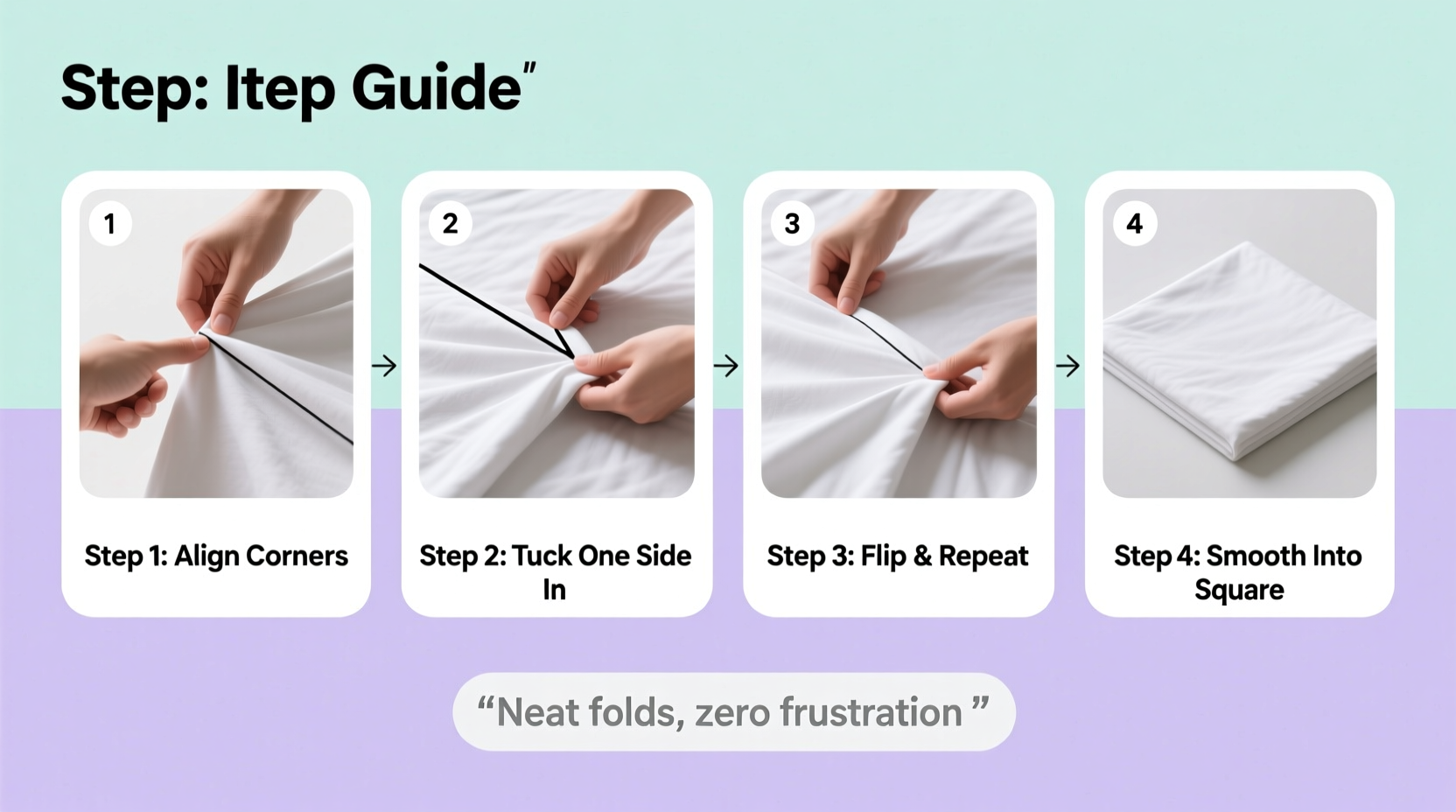
Fitted sheets are designed for function, not storage. Their elasticized edges grip tightly around mattress corners, which makes them essential for a secure bed setup—but also difficult to handle when folding. Most people attempt to fold them like flat sheets, leading to lopsided bundles, wrinkled fabric, and eventual surrender into a crumpled heap at the back of the linen closet.
The real issue isn’t the sheet itself—it’s the lack of a reliable method. Without a structured approach, even experienced homemakers can end up with a tangled mess. The good news? There’s a proven system that transforms chaos into order. It starts with understanding the anatomy of the sheet and ends with a compact, tidy rectangle ready for storage.
Step-by-Step: How to Fold a Fitted Sheet Neatly
The key to folding a fitted sheet lies in reversing its natural shape. Instead of fighting the elasticity, you work with it by tucking the corners inward and aligning the seams. Follow these steps carefully, and you’ll achieve a clean, professional fold consistently.
- Hold the sheet with the elastic facing you. Pick up the fitted sheet by two adjacent corners on one short side. Make sure the elastic edge is facing toward you, not away. These will be your “front” corners.
- Turn one corner inside out and place it over the other. Take one hand and flip the corner in your hand so that it turns inside out. Then, place it directly over the other corner. The right sides of the fabric should now be touching, and the elastic edges should nest together.
- Repeat with the opposite two corners. Move to the other short side of the sheet and repeat the process: grab both corners, turn one inside out, and place it over the other. At this point, all four corners are paired, and the elastic edges are hidden inside.
- Lay the sheet flat on a surface. Place the folded sheet on a bed, table, or any flat surface. Smooth it out gently so that it lies as flat as possible. You should now see a rectangular shape with two open sides.
- Fold in the sides. Take the left and right edges and fold them toward the center, about one-third of the way in. This helps create clean edges and prepares the sheet for final folding.
- Fold lengthwise into thirds or quarters. Starting from one end, fold the sheet into neat sections—either three or four folds, depending on the size. Keep the edges aligned and press down lightly with your hands to maintain crispness.
- Store immediately. Once folded, place the sheet directly into your linen closet. Avoid leaving it on the bed or chair where it might unfold or wrinkle.
Expert Insight: Why Proper Folding Matters
It’s easy to dismiss proper sheet folding as a minor detail, but experts emphasize its long-term benefits. According to textile care specialist Dr. Lena Peterson, \"Neat folding isn't just about aesthetics—it's about fabric preservation. When sheets are stored haphazardly, they develop deep creases and stress points that weaken fibers over time.\"
“Taking five extra minutes to fold your fitted sheets correctly can extend their usable life by months, even years. It reduces tangling, minimizes wrinkles, and prevents unnecessary wear during storage.” — Dr. Lena Peterson, Textile Preservation Specialist
Proper folding also improves efficiency. When all your linens are uniformly folded, you can stack them neatly, maximize shelf space, and quickly identify what you need without pulling everything out. For households with limited storage, this small habit makes a significant difference.
Do’s and Don’ts of Fitted Sheet Folding
| Do | Don’t |
|---|---|
| Fold while slightly damp to reduce stiffness | Try to fold when completely dry and stiff |
| Use a flat, stable surface like a bed or table | Fold in mid-air or while holding it |
| Pair matching sets before folding | Fold mismatched sheets separately |
| Press folds gently with your palms | Rush the process and skip smoothing |
| Store folded sheets vertically (like files) | Stack too high, causing collapse |
A Real-Life Example: From Chaos to Order
Sarah Thompson, a mother of three in Portland, Oregon, used to dread laundry day—not because of the washing, but because of the folding. “I’d throw the fitted sheets into a ball and shove them into the closet,” she admits. “Eventually, I had a drawer full of wadded-up linens that looked like someone had given up halfway through the job.”
After watching a demonstration video based on the method described above, Sarah decided to give it a try. She started with her twin-sized guest bed sheet, practicing slowly and using her dining table as a workspace. The first few attempts were imperfect, but by the fourth try, she managed a clean rectangle. “It felt like solving a puzzle,” she says. “Now, I teach my kids how to do it. Our linen closet looks like something out of a catalog.”
More than just visual improvement, Sarah noticed fewer wrinkles when making beds and less need to rewash sheets due to mildew smells caused by poor airflow in stuffed drawers. “It’s amazing how much difference one small change can make.”
Tips for Long-Term Success
Mastery comes with repetition. To ensure you build a lasting habit, consider these additional strategies:
- Fold immediately after drying. Don’t let sheets sit in the dryer or basket. Warm, slightly damp fabric is easier to manipulate and less prone to static cling.
- Keep a folding station. Dedicate a section of your laundry room or bedroom as a folding area. A clear, clutter-free space encourages consistency.
- Label or color-code sets. Use small fabric tags or store matching sheet sets together in breathable cotton bags. This eliminates confusion and keeps pairs intact.
- Teach others in the household. Share the method with family members or roommates. Uniform folding standards prevent one person from undoing everyone else’s efforts.
- Be patient with yourself. It may take several tries to get it right. Even seasoned organizers needed practice.
Frequently Asked Questions
Can I fold a fitted sheet without a flat surface?
While possible, it’s significantly harder. Folding on a bed, table, or countertop provides stability and allows you to smooth and align edges properly. Attempting to fold in mid-air often results in misalignment and frustration.
What if my sheet has extra-deep pockets?
Deep-pocket sheets require a bit more attention, but the same principles apply. After tucking the corners, take extra time to smooth out the excess fabric along the sides before folding. You may need to adjust the width of your side folds to accommodate the bulk.
Is there a faster way to fold fitted sheets?
Some people use alternative methods, such as rolling instead of folding, but these often sacrifice neatness for speed. The technique outlined here balances efficiency with precision. With practice, most people can complete the fold in under two minutes.
Final Checklist: Fold Fitted Sheets Like a Pro
Use this checklist each time you fold a fitted sheet until the process becomes second nature:
- Grasp two adjacent corners on the same short edge
- Turn one corner inside out and place it over the other
- Repeat with the opposite two corners
- Lay the sheet flat on a surface, elastic edges tucked inward
- Smooth out wrinkles and align edges
- Fold side edges toward the center
- Fold lengthwise into a neat rectangle
- Store immediately in an organized linen closet
Conclusion: End the Frustration for Good
Folding fitted sheets doesn’t have to be a source of stress or avoidance. By applying a consistent, logical method, you transform a chaotic task into a satisfying routine. The result isn’t just a tidy linen closet—it’s greater confidence in your daily habits, improved fabric care, and a sense of accomplishment in mastering a skill many still find elusive.
Start today. Pull out one fitted sheet and walk through the steps slowly. Repeat it the next time, and the next. Soon, you won’t need instructions—you’ll do it instinctively. And when someone asks how you keep your linens so perfectly arranged, you’ll smile and say, “It’s easier than you think.”




 浙公网安备
33010002000092号
浙公网安备
33010002000092号 浙B2-20120091-4
Comments
No comments yet. Why don't you start the discussion?