
Folding a fitted sheet is one of the most universally dreaded household tasks. Unlike flat sheets, fitted ones come with elastic edges, contorted corners, and a mind of their own—seemingly designed to resist order. Most people resort to crumpling them into loose bundles, tossing them haphazardly into linen closets, or simply avoiding the task altogether. But there’s a better way. With a consistent, logical method, you can fold fitted sheets neatly every time, transforming chaos into crisp rectangles that stack beautifully and save space.
The secret isn’t strength or speed—it’s technique. By understanding the structure of the sheet and following a repeatable sequence, even the most stubborn deep-pocketed king-size sheet can be tamed. This guide breaks down the process into clear steps, shares pro tips, and offers practical solutions for long-term linen organization.
Why Folding Fitted Sheets Matters
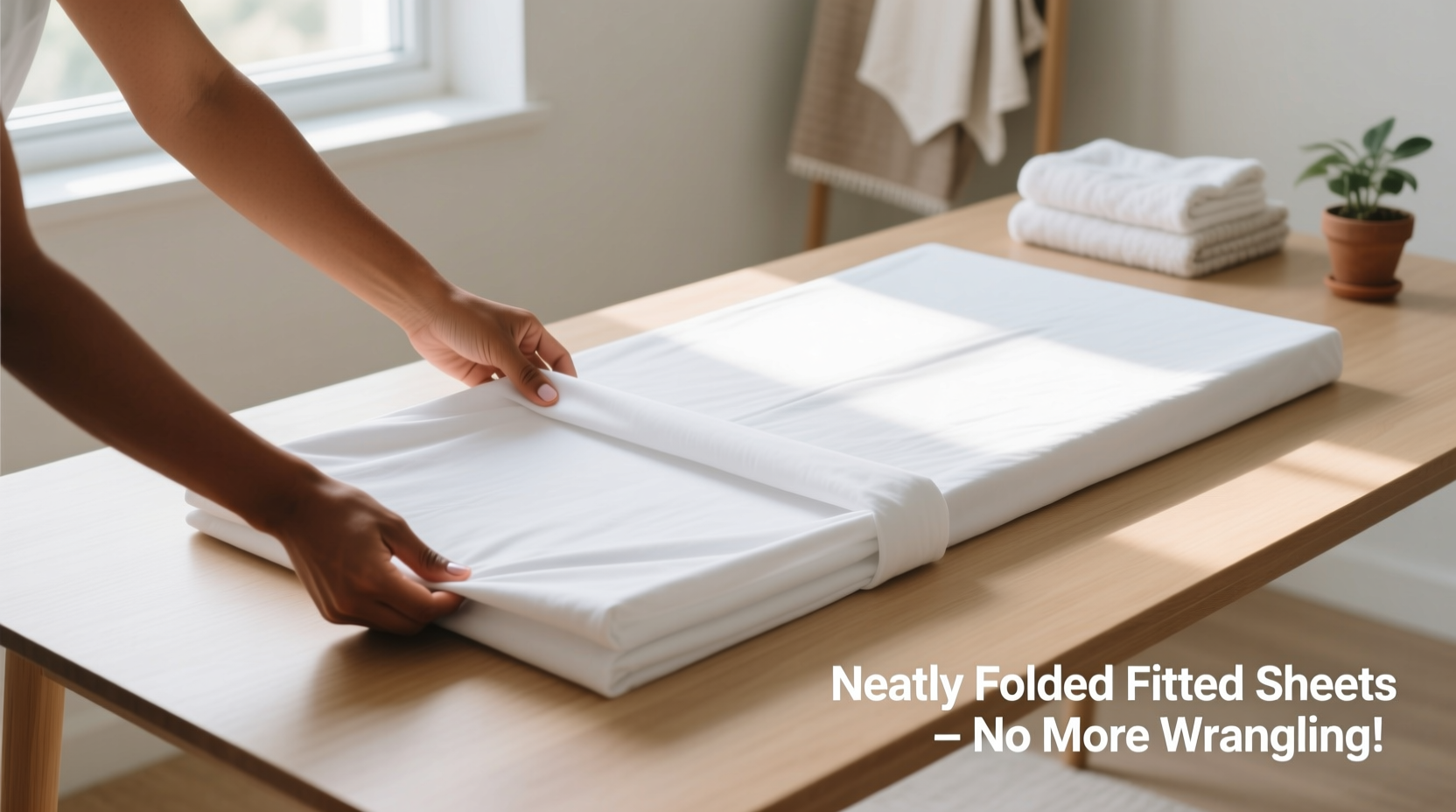
A neatly folded fitted sheet isn’t just about appearances. It impacts functionality, longevity, and daily convenience. When sheets are folded properly:
- They take up less space in storage.
- They’re easier to locate when needed.
- Fewer creases mean less ironing or smoothing before use.
- Consistent folding reduces strain on seams and elastic over time.
According to textile care expert Dr. Lila Chen, “Improper storage is one of the leading causes of premature wear in cotton bedding. Tightly packed, wrinkled sheets develop stress points that degrade fibers faster than regular use.” Folding correctly isn’t just tidy—it’s protective.
“Improper storage is one of the leading causes of premature wear in cotton bedding.” — Dr. Lila Chen, Textile Care Specialist
Step-by-Step: The Inside-Out Method
The most effective way to fold a fitted sheet starts by turning it inside out. This hides the elastic edges and aligns the seams, making it easier to match corners precisely. Follow this timeline-based approach for consistent results.
- Lay the sheet flat on a bed or clean floor. Smooth out major wrinkles with your hands.
- Turn it inside out by grabbing two adjacent corners of the same side (e.g., top-left and top-right) and flipping one corner over the other until the right side is facing inward.
- Match the corners. Hold the two now-visible corners in one hand. Reach under and grab the two opposite corners, tucking them into the first pair so all four are stacked together. You should feel the elastic edges nestling together neatly.
- Flip it right-side out while maintaining the corner bundle. Gently pull the outer layer over the bundled corners, like pulling a sock off. Now the sheet appears flat with no visible elastic.
- Smooth and lay flat. Place the sheet back down with the surface smooth and aligned. The corners are now matched, and the shape is nearly rectangular.
- Fold in thirds lengthwise. Bring one side toward the center, then the other, creating a long strip.
- Fold in half or thirds crosswise. Fold the bottom up to meet the top. For larger sheets, fold into thirds instead to maintain a compact size.
- Store immediately. Place the folded sheet into your linen closet or set it atop its matching flat sheet for coordinated sets.
Alternative Techniques for Different Skill Levels
Not everyone has time or patience for a seven-step folding ritual. Fortunately, there are variations suited to different preferences and dexterity levels.
The Corner-Pairing Shortcut
This method skips the inside-out flip and works directly with the right side out.
- Lay the sheet flat, elastic side up.
- Pinch the top two corners together and hold them in one hand.
- Locate the bottom two corners by sight or touch and bring them up to meet the top pair.
- Once all four corners are aligned, let the excess fabric fall naturally.
- Fold the sheet in half vertically, then horizontally, smoothing as you go.
This version is faster but may leave minor ruffles if corners aren’t perfectly aligned.
The Towel Roll Technique
For those who prioritize wrinkle reduction over compactness:
- Roll the fitted sheet tightly from one end to the other around a standard bath towel.
- Secure the roll with twill tape or a fabric tie.
This prevents deep creases and keeps the sheet ready for quick access. Ideal for infrequently used guest linens.
Do’s and Don’ts of Sheet Folding
| Do | Don't |
|---|---|
| Fold immediately after drying to minimize wrinkles | Leave sheets bunched in the dryer overnight |
| Use a flat, large surface like a bed or dining table | Try folding on a small countertop or uneven surface |
| Align corners before final folds | Force mismatched corners together |
| Store folded sheets with matching pillowcases inside | Scatter components across different shelves |
| Label bins or shelves for quick identification | Stack mixed sizes without organization |
Checklist: Master Your Linen Closet
To make sheet folding sustainable, integrate it into a broader system. Use this checklist to build lasting habits:
- ☐ Designate a folding area (bed or table) free from distractions.
- ☐ Sort laundry immediately after drying—don’t let sheets sit in baskets.
- ☐ Pair each fitted sheet with its corresponding flat sheet and pillowcases.
- ☐ Fold all matching pieces at once to maintain consistency.
- ☐ Store sets together—tuck pillowcases inside the folded fitted sheet.
- ☐ Label shelves or bins by bed size (Twin, Full, Queen, King).
- ☐ Reassess linen storage quarterly to prevent overcrowding.
Real Example: From Chaos to Calm
Sarah, a working mother of three in Portland, used to shove her family’s weekly laundry into overstuffed linen cabinets. “Every time I needed sheets, I’d pull out a tangled mess,” she recalls. “I’d waste five minutes untangling a queen set while the kids waited for me to remake their beds.”
After watching a folding tutorial online, she tried the inside-out method. “The first few times were slow,” she admits, “but by the third try, I had it down. Now I fold all our sheets within ten minutes of the dryer finishing.”
She also reorganized her closet, using labeled canvas bins for each bedroom. “Now my 10-year-old can get his own sheets when he needs them. It’s a tiny change, but it’s made mornings so much smoother.”
Frequently Asked Questions
Can I fold a wet fitted sheet?
No. Attempting to fold a damp or wet sheet will lock in wrinkles and encourage mildew. Always dry completely before folding. If slight dampness remains, hang it briefly to air-dry first.
What if my fitted sheet has extra-deep pockets or corner ties?
Deep pockets don’t change the folding principle—they just require a bit more fabric management. Focus on matching corners first; the rest follows. If corner ties get in the way, gently tuck them between layers during the final folds rather than cutting them off, which weakens the seam.
Is it worth folding sheets this way if I live alone?
Absolutely. Even single users benefit from organized storage. Neat folding makes it easier to rotate linens, spot stains early, and keep spare sets accessible. Plus, it takes less than two minutes once mastered.
Expert Insight: What Hotels Do Differently
Five-star hotels don’t rely on luck when it comes to linen presentation. Behind the scenes, staff follow strict folding protocols to ensure every drawer looks pristine. At The Willard Hotel in Washington, D.C., housekeeping supervisor Maria Tran explains: “We train new employees using the inside-out method because it creates uniformity. When every sheet is folded the same way, we save time during inventory checks and reduce replacement costs from misplacement.”
“We train new employees using the inside-out method because it creates uniformity.” — Maria Tran, Housekeeping Supervisor, The Willard Hotel
Hotels also store sheets in breathable cotton bags or open bins, never plastic, to allow airflow and prevent moisture buildup. A similar approach at home extends the life of your bedding significantly.
Final Thoughts: Make Order Part of Your Routine
Folding fitted sheets neatly isn’t a party trick—it’s a small act of daily mindfulness that pays off in efficiency, aesthetics, and fabric care. Like rolling a suitcase efficiently or organizing kitchen drawers, it’s one of those quiet skills that elevate the quality of everyday life.
The method described here works because it respects the sheet’s design rather than fighting it. Instead of wrestling elastic corners into submission, you work with them, using alignment and symmetry to create stability. With practice, the entire process becomes automatic—no thought required, just smooth, consistent results.
You don’t need perfection. You need repetition. Try folding one sheet this way today. Then do it again next week. In a month, you’ll wonder why you ever accepted chaos in your linen closet.




 浙公网安备
33010002000092号
浙公网安备
33010002000092号 浙B2-20120091-4
Comments
No comments yet. Why don't you start the discussion?