
Folding fitted sheets has long been considered one of the most frustrating household tasks. Unlike flat sheets or pillowcases, their elastic edges and curved corners resist neat folding, often ending up crumpled at the bottom of the linen closet. But it doesn’t have to be that way. With a consistent method and a bit of practice, anyone can master the art of folding fitted sheets into a compact, tidy rectangle. This guide breaks down the process into clear, repeatable steps, offering practical tips, common mistakes to avoid, and real-life insights to help you achieve consistency—every single time.
The Science Behind the Struggle
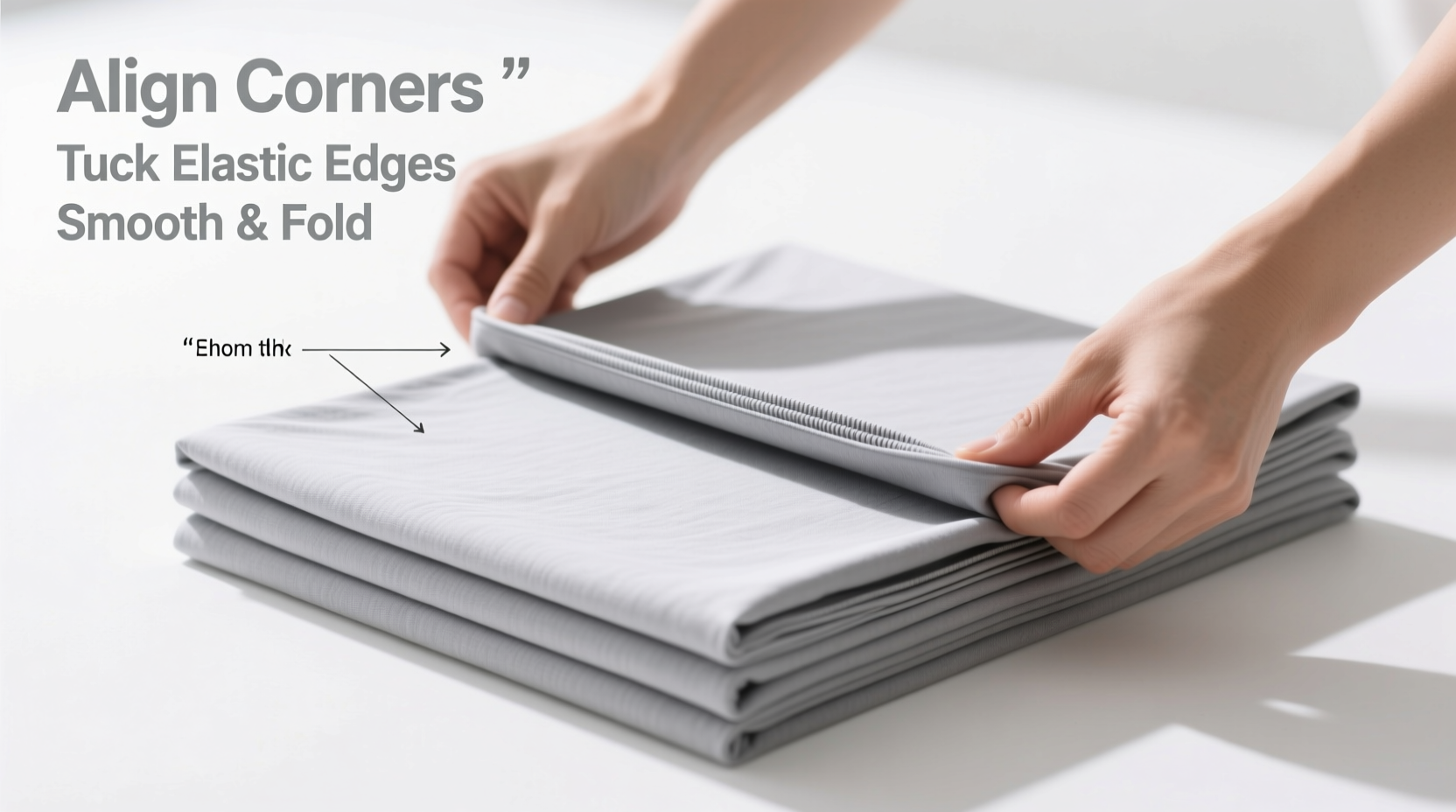
Fitted sheets are designed for function, not storage. Their elasticized perimeter allows them to stretch snugly over mattresses, but this same feature makes folding difficult. The lack of straight edges and the tendency of corners to flip inside out contribute to the chaos. Most people resort to balling them up or stuffing them haphazardly into drawers, which leads to wrinkles, tangles, and inefficient use of space.
However, the challenge isn't insurmountable. Experts in textile care and organization agree that the key lies in controlling the elastic edges and aligning the corners systematically. As Marie Kondo, author of *The Life-Changing Magic of Tidying Up*, puts it:
“Folding is not just about saving space—it’s about creating order and respect for your belongings. When you fold with intention, you reduce mental clutter too.” — Marie Kondo, Organizing Consultant
By treating the fitted sheet as a structured object rather than a shapeless piece of fabric, you can transform your linen storage from chaotic to curated.
Step-by-Step: Folding a Fitted Sheet Perfectly
The following method turns a wobbly, elasticated sheet into a clean rectangular fold. Practice each step slowly at first, then build speed with repetition.
- Start with the sheet inside out. Hold the sheet so the elastic edges face outward and the underside (the side that touches the mattress) is visible. This makes it easier to align the corners without confusion.
- Identify two adjacent corners. Reach into one corner with both hands and grasp the two seams where the elastic meets the fabric. Turn that corner inside out and place it over your hand like a glove. Repeat with the corner directly next to it, so both corners are now nested together, right sides touching.
- Join the opposite corners. Move to the other end of the sheet. Locate the two remaining corners and repeat the gloving process. Slide one corner over the other until all four corners are paired—two on each end.
- Flip one set right-side out. Take one pair of joined corners and flip them over the other pair. Now the right sides of the fabric are facing outward, and the elastic is neatly tucked between layers.
- Lay the sheet flat and smooth. Place it on a bed or table. Press out any wrinkles with your hands. You should now see a rectangular shape with two open ends.
- Fold lengthwise. Bring one long edge toward the center, then bring the other edge over it. This creates a long, narrow rectangle.
- Fold into thirds or quarters. Fold one end toward the center, then the other end over it. Adjust as needed to create a compact square or rectangle that matches your flat sheet size.
Common Mistakes and How to Avoid Them
Even with instructions, many people struggle due to small but critical errors. Here are the most frequent pitfalls—and how to correct them.
| Mistake | Why It Happens | Solution |
|---|---|---|
| Folding while the sheet is right-side out | The elastic edges obscure corner alignment | Always start inside out to clearly see and match corners |
| Trying to fold immediately after drying | Heat makes fabric expand; cooling causes shrinkage and warping | Let the sheet cool completely before folding |
| Skipping the smoothing step | Wrinkles lead to bulk and uneven folds | Smooth the sheet thoroughly before final folds |
| Rushing the process | Folding requires precision, not speed | Practice slowly; speed comes with muscle memory |
Real Example: From Chaos to Calm
Sarah, a mother of three in Portland, used to dread laundry day. Her linen closet was a jumble of twisted fitted sheets, some lost entirely under piles of mismatched linens. After watching a quick tutorial online, she tried the inside-out method described above. At first, it took her nearly ten minutes to fold a single queen-sized sheet. But after repeating the process five times, she could do it in under three minutes. Within a month, her entire linen collection was uniformly folded and stacked by bed size. “It’s silly how much satisfaction I get from opening my closet and seeing everything neat,” she said. “Now my kids even copy me when they help with chores.”
Pro Tips for Long-Term Success
Mastery doesn’t stop at folding. To keep your sheets looking crisp and organized, integrate these habits into your routine.
- Pair sheets immediately after drying. Fold the fitted sheet, then place the matching flat sheet and pillowcases inside it. This prevents mismatched sets and saves time later.
- Store vertically when possible. Like files in a cabinet, upright stacks are easier to browse and less likely to topple.
- Use shelf dividers or bins. These help maintain order, especially in deep closets where folded stacks tend to slide forward.
- Wash similar sizes together. Mixing twin and king sheets increases the chance of misfolding due to size confusion.
- Label if necessary. For households with multiple bed types, a small fabric tag or colored stitch can identify sheet sets at a glance.
Checklist: Master Your Fitted Sheet Folding Routine
Use this checklist each time you fold a fitted sheet to ensure consistency:
- ☐ Remove sheet from dryer and let cool for 5 minutes
- ☐ Turn sheet inside out
- ☐ Match and nest first pair of adjacent corners
- ☐ Match and nest second pair of corners
- ☐ Flip one set over the other to hide elastic
- ☐ Lay flat and smooth out wrinkles
- ☐ Fold lengthwise into a narrow strip
- ☐ Fold crosswise into a compact rectangle
- ☐ Insert matching flat sheet and pillowcases
- ☐ Store in designated linen space
Frequently Asked Questions
Can this method work with deep-pocket or extra-long fitted sheets?
Absolutely. The depth of the pocket doesn’t change the folding logic. Just ensure you fully tuck and align the corners—even on sheets designed for thick mattresses or mattress toppers. Some users find it helpful to lay the sheet on the floor for better control when dealing with oversized bedding.
What if my sheet loses its elasticity over time? Does that affect folding?
Worn elastic can make corner alignment trickier, but the folding method remains the same. In fact, older sheets may be easier to fold because they’re less springy. However, if the fabric sags significantly, consider retiring the set. Properly cared-for sheets last 2–3 years with regular use and gentle washing.
Is there a difference in folding technique for different materials like cotton, bamboo, or microfiber?
No—the structure of the sheet matters more than the fabric. Whether it’s 100% Egyptian cotton or synthetic blend, the elastic edges define the folding approach. That said, delicate fabrics like silk-blend sheets should be folded gently to avoid snags, and air-dried when possible to preserve fiber integrity.
Expert Insight: Why Precision Matters
Professional home organizers emphasize that small routines compound into significant lifestyle improvements. According to David Mok, a certified home efficiency consultant:
“People underestimate how much mental energy disorganization drains. Taking five extra minutes to fold a fitted sheet properly reduces decision fatigue later. It’s not about perfection—it’s about creating systems that support peace of mind.” — David Mok, Home Efficiency Consultant
This philosophy extends beyond laundry. When everyday tasks become predictable, they require less cognitive load, freeing up attention for more meaningful activities.
Final Thoughts: Make It a Habit
Folding a fitted sheet perfectly isn’t a party trick—it’s a practical skill that enhances daily living. The initial effort pays off in streamlined storage, easier bed-making, and a sense of accomplishment that ripples through other areas of household management. Like tying a tie or packing a suitcase efficiently, it’s a learned behavior that becomes second nature with repetition.
Don’t expect flawless results on the first try. Even seasoned homemakers had to practice. What matters is consistency. Commit to using the same method every time, and within a few weeks, you’ll fold without thinking—just like brushing your teeth or buckling your seatbelt.




 浙公网安备
33010002000092号
浙公网安备
33010002000092号 浙B2-20120091-4
Comments
No comments yet. Why don't you start the discussion?