
Folding a fitted sheet has long been considered one of the great domestic challenges. With their elastic edges and curved corners, they resist neat folding in a way flat sheets never do. Many people simply ball them up or shove them into drawers, only to pull out a tangled mess weeks later. But it doesn’t have to be this way. With the right technique, you can fold fitted sheets cleanly, consistently, and without frustration. This guide breaks down the process into simple, repeatable steps that anyone can follow—no special skills required.
The key is understanding the structure of the fitted sheet and working with its design rather than against it. By aligning corners, smoothing edges, and using controlled folds, you’ll transform chaos into order. Whether you're preparing for laundry day, organizing your linen closet, or teaching someone else how to manage household tasks, mastering this skill brings both practical and psychological benefits. A neatly folded stack of linens signals control, care, and efficiency.
Why Fitted Sheets Are So Hard to Fold
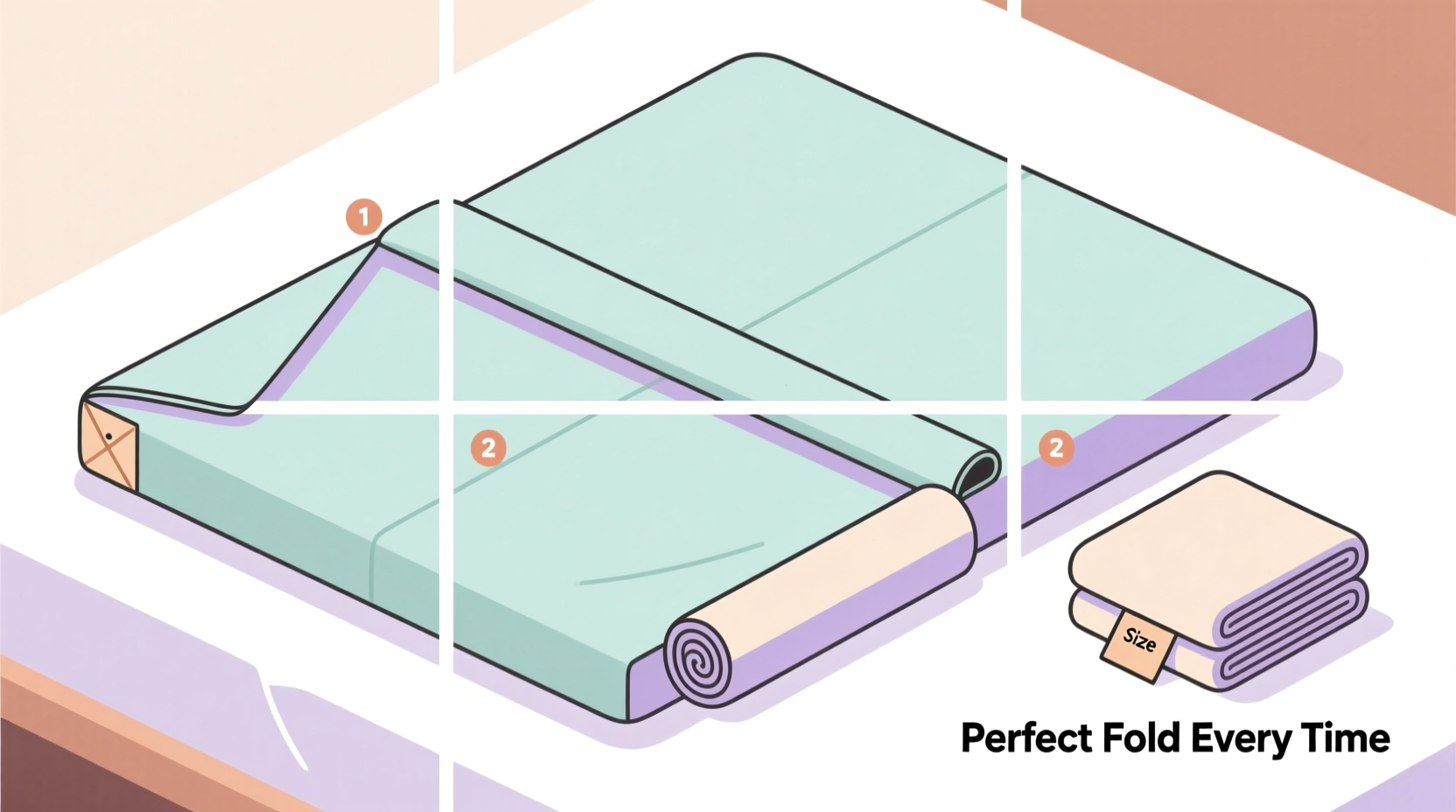
Fitted sheets differ from flat sheets because they are designed to stretch over a mattress. They feature elasticized edges and reinforced corners that grip the bed securely. While this makes them functional during use, it also makes them unpredictable when folding. Unlike flat sheets, which lie smoothly on a surface, fitted sheets tend to curl, twist, and resist symmetry.
The confusion often starts at the corner. Most people try to fold them like regular rectangles, ignoring the fact that the corners are meant to connect with each other in three-dimensional space. Without recognizing the pairing logic—corner to corner, right side to right side—the folding process becomes arbitrary and inconsistent.
Additionally, fabric type plays a role. Thin cotton sheets may slip and shift during folding, while heavier microfiber or jersey blends hold their shape better but can be bulkier. The size of the sheet matters too—a king-sized fitted sheet contains significantly more material than a twin, increasing the challenge of alignment and compactness.
A Step-by-Step Guide to Perfectly Folding Fitted Sheets
The following method transforms a wavy, unruly fitted sheet into a tidy rectangle that stacks neatly with the rest of your linens. Practice this sequence slowly at first, then speed up as muscle memory develops.
- Hold the sheet by two adjacent corners. Pick up the fitted sheet and locate two corners at one end (e.g., top left and top right). Hold one corner in each hand, making sure the right sides of the fabric are facing each other. You should feel the elastic pulling inward.
- Turn one corner inside out and tuck it into the other. Take the corner in your right hand and flip it inside out so it envelops the corner in your left hand. Now both corners are nested together, right sides touching, with only two free corners remaining.
- Repeat with the opposite end. Move to the other end of the sheet (bottom left and bottom right) and repeat the same tucking motion. Turn one corner inside out and insert it into the other. At this point, all four corners are paired—two sets tucked together—and the sheet resembles a loose rectangle.
- Lay the sheet flat on a surface. Place the sheet on a bed, table, or clean floor with the tucked corners aligned at the top. Smooth out any wrinkles with your hands. The elastic edges should now lie flat rather than curling upward.
- Fold lengthwise if necessary. If the sheet is wide (such as queen or king), fold it in half or thirds along the long edge to reduce width. Smooth again after each fold.
- Fold crosswise into a compact rectangle. Starting from the bottom edge, fold the sheet upward in thirds or quarters, depending on desired size. Each fold should be crisp and even. Aim for a final shape that matches your storage space—usually about 8x10 inches.
- Store immediately. Once folded, place the sheet directly into your linen closet or drawer. Avoid leaving it draped over furniture where it may wrinkle or become misshapen.
This technique works regardless of sheet size or material. With repetition, the entire process takes less than a minute.
Do’s and Don’ts When Folding Fitted Sheets
| Do | Don't |
|---|---|
| Pair corners with right sides together | Try to fold without matching corners first |
| Smooth out wrinkles before final folds | Fold over creases or bunches |
| Use a large, flat surface like a bed | Fold in midair or on uneven ground |
| Fold while fabric is slightly warm from drying | Wait until sheets are cold and stiff |
| Store folded sheets vertically like files | Stack too high, causing collapse and disorder |
Real-Life Example: Transforming a Chaotic Linen Closet
Sarah, a mother of three in Portland, used to dread opening her linen closet. It was a jumble of mismatched pillowcases, crumpled flat sheets, and balled-up fitted sheets stuffed haphazardly onto shelves. Every time she needed bedding, she wasted time untangling and re-folding. After watching a quick tutorial based on this method, she decided to reorganize the entire cabinet.
She pulled everything out, laundered the most-used sets, and applied the corner-tucking technique to each fitted sheet. Within an hour, her closet was transformed. She folded all sets uniformly and stored them together—flat sheet inside the folded fitted sheet, with matching pillowcases tucked inside. She labeled baskets by bed size and arranged them alphabetically on adjustable shelves.
“It sounds small,” Sarah said, “but being able to grab a complete set in seconds changed my morning routine. I don’t stress about changing beds anymore. Even my kids started putting away their own linens because it’s so simple.”
Expert Insight on Bedding Organization
“The way we store our linens reflects our approach to daily self-care. Taking a few extra minutes to fold properly isn’t just about neatness—it’s about creating systems that support calm and consistency in the home.” — Lena Torres, Home Organization Specialist and Author of *The Orderly Household*
Torres emphasizes that organization begins with mastery of fundamentals. “People overlook basic textile care, but knowing how to handle everyday items like fitted sheets reduces decision fatigue. When routines are clear, mental energy is freed for more important things.”
Checklist: Master Your Fitted Sheet Folding Routine
- ☐ Remove fitted sheet from dryer promptly
- ☐ Identify and pair opposite corners (right sides together)
- ☐ Tuck one corner into the other to nest them
- ☐ Lay sheet flat on a large surface (bed or table)
- ☐ Smooth out all wrinkles and adjust edges
- ☐ Fold lengthwise if needed to reduce width
- ☐ Fold crosswise into a compact rectangle
- ☐ Store immediately with matching set components
- ☐ Repeat weekly to build confidence and consistency
- ☐ Teach family members the same method for uniform results
Frequently Asked Questions
Can I fold a fitted sheet without a flat surface?
While possible, folding without a table or bed increases the likelihood of misalignment. The lack of support makes it harder to smooth wrinkles and maintain symmetry. For best results, always use a clean, flat area—even a cleared dining table will work.
What if my fitted sheet has deep pockets or extra-long elastics?
Deep-pocket sheets follow the same folding principles. The only difference is slightly deeper tucks when nesting corners. After pairing the corners, lay the sheet down and gently stretch the sides outward before smoothing to release tension and create a flatter profile.
Should I fold sheets with or without their matching set?
It’s most efficient to fold the flat sheet around the fitted sheet and include the pillowcases inside. This keeps all pieces together, prevents mismatches, and simplifies retrieval. Use a consistent order—fitted on the outside, flat in the middle, cases on top—for quick identification.
Conclusion: Turn a Daily Struggle into a Seamless Habit
Folding a fitted sheet perfectly isn’t magic—it’s method. Once you understand the logic behind the corners and embrace a repeatable system, what once felt impossible becomes second nature. The satisfaction of a crisp, compact fold extends beyond the linen closet; it represents attention to detail, personal discipline, and pride in your environment.
Start today. Pull out one fitted sheet and walk through the steps slowly. Do it again next laundry day. Before long, you won’t just know how to fold a fitted sheet—you’ll wonder why it ever seemed difficult. Share the technique with roommates, partners, or teens learning household skills. Small acts of order compound into a more peaceful, functional home.




 浙公网安备
33010002000092号
浙公网安备
33010002000092号 浙B2-20120091-4
Comments
No comments yet. Why don't you start the discussion?