
Folding a fitted sheet has long been considered one of the most frustrating household tasks. The elastic corners, uneven edges, and tendency to twist make it seem like an impossible puzzle. Yet mastering this skill transforms your linen closet from chaotic to curated. A neatly folded fitted sheet saves space, looks professional, and makes changing beds faster and more efficient. This guide breaks down the process into clear, repeatable steps, offering multiple folding techniques, expert insights, and practical tips so you can achieve consistent results—every single time.
The Science Behind the Struggle
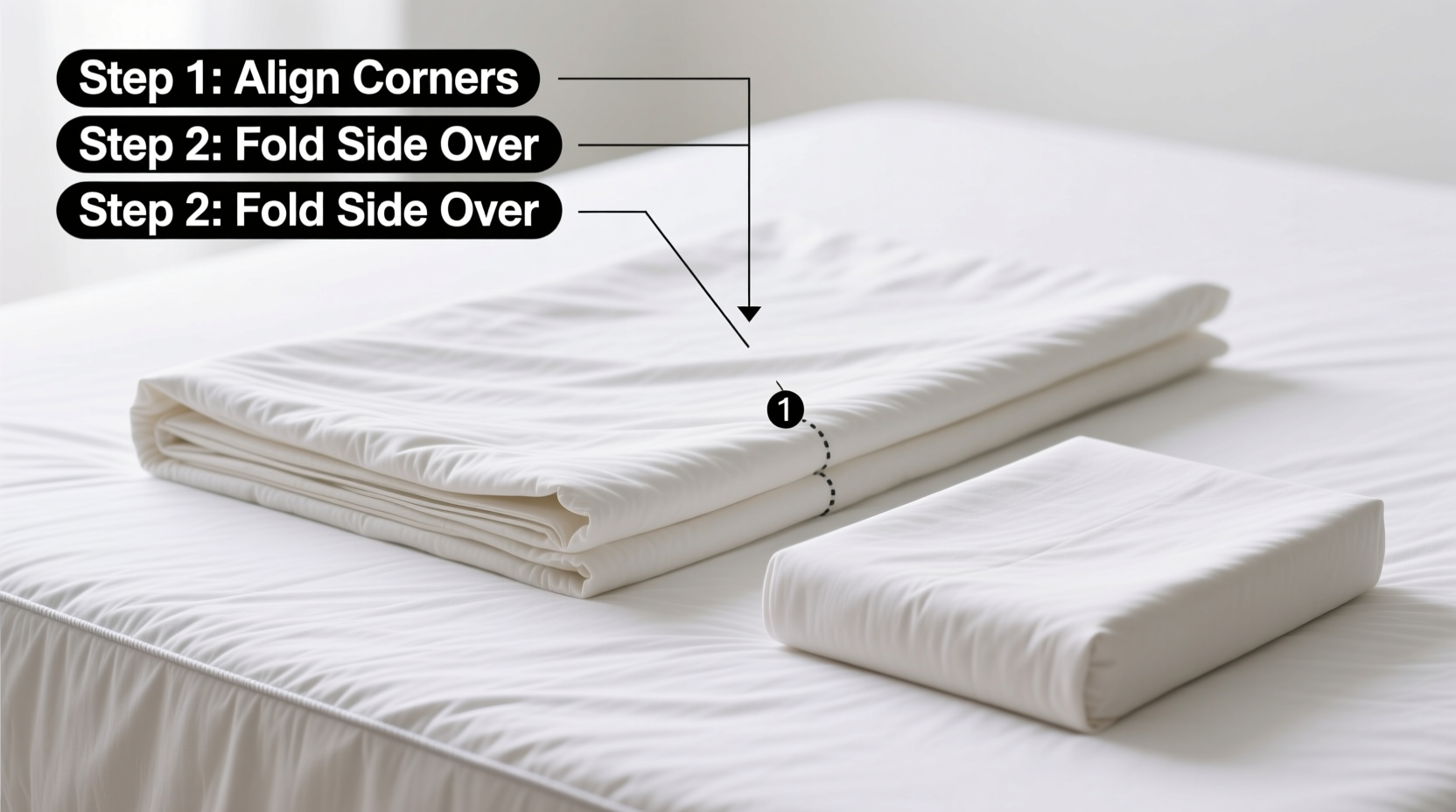
Fitted sheets differ fundamentally from flat sheets. Their design includes deep pockets formed by elasticized edges that hug mattress corners. While functional in use, these features complicate folding because they resist symmetry and uniformity. Most people attempt to fold them like flat linens, leading to lopsided bundles or crumpled wads tucked haphazardly into shelves.
The key to success lies not in brute force but in understanding geometry and fabric behavior. Textile experts emphasize aligning seams and matching tension points before initiating folds. According to Dr. Lena Torres, home organization researcher at the Institute for Domestic Efficiency, “Fitted sheets are engineered for stretch, not storage. Our job is to neutralize that elasticity temporarily through strategic hand positioning and corner tucking.”
“Consistent folding starts with recognizing where the stress points are—those elastic corners—and using them as anchors rather than obstacles.” — Dr. Lena Torres, Home Organization Researcher
Step-by-Step: The Inside-Out Method (Beginner-Friendly)
This technique minimizes visible wrinkles and contains the elastic edges early, making it ideal for those new to precision folding. It works best on standard twin through king-sized sheets.
- Hold the sheet lengthwise: Grasp two adjacent corners of the short edge—one in each hand—with the outer (printed or textured) side facing inward.
- Flip one corner inside the other: Tuck the right corner completely inside the left, so both elastic openings are nested together. You should now hold a single double-thick corner.
- Repeat with the opposite end: Move to the other short edge and do the same—nest the two corners together until only two combined corners remain.
- Align the corners: Bring the two grouped corners together, holding all four corners in one hand. Shake gently to settle the fabric and eliminate twists.
- Lay flat and smooth: Place the sheet on a clean, hard surface (like a table or bed). Align the top and bottom edges, pressing out air pockets with your palms.
- Fold in thirds vertically: Fold one long side toward the center, about one-third of the way across. Repeat with the opposite side so the edges meet neatly in the middle.
- Accordion-fold horizontally: Starting from one end, fold the sheet in even increments (about 6–8 inches wide) until you reach the other end.
- Store immediately: Slide the finished rectangle into your linen closet or stack atop matching pillowcases.
Advanced Technique: The Military Roll (Space-Saving)
Used by hospitality professionals and minimalist packers, this method compresses the sheet into a tight cylinder, reducing volume by up to 40% compared to traditional folding. It’s especially useful for small apartments or RV living.
- Begin by nesting opposite corners as in Step 2 above.
- Lay the sheet flat with elastic edges aligned and smoothed.
- Fold one long side halfway toward the center.
- Starting at the folded edge, begin rolling tightly toward the open edge, keeping pressure even along the roll.
- Once fully rolled, tuck any loose ends into the tube’s opening to secure.
The resulting roll fits easily into narrow bins or under-bed containers. Unlike folded versions, rolled sheets resist unraveling when stacked.
Comparison Table: Folding Methods at a Glance
| Method | Time Required | Space Efficiency | Skill Level | Best For |
|---|---|---|---|---|
| Inside-Out Fold | 2–3 minutes | ★★★☆☆ | Beginner | Daily use, family linen closets |
| Military Roll | 1.5–2 minutes | ★★★★★ | Intermediate | Small spaces, travel, storage tubs |
| Envelope Fold | 3–4 minutes | ★★★★☆ | Advanced | Display shelving, gift sets |
| Quick Crumple | Under 1 minute | ★☆☆☆☆ | All Levels | Temporary storage, laundry baskets |
Checklist: Achieve Perfect Folds Consistently
Use this checklist each time you fold a fitted sheet to ensure consistency and quality:
- ✅ Choose a large, flat surface free of clutter
- ✅ Identify the top edge (often marked with a tag or pattern orientation)
- ✅ Match all four corners in pairs before laying down
- ✅ Smooth out wrinkles with downward strokes
- ✅ Maintain straight folding lines—don’t eyeball angles
- ✅ Fold to match the dimensions of your flat sheet set
- ✅ Store folded sets together (fitted + flat + pillowcases)
Real Example: From Chaos to Calm – Maria’s Linen Closet Transformation
Maria, a mother of three in Portland, Oregon, used to dread laundry day. Her linen closet was a tangle of misshapen sheet bundles, with fitted sheets often pulled out looking like tangled nets. After watching a demonstration video based on the inside-out method, she practiced five times with old sheets. By the sixth try, she had it down. “I timed myself,” she said. “It took me just over two minutes to fold a king-size fitted sheet neatly. Now my closet looks like something out of a catalog. My kids even comment on how ‘tidy’ it is.”
She now teaches the method to her teenage daughters, turning folding into a weekly family routine. “It’s not just about neatness,” Maria adds. “It’s about control. When one thing feels manageable, everything else seems easier too.”
Common Mistakes That Ruin Your Fold
Even experienced folders fall into traps that compromise the final result. Avoid these pitfalls:
- Skipping corner pairing: Folding without first connecting opposing corners leads to asymmetry and bulk.
- Folding on a soft surface: Beds absorb movement; always use a table or countertop for crisp edges.
- Rushing the smoothing phase: Trapped air creates puffiness that resists compression.
- Ignoring fabric type: Jersey knit sheets behave differently than cotton percale—adjust grip strength accordingly.
- Storing while damp: Moisture breeds mildew and weakens fibers over time.
“The difference between a good fold and a great fold is patience. Take ten extra seconds to align the edges, and you’ll save ten minutes searching later.” — James Holloway, Hotel Housekeeping Supervisor, 18 years experience
FAQ: Your Fitted Sheet Questions Answered
Can I machine-wash fitted sheets before folding?
Absolutely. In fact, washing before folding ensures cleanliness and removes stiffness. However, remove them promptly after the cycle ends to prevent deep creasing. For best results, fold while slightly damp or fully dry—never wet.
Why does my folded sheet still look bulky?
Bulk usually stems from trapped air or uneven layers. Try lifting the sheet slightly off the surface and lowering it slowly to release air. Also, ensure you're folding in consistent widths—use your hand width (approx. 4 inches) as a natural measuring tool if needed.
Do different sizes require different folding techniques?
No. The principles remain the same regardless of size. Larger sheets simply require more space and slightly wider fold increments. Use a bigger table for queen and king sizes to maintain control.
Mastering the Envelope Fold (For Display & Gifting)
When presentation matters—such as gifting handmade linens or organizing a boutique-style closet—the envelope fold delivers elegance. Follow these steps:
- Nest the corners as in previous methods.
- Lay the sheet flat and press smooth.
- Fold one-third of the sheet inward from the bottom.
- Fold the top third down over it, creating a rectangular frame.
- Tuck any loose corners beneath the top flap to seal the “envelope.”
- Place a ribbon or label across the center for added polish.
This method hides the elastic edges completely and creates a clean, gift-ready package. It’s popular among Airbnb hosts and luxury hotels aiming for visual harmony.
Conclusion: Turn a Chore Into a Confidence Boost
Folding a fitted sheet perfectly isn’t magic—it’s method. With practice, what once felt impossible becomes automatic. The benefits extend beyond aesthetics: organized storage reduces decision fatigue, extends textile lifespan, and brings quiet satisfaction to daily routines. Whether you choose the beginner-friendly inside-out fold or the compact military roll, consistency is the real goal. Each successful fold reinforces the idea that small acts of order create larger impacts in life.




 浙公网安备
33010002000092号
浙公网安备
33010002000092号 浙B2-20120091-4
Comments
No comments yet. Why don't you start the discussion?