
Folding a fitted sheet has long been considered one of the great household mysteries—right up there with untangling necklaces or matching socks without a partner. The elastic corners, the awkward stretch, and the tendency to end up with a crumpled mess have frustrated even the most organized individuals. But it doesn’t have to be that way. With a clear, repeatable technique, folding a fitted sheet neatly is not only possible but surprisingly satisfying. This guide breaks down a proven method that turns chaos into crisp corners and eliminates the last excuse for a messy linen closet.
The Problem with Fitted Sheets
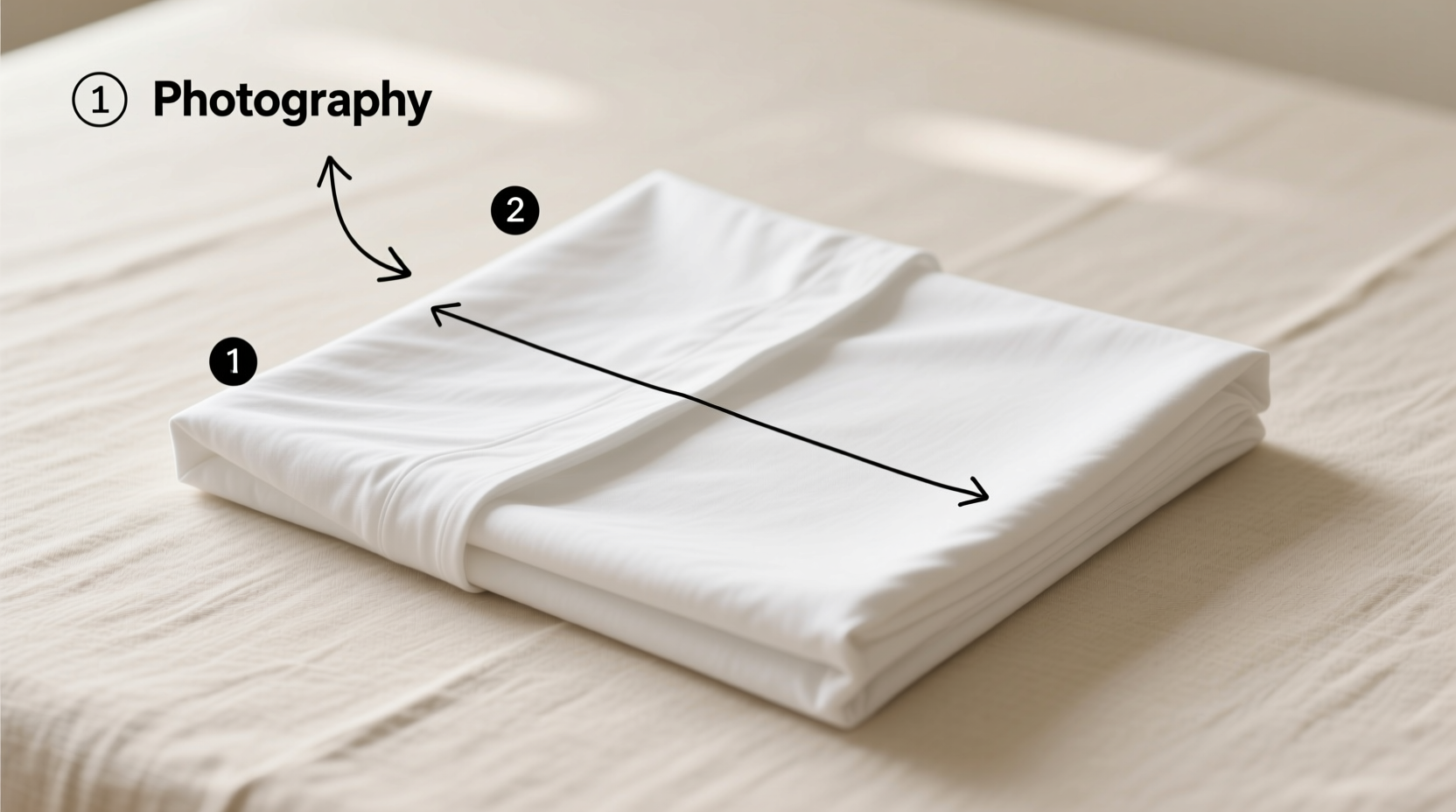
Fitted sheets are designed for function: their elasticized edges grip mattress corners securely, ensuring a snug fit through the night. However, that same design makes them notoriously difficult to fold. Unlike flat sheets, which lie smoothly and predictably, fitted sheets resist symmetry. Most people resort to balling them up or stuffing them into drawers, leading to creases, tangles, and wasted space.
The root issue lies in the corners. When you try to fold a fitted sheet like a flat one, the elastic pulls the fabric out of alignment, creating bulges and uneven layers. Without a structured approach, the result is rarely tidy. But when you treat the corners as handles—tools rather than obstacles—you gain control over the entire process.
A Step-by-Step Guide to Perfectly Folded Fitted Sheets
The following method transforms a chaotic piece of fabric into a compact, rectangular bundle. It works for all sizes—twin, full, queen, or king—and requires no special tools. Practice once or twice, and it will become second nature.
- Hold the sheet by two adjacent corners (inside-out). Stand with the sheet held in front of you, the short edge facing upward. Take one hand and grasp a corner from the shorter side. With your other hand, reach across and grab the corner directly next to it. Turn both wrists inward so the corners face each other and tuck one inside the other. The right sides of the fabric should now be touching, hiding the elastic.
- Repeat with the opposite two corners. Move to the other short edge of the sheet. Locate the remaining two corners and repeat the process: bring them together, turn the wrists inward, and nest one corner inside the other. At this point, all four elastic edges are tucked, and the sheet resembles a loose rectangle with no visible stretching.
- Lay the sheet flat on a surface. Place it gently on a bed, table, or any clean, smooth area. Smooth out any wrinkles with your hands. The top layer should now look like a plain rectangular piece of fabric.
- Fold in the sides. Bring the left edge toward the center, about one-third of the way across. Then fold the right edge over it, overlapping slightly. This creates a neat, vertical column free of bulk.
- Fold lengthwise into thirds. Starting at one end, fold the bottom third upward. Then fold the top third down over it, like folding a letter. You now have a compact rectangle.
- Smooth and store. Run your hands over the folded sheet to remove air pockets and ensure crisp edges. Store it flat in a linen closet or stack it with matching sets.
This method works because it neutralizes the elasticity before folding begins. By pairing and nesting the corners, you eliminate the tension that distorts traditional attempts. Once the elastic is hidden, the sheet behaves like a flat piece of fabric—making the rest of the process straightforward.
Why This Method Works: The Science of Fabric Control
Fabric behavior under tension plays a key role in folding success. Elasticated edges store energy, pulling the material back into its stretched shape unless constrained. The nested-corner technique effectively “locks” that energy inside, preventing rebound during folding.
Additionally, folding while the sheet is inside-out reduces visual distractions. The smooth outer surface allows you to focus on alignment rather than fighting against bunched seams or exposed bands. This psychological advantage—seeing order instead of chaos—makes the process feel more manageable.
“Folding isn’t just about storage—it’s about respect for your belongings. A neatly folded sheet lasts longer, resists mildew, and makes changing beds faster.” — Clara Mendez, Home Organization Consultant
Common Mistakes and How to Avoid Them
Even with a reliable method, small errors can undermine results. Below is a comparison of common pitfalls and their solutions.
| Mistake | Why It Causes Problems | Solution |
|---|---|---|
| Folding without nesting corners | Elastic pulls fabric out of alignment, causing lumps | Always pair and tuck corners first, inside-out |
| Folding on an uneven surface | Wrinkles form, making layers misaligned | Use a bed, table, or countertop for stability |
| Rushing the smoothing step | Trapped air creates bulky folds | Press firmly with palms after each fold |
| Trying to fold a damp sheet | Moisture weakens fiber structure and invites mildew | Ensure complete dryness before folding |
| Storing in plastic bins without airflow | Traps moisture, leading to musty odors | Use breathable cotton bags or open shelves |
Real-Life Example: From Chaos to Calm
Sarah, a mother of three in Portland, used to toss her fitted sheets into a basket at the back of her closet. “I’d spend ten minutes digging for a matching set every time I changed the beds,” she recalls. “And half the time, the sheets were tangled or still damp from the last wash.”
After watching a quick tutorial based on this method, she decided to reorganize her entire linen cabinet. She spent one Sunday afternoon refolding every sheet using the nested-corner technique. The difference was immediate. “Now I can see everything clearly. Each set is stacked like books on a shelf. My kids even started putting them away themselves because it looks ‘neat,’ ” she says with a laugh.
More importantly, Sarah noticed her sheets lasted longer. Fewer deep creases meant less stress on the fibers, and improved airflow reduced mustiness. What began as a quest for tidiness turned into better textile care.
Checklist: Mastering the Fold in Five Minutes
Follow this checklist each time you fold a fitted sheet to build consistency and speed.
- ✅ Ensure the sheet is completely dry
- ✅ Hold two adjacent corners with palms facing inward
- ✅ Nest one corner inside the other (right sides together)
- ✅ Repeat with the opposite two corners
- ✅ Lay flat on a smooth surface
- ✅ Smooth out wrinkles with your hands
- ✅ Fold sides toward center to form a rectangle
- ✅ Fold lengthwise into thirds
- ✅ Press down to flatten the final bundle
- ✅ Store with matching flat sheet and pillowcases
With repetition, this checklist becomes automatic. Many users report mastering the technique in under three tries.
Frequently Asked Questions
Can this method work with deep-pocket sheets?
Absolutely. Deep-pocket sheets have longer sides but the same corner structure. The nesting technique remains identical—just take care to fully align the corners so the extra fabric doesn’t bunch. Smoothing is especially important here to manage volume.
What if my sheet is wrinkled after washing?
Light wrinkles won’t interfere with folding, but heavy creasing can make alignment harder. For best results, remove sheets from the dryer promptly and fold immediately. If ironing isn’t practical, a quick steam from a garment steamer or hanging in a steamy bathroom can relax stubborn folds.
Should I fold fitted sheets with the matching flat sheet?
Yes—this is one of the most effective storage strategies. Once both are folded into rectangles of similar size, place the fitted sheet on top of the flat sheet and secure them together with a clothespin, ribbon, or elastic band. Label if needed. This ensures you always have a complete set ready to go.
Final Thoughts: Turning a Chore Into a Skill
Folding a fitted sheet perfectly isn’t about perfectionism—it’s about efficiency, care, and reclaiming control over everyday tasks. Once mastered, the process takes less than two minutes and pays dividends in closet space, fabric longevity, and mental clarity. No more rummaging, no more frustration.
This technique proves that even the smallest routines can be optimized. What seems impossible at first glance often yields to a systematic approach. And in the quiet act of folding cloth, there’s a subtle satisfaction—a moment of order created by your own hands.




 浙公网安备
33010002000092号
浙公网安备
33010002000092号 浙B2-20120091-4
Comments
No comments yet. Why don't you start the discussion?