
Graphic tees are more than just clothing—they’re personal statements. Whether it’s a vintage band logo, a bold slogan, or an artistic design, the print is what makes each shirt unique. But over time, improper storage can lead to cracked ink, faded colors, and distorted graphics. While washing and drying play major roles in print longevity, how you fold and store your graphic tees matters just as much. Many people unknowingly damage their favorite shirts by using the same folding method they use for plain cotton tees, not realizing that screen-printed areas require special care.
The key to preserving a graphic tee lies in minimizing stress on the printed area. Repeated creasing along the design weakens the ink layer, leading to cracks. Exposure to light and air during storage accelerates fading. Fortunately, with the right folding technique and mindful storage habits, you can keep your graphic tees looking vibrant for years. This guide breaks down the science behind print degradation and provides actionable steps to protect your collection.
Why Folding Matters for Graphic Tee Longevity
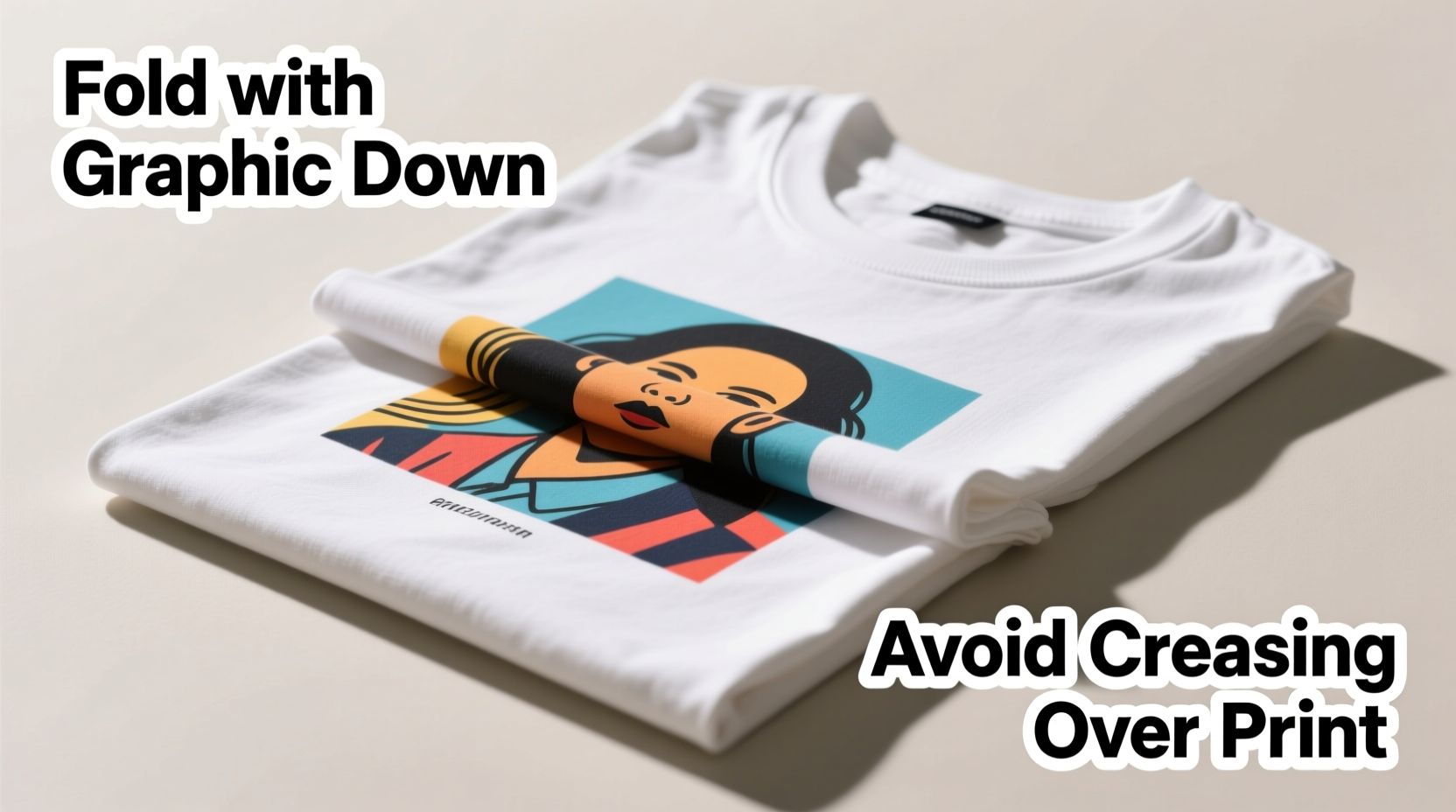
Most people assume that as long as a shirt is clean and stored in a drawer, it's safe. But the reality is more nuanced. Screen printing involves applying layers of plastisol or water-based ink onto fabric. These inks bond with fibers but remain somewhat rigid. When folded sharply across a printed area—especially repeatedly—the ink layer fractures under pressure, creating visible cracks. Over time, this damage becomes irreversible.
Folding also affects exposure. A loosely folded shirt left at the edge of a stack may have its front exposed to ambient light, which degrades dyes and fades colors. UV rays, even from indoor lighting, contribute to chromatic breakdown. Additionally, stacking heavy items on top of folded graphic tees can compress the print, accelerating wear.
The goal isn’t just neatness—it’s preservation. Proper folding distributes tension away from high-risk zones, reduces direct exposure, and maintains the structural integrity of both fabric and print.
Step-by-Step: The Correct Way to Fold a Graphic Tee
Folding a graphic tee properly takes less than a minute but pays dividends in longevity. Follow this sequence to minimize strain on the print while keeping the shirt compact and wrinkle-resistant.
- Lay the shirt flat on a clean, dry surface, preferably a table or bed. Smooth out any wrinkles with your hands, ensuring the graphic is centered and flat.
- Fold one sleeve inward toward the center back line. Imagine drawing a straight line from the collar down the middle of the shirt—this is your folding axis. Bring the sleeve across so the seam aligns with the centerline, forming a straight edge.
- Repeat with the other sleeve, mirroring the first fold. The shoulders should now form a rectangle without overlapping fabric.
- Fold the bottom hem upward, but stop short of the graphic. If the print sits on the chest, fold the bottom third up—just enough to reach below the design. This keeps the print free of creases.
- Fold the top portion down over the lower section, enclosing the graphic between two layers of fabric. The print should now be sandwiched inside, protected from light and abrasion.
- Store vertically or flat in a drawer or shelf, avoiding overcrowding. If stacking, place heavier items at the bottom.
This method avoids direct folding over the graphic and ensures even weight distribution. It also prevents “shelf marks” caused by prolonged creasing in the same spot.
Do’s and Don’ts of Storing Graphic Tees
How you store your folded tees is just as important as how you fold them. Environment, positioning, and frequency of access all influence condition. The following table outlines best practices versus common mistakes.
| Do’s | Don’ts |
|---|---|
| Store in a cool, dark drawer – Prevents UV exposure and heat-related ink breakdown. | Leave shirts exposed to sunlight – Even brief daily exposure causes cumulative fading. |
| Rotate your stack monthly – Prevents permanent creases and allows inspection for wear. | Stack heavily without rotation – Bottom shirts endure constant pressure, risking print delamination. |
| Use acid-free tissue paper – Place between folds to cushion prints and absorb moisture. | Store in plastic bags long-term – Traps humidity, promoting mildew and ink brittleness. |
| Fold with print inward – Shields design from abrasion and light. | Fold directly over the graphic – Creates a stress point that leads to early cracking. |
| Keep away from strong-smelling products – Perfumes and cleaning agents can react with ink polymers. | Store near laundry detergents or air fresheners – Volatile chemicals degrade fabric dyes over time. |
Adhering to these guidelines ensures your shirts remain in display-ready condition, whether worn weekly or saved for special occasions.
Real Example: Preserving a Vintage Band Collection
Mark, a music enthusiast from Portland, owns over 50 vintage band tees, some dating back to the 1980s. For years, he folded them like regular shirts—neatly, but with creases running through the logos. By 2022, many designs had developed spiderweb-like cracks, especially on black ink prints. Discouraged, he consulted a textile conservator at a local museum who recommended a preservation-focused folding method.
He began refolding each tee using the print-sparing technique described above, storing them in shallow drawers lined with acid-free paper. He also installed UV-filtering film on nearby windows and removed scented candles from his bedroom, where he previously kept his wardrobe. After 18 months, not only did the existing damage stop progressing, but newer shirts showed no signs of wear despite frequent use.
“I used to think cracking was inevitable,” Mark said. “Now I realize it was just how I was folding them. Changing one habit saved my entire collection.”
“Textile preservation isn’t just for museums. Everyday decisions—like where and how you fold a shirt—determine whether a graphic survives five years or fifty.” — Dr. Lena Patel, Textile Conservation Specialist, University of the Arts London
Checklist: Protect Your Graphic Tees in 7 Steps
To make adoption easy, here’s a concise checklist summarizing the essential actions for every graphic tee owner:
- ✅ Wash graphic tees inside-out in cold water
- ✅ Air-dry or use low heat to prevent ink shrinkage
- ✅ Lay shirt flat before folding—never fold from the hanger
- ✅ Fold sleeves inward along the centerline
- ✅ Fold bottom up to just below the graphic
- ✅ Fold top down to enclose the print between layers
- ✅ Store in a dark, dry drawer and rotate stacks monthly
Hang this list near your dresser or save it digitally as a reminder. Consistency turns good habits into lasting protection.
FAQ: Common Questions About Folding Graphic Tees
Can I hang graphic tees instead of folding them?
Hanging is acceptable for short-term storage (up to a few weeks), but long-term hanging can stretch the shoulders and distort the neckband, especially with heavier prints. If you choose to hang, use wide, padded hangers and avoid direct sunlight. For permanent storage, folding remains the safer option.
What if my tee already has small cracks in the print?
Minor cracking doesn’t mean the shirt is doomed. Stop folding over the damaged area immediately. You can reinforce the print by placing a thin cloth over it and gently ironing on low heat with no steam—this helps re-bond loose ink. However, prevention is always better than repair.
Should I fold all types of graphic tees the same way?
The core principle—protecting the print from creases—applies universally. However, oversized prints spanning the entire back may require horizontal folding or rolling. In such cases, roll the shirt from the bottom up, like a sleeping bag, and store it in a breathable cotton bag to avoid compression.
Conclusion: Small Habits, Lasting Results
Your graphic tees carry memories, messages, and meaning. Treating them with care isn’t about perfection—it’s about respect for the craft and culture they represent. By adjusting how you fold and store these garments, you extend not just their lifespan but their emotional value. The techniques outlined here take seconds to apply but yield visible results over time. No special tools, no expensive solutions—just mindful attention to detail.
Start tonight: pull out your favorite graphic tee and refold it the right way. Make it a ritual after every wash. Share this practice with friends who love vintage styles or limited-edition drops. Preservation is a quiet act of appreciation—one fold at a time.




 浙公网安备
33010002000092号
浙公网安备
33010002000092号 浙B2-20120091-4
Comments
No comments yet. Why don't you start the discussion?