
Navigating the world of credit cards can feel overwhelming. With countless options, varying interest rates, and complex terms, it's easy to make a choice that doesn't align with your financial goals. But getting a credit card doesn’t have to be stressful. When approached methodically, it becomes a powerful tool for building credit, earning rewards, and managing everyday expenses. This guide walks you through each stage—from assessing your needs to receiving your card in the mail—with clear, actionable steps.
Step 1: Assess Your Financial Health and Credit Standing
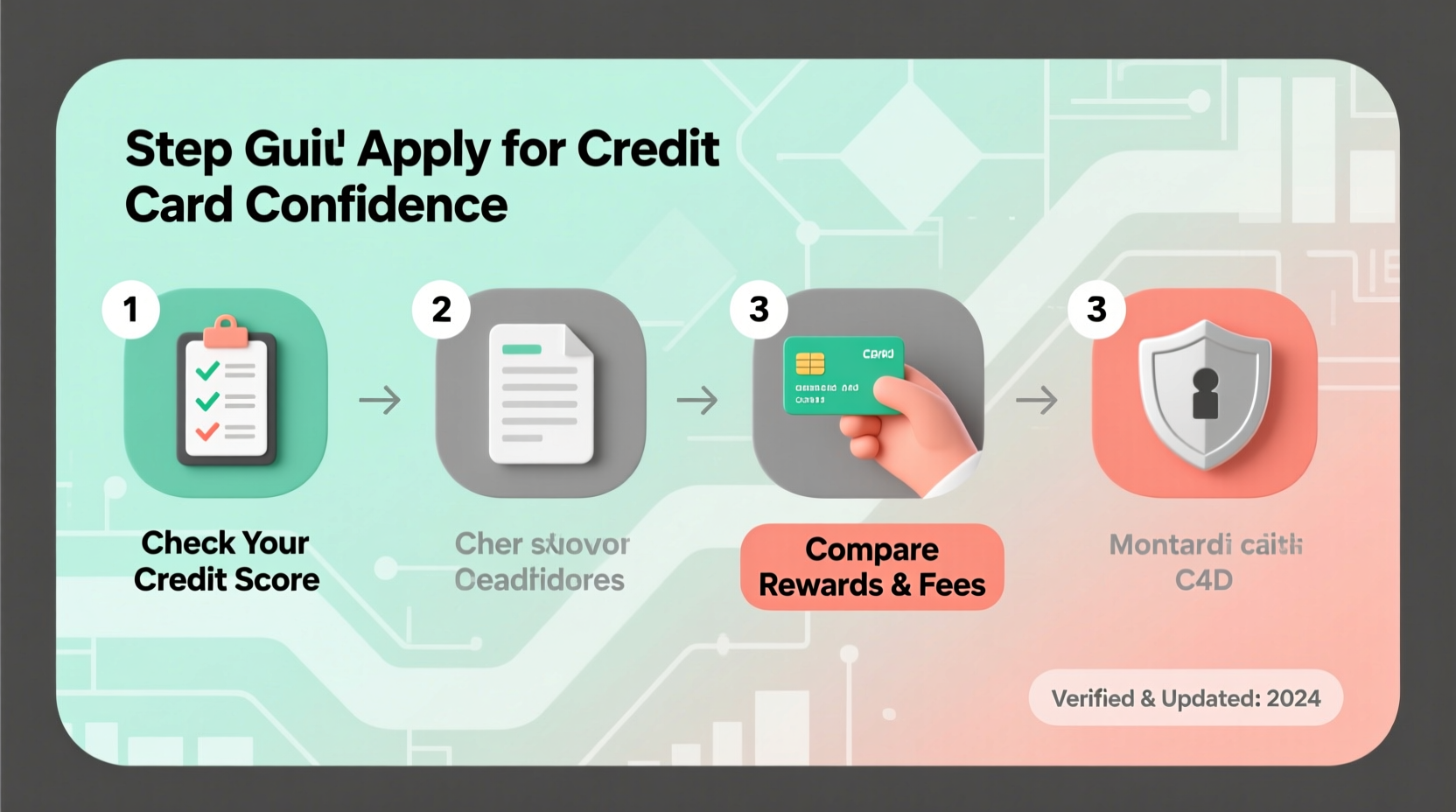
Before applying for any credit card, understand where you stand financially. Lenders evaluate your creditworthiness based on several factors, including your credit score, income, debt-to-income ratio, and existing credit history.
Your FICO credit score is one of the most important determinants. It typically ranges from 300 to 850:
- 300–579: Poor – Limited approval chances
- 580–669: Fair – May qualify for secured or entry-level cards
- 670–739: Good – Eligible for many unsecured cards
- 740–850: Very good to excellent – Access to premium rewards and low-interest offers
If your score is below 600, consider starting with a secured credit card. These require a refundable deposit (often $200–$500), which serves as your credit limit. Responsible use over time can help build or rebuild credit.
Step 2: Define Your Goals and Card Priorities
Credit cards are not one-size-fits-all. Your ideal card depends on what you want to achieve. Common objectives include:
- Earning cash back or travel rewards
- Transferring high-interest balances
- Building or improving credit
- Gaining access to exclusive perks (airport lounges, rental car insurance)
Matching your goal to the right card type increases long-term value. For example, frequent travelers benefit more from airline co-branded cards, while everyday spenders may prefer flat-rate cash-back cards.
“Choosing a card without understanding its annual fee, foreign transaction fees, or reward structure often leads to unexpected costs.” — Lisa Tran, Certified Financial Planner
Step 3: Compare Cards Using Key Criteria
Not all credit cards are created equal. Use this comparison table to evaluate top contenders side-by-side:
| Feature | Rewards Card | Balance Transfer Card | Secured Card | Student Card |
|---|---|---|---|---|
| Best For | Maximizing spending rewards | Paying off existing debt | Building credit | First-time users |
| Intro APR | 0% for 12 months (on purchases) | 0% for 15–21 months | N/A | 0% intro period possible |
| Ongoing APR | 16–26% | 15–28% | 20–30% | 18–27% |
| Annual Fee | $0–$95 (premium up to $550) | Typically $0 | $0–$50 | $0 |
| Reward Rate | 1.5–5% cash back or points | Usually none | None or minimal | 1–2% cash back |
| Credit Needed | Fair to excellent | Good to excellent | Fair or limited | Fair or limited |
Look beyond flashy sign-up bonuses. Ask: Does the card charge foreign transaction fees? Is customer service available 24/7? Are there bonus categories that match your spending habits?
Step 4: Apply Strategically and Safely
When you’ve narrowed your options, it’s time to apply. Here’s how to do it wisely:
- Apply online through the issuer’s official website for fastest processing.
- Have documentation ready: Government ID, Social Security number, proof of income, and employment details.
- Submit only one application at a time. Multiple hard inquiries in a short window can lower your credit score.
- Avoid pre-approval traps. “Pre-approved” doesn’t guarantee approval and still results in a hard pull if you proceed.
Many issuers provide instant decisions. If approved, you may receive a temporary card number for immediate use. The physical card usually arrives within 7–10 business days.
Step 5: Use Your Card Responsibly After Approval
Getting approved is just the beginning. How you use the card determines whether it helps or harms your finances.
Follow this checklist to stay on track:
📋 **Responsible Credit Card Use Checklist**- Pay your balance in full each month to avoid interest
- Keep utilization under 30% (ideally under 10%) of your limit
- Set up automatic payments for at least the minimum due
- Review statements monthly for unauthorized charges
- Never max out your card—even if you pay it off
Maintaining low utilization and making on-time payments are two of the biggest contributors to a strong credit score.
Real Example: Maria’s Smart Upgrade
Maria, a 29-year-old graphic designer, started with a secured card after college with a $300 deposit. She used it for small recurring bills like her phone plan and streaming services, always paying in full. After 14 months, her credit score rose from 610 to 720. She applied for a no-annual-fee cash-back card offering 2% on all purchases. Within two years, she earned $180 in rewards and qualified for a personal loan at a competitive rate—all because she built discipline early.
Common Mistakes to Avoid
- Applying for too many cards at once: Hurts your credit score and raises red flags.
- Ignoring annual fees: A $95 fee wipes out the value of a card unless rewards exceed that cost.
- Carrying a balance to “build credit”: Paying interest is unnecessary; on-time payments alone boost credit.
- Using credit for unaffordable purchases: Credit isn’t free money—it must be repaid.
FAQ
Can I get a credit card with no credit history?
Yes. Consider a secured card, a student card, or becoming an authorized user on a family member’s account. Some issuers also offer credit-builder loans that report to bureaus.
How long does it take to get approved?
Many issuers provide instant decisions online. If additional verification is needed, it may take 7–10 business days. Physical delivery adds another 5–10 days.
Does checking my own credit hurt my score?
No. Checking your own credit is a soft inquiry and does not impact your score. Only hard inquiries from lenders affect it.
Final Thoughts: Confidence Comes From Preparation
Getting a credit card should never be a rushed decision. By understanding your financial position, clarifying your goals, comparing features, and applying thoughtfully, you gain control—not just a piece of plastic. Whether you're establishing credit for the first time or upgrading to a rewards powerhouse, each step you take builds financial confidence.
Remember: A credit card is a tool. In the right hands, it strengthens credit, simplifies budgeting, and even pays you back through rewards. In careless hands, it leads to debt and stress. Choose wisely, use consistently, and let responsible habits compound over time.




 浙公网安备
33010002000092号
浙公网安备
33010002000092号 浙B2-20120091-4
Comments
No comments yet. Why don't you start the discussion?