
Earning a master’s degree is more than an academic achievement—it’s a strategic investment in your professional future. Whether you're aiming to shift careers, increase earning potential, or gain specialized expertise, a graduate degree can open doors that remain closed with only a bachelor’s. Yet the path isn’t always straightforward. From choosing the right program to balancing work and study, success requires planning, persistence, and purpose. This guide breaks down the journey into clear, actionable steps, supported by real-world examples, expert advice, and practical tools to help you succeed.
Step 1: Define Your Goals and Choose the Right Program
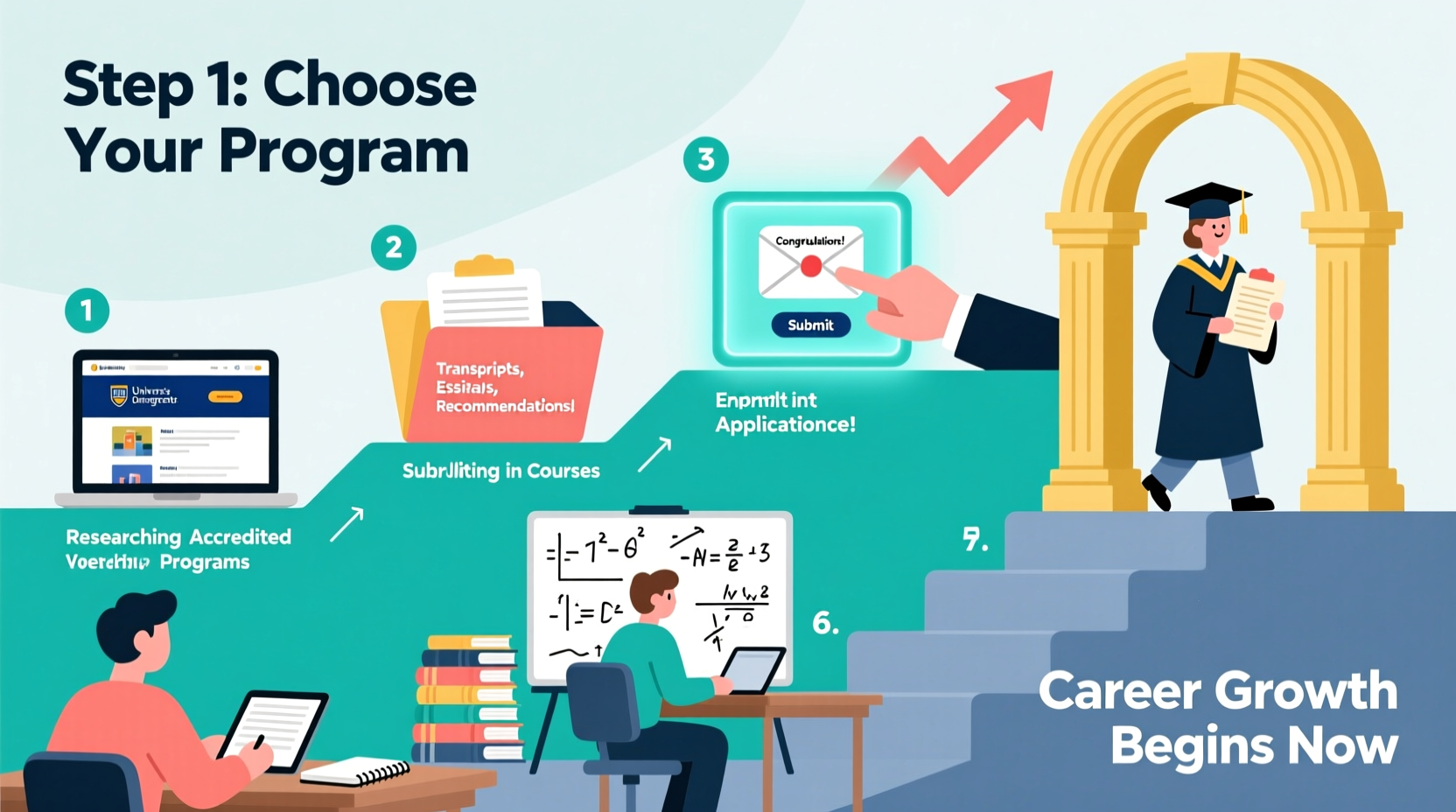
Before applying to any program, clarify why you want a master’s degree. Is it to advance in your current field? Transition into a new industry? Or gain leadership qualifications? Your motivation will shape which degree—and which school—is right for you.
Consider these key factors when evaluating programs:
- Accreditation: Ensure the institution and program are regionally accredited. This affects financial aid eligibility and employer recognition.
- Curriculum: Does the coursework align with your career goals? Look for programs offering hands-on projects, internships, or specializations.
- Delivery Format: Full-time on-campus, part-time evening, online, or hybrid? Choose based on your work and personal commitments.
- Reputation & Outcomes: Research job placement rates, alumni networks, and average salary increases post-graduation.
Step 2: Prepare and Submit a Competitive Application
Admission to master’s programs is often competitive. A strong application goes beyond grades—it tells a compelling story of preparation, purpose, and potential.
Core components typically include:
- Transcripts: Most schools require a minimum GPA (often 3.0+), though some consider upward trends or relevant experience.
- Standardized Tests: While many programs have gone test-optional, GRE, GMAT, or subject-specific exams may still be required—especially in business, engineering, or psychology.
- Letters of Recommendation: Request from professors or supervisors who can speak to your abilities and work ethic. Give them at least four weeks’ notice.
- Statement of Purpose: This is your chance to stand out. Explain why you’re pursuing this degree, how it fits your goals, and what unique perspective you bring.
- Resume/CV: Highlight relevant experience, research, publications, or leadership roles.
“Your statement of purpose should not repeat your resume. It should reveal your intellectual curiosity and professional clarity.” — Dr. Lena Torres, Graduate Admissions Director, University of Michigan
Step 3: Secure Funding and Manage Costs
A master’s degree can cost anywhere from $15,000 to over $60,000, depending on the field and institution. Planning your finances early is critical.
Explore these funding options:
| Funding Source | Pros | Cons |
|---|---|---|
| Institutional Scholarships | No repayment; often merit-based | Limited availability; competitive |
| Federal Student Aid (FAFSA) | Subsidized loans available | Loans accrue interest |
| Employer Tuition Reimbursement | Paid while working; strengthens loyalty | May require staying with company post-graduation |
| Teaching/Research Assistantships | Cover tuition + provide stipend | Demand time; limited spots |
Step 4: Succeed in Your Program and Build Career Value
Getting in is just the beginning. Excelling academically while building professional capital ensures your degree pays off.
Follow this checklist during your studies:
- Set clear weekly goals for assignments, readings, and networking.
- Engage with faculty—they can become mentors, recommenders, or collaborators.
- Join student organizations or professional clubs related to your field.
- Seek internships, capstone projects, or applied research opportunities.
- Update your LinkedIn and resume with new skills and accomplishments as they happen.
Mini Case Study: From Classroom to Career Leap
Sophia Chen worked in marketing for five years but wanted to move into data-driven strategy. She enrolled in a part-time Master of Science in Marketing Analytics at NYU while continuing her job. During her second semester, she completed a predictive modeling project for a nonprofit, which she later showcased in job interviews. Six months after graduation, she secured a senior analyst role at a Fortune 500 company—earning 38% more than her previous position. Her degree didn’t just teach her analytics; it gave her tangible proof of skill.
Step 5: Leverage Your Degree for Career Advancement
The true value of a master’s degree emerges after graduation. Strategic positioning turns your credential into a catalyst for growth.
Here’s a timeline for maximizing impact in your first year post-graduation:
- Month 1–2: Update all professional profiles (LinkedIn, portfolio, CV) with your degree and key projects.
- Month 3: Reach out to alumni network and attend industry events. Share insights from your thesis or capstone.
- Month 4–6: Apply for promotions or lateral moves that align with your new expertise.
- Month 7–12: Pursue certifications or leadership roles that build on your graduate training.
Many employers view advanced degrees as signals of discipline, critical thinking, and commitment. Use that perception to initiate conversations about advancement, even if no opening exists yet.
Frequently Asked Questions
Can I work full-time while earning a master’s degree?
Yes—many students do. Part-time, evening, and online programs are designed for working professionals. Success depends on time management, employer support, and realistic course loads (typically 1–2 classes per term).
Will a master’s degree guarantee a higher salary?
Not automatically—but data shows strong returns. According to the U.S. Bureau of Labor Statistics, workers with a master’s degree earn, on average, 20% more than those with only a bachelor’s. Fields like healthcare, engineering, and computer science often see even greater gains.
Is an online master’s degree respected by employers?
Increasingly, yes—especially from accredited institutions. Many top universities now offer identical curricula and faculty for online and on-campus programs. The key is accreditation and rigor, not delivery mode.
Conclusion: Turn Your Degree Into Momentum
Earning a master’s degree is a significant achievement, but its real power lies in what you do with it. From defining your purpose early to strategically applying your new credentials, every step shapes your long-term trajectory. Whether you're advancing in your current role or pivoting to a new field, the combination of knowledge, credibility, and network gained through graduate study can accelerate your career in ways few other investments can match.




 浙公网安备
33010002000092号
浙公网安备
33010002000092号 浙B2-20120091-4
Comments
No comments yet. Why don't you start the discussion?