
The term “Red Card” is most commonly associated with U.S. immigration policy as a proposed form of legal status for certain undocumented immigrants, particularly those working in agriculture. However, it is often misunderstood or confused with other programs like the H-2A visa or the actual green card. In reality, there is currently no official \"Red Card\" program issued by U.S. Citizenship and Immigration Services (USCIS). Despite this, many people use the term colloquially to refer to agricultural worker visas or potential future legalization pathways. This guide clarifies what the Red Card concept entails, who might be eligible under proposed legislation, and how agricultural workers can navigate existing legal channels.
Understanding the Red Card Concept
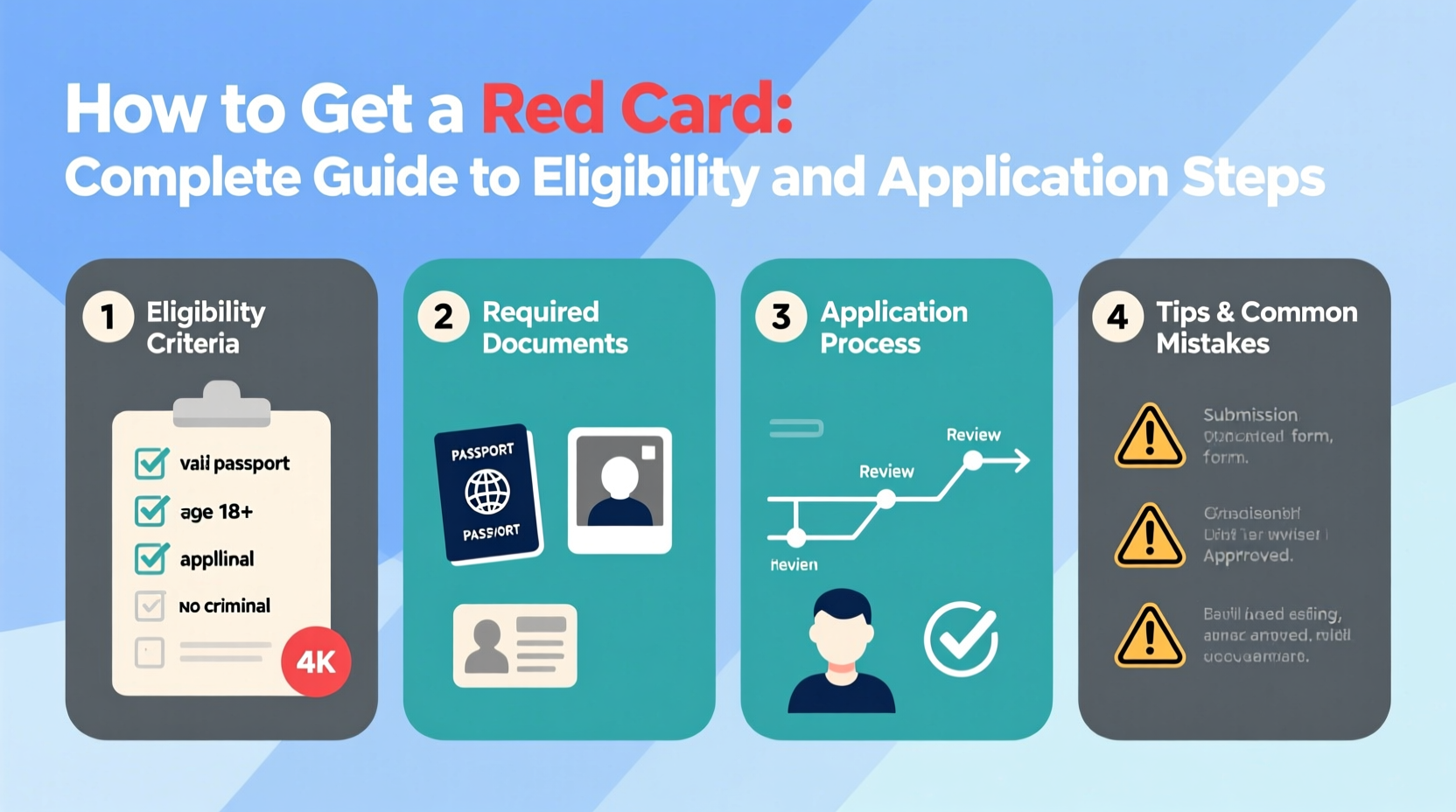
The idea of a Red Card stems from various legislative proposals over the past two decades aimed at creating a temporary or permanent work authorization system for foreign agricultural laborers. Unlike the H-2A visa, which requires employer sponsorship and seasonal intent, a Red Card would theoretically allow year-round employment, portability between employers, and a path toward permanent residency. Though never fully enacted, versions of such bills have been introduced in Congress, including the Agricultural Job Opportunities, Benefits, and Security (AgJOBS) Act.
The core principle behind the Red Card is economic necessity: U.S. farms rely heavily on immigrant labor, yet many workers operate without legal documentation due to outdated quotas and complex processes. A formal Red Card system could stabilize the workforce, protect labor rights, and ensure food supply chain continuity.
“Farmworkers are the backbone of America’s food production. Without a stable, recognized labor force, our agricultural sector faces serious risk.” — Dr. Elena Martinez, Agricultural Policy Analyst at the Migration Policy Institute
Eligibility Criteria Under Proposed Legislation
While no active Red Card program exists today, past legislative drafts outline consistent eligibility requirements. These may serve as a blueprint if similar laws are revived:
- Work History: At least 100–180 days of documented agricultural labor in the U.S. within the last 2–3 years.
- Continuous Presence: Proof of continuous residence in the U.S., typically since before a specific cutoff date (e.g., 2021).
- No Criminal Record: Applicants must pass background checks and not have disqualifying criminal convictions.
- Tax Compliance: Evidence of tax filings or payments related to farm income.
Current Legal Alternatives: The H-2A Visa and Beyond
In the absence of a Red Card, the primary legal avenue for foreign agricultural workers is the H-2A temporary agricultural visa. While not equivalent to a Red Card, understanding this process helps clarify what a future program might improve upon.
| Feature | H-2A Visa | Proposed Red Card |
|---|---|---|
| Duration | Up to 3 years, extendable in seasonal increments | Potentially renewable annually with path to permanency |
| Employer Sponsorship | Required | Not required; worker mobility allowed |
| Path to Green Card | No direct path | Yes, after several years of compliance |
| Year-Round Work | Limited to seasonal needs | Permitted |
| Family Inclusion | Spouses/children can accompany on H-4 (no work) | Dependents may receive derivative status |
The H-2A program has grown significantly—over 350,000 visas were issued in fiscal year 2023—but it faces criticism for tying workers to single employers, increasing vulnerability to exploitation. A true Red Card would address these flaws by granting greater autonomy and long-term security.
Step-by-Step Guide to Preparing for a Potential Red Card Program
Although no application process currently exists, proactive preparation increases chances of success when—and if—a Red Card becomes available. Follow this timeline to stay ahead:
- Document Your Work History (Ongoing): Collect pay records, signed employer letters, W-2s or 1099s, and even photographs of you working on farms.
- Build a Paper Trail of U.S. Presence (Next 6 Months): Gather rental agreements, medical records, school enrollment (for children), bank statements, and utility bills showing your name and address.
- Consult an Immigration Attorney (Within 3 Months of Any Announcement): When legislation is introduced, seek legal counsel immediately to assess eligibility and prepare forms.
- File Preliminary Applications (When Available): Submit all required paperwork promptly during the designated registration window.
- Maintain Clean Status (Ongoing): Avoid any legal issues that could jeopardize your application, including traffic violations that lead to arrest.
Real Example: Maria’s Journey Toward Legal Recognition
Maria, a 42-year-old strawberry harvester in California, has worked in U.S. agriculture for 17 years. She entered without inspection in 2006 and has since worked full-time across multiple farms. Though she lacks formal documentation, she keeps detailed logs of her employment, pays state taxes using an ITIN, and rents a home under her name.
When news broke about a possible Red Card bill in 2023, Maria contacted a nonprofit legal aid group. With their help, she compiled over a decade of evidence: employer affidavits, tax returns, church attendance records, and medical visits. Although the bill stalled in Congress, her file is now ready for submission whenever a new opportunity arises. Her story reflects thousands of workers quietly building lives and contributing to the economy—waiting for recognition.
Frequently Asked Questions
Is there a Red Card available right now?
No. As of 2024, there is no official Red Card program in operation. The term refers to proposed legislation that has not passed into law. Stay informed through USCIS.gov and trusted immigrant advocacy organizations.
Can I apply for a green card through farm work?
Direct paths are limited. Some workers may qualify through family sponsorship, asylum, or special programs like U visas. The EB-3 visa category includes agricultural workers but has long backlogs. Future Red Card legislation could create a dedicated track.
Will a Red Card lead to citizenship?
Under most proposals, yes—but not immediately. Workers would first gain certified agricultural worker status, then become eligible for lawful permanent residence (green card) after meeting work duration and compliance requirements, potentially leading to naturalization later.
Action Checklist: Prepare for a Red Card Opportunity
- ✅ Gather at least three years of agricultural employment proof
- ✅ Obtain tax ID number (ITIN) and file annual returns
- ✅ Collect evidence of continuous U.S. residence (leases, bills, IDs)
- ✅ Register with local immigrant legal service providers
- ✅ Monitor congressional updates on immigration reform
- ✅ Avoid any criminal activity or immigration violations
- ✅ Educate yourself on rights under the H-2A program and labor laws
Conclusion: Stay Informed, Stay Ready
The absence of a formal Red Card does not diminish the value or contributions of agricultural workers. While policy changes remain uncertain, preparation is power. By documenting your work, maintaining clean records, and staying connected to legal resources, you position yourself to act swiftly when opportunities arise. Immigration reform may take time, but history shows that organized, informed communities shape outcomes. Whether through advocacy, testimony, or personal readiness, your role matters.




 浙公网安备
33010002000092号
浙公网安备
33010002000092号 浙B2-20120091-4
Comments
No comments yet. Why don't you start the discussion?