
For many, switching from glasses to contact lenses means greater convenience, improved peripheral vision, and more freedom in daily life. But unlike over-the-counter accessories, contact lenses are medical devices that require proper fitting, professional guidance, and ongoing care. Wearing the wrong lenses—or using them improperly—can lead to infections, corneal damage, or even permanent vision loss. This guide walks you through every step of obtaining contact lenses safely, from getting a valid prescription to making an informed purchase.
Why You Can’t Buy Contacts Without a Prescription
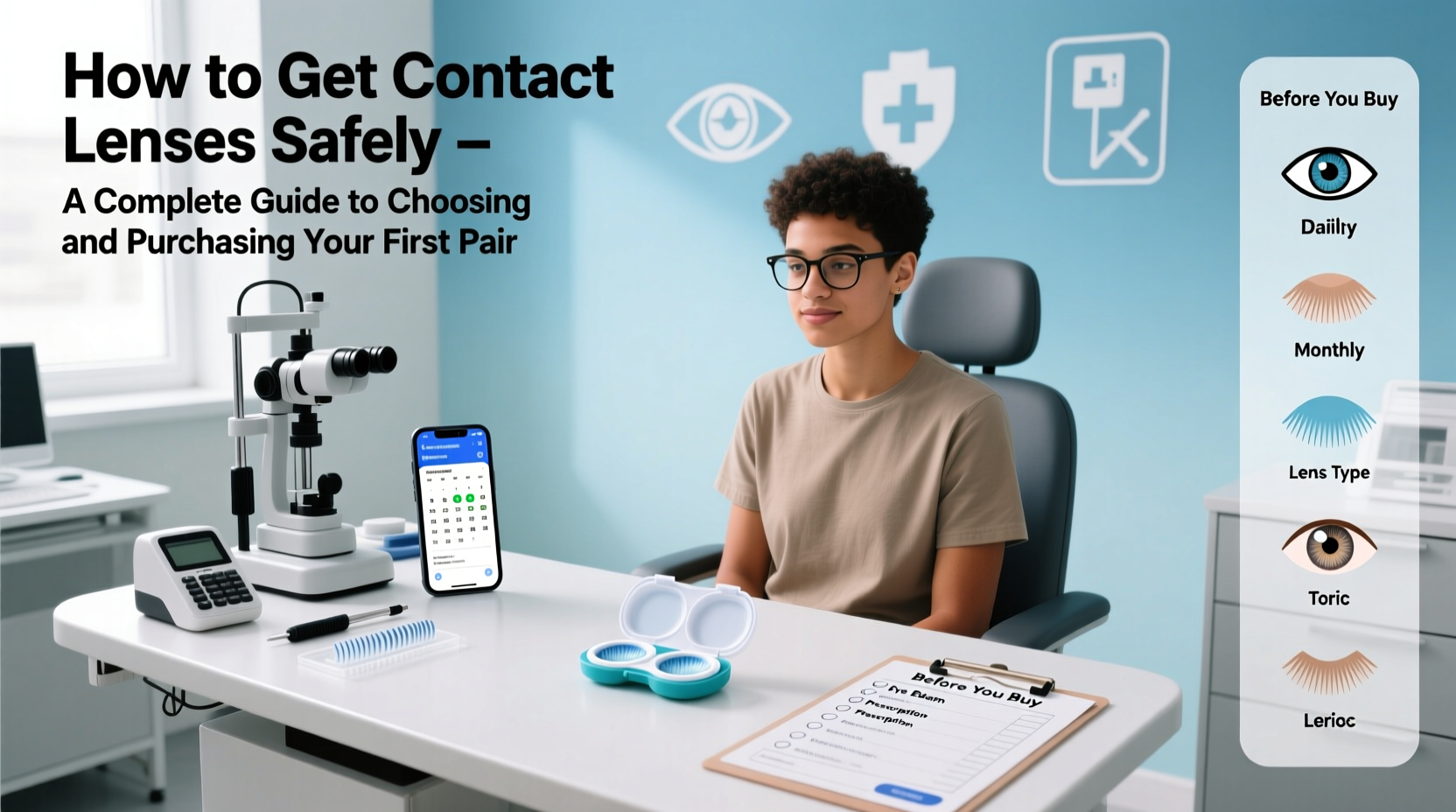
Contact lenses sit directly on the cornea, altering how light enters the eye. Because they interact physically with living tissue, they are classified as Class II medical devices by the U.S. Food and Drug Administration (FDA) and regulated similarly worldwide. A prescription isn’t just a legal requirement—it’s a safeguard for your ocular health.
An optometrist or ophthalmologist determines your exact lens parameters, including:
- Sphere (SPH): Corrects nearsightedness or farsightedness
- Cylinder (CYL) and Axis: Addresses astigmatism
- Base Curve (BC): Matches the curvature of your cornea
- Diameter (DIA): Ensures proper fit across the eye
- Lens material and oxygen permeability
Wearing lenses not prescribed for your eyes—even if the power seems close—can cause discomfort, blurred vision, or serious complications like corneal hypoxia (oxygen deprivation).
“Contact lenses are not one-size-fits-all. Even small deviations in fit can compromise eye health.” — Dr. Lena Torres, Optometrist and Corneal Specialist
Your Eye Exam: What to Expect
A contact lens exam goes beyond a standard vision test. While a routine eye check assesses general eye health and refractive error, a contact lens evaluation includes additional measurements and assessments specific to lens wear.
The process typically involves:
- Refraction Test: Determines your glasses prescription.
- Corneal Topography: Maps the surface of your cornea to detect irregularities, especially important for astigmatism or keratoconus.
- Tear Film Assessment: Evaluates your eye’s ability to stay lubricated—critical for comfort with contacts.
- Eye Surface Health Check: Screens for dry eye, blepharitis, or other conditions that may make lens wear risky.
- Diagnostic Lens Fitting: The doctor places trial lenses on your eyes to assess fit, movement, and visual clarity.
- Follow-Up Visit: After wearing the trial lenses for a day or two, you return to confirm comfort and performance.
Only after this full evaluation will your eye care provider issue a contact lens prescription, which remains valid for one to two years depending on local regulations and your eye health status.
Choosing the Right Type of Contact Lenses
Not all contact lenses are the same. Your lifestyle, eye health, and vision needs determine the best option. Below is a comparison of common lens types:
| Type | Replacement Schedule | Best For | Potential Drawbacks |
|---|---|---|---|
| Daily Disposables | One day (discard after single use) | Allergy sufferers, active lifestyles, beginners | Higher cost per wear; not ideal for high prescriptions |
| Bi-Weekly or Monthly Reusables | Two weeks or one month | Cost-conscious users, stable prescriptions | Require strict cleaning regimen; higher infection risk if mishandled |
| Toric Lenses | Daily or monthly | Astigmatism correction | More expensive; may rotate and blur vision if poorly fitted |
| Multifocal Lenses | Daily or monthly | Presbyopia (age-related near vision loss) | May reduce contrast or clarity compared to single-vision lenses |
| Extended Wear (Rare) | Up to 30 days continuous wear | High oxygen-permeable materials; requires special approval | Increased risk of infection; not recommended for most new wearers |
Beginners often benefit from daily disposables—they eliminate the need for cleaning solutions and reduce the risk of contamination. They’re also ideal for occasional wearers or those with seasonal allergies.
How to Purchase Contact Lenses Safely
Once you have a valid prescription, you’re ready to buy. However, where you purchase matters. Illegitimate retailers may sell expired, counterfeit, or non-FDA-approved lenses.
Step-by-Step Guide to Safe Purchasing
- Verify Your Prescription Is Current: Ensure it hasn’t expired and includes all necessary parameters.
- Buy Only from Licensed Vendors: Choose pharmacies, optical chains, or reputable online retailers that require a prescription before selling.
- Check FDA Approval: Look for lenses approved by regulatory bodies (e.g., FDA in the U.S., CE mark in Europe).
- Avoid “No Prescription Needed” Sites: These are illegal and dangerous. If a site doesn’t ask for your prescription, do not proceed.
- Confirm Exact Lens Match: Double-check brand, base curve, diameter, and power against your prescription.
- Inspect Packaging Upon Arrival: Seals should be intact; expiration date must be visible and future-dated.
Mini Case Study: Sarah’s First Pair
Sarah, 22, wanted contacts for her summer internship. Excited by online ads offering “free trials,” she ordered lenses without a prescription. After wearing them for two days, she experienced redness, pain, and blurred vision. An urgent eye exam revealed corneal abrasions from ill-fitting lenses. She required antibiotic drops and four weeks without contacts. Her doctor emphasized: “Even if lenses feel fine at first, improper fit can silently damage your eyes.” Sarah later got properly fitted lenses and now wears dailies safely.
Essential Care Tips for New Wearers
Proper hygiene is non-negotiable. More than 80% of contact lens complications stem from poor handling practices.
Do’s and Don’ts of Contact Lens Use
| Do’s | Don’ts |
|---|---|
| Wash hands before handling lenses | Use tap water to clean or store lenses |
| Replace storage case every 3 months | Top off old solution with new solution |
| Remove lenses before sleeping, swimming, or showering | Wear lenses longer than recommended |
| Follow replacement schedule strictly | Ignore signs of irritation (redness, pain, tearing) |
If you experience persistent discomfort, remove your lenses immediately and consult your eye doctor. Delaying care can turn a minor irritation into a severe infection like microbial keratitis.
Frequently Asked Questions
Can I wear someone else’s contact lenses if they have the same prescription?
No. Even with identical prescriptions, each person’s corneal shape differs. Lenses that fit one person may rub, dislodge, or restrict oxygen flow on another. Sharing also transfers bacteria and increases infection risk.
Are colored or cosmetic contacts safe?
Yes—but only if prescribed and fitted by an eye care professional. Decorative lenses sold at costume shops or online without a prescription are illegal and frequently cause corneal ulcers. Always treat cosmetic lenses like medical devices.
What should I do if I lose my prescription?
Contact your eye care provider for a copy. Most offices keep digital records and can reissue prescriptions quickly. Never guess lens parameters based on an old pair or glasses prescription.
Final Steps: Building a Safe Routine
Getting your first pair of contact lenses is exciting, but safety must come first. Start with a comprehensive eye exam, choose the right lens type for your needs, and only purchase from trusted sources. Establish a strict hygiene routine from day one—habits formed early become lifelong protections.
Remember: your eyes don’t regenerate damaged tissue. Every decision you make about lens use impacts long-term vision health. Whether you’re wearing contacts for sports, aesthetics, or convenience, doing it safely ensures you enjoy the benefits without the risks.




 浙公网安备
33010002000092号
浙公网安备
33010002000092号 浙B2-20120091-4
Comments
No comments yet. Why don't you start the discussion?