
Starting a business is more than just having a great idea—it’s about execution, resilience, and strategy. Thousands of entrepreneurs launch ventures each year, but only a fraction achieve sustainable growth. The difference often lies in preparation, focus, and the ability to adapt. Whether you're launching a side hustle or building a scalable startup, mastering foundational strategies dramatically increases your odds of long-term success.
Validate Your Idea Before Investing Time and Money
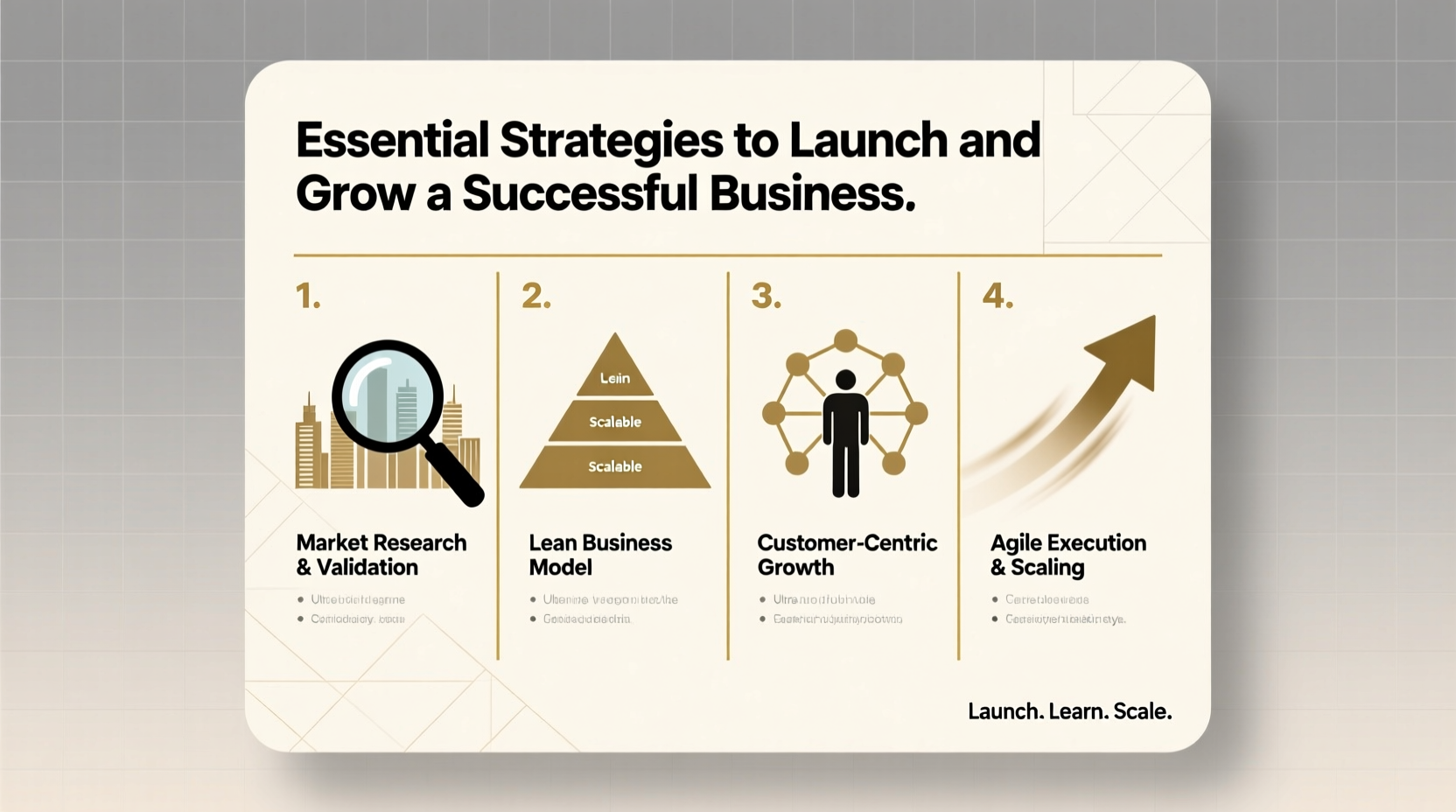
One of the most common mistakes new entrepreneurs make is building a product or service without confirming that anyone actually wants it. Validation isn’t about hoping for demand—it’s about proving it. Start by identifying a real problem people face and determine if your solution offers meaningful relief.
Conduct customer interviews, run surveys, or create a landing page with a pre-order option to gauge interest. If potential customers are willing to commit—either with time or money—you’re on the right track. This early feedback loop helps refine your offering before full-scale development.
The Lean Validation Process
- Define your core hypothesis (e.g., “Busy professionals need faster meal prep solutions.”)
- Create a simple prototype or mockup
- Share it with your target audience through social media, email, or networking events
- Collect feedback and measure engagement (clicks, sign-ups, inquiries)
- Iterate based on insights before spending heavily on production
Build a Scalable Business Model
A compelling idea means little without a viable way to generate revenue. A strong business model outlines how you create, deliver, and capture value. It answers key questions: Who pays? How do they pay? What costs are involved? And can this scale?
Use tools like the Business Model Canvas to map out nine critical components: customer segments, value propositions, channels, customer relationships, revenue streams, key resources, key activities, key partnerships, and cost structure. This visual framework forces clarity and exposes gaps early.
| Component | Description | Example (Meal Kit Startup) |
|---|---|---|
| Customer Segments | Who you serve | Urban professionals aged 28–45 |
| Value Proposition | Why they choose you | Healthy meals ready in 15 minutes |
| Revenue Streams | How you earn | Subscription boxes, one-time purchases |
| Cost Structure | Major expenses | Ingredients, packaging, delivery logistics |
Create a Realistic Launch Plan
Going from idea to market requires more than enthusiasm—it demands planning. A structured launch plan reduces risk and keeps you focused during chaotic early stages. Break your launch into phases: pre-launch, soft launch, and public launch.
- Pre-launch: Finalize branding, build a website, set up payment systems, and start building an audience.
- Soft launch: Release to a small group of beta users. Collect testimonials and fix bugs.
- Public launch: Promote widely using email lists, social media, and PR outreach.
“Many startups fail not because the product is bad, but because they launch too quietly or too broadly without testing.” — Sarah Lin, Founder & CEO of GrowthLab
Launch Checklist
- ✅ Register your business legally
- ✅ Open a dedicated business bank account
- ✅ Secure domain name and build a functional website
- ✅ Set up accounting software (e.g., QuickBooks, Xero)
- ✅ Develop brand assets (logo, color scheme, tone of voice)
- ✅ Create initial marketing materials (email template, social posts)
- ✅ Identify first 100 target customers
- ✅ Test checkout process and customer support flow
Focus on Customer Acquisition and Retention
Growth doesn’t happen in isolation. You need a clear strategy for attracting and keeping customers. In the early days, focus on finding \"true believers\"—people who love your product enough to refer others. Word-of-mouth remains one of the most powerful acquisition channels.
Start with low-cost, high-impact tactics: content marketing, community engagement, strategic partnerships, and referral programs. Track your Customer Acquisition Cost (CAC) and Lifetime Value (LTV). Aim for an LTV:CAC ratio of at least 3:1 to ensure sustainability.
Equally important is retention. It costs five times more to acquire a new customer than to keep an existing one. Implement onboarding emails, loyalty rewards, and regular check-ins to nurture relationships.
Mini Case Study: From Side Project to Six-Figure Revenue
Jamal started a niche online course teaching Excel automation for freelancers. Instead of advertising broadly, he joined freelance forums and Facebook groups, offering free templates in exchange for email sign-ups. Over three months, he built a list of 2,000 subscribers. He then launched his course to this warm audience, pricing it at $97. Within two weeks, he made over $40,000 in sales—with minimal ad spend. By focusing on a specific audience and delivering targeted value, Jamal turned a skill into a profitable business.
Scale with Systems and Team Building
Early traction is exciting, but scaling requires shifting from doing everything yourself to building systems that work without constant oversight. Document processes for sales, fulfillment, customer service, and marketing. Use project management tools like Notion or Trello to standardize workflows.
As revenue grows, consider hiring your first team members. Prioritize roles that free you to focus on strategy and growth—such as operations, customer support, or digital marketing. Outsource non-core tasks like bookkeeping or design when possible.
Scaling also means refining your financial discipline. Monitor cash flow weekly, reinvest profits wisely, and maintain a runway of at least six months of operating expenses. Rapid growth can be deadly if not managed financially.
Frequently Asked Questions
How much money do I need to start a business?
It depends on the type of business. Service-based models (e.g., consulting, coaching) can start for under $1,000. Product-based businesses may require $5,000–$50,000 for inventory, manufacturing, and logistics. The key is to start lean—validate demand before large investments.
Do I need a business degree to succeed?
No. While formal education helps, real-world experience, mentorship, and continuous learning are often more valuable. Many successful founders are self-taught in areas like marketing, finance, and leadership.
When should I consider raising outside funding?
Only after you’ve validated demand and achieved some organic traction. Investors look for evidence of market fit, repeat customers, and a clear path to scalability. Bootstrapping first gives you more control and negotiating power later.
Conclusion: Take Action Today
Getting into business isn’t about waiting for perfect conditions—it’s about starting with what you have and improving through action. Success comes from consistent effort, learning from failures, and staying aligned with customer needs. You don’t need a revolutionary idea; you need a solid strategy and the discipline to execute it.




 浙公网安备
33010002000092号
浙公网安备
33010002000092号 浙B2-20120091-4
Comments
No comments yet. Why don't you start the discussion?