
Fruit flies are more than a seasonal nuisance—they’re persistent invaders that appear the moment overripe fruit sits on the counter or a wine glass is left unwashed. These tiny pests aren’t just annoying; they can contaminate food and multiply rapidly under favorable conditions. A single female can lay up to 500 eggs in decaying organic matter, leading to an explosion in population within days. While chemical sprays offer a quick fix, many people prefer natural solutions that are safe for homes with children, pets, and food preparation areas. The good news: eliminating fruit flies naturally is not only effective but often faster and more sustainable than you might think.
Understanding the Fruit Fly Problem
Fruit flies, scientifically known as *Drosophila melanogaster*, are attracted to fermenting sugars found in overripe fruits, vegetables, spilled drinks, damp mops, garbage disposals, and even empty bottles. They thrive in warm, moist environments and can complete their life cycle—from egg to adult—in as little as eight days. This rapid reproduction means that ignoring a few flies today can result in dozens tomorrow.
They don’t bite, but they do carry bacteria from trash and drains onto kitchen surfaces and food. Because of this, swift action is essential. Natural methods focus on disrupting their breeding cycle, removing attractants, and trapping adults—all without introducing harmful chemicals into your living space.
Immediate Natural Traps That Work Fast
The fastest way to reduce adult fruit fly populations is by deploying simple traps made from household ingredients. These traps lure flies in using fermented scents and trap them effectively.
Apple Cider Vinegar Trap
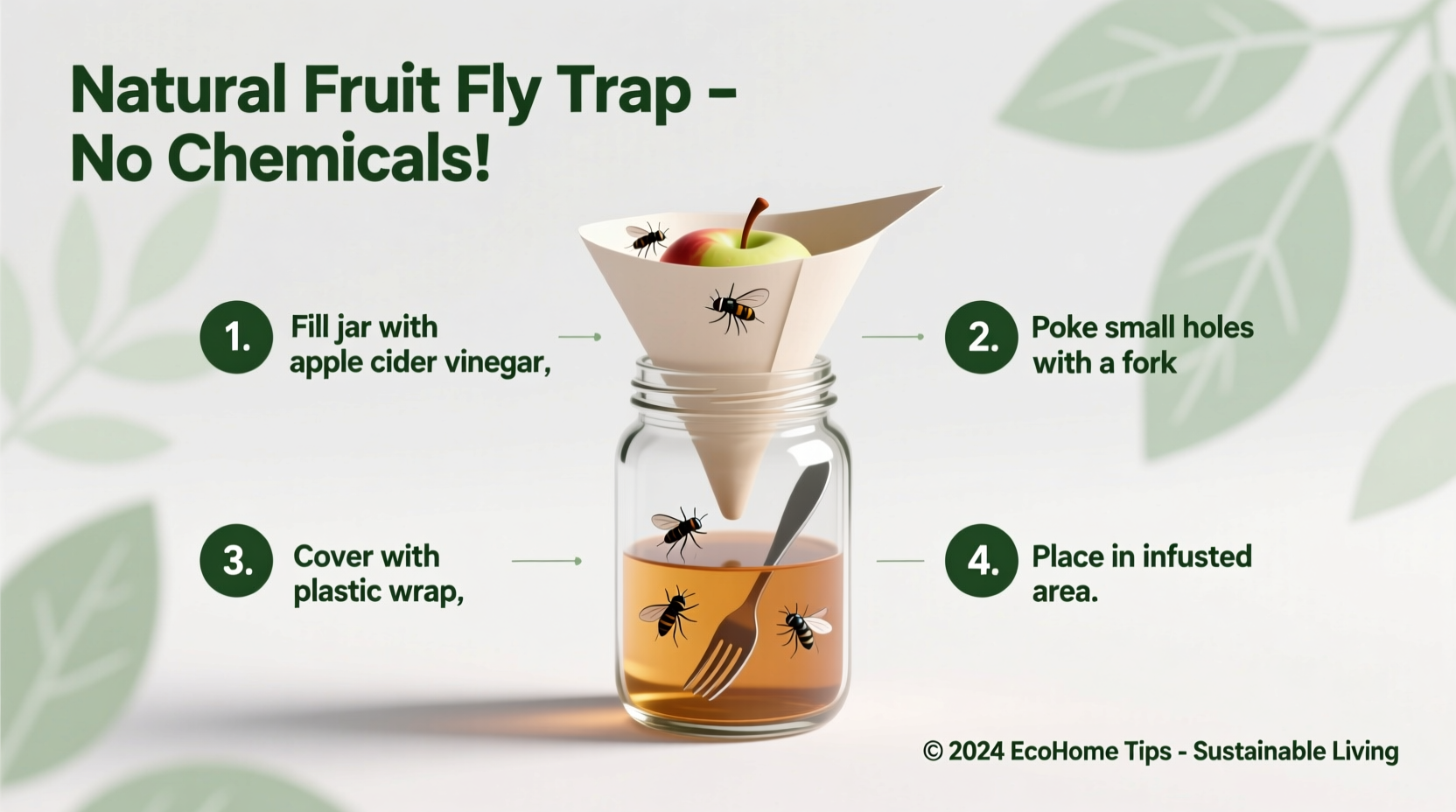
Pour a half-inch of apple cider vinegar into a small bowl. Add a drop of dish soap to break the surface tension. Cover the bowl with plastic wrap and secure it with a rubber band. Poke several small holes in the top. Flies enter through the holes but cannot escape due to the slippery surface and reduced buoyancy caused by the soap.
Rotten Fruit Bait Jar
Place a piece of overripe banana or peach in a mason jar. Roll a piece of paper into a cone and place it in the jar’s mouth, leaving a small gap at the bottom. Flies crawl in easily but struggle to find their way out. Replace every two days.
Red Wine or Beer Trap
Leftover red wine or flat beer works exceptionally well because fruit flies are drawn to fermentation. Pour a small amount into a shallow dish with a few drops of dish soap. Within hours, you’ll notice dead flies accumulating at the bottom.
“Fruit flies are highly responsive to odor cues. Using natural attractants like vinegar or wine gives you an immediate edge in control.” — Dr. Lena Torres, Entomologist, University of California Agriculture Program
Step-by-Step Guide to Eliminate Fruit Flies in 72 Hours
Eliminating fruit flies requires both speed and thoroughness. Follow this timeline-based approach to clear your kitchen in three days or less.
- Day 1 – Identify & Remove Sources (Even Hidden Ones)
- Discard all overripe fruits and vegetables—even those still in bowls or baskets.
- Empty and clean trash cans with soapy water; rinse recycling bins.
- Clean under appliances where food debris may accumulate.
- Check compost bins: if indoors, move them outside temporarily.
- Day 1 – Deploy Multiple Traps
- Set up 2–3 apple cider vinegar traps near problem areas: countertops, sink, trash bin.
- Place one red wine trap near the dining table or bar area.
- Use a fruit bait jar near storage areas like pantries.
- Day 2 – Deep Clean Breeding Zones
- Pour ½ cup baking soda down drains followed by 1 cup white vinegar. Let it fizz for 10 minutes, then flush with boiling water.
- Scrub garbage disposal with a mixture of ice cubes, salt, and lemon peels.
- Wipe down cabinet interiors, especially near fruit bowls or coffee stations.
- Inspect dishrags, sponges, and mop heads—replace or boil them.
- Day 3 – Evaluate & Reinforce
- Remove dead flies from traps and refresh liquid baits.
- If activity continues, increase trap density or switch bait types.
- Seal fruits like bananas, tomatoes, and stone fruits in the refrigerator.
- Ensure no standing water remains in sinks or plant saucers.
Do’s and Don’ts When Fighting Fruit Flies
| Do’s | Don’ts |
|---|---|
| Store ripe produce in the fridge or sealed containers | Leave fruit uncovered on counters for more than a few hours |
| Clean drains weekly with baking soda and vinegar | Ignore slow-draining sinks or foul odors from pipes |
| Take out trash daily during warm months | Use aerosol sprays near food prep areas unless absolutely necessary |
| Inspect grocery bags before storing—eggs can hitchhike on fruit skins | Assume the problem is solved after one day of no sightings |
| Use multiple trap types simultaneously | Reuse old traps without cleaning—decomposing flies can attract more pests |
Real-Life Example: A Kitchen Turnaround in 48 Hours
Sarah, a home cook in Austin, Texas, returned from a weekend trip to find her kitchen swarming with fruit flies. She had left a peach and a bunch of grapes on the counter, and the warm summer air accelerated fermentation. By Sunday evening, dozens of flies were hovering near her sink and wine glasses.
Instead of reaching for insect spray, she followed a natural protocol. On Monday morning, she discarded all exposed produce, cleaned her sink drain with baking soda and vinegar, and set three traps: one with apple cider vinegar, one with red wine, and a paper-cone jar baited with banana peel. She also ran her dishwasher on sanitize mode to eliminate any hidden larvae.
By Tuesday afternoon, fly activity dropped by over 90%. She replaced the traps and wiped down cabinets with diluted vinegar. By Wednesday, her kitchen was fly-free. Sarah now keeps a spare trap ready and refrigerates all soft fruits immediately.
Long-Term Prevention Strategies
Killing adult flies is only half the battle. Lasting results come from preventing new generations from hatching.
- Refrigerate vulnerable produce: Berries, melons, peaches, and tomatoes should be stored in the fridge once ripe.
- Wash produce immediately: Rinse fruits and vegetables upon bringing them home to remove potential eggs.
- Seal compost: If using an indoor compost container, ensure it has a tight lid and empty it every 2–3 days.
- Maintain drains: Flush monthly with hot water and use enzyme-based drain cleaners to break down organic buildup.
- Air circulation: Use exhaust fans or open windows to reduce humidity in kitchens and dining areas.
Frequently Asked Questions
How long does it take to get rid of fruit flies naturally?
With consistent effort, most infestations can be eliminated within 3–5 days. However, because eggs hatch continuously, it’s important to maintain traps and cleanliness for up to two weeks to catch emerging adults.
Can fruit flies come from drains even if I don’t see food there?
Yes. Fruit fly larvae thrive in the biofilm—a slimy layer of organic gunk—that builds up inside drainpipes. Even if the sink looks clean, this residue can harbor eggs. Regular cleaning with baking soda and vinegar helps disrupt this environment.
Are fruit flies dangerous?
While they don’t bite or sting, fruit flies can transfer bacteria like E. coli and Salmonella from garbage and sewage to food surfaces. For this reason, controlling them quickly is important for food safety.
Natural Solutions Checklist
Use this checklist to ensure comprehensive treatment:
- ✅ Discard overripe or fermenting produce
- ✅ Clean all countertops, cutting boards, and utensils
- ✅ Set up at least two different types of natural traps
- ✅ Treat all drains with baking soda and vinegar
- ✅ Empty and sanitize trash and recycling bins
- ✅ Inspect and clean sponges, rags, and mops
- ✅ Store remaining fruits and vegetables in sealed containers or the fridge
- ✅ Monitor trap effectiveness and replace every 48 hours
- ✅ Continue prevention steps for at least two weeks
“The most effective fruit fly control isn’t about killing adults—it’s about removing the conditions they need to survive and reproduce.” — National Pest Management Association
Conclusion: Take Action Now, Stay Fly-Free Later
Getting rid of fruit flies fast using natural methods is entirely achievable with prompt action and attention to detail. The key lies not in a single magic solution, but in combining targeted traps, rigorous sanitation, and preventive habits. Unlike chemical sprays, these approaches protect your health while addressing the root causes of infestation. Once you’ve cleared the current outbreak, maintaining a clean, dry kitchen and storing produce properly will keep fruit flies from returning.




 浙公网安备
33010002000092号
浙公网安备
33010002000092号 浙B2-20120091-4
Comments
No comments yet. Why don't you start the discussion?