
Scratches on eyeglass lenses are more than just a cosmetic nuisance—they can distort vision, create glare, and reduce comfort during prolonged screen use or night driving. When faced with a scuffed lens, many turn to a widely shared DIY remedy: the toothpaste hack. Rubbing toothpaste on scratched lenses and buffing them clean has become a go-to solution passed around in forums, social media, and even casual conversations. But does it actually work? More importantly, could it do more harm than good?
This article examines the truth behind the toothpaste method, explores the science of lens materials, evaluates safer alternatives, and provides practical guidance for preventing and managing scratches—so you can make informed decisions about your eyewear care.
The Science Behind Lens Scratches
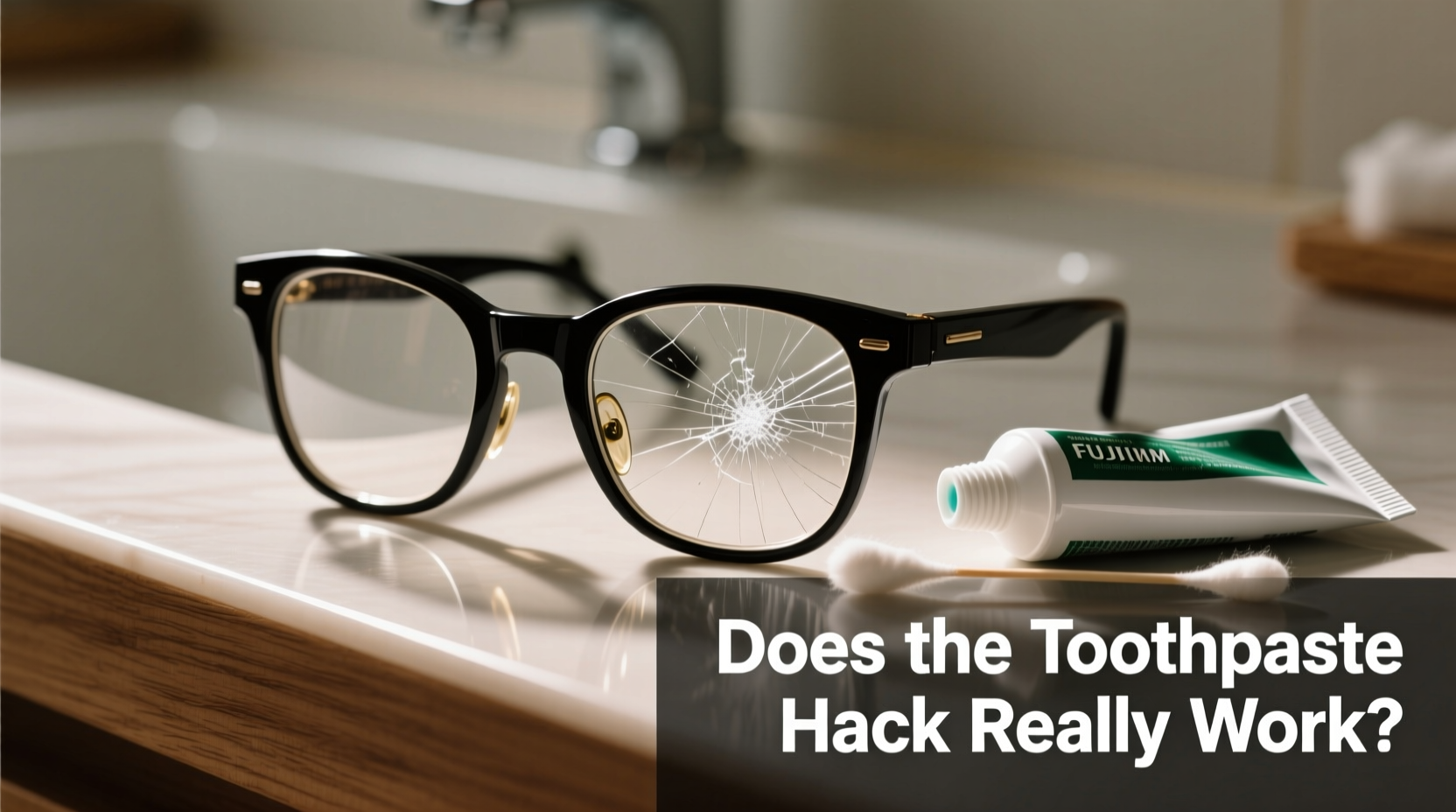
To understand whether toothpaste can repair scratches, it’s essential to first grasp what causes them and how lens surfaces respond to abrasion.
Glasses lenses are typically made from plastic (polycarbonate or CR-39), glass, or high-index materials. Most modern lenses are plastic-based due to their lightweight nature and impact resistance. However, plastic is softer than glass and more prone to scratching—even from seemingly harmless actions like wiping lenses with a shirt or storing them face-down on rough surfaces.
A scratch is a physical indentation in the lens surface. Unlike smudges or haze, which sit on the surface and can be cleaned, scratches alter the lens's topography. Light passing through a scratched area refracts unevenly, causing visual distortion, halos, or reduced contrast.
Some lenses come with scratch-resistant coatings, but these are not scratch-proof. Over time, micro-abrasions accumulate, especially if lenses aren’t properly cared for.
How the Toothpaste Hack Works (or Doesn’t)
The logic behind using toothpaste lies in mild abrasiveness. Many conventional toothpastes contain silica or calcium carbonate—fine abrasive agents designed to scrub away plaque without damaging enamel. The idea is that these same particles can “buff out” shallow scratches on lenses by smoothing the surrounding surface.
In theory, this might seem plausible. After all, automotive polish uses abrasives to level minor paint imperfections. But there are critical differences between car paint and optical lenses.
Lens surfaces require extreme precision. Even microscopic changes can disrupt optical clarity. While toothpaste may slightly reduce the visibility of very fine surface marks, it cannot truly “remove” a scratch. Instead, it redistributes material around the groove, potentially creating a hazy spot that diffuses light rather than reflecting it cleanly.
Moreover, not all toothpastes are created equal. Gel formulas, whitening pastes, or those labeled “extra strength” often contain larger abrasive particles or chemicals like baking soda or hydrogen peroxide, which can damage anti-reflective, UV, or hydrophobic coatings.
“Using household products like toothpaste on coated lenses risks irreversible coating degradation. Once the coating is compromised, the lens performs poorly in low light and becomes harder to clean.” — Dr. Lena Torres, Optometric Technician & Eyewear Care Specialist
Step-by-Step: What Happens When You Use Toothpaste?
If someone proceeds with the toothpaste method despite the risks, here’s a typical sequence—and where things can go wrong:
- Clean the lenses: Rinse with water and dry gently with a microfiber cloth to remove debris.
- Apply toothpaste: A pea-sized amount of non-gel, non-whitening toothpaste is dabbed onto the lens.
- Buff in circular motions: Using a soft cloth, the paste is rubbed over the scratch for 30–60 seconds.
- Rinse and inspect: The lens is washed again and examined under light.
Results vary. Some users report temporary improvement in superficial scuffs, particularly on uncoated plastic lenses. Others notice increased cloudiness, loss of coating sheen, or worsened glare. In rare cases, vigorous rubbing can deepen existing scratches or introduce new ones.
The effect is rarely uniform across the lens, leading to inconsistent optics—a serious concern for anyone relying on precise vision correction.
Do’s and Don’ts of Scratch Removal
To help clarify best practices, here’s a comparison of recommended versus risky behaviors when dealing with scratched lenses.
| Do’s | Don’ts |
|---|---|
| Use manufacturer-recommended lens cleaners | Use household cleaners like Windex or vinegar |
| Clean lenses with a microfiber cloth and lens-safe solution | Wipe lenses with paper towels, tissues, or clothing |
| Store glasses in a hard case when not in use | Leave glasses face-up on surfaces where they can collect dust |
| Consider professional resurfacing for deep scratches | Use sandpaper, baking soda, or metal polishes |
| Replace lenses if scratches impair vision | Attempt DIY fixes on coated or prescription lenses |
Proven Alternatives to the Toothpaste Hack
If toothpaste isn’t a reliable fix, what options exist for addressing scratches?
1. Professional Lens Resurfacing
Some optical labs offer lens polishing services for uncoated plastic lenses. This process uses calibrated buffing machines to smooth the surface. However, it’s not suitable for most modern lenses because it removes material and can alter the prescription, especially in progressive or high-index lenses. It also eliminates any existing coatings.
2. Lens Replacement
For deeply scratched or coated lenses, replacement is often the safest and most effective solution. Most opticians can replace lenses while keeping your current frames, which is typically more affordable than buying a new pair. Costs vary depending on prescription complexity and coating choices (e.g., blue light filter, polarization).
3. Temporary Coating Kits
While not a repair method, some retail kits claim to fill minor scratches with a liquid polymer that dries clear. These are generally intended for camera lenses or screens and have mixed reviews when applied to eyeglasses. They may reduce the appearance of fine lines but don’t restore optical integrity.
4. Preventative Maintenance
Prevention is far more effective than cure. Regular cleaning, proper storage, and avoiding contact with abrasive surfaces significantly extend lens life.
“Once a lens coating is damaged, there’s no way to restore it at home. Prevention through proper handling is the only true long-term strategy.” — James R. Kim, Optical Laboratory Manager
Real-World Example: A Cautionary Tale
Sarah, a graphic designer from Portland, noticed a spiderweb of fine scratches on her anti-reflective computer glasses after six months of daily use. She tried the toothpaste method after seeing a viral TikTok video. Using a popular whitening paste, she buffed both lenses vigorously for two minutes.
At first, the scratches seemed less visible. But within hours, she noticed a rainbow-like haze around bright lights and difficulty focusing during evening screen work. She visited her optometrist, who confirmed that the anti-reflective coating had been stripped in multiple areas. The lenses were no longer fit for professional use, and Sarah had to pay $180 to replace them—money she would have saved by seeking professional advice sooner.
Sarah now keeps a microfiber cloth at her desk, uses a spray cleaner labeled safe for coated lenses, and stores her glasses in a padded case. “I learned the hard way,” she says. “That five-minute hack cost me weeks of discomfort and unnecessary expense.”
Checklist: How to Safely Handle Scratched Glasses
- Assess the severity: Hold lenses under bright light. If you can feel the scratch with a fingernail, it’s likely too deep to fix at home.
- Determine lens type: Check with your optician if your lenses have anti-reflective, scratch-resistant, or blue-light coatings.
- Avoid abrasive substances: No toothpaste, baking soda, sandpaper, or window cleaners.
- Consult a professional: Visit your optometrist or optical lab for an evaluation.
- Replace when necessary: If vision is impaired or glare is distracting, invest in new lenses.
- Upgrade protection: Consider lenses with enhanced durability coatings for future pairs.
Frequently Asked Questions
Can I use baking soda instead of toothpaste?
No. Baking soda is more abrasive than most toothpastes and highly likely to damage lens coatings or deepen scratches. It should never be used on eyeglass lenses.
Are some lenses more scratch-resistant than others?
Yes. Glass lenses are naturally more scratch-resistant but heavier and less impact-safe. High-quality plastic lenses often come with factory-applied scratch-resistant coatings. Polycarbonate lenses are impact-resistant but benefit greatly from added protective layers.
Will insurance cover scratched lens replacement?
It depends on your vision plan. Some insurance providers cover lens replacements due to damage, but often only once per year and with a copay. Check your policy details or ask your optician to file a claim.
Conclusion: Protect Your Vision, Not Just Your Lenses
The toothpaste hack may appear to offer a quick, cost-free solution to scratched glasses, but the risks far outweigh any marginal benefits. At best, it provides a temporary illusion of improvement. At worst, it compromises lens coatings, degrades optical performance, and shortens the lifespan of your eyewear.
True lens care isn’t about quick fixes—it’s about consistency, knowledge, and respect for the precision engineering behind your glasses. From using the right cleaning tools to storing your frames properly, every small habit contributes to clearer vision and longer-lasting lenses.
If scratches are already present, resist the urge to experiment. Seek professional guidance. In many cases, replacing the lenses is not only safer but also more economical in the long run. And when selecting your next pair, consider investing in premium coatings that offer real protection against scratches, glare, and digital eye strain.




 浙公网安备
33010002000092号
浙公网安备
33010002000092号 浙B2-20120091-4
Comments
No comments yet. Why don't you start the discussion?