
Selling on Amazon has become one of the most accessible ways for entrepreneurs and small businesses to reach millions of customers worldwide. With over 300 million active users, Amazon offers unparalleled exposure and infrastructure. But for new sellers, the process can seem overwhelming—navigating registration, understanding fees, listing products, and managing logistics all require careful planning. This guide breaks down the entire journey into clear, actionable steps so you can launch your Amazon business with confidence.
Step 1: Choose Your Selling Plan
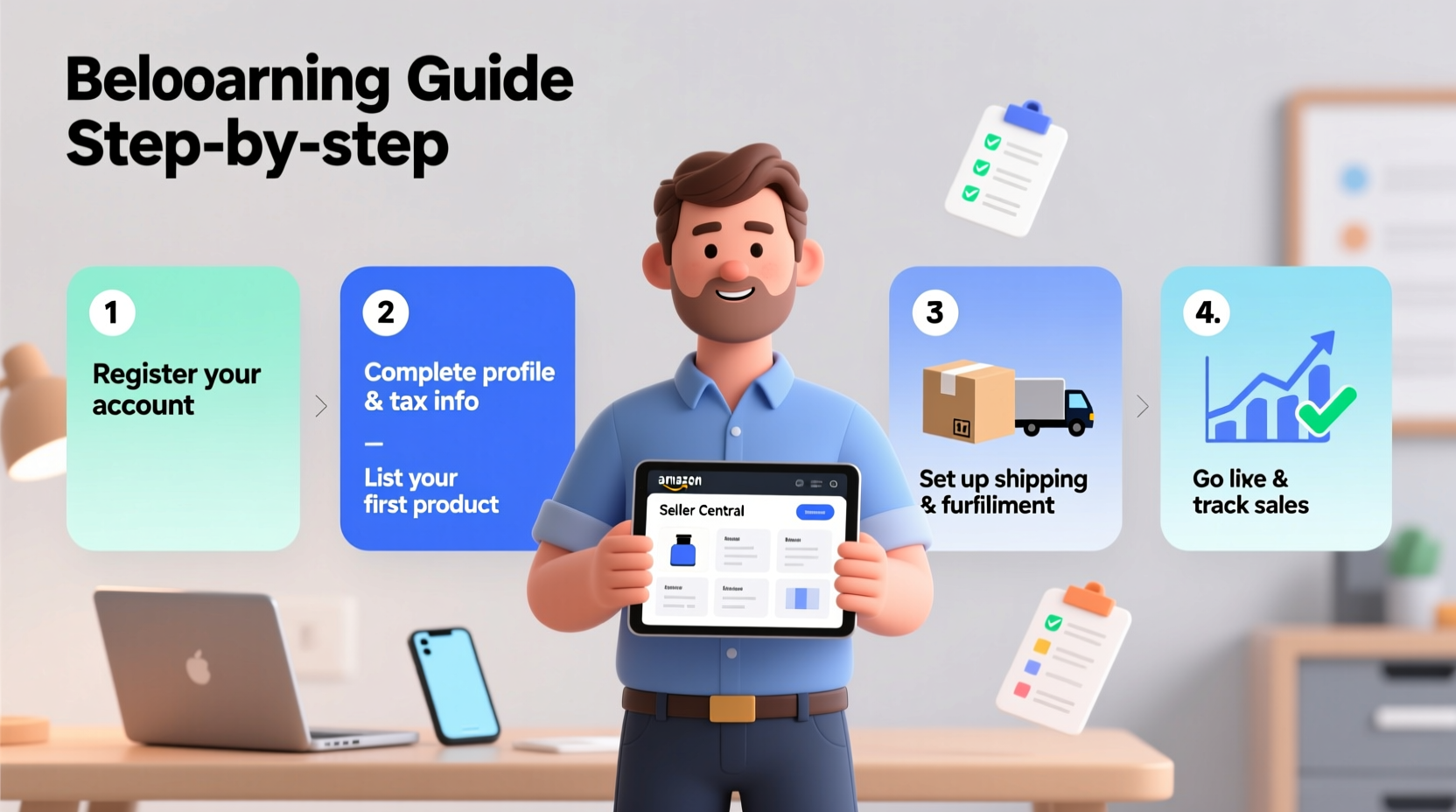
Amazon offers two primary selling plans: Individual and Professional. Your choice depends on how many items you plan to sell each month.
| Feature | Individual Plan | Professional Plan |
|---|---|---|
| Monthly Fee | $0 | $39.99 |
| Per-Item Fee | $0.99 | $0.00 |
| Unlimited Listings | No (limited to 40/month) | Yes |
| Access to Bulk Tools | No | Yes |
| Brand Registry Eligibility | No | Yes |
If you're serious about building a sustainable business, the Professional plan is almost always the better long-term option. It unlocks essential tools like inventory reports, advertising, and API access, which are crucial for scaling.
Step 2: Register Your Seller Account
To begin, visit sellercentral.amazon.com and click “Register Now.” You’ll need the following information:
- A valid email address
- Your government-issued ID (for identity verification)
- A phone number (for two-factor authentication)
- A bank account (to receive payments)
- A credit card (for identity confirmation)
The registration process typically takes 24–72 hours. Amazon may contact you for additional verification, especially if you're registering from outside the U.S. Be prepared to provide documentation such as a utility bill or tax ID.
“We see thousands of new sellers every month, but the ones who succeed are those who treat Amazon like a real business—not just a side hustle.” — Raj Patel, Amazon Marketplace Advisor
Step 3: Decide What to Sell
Choosing the right product is the foundation of your success. Avoid guesswork by conducting thorough market research. Focus on three key factors: demand, competition, and profitability.
Use Amazon’s Best Sellers Rank (BSR) to gauge demand. A lower BSR indicates higher sales volume. Look for products with a BSR under 5,000 in their category. At the same time, analyze customer reviews to identify common complaints—these reveal opportunities for product improvement.
Product Research Checklist
- ✅ Is there consistent demand? (Check BSR trends)
- ✅ Are competitors making sales? (Look at review velocity)
- ✅ Can I source it profitably? (Compare landed cost vs. selling price)
- ✅ Is it lightweight and easy to ship? (Lower FBA fees)
- ✅ Does it have room for branding or differentiation?
Step 4: Source Your Products
There are several ways to acquire inventory:
- Wholesale: Buy branded goods in bulk from authorized distributors.
- Private Label: Work with a manufacturer to create your own branded version of an existing product.
- Arbitrage: Buy discounted items from retail stores or online and resell them on Amazon.
- Handmade: Create and sell unique, handcrafted items through Amazon Handmade.
For private label, platforms like Alibaba or ThomasNet connect you with global suppliers. Always request samples before placing large orders. Confirm packaging, labeling, and quality meet Amazon’s standards.
Mini Case Study: From Idea to First Sale
Lisa, a fitness enthusiast from Colorado, noticed that yoga mat straps were frequently mentioned in negative reviews—many broke or lacked padding. She sourced a durable, padded version from a supplier in Vietnam, branded them under her name “ZenGrip,” and launched on Amazon using Fulfillment by Amazon (FBA). Within three months, she was selling 200 units per week, with a 4.7-star average rating. Her initial investment was $2,500, and she turned a profit by month four.
Step 5: List Your Product on Amazon
A compelling product listing drives conversions. It includes:
- Title: Clear, keyword-rich, and under 200 characters.
- Images: High-resolution (1000x1000 pixels), white background, multiple angles.
- Price: Competitive, factoring in Amazon fees and shipping.
- Description: Benefit-focused, scannable, and mobile-friendly.
- Bullet Points: Highlight key features and solve customer pain points.
- Search Terms: Backend keywords that improve discoverability.
Example title: Premium Padded Yoga Mat Strap for Carrying & Storage – Non-Slip, Adjustable, Lightweight – ZenGrip Fitness Accessory
Use Amazon’s Keyword Tool or third-party software like Helium 10 to identify high-traffic search terms. Avoid keyword stuffing—Amazon penalizes unnatural language.
“Your listing isn’t just information—it’s a sales pitch. Every word should answer a customer’s unspoken question: ‘Why should I buy this?’” — Sarah Kim, Conversion Optimization Specialist
Fulfillment: FBA vs. FBM
You have two options for handling orders:
- Fulfillment by Amazon (FBA): Ship inventory to Amazon warehouses. They handle storage, packing, shipping, returns, and customer service. You pay storage and fulfillment fees, but gain eligibility for Prime shipping.
- Fulfillment by Merchant (FBM): You store and ship orders yourself. More control, but slower delivery and no Prime badge unless enrolled in Seller Fulfilled Prime.
FBA is recommended for beginners. It simplifies logistics and boosts visibility—Prime-eligible listings convert up to 3x higher than non-Prime items.
Launch and Promote Your Product
Getting your first reviews is critical. Without social proof, even great products struggle to gain traction. Amazon prohibits paying for reviews, but you can use their Vine Program, which allows you to send free products to trusted reviewers in exchange for honest feedback.
Additionally, consider:
- Running Amazon PPC (Pay-Per-Click) ads to increase visibility.
- Offering limited-time discounts via Coupons or Lightning Deals.
- Using external traffic sources like social media or email lists to drive initial sales.
Frequently Asked Questions
Do I need a business license to sell on Amazon?
In most cases, yes. While Amazon doesn’t require a business license during registration, many states do require one if you’re operating as a formal business. Additionally, certain categories (like beauty or food) may require approvals or permits.
How much money do I need to start?
You can start with as little as $500 if you're doing retail arbitrage or selling used items. For private label, expect to invest $2,000–$5,000 for product development, manufacturing, shipping, and initial marketing.
Can I sell from outside the U.S.?
Yes. Amazon Global Selling allows international sellers to list on marketplaces like the U.S., Canada, UK, and Germany. You’ll need to comply with local tax laws and may need a U.S. EIN if storing inventory domestically.
Conclusion: Take the First Step Today
Starting to sell on Amazon doesn’t require special skills or massive capital—just a clear plan and consistent execution. By choosing the right product, optimizing your listing, and leveraging Amazon’s powerful fulfillment network, you can build a profitable business from anywhere in the world. The marketplace rewards those who focus on customer experience, reliability, and continuous improvement. Don’t wait for perfect conditions. Start small, learn fast, and scale what works.




 浙公网安备
33010002000092号
浙公网安备
33010002000092号 浙B2-20120091-4
Comments
No comments yet. Why don't you start the discussion?