
Earning community service hours doesn’t have to be a slow, disorganized process. Whether you're a student fulfilling school requirements, applying for college, or building experience for a scholarship, completing your hours efficiently is possible with the right approach. The key lies in strategic planning, leveraging high-opportunity organizations, and focusing on roles that offer both volume and impact. This guide outlines actionable methods to accumulate hours quickly while contributing meaningfully to your community.
Identify Your Target and Timeline
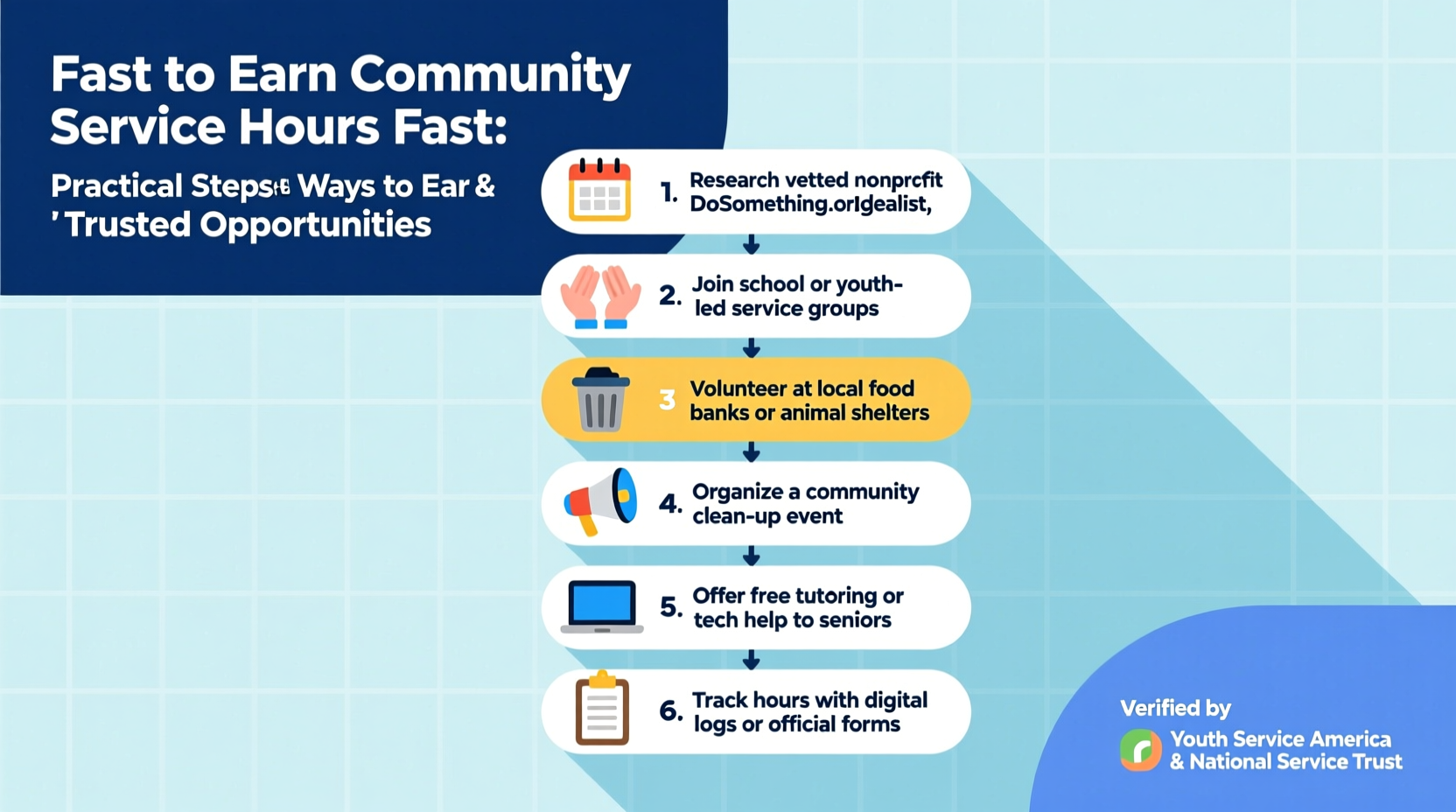
The first step toward earning hours fast is clarity. Know exactly how many hours you need and by when. A student aiming for 100 hours over six months has more flexibility than someone needing 50 hours in two weeks. Break down your goal into weekly targets—this turns an overwhelming task into manageable chunks.
For example, if you need 60 hours in 30 days, aim for roughly two 4-hour shifts per day, five days a week. That’s 40 hours from consistent effort, leaving room for weekend events or longer volunteer days to make up the remainder.
Target High-Impact Volunteer Opportunities
Not all volunteer roles are created equal. Some positions allow you to rack up hours quickly due to their duration, frequency, or structure. Focus on opportunities where time tracking is transparent and supervisors are reliable for signing off on documentation.
Top Fast-Track Volunteer Roles
- Event Support: Festivals, charity runs, food drives, and back-to-school supply distributions often need volunteers for full-day shifts.
- Homeless Shelter Assistance: Many shelters welcome help with meal prep, sorting donations, and overnight supervision—roles that can span 4–8 hours.
- Habitat for Humanity Builds: Construction projects typically run 8-hour days and provide verified logs.
- Animal Shelters: Weekend adoption events or cleaning marathons can yield multiple hours at once.
- Senior Centers: Hosting activities or assisting with outings often involves half- or full-day commitments.
“Students who choose event-based volunteering can complete 75% of their required hours in just three weekends.” — Dr. Lena Torres, Director of Youth Engagement, National Volunteer Network
Step-by-Step Guide to Accelerate Your Hours
Follow this five-step plan to maximize efficiency and minimize delays:
- Week 1: Research & Contact
Search local nonprofits, religious centers, schools, and city programs. Use platforms like VolunteerMatch, Idealist, or United Way to find active opportunities. Call or email coordinators to ask about immediate openings and time-tracking policies. - Week 2: Commit to Multi-Hour Shifts
Sign up for at least two full-day events (e.g., Saturday food packing at a food bank) and schedule recurring weekday evening roles (e.g., tutoring from 5–8 PM). - Week 3: Stack Weekends
Volunteer Friday evening through Sunday. Look for festivals, clean-up campaigns, or donation drives that accept walk-ins or last-minute helpers. - Week 4: Follow Up & Document
Request signed verification forms or digital certificates. Keep a log with dates, start/end times, supervisor names, and contact info. - Ongoing: Repeat High-Yield Roles
If allowed, return to the same organization. Familiarity speeds up check-in and increases trust, often leading to longer shifts or special assignments.
Trusted Platforms and Local Resources
Leverage national and local networks that streamline access to verified opportunities. These organizations track hours reliably and often partner with schools and institutions.
| Organization | Type of Work | Avg. Hours per Shift | How to Join |
|---|---|---|---|
| Feeding America Food Banks | Packing meals, sorting donations | 4–8 hours | Register online at feedingamerica.org/volunteer |
| Habitat for Humanity | Construction, site cleanup | 6–10 hours | Visit habitat.org/volunteer and locate your chapter |
| Red Cross Blood Drives | Guest assistance, registration support | 5–7 hours | Sign up as a volunteer at redcross.org |
| Local Animal Shelters | Cleaning, walking dogs, adoption events | 3–6 hours | Contact your municipal shelter directly |
| Parks & Recreation Departments | Trail maintenance, event staffing | 4–8 hours | Check city website or visit community center |
Real Example: How One Student Earned 80 Hours in 6 Weeks
Jamal, a high school junior, needed 80 community service hours for his honor society application due in seven weeks. He began by contacting the local food bank, which had a major holiday packing event scheduled for a Saturday. He volunteered for two 8-hour shifts that weekend—earning 16 hours immediately.
The following week, he joined a Habitat for Humanity build every Saturday (8 hours each). He also committed to tutoring at a youth center on Tuesdays and Thursdays from 6–8 PM (4 hours weekly). By combining weekend builds (32 hours over four Saturdays) with tutoring (16 hours over four weeks), he reached 64 hours. To close the gap, he helped organize a city park cleanup that offered 6-hour shifts—he did two, totaling 12 hours, finishing with 80 hours in six weeks.
His strategy worked because he prioritized long-shift opportunities and maintained consistency without overextending himself.
Common Pitfalls to Avoid
Even with good intentions, students can lose time due to preventable mistakes. Here’s what not to do:
| Don’t | Do Instead |
|---|---|
| Wait until the last month to start | Begin early—even small weekly shifts add up |
| Choose vague or unverified roles | Work only with organizations that provide official documentation |
| Forget to confirm time tracking | Ask upfront: “Will you sign off on my hours?” |
| Overcommit and burn out | Schedule rest days and rotate between physical and low-effort roles |
FAQ
Can I count informal volunteering toward my hours?
It depends on your institution’s rules. While helping a neighbor or organizing a donation drive shows initiative, most schools and programs require verification from a nonprofit or supervisor. If possible, coordinate informal efforts through an established organization to ensure they’re counted.
How do I prove my hours if no form is provided?
Keep detailed records: write down the date, start and end times, tasks performed, and the supervisor’s name and contact. Send a polite follow-up email requesting confirmation. A printed email from a coordinator can serve as proof if formal paperwork isn’t available.
Are virtual volunteer hours accepted?
Some schools and programs now accept remote service, such as tutoring online, translating documents, or managing social media for nonprofits. Confirm with your advisor first. Organizations like Catchafire or Points of Light offer structured virtual roles with verifiable logs.
Final Checklist: Get Started Today
- ✅ Determine your total hour requirement and deadline
- ✅ List 3–5 nearby organizations with frequent volunteer needs
- ✅ Contact them within 48 hours to secure a shift
- ✅ Attend your first session and request a supervisor’s contact info
- ✅ Log every shift in a notebook or digital document
- ✅ Request verification forms upon completion
Take Action Now
Community service is more than a box to check—it's a chance to grow, connect, and contribute. But when time is tight, efficiency matters. By targeting high-yield opportunities, using trusted platforms, and staying organized, you can meet your hour requirement faster than you think. Don’t wait for motivation. Reach out to a local shelter, sign up for a weekend event, and start building both your resume and your impact. The fastest way to finish is to begin today.




 浙公网安备
33010002000092号
浙公网安备
33010002000092号 浙B2-20120091-4
Comments
No comments yet. Why don't you start the discussion?