
In an era of overflowing closets and digital clutter, the most resonant gifts are no longer things—but moments. Experiential gifting—giving time, presence, and shared sensation—has moved beyond trend status into quiet necessity. A 2023 Journal of Consumer Psychology study found that recipients report 20% higher long-term satisfaction from experiences than from material gifts, especially when those experiences involve novelty, social connection, or personal growth. VR gaming sessions exemplify this shift: they combine immersive technology, collaborative play, and emotional resonance in a way few physical objects can match. Yet choosing, booking, and delivering such a gift requires more nuance than clicking “Add to Cart.” This guide details how to thoughtfully curate, personalize, and execute experiential gifting—not as a novelty, but as a practice grounded in empathy, intention, and real-world logistics.
Why Experiential Gifts Outperform Physical Ones—Beyond the Buzzword
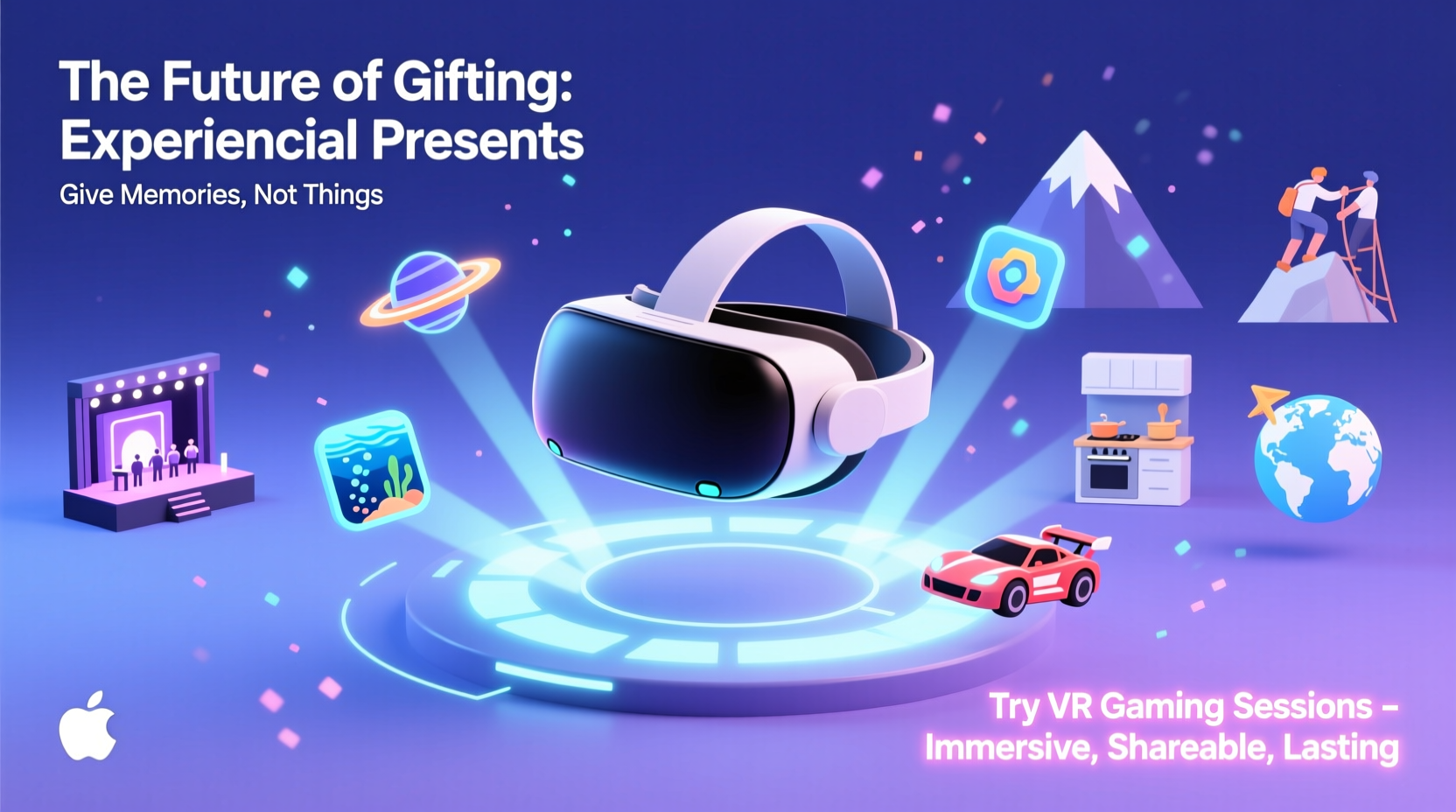
Experiential gifting is often praised for its “meaningfulness,” but its superiority rests on three evidence-based pillars: memory architecture, social bonding, and psychological ownership. Unlike a sweater that fades or a gadget that becomes obsolete, experiences embed themselves in autobiographical memory through multisensory encoding—sights, sounds, laughter, even the tactile feedback of VR controllers. Neuroscientists at UCLA confirm that episodic memories formed during novel, emotionally engaged activities activate broader neural networks, making them more durable and retrievable over time.
Socially, shared experiences trigger oxytocin release and mutual vulnerability—key ingredients for deepening relationships. When two people navigate a VR escape room together, their success depends on communication, trust, and adaptive problem-solving—unlike passively receiving a gift card. And psychologically, experiences resist comparison. A $200 watch invites silent appraisal against others’ possessions; a 90-minute VR adventure in zero-gravity basketball or ancient Rome has no benchmark—it’s singular, subjective, and inherently personal.
This isn’t about rejecting physical objects altogether. It’s about recognizing that for many recipients—especially teens, young professionals, and adults downsizing or prioritizing mental wellness—a well-chosen experience delivers richer, longer-lasting value.
How to Choose the Right Experience: Matching Intent, Recipient, and Context
Selecting an experiential gift demands deeper listening than selecting a product. Ask not “What do they like?” but “What do they *need* right now?” A stressed teacher may crave calm immersion (e.g., guided VR meditation in Icelandic fjords), while a tech-curious teen might thrive in competitive multiplayer VR esports. Below is a decision framework:
| Recipient Profile | Recommended Experience Type | Why It Fits | Risk to Avoid |
|---|---|---|---|
| Introverted creative (e.g., writer, designer) | VR art studio session (Tilt Brush, OpenBrush) + optional live instructor guidance | Offers flow state without social pressure; fosters self-expression in low-stakes environment | Overly competitive or loud multiplayer arenas |
| Active older adult (65+) | VR nature walk with haptic feedback vest + seated balance support | Provides safe mobility, cognitive stimulation, and emotional uplift without physical strain | Fast-paced action games requiring rapid reflexes |
| Teen gamer already owning hardware | Private VR coaching session with pro player (e.g., Beat Saber strategy, Half-Life: Alyx movement optimization) | Leverages existing interest while adding mentorship and skill growth | Duplicating hardware they already own or subscriptions they manage |
| Couple celebrating anniversary | Multiplayer VR travel experience (e.g., exploring Kyoto temples or Mars base) with post-session digital photo album | Creates shared narrative, intimacy through co-discovery, and tangible memory artifact | Isolated single-player sessions lacking relational dimension |
Crucially, avoid assumptions based on age or gender. A 72-year-old retired engineer may relish solving physics-based VR puzzles far more than a “gentle” nature walk. Always verify accessibility: ask about motion sensitivity, headset weight tolerance, wheelchair access at venues, and language options for guided sessions.
A Step-by-Step Guide to Booking & Delivering a VR Gaming Session Gift
Gifting an experience isn’t transactional—it’s relational stewardship. Follow this sequence to ensure clarity, reduce friction, and maximize joy:
- Research & Pre-Vet Providers: Search for local VR arcades with verified reviews mentioning “beginner-friendly,” “patient staff,” or “customizable sessions.” Cross-check Google Maps photos for cleanliness and modern equipment (look for Valve Index, HTC Vive Pro 2, or Meta Quest 3—not outdated gear). Eliminate providers with >3-star average or frequent complaints about no-shows or rushed onboarding.
- Confirm Logistics in Writing: Email the venue with exact questions: “Does the session include 15 minutes of headset calibration and safety briefing? Is there seating for non-participants? Can we reschedule with 48 hours’ notice if illness occurs?” Save their reply—it’s your contract.
- Personalize the Delivery: Don’t send a generic e-voucher. Create a physical “Experience Kit”: a folded card explaining *why* you chose this (e.g., “I remember how you lit up describing space documentaries—so I booked us a VR tour of the ISS”), plus a small tactile item (a textured star chart, a mini LED constellation lamp) that bridges the physical and virtual.
- Prep the Recipient Thoughtfully: Send a gentle pre-visit note: “No need to prep—just wear comfortable clothes and glasses if you use them. The staff will walk you through everything. If motion feels intense, say ‘pause’ and they’ll stop instantly.” Normalize agency and comfort.
- Follow Up Afterward: Within 48 hours, text: “What moment stuck with you most?” Not “Did you like it?” This invites reflection and reinforces the memory’s emotional weight.
Real Example: Turning a Teen’s Isolation into Connection
Maya, 16, had withdrawn socially after moving cities mid-semester. Her parents worried about screen time but noticed her quietly researching VR game design forums. Instead of buying another headset accessory, they gifted her a “VR Creator Lab” package: a 2-hour session at a local studio where she learned to build simple interactive environments using Unity and VR templates, followed by a 30-minute guided tour of her own creation with a supportive instructor.
The shift wasn’t immediate—but within weeks, Maya began sharing her VR sketches online and joined a Discord community for teen developers. Her mother shared: “She didn’t just get a ‘fun hour.’ She got validation for a skill she was quietly cultivating. That confidence spilled into school projects and even rekindled old friendships who came to watch her demo.” The gift succeeded because it honored her internal world—not just her external interests.
“Experiential gifts work when they mirror the recipient’s emerging identity—not their current circumstances. A VR session isn’t about gaming; it’s about saying, ‘I see the person you’re becoming.’” — Dr. Lena Torres, Clinical Psychologist & Author of The Memory Economy
FAQ: Practical Concerns Addressed
What if the recipient has never tried VR—or gets motion sickness?
Reputable providers offer tiered onboarding: seated experiences (e.g., VR painting, museum tours) or “comfort modes” that minimize artificial movement. Always select sessions labeled “beginner-friendly” or “low-motion.” Most studios provide free pre-session consultations—use them to discuss concerns. Motion sickness affects only ~10% of users with modern hardware, and nearly all cases resolve within 3–5 minutes of stopping.
Can I gift a VR experience without knowing their exact schedule?
Absolutely. Purchase a voucher valid for 12 months with no blackout dates, then coordinate via shared calendar once both parties are available. Better yet, gift a “flexible window”—e.g., “Book any weekday morning in March or April”—which reduces decision fatigue and honors their autonomy.
How much should I realistically budget for a quality VR session?
Local VR arcades charge $25–$45 per person for 60–90 minutes, including setup and guidance. Premium experiences (e.g., multi-sensory VR with haptics, live instructor, or custom content) range $65–$110. Avoid “$9.99 VR deals”—they often use outdated headsets, lack staff training, or force rushed 20-minute slots. Invest in duration and human support, not just hardware.
Expanding Beyond VR: Principles That Apply to All Experiential Gifting
While VR offers vivid illustration, these principles scale to any experience: cooking classes, stargazing nights, pottery workshops, or even curated podcast listening sessions with discussion guides. First, prioritize *agency*: the recipient must feel invited, not obligated. Second, emphasize *shared presence*: even solo experiences gain depth when paired with intentional follow-up (“Let’s debrief over coffee”). Third, anchor in *authenticity*: don’t gift a jazz concert to someone who hates improvisation—gift a vinyl listening party with artist commentary instead. Finally, recognize that the gift’s true value crystallizes not at the event, but in the memory’s retelling: “Remember when we floated above Everest in VR?” That sentence, repeated, becomes part of their personal mythology.
Conclusion: Your Next Gift Is a Moment Waiting to Be Shared
Gifting experientially isn’t about abandoning tradition—it’s about evolving generosity to meet human needs more precisely. A VR gaming session isn’t merely “fun tech.” It’s permission to be curious without judgment, to fail laughingly in zero gravity, to collaborate across generations in ways physical objects can’t mediate. It’s also deeply practical: no storage, no returns, no guilt about consumption. What remains is resonance—the quiet hum of a shared memory that grows richer with time.
Start small. This week, replace one planned physical gift with a 60-minute experience tailored to someone you know well—not what you assume they’d like, but what aligns with their unspoken rhythms: their curiosity, their fatigue, their quiet hopes. Book it. Personalize the delivery. Show up—not just physically, but attentively. Then listen closely to what they remember afterward. That detail—the texture of the virtual wind, the sound of their own laughter echoing in the headset—that’s where meaning lives.




 浙公网安备
33010002000092号
浙公网安备
33010002000092号 浙B2-20120091-4
Comments
No comments yet. Why don't you start the discussion?