
Floating shelves add a sleek, modern touch to any room—offering both storage and visual appeal without the clutter of visible brackets. But when you're mounting them on drywall without access to wall studs, the challenge shifts from aesthetics to structural integrity. Many people assume that no stud means no strength, but with the right hardware, technique, and attention to detail, it’s entirely possible to install secure, load-bearing floating shelves even in stud-free zones.
The key lies not in brute force, but in smart anchoring, weight distribution, and understanding your wall's limitations. Drywall alone can't support heavy loads, but paired with the correct fasteners and installation method, it becomes part of a reliable support system. This guide walks through everything you need to know—from selecting the proper anchors to final leveling—to ensure your shelves stay firmly in place for years.
Understanding Drywall and Load Limits
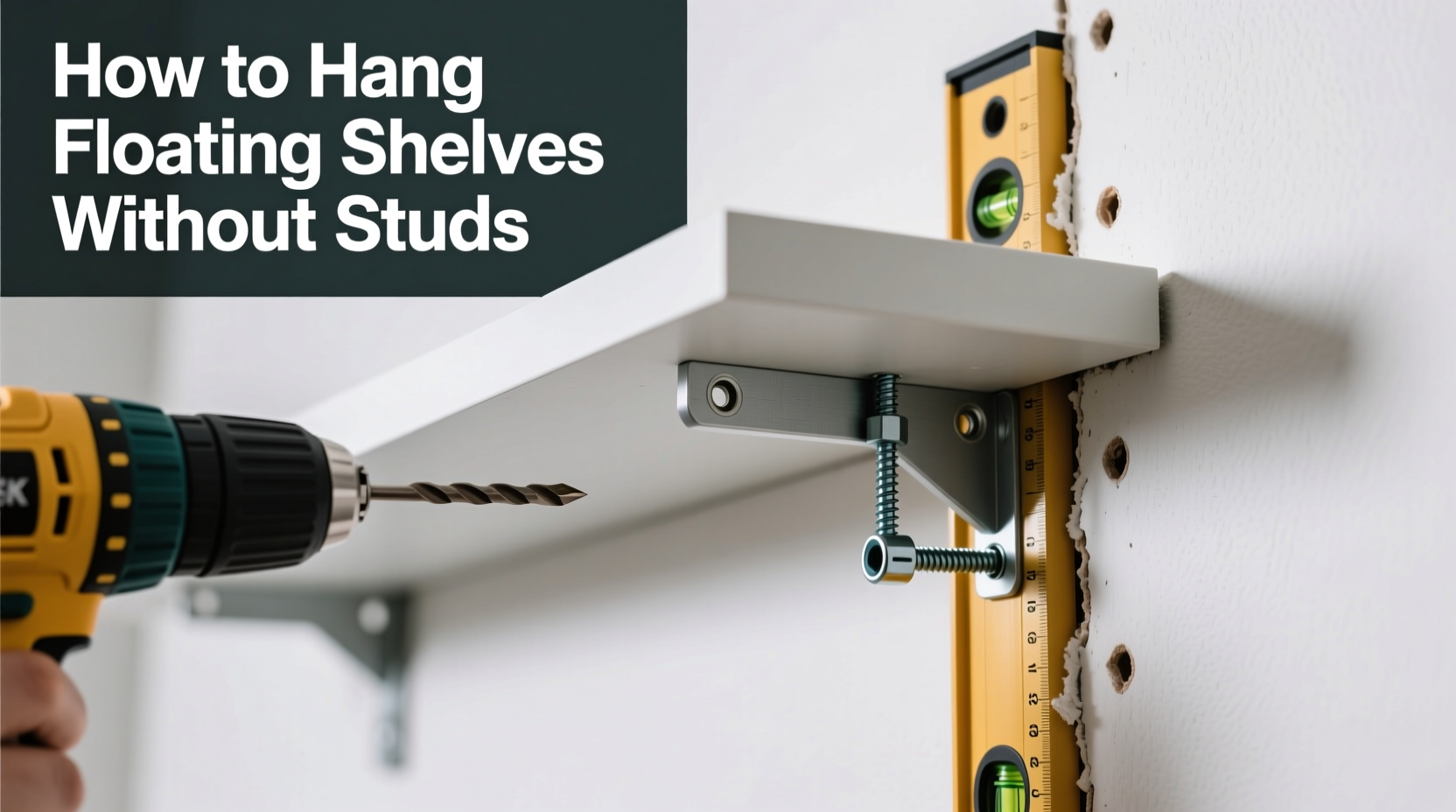
Drywall, typically made of gypsum sandwiched between paper layers, is designed as a finish material, not a structural one. Standard ½-inch drywall can only hold about 5 to 10 pounds per anchor point without additional reinforcement. That means hanging a shelf directly with drywall screws will fail under minimal weight.
However, modern drywall anchors are engineered to transfer load beyond the surface layer into the hollow cavity behind, distributing pressure across a wider area. When used correctly, certain types can support up to 50 or even 100 pounds per anchor—making them ideal for medium-duty shelving.
Before installing, assess what you plan to store on the shelves. Books, kitchenware, and decorative items vary significantly in weight. A single hardcover book averages 2–3 pounds; a row blender or mixer could weigh 15+. Always estimate total load conservatively and double-check anchor ratings.
“Never exceed 50% of an anchor’s rated capacity when mounting shelves. Dynamic loads—like reaching for an item—create forces greater than static weight.” — Carlos Mendez, Residential Construction Consultant
Selecting the Right Anchors for Your Shelves
Not all drywall anchors are created equal. Some expand inside the wall, others grip the backside, and some rely on toggling mechanisms. For floating shelves, which require precise alignment and high pull-out resistance, only a few types meet the standard.
| Anchoring Type | Max Weight (per anchor) | Installation Effort | Best For |
|---|---|---|---|
| Toggle Bolts (Snap/Traditional) | 50–100 lbs | High | Heavy shelves, long-term installations |
| Threaded Drywall Anchors (e.g., E-Z Ancor) | 25–30 lbs | Low | Medium-duty shelves, quick installs |
| Self-Drilling Anchors (e.g., TOGGLER Snaptoggle) | 40–75 lbs | Moderate | Precise placement, high-strength needs |
| Plastic Expansion Anchors | 10–15 lbs | Very Low | Light decor only – not recommended for shelves |
For floating shelves, avoid plastic expansion anchors. They’re prone to stripping and shifting under lateral stress. Instead, opt for metal toggle bolts or Snaptoggles, which provide superior holding power and stability. While more complex to install, their reliability justifies the effort.
Step-by-Step Installation Guide
Installing floating shelves without studs requires precision. Follow this sequence to ensure safety, level alignment, and durability.
- Gather Tools and Materials
You’ll need: tape measure, level, pencil, drill with ⅜\" or ½\" bit (check anchor specs), drywall saw (if needed), chosen anchors, screws, and shelf mounting brackets (often included with shelf kit). - Mark Shelf Position
Use a tape measure to determine desired height. Lightly mark both ends with a pencil. Place a 4-foot level across the marks and draw a faint horizontal line to guide drilling. - Locate Studs (Even If Not Using Them)
Run a stud finder along the wall. If one edge of the shelf aligns with a stud, use it for added reinforcement—even if the rest relies on anchors. - Mark Anchor Points
Based on your shelf bracket layout, mark where each anchor will go. Ensure spacing matches bracket holes exactly. For longer shelves, use at least three anchor points to prevent sagging. - Drill Pilot Holes
Drill straight into each marked point using the bit size specified by your anchor manufacturer. For toggle bolts, this may be larger than standard screws (e.g., ½\"). - Insert Anchors
For traditional toggles: slide the bolt through the toggle wings, compress, insert into hole, then tighten until the wings catch behind drywall.
For Snaptoggles: push the sleeve into the hole until the collar snaps flush. Insert screw afterward. - Attach Brackets and Level
Align mounting brackets with installed anchors. Insert screws gradually, tightening each slightly in rotation to maintain level. Recheck with a level before fully securing. - Mount the Shelf
Slide or screw the shelf onto the secured brackets. Some designs use hidden slots; others attach with top screws. Conceal fasteners with wood filler or plugs if desired. - Test for Stability
Apply gentle downward pressure along the front edge. There should be no wobbling, popping, or movement at anchor points. Wait 24 hours before loading fully to allow settling.
Real-World Example: Kitchen Spice Rack Retrofit
Sarah, a renter in a 1970s apartment, wanted to free up counter space by installing a floating spice rack above her stove. The wall was solid drywall with no accessible studs within the ideal mounting zone. After researching options, she chose TOGGLER Snaptoggles rated for 75 pounds each.
She measured carefully, marking four anchor points across a 24-inch span. Drilling ⅜\" holes, she inserted the Snaptoggles and attached L-brackets supplied with the shelf. Once secured, she mounted a solid oak shelf and arranged over 20 glass spice jars.
Two years later, the shelf remains stable, supporting daily use. “I was nervous at first,” she said, “but following the torque instructions and using a level made all the difference. It feels as solid as if it were on a stud.”
Common Mistakes and How to Avoid Them
- Over-tightening screws – Can crush drywall or strip anchors. Stop when resistance increases suddenly.
- Using too few anchors – Increases stress on each point. For shelves over 24 inches, use at least three supports.
- Ignoring wall curvature – Older walls aren’t perfectly flat. Shim brackets if the shelf doesn’t sit flush.
- Mounting near seams or edges – Drywall joints are weak points. Keep anchors at least 2 inches from vertical seams or corners.
- Assuming all anchors are equal – Plastic anchors fail under sustained load. Invest in quality metal systems.
Weight Distribution and Shelf Design Tips
The design of the shelf itself plays a critical role in its performance on drywall. A well-designed shelf transfers weight closer to the wall, reducing leverage that pulls anchors forward.
Choose shelves with deep cleats or integrated brackets that extend at least two-thirds of the shelf depth toward the wall. This minimizes the moment arm—the distance from the wall to the load’s center of gravity—reducing outward pull.
Also consider material: solid wood shelves distribute weight evenly but are heavier themselves. Engineered wood or plywood with veneer offers strength with less self-load. Avoid glass unless specifically designed for drywall mounting with reinforced brackets.
Arrange heavier items toward the back of the shelf, closest to the wall. This simple habit reduces tipping risk and stress on anchor points.
Checklist: Secure Floating Shelf Installation Without Studs
- ✓ Confirm no studs are available in desired location
- ✓ Select toggle bolts or Snaptoggles rated for at least 2x expected load
- ✓ Measure and mark shelf position with level
- ✓ Drill pilot holes to manufacturer specifications
- ✓ Insert anchors carefully, ensuring full engagement behind drywall
- ✓ Attach brackets incrementally, checking level throughout
- ✓ Mount shelf and inspect fit and stability
- ✓ Perform gradual loading test over first week
Frequently Asked Questions
Can I mount a TV with floating shelves on drywall without studs?
No. TVs generate dynamic loads and pose safety risks if mounts fail. Always secure TV mounts to wall studs or use specialized ceiling/wall structural supports. Floating shelves nearby can complement the setup but shouldn’t bear the TV’s weight.
How do I patch and re-drill if I make a mistake?
If a hole is slightly off, shift to a new location at least 1 inch away. For damaged drywall, fill old holes with spackling compound, let dry, sand smooth, and re-drill. Large gaps may require mesh tape for reinforcement before patching.
Are there alternatives to drilling into drywall?
Adhesive strips like heavy-duty Command Strips are only suitable for very light objects (under 5 lbs). They lack shear strength and degrade over time. For shelves, mechanical fasteners are non-negotiable for safety.
Final Thoughts: Confidence Through Preparation
Hanging floating shelves without studs isn’t risky—if you respect the materials and use the right methods. Drywall isn’t weak; it’s misunderstood. With proper anchors, careful planning, and disciplined execution, you can achieve clean, sturdy shelving anywhere.
The most successful installations come down to preparation: choosing the correct hardware, measuring twice, drilling straight, and testing thoroughly. Don’t rush the process. Each step builds confidence in the final result.




 浙公网安备
33010002000092号
浙公网安备
33010002000092号 浙B2-20120091-4
Comments
No comments yet. Why don't you start the discussion?