
Hanging holiday ornaments is one of the most delicate acts of seasonal decorating. For many, the centerpiece is a collection of heirloom glass ornaments—glittering, fragile, and often heavier than they appear. The challenge arises when trying to display these treasures on real Christmas trees, especially those with slender, flexible branch tips that bend under minimal weight. A snapped twig or a shattered ornament isn’t just disappointing—it can ruin the mood and risk safety.
The goal isn’t just decoration; it’s preservation. You want your ornaments secure, your tree intact, and your family safe. This guide offers practical, tested solutions for hanging heavy glass ornaments on thin branches using everyday materials and smart techniques. No guesswork, no frustration—just reliable methods backed by experience.
Understand the Risks: Why Thin Branches Fail
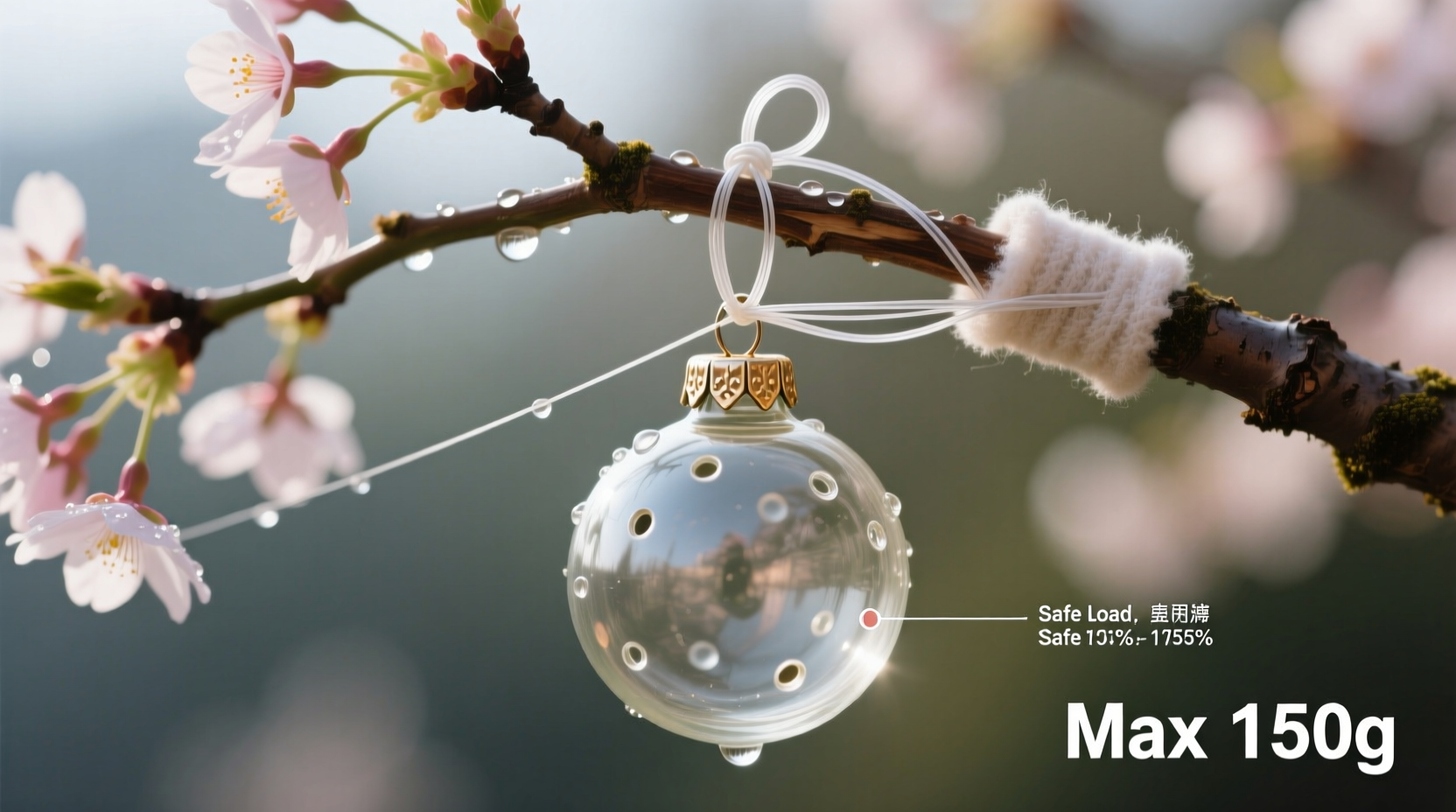
Real evergreen trees, particularly species like firs and spruces, feature graceful, upward-curving branches with delicate outer tips. These tips are not designed to bear concentrated weight. When a heavy glass ornament—often weighing 3 to 6 ounces—is hung from the end of a thin branch, several forces come into play:
- Leverage effect: The farther from the trunk, the greater the stress on the branch point.
- Brittle wood: Some evergreens have dry or older outer growth that snaps easily, especially in heated indoor environments.
- Vibration: Footsteps, pets, or even closing a door can cause small movements that dislodge poorly secured ornaments.
Over time, even a well-hung ornament can shift, increasing pressure on the weakest part of the branch—the tip. Once broken, the damage is irreversible, and the ornament may fall to the floor.
“Many people don’t realize that a 4-ounce ornament at the end of a 12-inch branch exerts nearly twice the torque as the same ornament placed halfway in. That mechanical disadvantage is what breaks most twigs.” — Dr. Alan Reeves, Arborist and Holiday Tree Safety Consultant
Step-by-Step: How to Hang Heavy Ornaments Safely
Follow this sequence to minimize risk while maximizing visual appeal. These steps apply whether you're decorating a newly set-up tree or adjusting an existing display.
- Assess the ornament’s weight and hook type. Hold the ornament in your hand. If it feels dense or cold (a sign of thick glass), treat it as high-risk. Check if the wire hook is bent, corroded, or too narrow to grip securely.
- Inspect the branch. Gently press near the tip. If it bends more than an inch with light pressure, avoid hanging anything heavier than a lightweight tinsel ball there.
- Select an interior anchor point. Move inward along the branch, toward the trunk, until you find a sturdier section. Look for thicker bark or branching junctions where strength increases.
- Use a support method (see below). Do not rely solely on the branch tip. Instead, redistribute the weight using internal supports.
- Test gently. After hanging, lightly tap the stand or shake the tree base slightly to simulate movement. Watch for swaying or loosening.
Best Support Methods for Heavy Glass Ornaments
Never depend on the natural strength of a thin branch tip. Instead, use one of these proven support strategies to transfer the load to stronger parts of the tree.
1. The Internal Wire Loop Method
Bend a 6-inch piece of floral wire (22-gauge works best) into a U-shape. Slide the base of the U under the ornament’s hook, then twist the ends around a sturdier inner branch or the main trunk. This creates a suspension system that bypasses the weak tip entirely.
2. Decorative Branch Cradle
Weave a small loop of ribbon or satin cord beneath two adjacent inner branches to form a sling. Place the ornament in the sling, then drape its hook over the front edge. The sling bears the weight; the hook adds stability.
3. Dual-Point Hanging System
Use two short strands of clear fishing line (15-lb test). Tie one end of each strand to the ornament’s hook, then attach the other ends to separate, stronger branches above and to the sides. This triangulates the load and reduces strain on any single point.
4. Mini Ornament Shelf
For extremely heavy pieces (like vintage German kugels), place them on a small decorative platform nestled into the crotch of two strong branches. Use museum putty to keep the shelf from sliding. This isn’t traditional hanging, but it protects both ornament and tree.
Do’s and Don’ts: A Quick Reference Table
| Do | Don’t |
|---|---|
| Use fishing line or floral wire to transfer weight inward | Hang directly on flimsy branch tips |
| Place heaviest ornaments near the trunk or lower tiers | Cluster multiple heavy ornaments on one branch |
| Reinforce hooks with pliers if they’re too thin | Force a stiff hook onto a brittle branch |
| Check ornaments weekly for shifting or loosening | Assume once-hung means forever-safe |
| Use soft padding (like felt) between wire and bark | Leave sharp wire edges exposed against branches |
Real Example: Preserving a Heirloom Collection
Sarah M., a collector from Vermont, inherited a set of 1920s Czech glass ornaments from her grandmother. Each is large—over 4 inches in diameter—and weighs close to 5 ounces. Her balsam fir tree has beautiful foliage but notoriously thin outer branches.
In past years, she lost two ornaments to falls caused by snapped tips. Determined to protect the rest, she adopted the dual-point hanging method using clear fishing line. She pre-threaded each ornament with a tiny knot at the hook, then anchored the lines to higher, thicker branches using micro-cable ties disguised by pine needles.
Throughout the season, none shifted, and the tree remained undamaged. “It took ten extra minutes,” she said, “but I didn’t lose a single one. Now I do this for every heavy piece, even if it seems stable.”
Checklist: Safe Ornament Hanging Routine
- ✅ Weigh or estimate the ornament’s mass before hanging
- ✅ Inspect branch flexibility and health
- ✅ Choose a support method (wire, sling, dual-line, or shelf)
- ✅ Anchor to a stronger inner branch or trunk section
- ✅ Conceal support lines with greenery or strategic placement
- ✅ Test for stability with gentle movement
- ✅ Recheck all heavy ornaments weekly during display
- ✅ Remove carefully after holidays to avoid snagging
Frequently Asked Questions
Can I use hot glue to secure an ornament to a branch?
No. Hot glue adheres poorly to waxy pine needles and bark, and it can damage both the tree and the ornament’s finish. It also becomes brittle and fails over time. Mechanical support is safer and reversible.
What if my ornament doesn’t have a hook?
Some vintage ornaments lack hooks or have broken ones. In such cases, wrap a thin ribbon or silk cord around the ornament’s neck (if shaped that way), then tie it to a sturdy branch. Avoid tying around the glass body, as pressure can cause cracks.
Are artificial trees safer for heavy ornaments?
Generally, yes. Most artificial tree branches are made of metal or reinforced plastic cores, offering better weight support. However, always check manufacturer guidelines—some tips are still too weak for heavy loads. Use the same support principles for consistency.
Final Thoughts: Beauty Without Breakage
There’s no reason to choose between a stunning display and structural safety. With a little planning, you can showcase your most cherished glass ornaments exactly where they’ll shine—without fear of breakage or branch loss. The key is redistributing weight intelligently and respecting the physical limits of natural materials.
These methods aren’t about perfection—they’re about prevention. A few minutes of careful setup can save hours of cleanup, emotional distress, or worse, injury from broken glass. Whether you’re decorating a tabletop spruce or a towering Fraser fir, treat each heavy ornament as a responsibility as much as a delight.




 浙公网安备
33010002000092号
浙公网安备
33010002000092号 浙B2-20120091-4
Comments
No comments yet. Why don't you start the discussion?