
Hanging a heavy mirror can dramatically enhance the aesthetic of a room, creating the illusion of space and bringing in more light. But when done incorrectly, it risks not only falling and causing injury but also cracking or crumbling your wall—especially if you're working with drywall. The key to success lies in understanding your wall type, selecting the right hardware, and distributing weight properly. This guide walks you through every critical step to ensure your mirror stays securely mounted for years, without compromising your walls.
Understanding Wall Types and Weight Limits
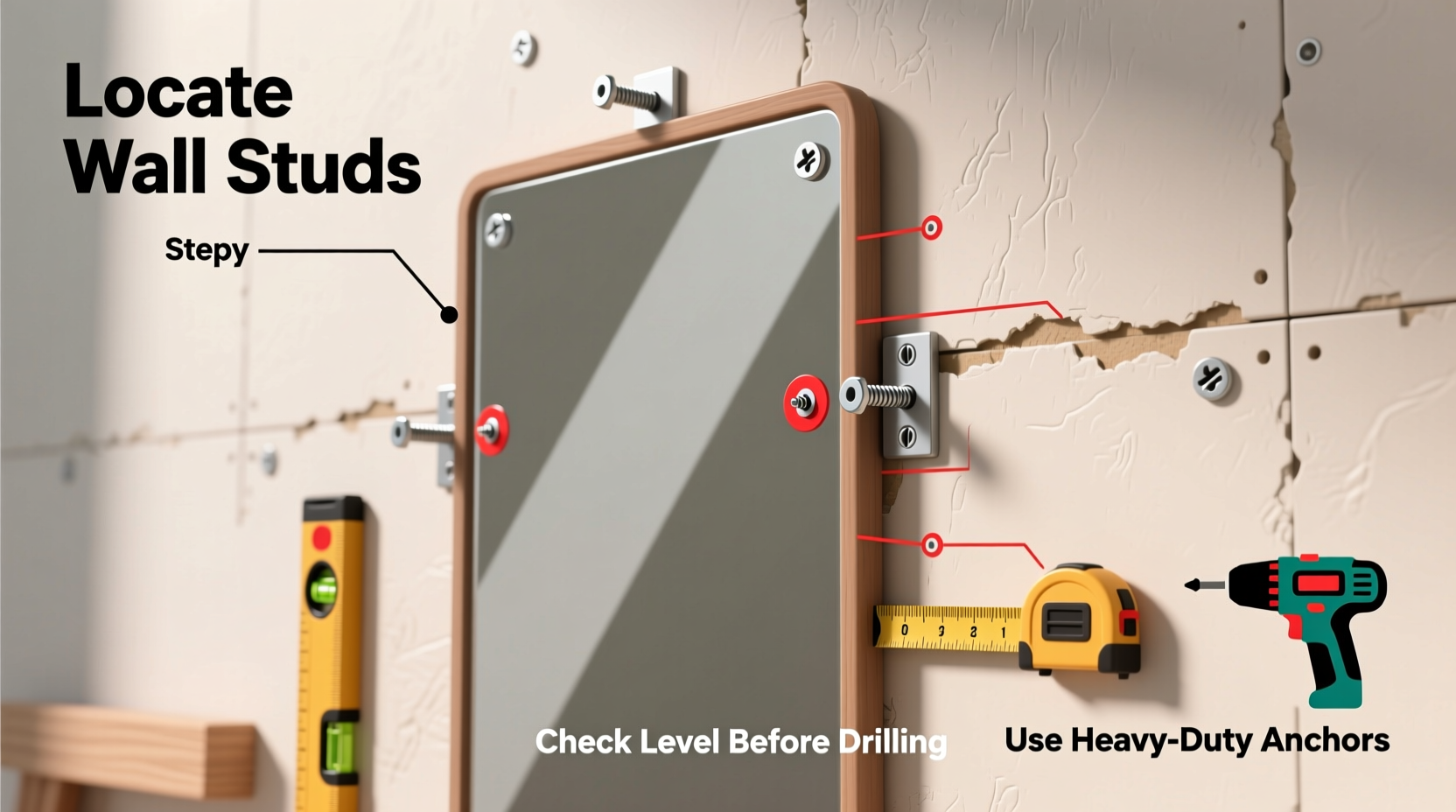
Before driving any screws into your wall, it’s essential to know what kind of surface you’re dealing with. Different wall materials have vastly different load-bearing capacities, and choosing the wrong mounting method can lead to cracks, holes, or even structural damage.
- Drywall (Plasterboard): Common in modern homes, drywall is lightweight but weak on its own. It typically supports only 5–10 pounds per anchor without hitting a stud.
- Studs (Wood or Metal): These vertical framing members are the strongest points in your wall. Wood studs can support hundreds of pounds when properly fastened.
- Plaster Walls: Older homes often have plaster over lath. While stronger than drywall, plaster is brittle and prone to cracking under stress or improper drilling.
- Concrete or Brick: Found in basements or exterior walls, these surfaces require masonry anchors and specialized tools like hammer drills.
Most interior walls use wood studs spaced 16 or 24 inches apart, centered. If your mirror weighs more than 20 pounds, anchoring directly into studs is non-negotiable for safety and longevity.
Choosing the Right Hardware for Heavy Mirrors
The mirror’s weight determines the type of hardware you need. Standard picture hooks work for small frames, but heavy mirrors demand industrial-grade solutions. Always check the weight rating on packaging and double-check your calculations.
| Hardware Type | Max Weight Capacity | Best For | Installation Notes |
|---|---|---|---|
| Wall Anchors (Toggle Bolts) | 50–100 lbs | Drywall without studs | Requires pre-drilling; spreads load behind wall |
| Monkey Hooks (Heavy-Duty) | Up to 50 lbs | Medium mirrors on drywall | No drill needed; gentle on walls but limited capacity |
| French Cleat | 100+ lbs | All wall types with proper mounting | Two interlocking wooden/metal strips; excellent stability |
| Stud Screws (#10 or #12) with Washers | 150+ lbs | Direct stud mounting | Use coarse-thread screws for wood studs |
| Molly Bolts | 50–75 lbs | Thicker drywall or plaster | Expands inside wall; reusable |
A common mistake is assuming that two small anchors will support a 40-pound mirror. In reality, unless they're toggle bolts or molly bolts properly installed, they may pull out under stress, especially as temperature and humidity cause slight shifts in the wall.
“Always match the fastener to both the wall material and the mirror’s mounting system. A mismatch leads to failure.” — James Reed, Licensed Contractor & Home Renovation Specialist
Step-by-Step Guide: Hanging a 50-Pound Mirror Safely
This practical walkthrough assumes you're mounting a large bathroom or entryway mirror on a standard drywall interior wall with wooden studs behind.
- Measure and Prepare: Lay the mirror face-down on a soft blanket. Measure the distance between the hanging brackets or D-rings on the back. Note the height from the top of the frame to the hanging point.
- Locate Studs: Use a stud finder to identify at least one, preferably two, studs within the mirror’s horizontal span. Mark their centerlines lightly with a pencil.
- Mark Mounting Points: Hold a level against the wall and transfer the bracket measurements from the mirror. Ensure marks align vertically with the stud centers.
- Select Screws: Choose #10 or #12 wood screws, 2.5 to 3 inches long. Pre-drill pilot holes slightly smaller than the screw diameter to prevent splitting.
- Install Screws: Drive screws into the studs at the marked points, leaving about 1/4 inch protruding so the mirror’s bracket can slide on easily.
- Hang the Mirror: With a helper, lift the mirror and align the brackets with the screws. Gently lower until secure. Do not force or tilt during placement.
- Check Level and Stability: Use a bubble level across the top. Apply slight downward pressure to test for movement. If it shifts, recheck screw depth and tightness.
When You Can’t Hit a Stud: Safe Alternatives
Sometimes, the ideal spot for your mirror doesn’t align with studs. In such cases, you still have safe options—provided you use the correct reinforcement methods.
One of the most reliable solutions is using **toggle bolts**. These consist of a bolt and spring-loaded wings that open behind the drywall, spreading the load across a larger area. They’re ideal for mirrors weighing 30–100 pounds.
To install toggle bolts:
- Drill a hole slightly larger than the folded toggle.
- Thread the bolt through the mirror’s hanger, then insert the toggle into the hole.
- Pull gently until the toggle opens behind the wall.
- Tighten the bolt until snug—over-tightening can crack drywall.
Another option is a **French cleat system**, which distributes weight evenly across multiple fasteners. One cleat attaches to the wall (anchored into studs or with heavy-duty toggles), and the mating piece attaches to the mirror frame. When engaged, the two pieces lock together, preventing forward or backward movement.
“I once had a client hang a 70-pound mirror with flimsy plastic anchors. It came crashing down in three weeks. Switched to a French cleat anchored into two studs—no issues in five years.” — Maria Tran, Interior Designer & Safety Consultant
Mini Case Study: Avoiding Disaster in a Historic Home
In a 1920s Chicago bungalow, homeowner Daniel wanted to install a vintage floor-length mirror in his hallway. The mirror weighed 65 pounds and had a single D-ring mount. The wall was plaster over wood lath—stronger than drywall but fragile if drilled incorrectly.
His initial attempt used standard screw-in anchors. After two days, hairline cracks appeared around the anchor, and the mirror tilted. Concerned, he consulted a contractor who recommended removing the anchor and installing a French cleat system.
The solution:
- A 36-inch hardwood cleat was mounted horizontally into two wall studs using 3-inch lag screws.
- A mating cleat was attached to the back of the mirror frame with reinforced wood blocking.
- The mirror was lifted and slid onto the wall cleat, locking securely in place.
Result: The mirror has remained perfectly level and crack-free for over four years, even through seasonal humidity shifts. The added benefit? No visible hardware from the front.
Common Mistakes That Lead to Cracked Walls
Even experienced DIYers make errors when hanging heavy objects. Here are the most frequent missteps—and how to avoid them:
| Mistake | Why It’s Risky | How to Fix It |
|---|---|---|
| Using drywall anchors beyond their weight limit | Causes gradual pull-through and wall cracking | Upgrade to toggle bolts or hit studs |
| Mounting with only one anchor point | Creates torque that stresses the wall | Use two or more secure points aligned with structure |
| Over-tightening screws | Cracks drywall or splits plaster | Tighten until snug, then stop—use washers to distribute pressure |
| Ignoring the mirror’s hanging mechanism | Weak D-rings or thin wire can snap | Replace with braided steel cable or wall-mounted cleats |
FAQ: Your Top Questions Answered
Can I hang a heavy mirror on drywall without studs?
Yes, but only with high-capacity anchors like toggle bolts or molly bolts. Never exceed the anchor’s rated weight, and always use multiple points to distribute the load. For mirrors over 50 pounds, hitting at least one stud is strongly recommended.
What if my mirror has no backing for a cleat?
You can reinforce the back with a plywood panel screwed into the frame. Attach the cleat to this panel, ensuring screws penetrate solid wood. This creates a stable base for secure wall attachment.
How do I know if my wall is cracked from hanging?
Small hairline cracks near anchors are early warning signs. Tap around the area—if it sounds hollow or gives slightly, the anchor may be failing. Remove the mirror immediately and reassess your mounting strategy.
Final Checklist Before You Hang
Run through this list to ensure a safe, lasting installation:
- ✅ Weigh the mirror (don’t guess)
- ✅ Identify wall type (drywall, plaster, etc.)
- ✅ Locate studs with a reliable stud finder
- ✅ Choose hardware rated for at least 25% more than the mirror’s weight
- ✅ Confirm the mirror’s hanging hardware is sturdy (replace if needed)
- ✅ Use a level and measure twice before drilling
- ✅ Have a helper assist with lifting and positioning
- ✅ Test stability with gentle pressure after hanging
Conclusion: Hang with Confidence and Care
Hanging a heavy mirror doesn’t have to be a risky project. With the right tools, knowledge of your wall structure, and attention to detail, you can achieve a professional-quality result that enhances your space without damaging it. Whether you’re anchoring into studs, using toggle bolts, or installing a French cleat, the principles remain the same: distribute weight, use appropriate hardware, and never compromise on safety.




 浙公网安备
33010002000092号
浙公网安备
33010002000092号 浙B2-20120091-4
Comments
No comments yet. Why don't you start the discussion?