
Decorating a holiday tree is one of the most cherished traditions of the season. Yet, many people face the same frustrating issue every year: cracking or snapping delicate branches when hanging heavier ornaments. This is especially common with artificial trees, where branch tips are often made from thin PVC or plastic-coated wire designed more for appearance than structural strength. The good news? With the right strategies, you can safely display even your heaviest glass or ceramic ornaments—without sacrificing aesthetics or risking damage.
The key lies not in avoiding heavy decorations altogether, but in redistributing weight, reinforcing support points, and understanding the mechanics of your tree’s construction. Whether you’re working with a budget-friendly pre-lit model or a high-end lifelike spruce, these proven methods will preserve both your tree and your peace of mind.
Understanding Artificial Tree Branch Construction
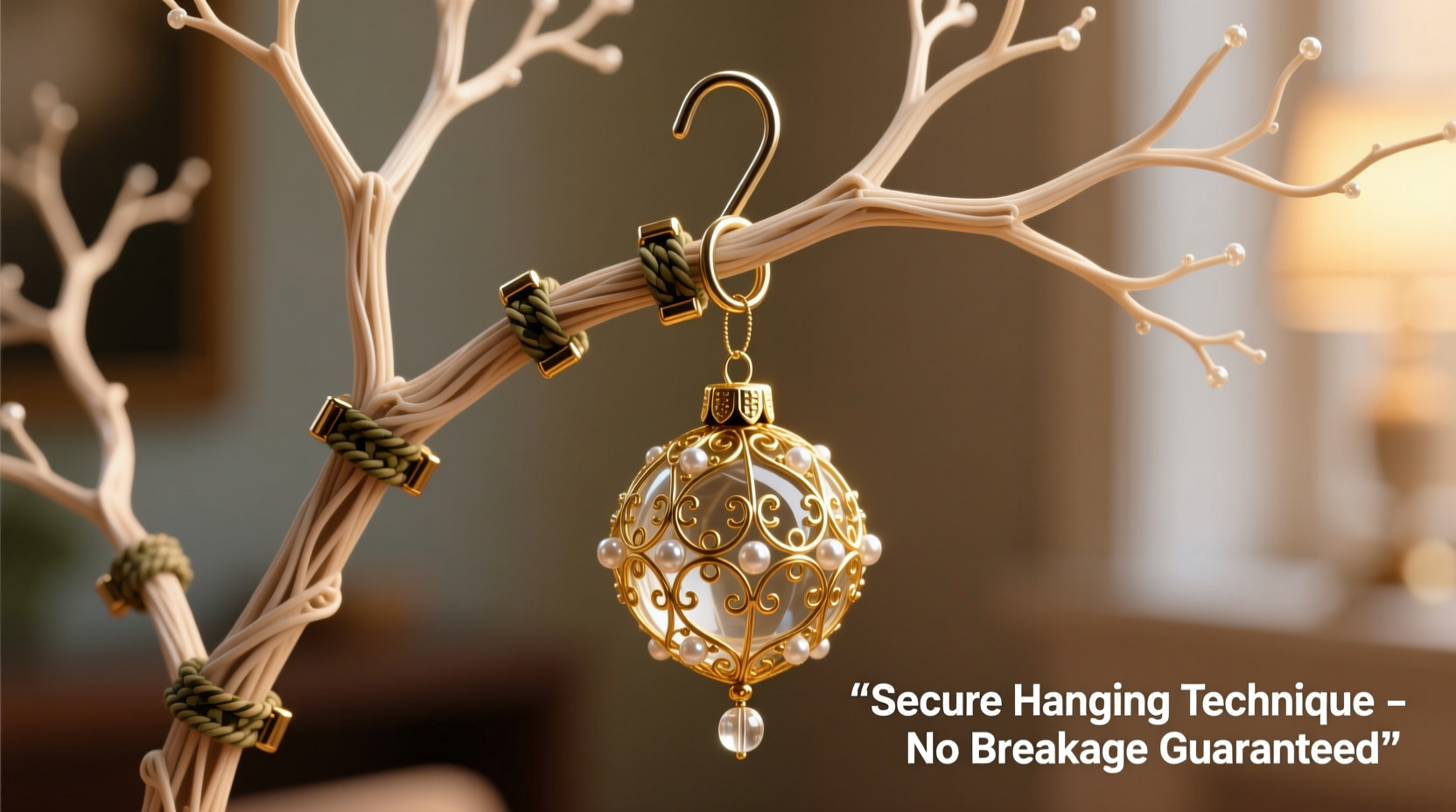
Most artificial Christmas trees use a layered branch system. Each main limb contains multiple smaller \"tips\" fanned out to mimic natural foliage. These tips are typically made from molded plastic stems wrapped in fabric or PVC needles. While they appear sturdy, their load-bearing capacity is minimal—often less than 3 ounces per tip.
Manufacturers prioritize visual realism over durability. As a result, branches flex easily under pressure, and repeated stress at the joint (where the tip meets the central stem) leads to cracks or complete separation. Heavier ornaments—especially those over 6 ounces—can exceed this limit quickly, particularly if hung at the far end of a branch where leverage increases strain.
Understanding this helps explain why simply \"being careful\" isn’t enough. Structural reinforcement and smart placement are essential for long-term safety.
“Many customers don’t realize that ornament weight distribution is just as important as branch quality. A well-balanced tree can hold twice the decorative load without damage.” — Daniel Reeves, Senior Product Designer at Evergreen Home Accents
Reinforce Weak Points with Internal Supports
One of the most effective ways to prevent breakage is to strengthen the branch itself before hanging anything. This involves adding internal support to increase rigidity and distribute weight along the entire length of the tip.
Use lightweight yet firm materials such as:
- Floral wire (20–22 gauge)
- Chopsticks or wooden skewers
- Plastic coffee stirrers
- Narrow aluminum rods (available at craft stores)
To apply:
- Select a support rod slightly longer than the branch tip.
- Gently insert it into the hollow core of the plastic stem, pushing until it reaches the base connection point.
- Bend the top end into a small hook or loop to help anchor the ornament hanger.
- Secure the base of the rod with a small dab of hot glue where it meets the main limb—this prevents shifting.
This method effectively turns a flimsy tip into a mini cantilever capable of supporting up to 10–12 ounces, depending on material and insertion depth.
Use Weight-Distributing Hangers Instead of Direct Hooks
Traditional ornament hooks concentrate all the weight on a single contact point—the tip of the branch. Over time, this creates stress fractures. A better approach uses hangers that spread the load across multiple connection points.
Consider these alternatives:
Fabric Loop Hangers
Cut a 3-inch strip of soft fabric or ribbon. Loop it around the main limb near the base of the branch cluster, then tie the ends together above. Hang the ornament from this loop. This transfers the weight directly to the sturdier central armature, bypassing weak outer tips entirely.
Branch-Wrap Wire
Take a 6-inch piece of floral wire and wrap it snugly around the base of a group of 3–5 branch tips. Twist the ends together overhead to form a small basket. Then thread your ornament hook through the twisted top. This method engages multiple tips to share the burden, reducing individual strain by up to 70%.
Mini S-Hooks with Crossbars
Available at hardware stores, these consist of a horizontal bar with two downward-facing hooks. Place the bar across two adjacent main limbs, letting the hooks dangle below. Ideal for medium-heavy items like snow globes or lantern-style ornaments.
| Hanger Type | Max Load | Best For | Installation Time |
|---|---|---|---|
| Standard Plastic Hook | 2–3 oz | Lightweight balls, tinsel | 10 seconds |
| Fabric Loop | 8–10 oz | Medium glass, ceramic | 1 minute |
| Wire Wrap Cluster | 6–8 oz | Delicate heirlooms | 2 minutes |
| Mini S-Hook + Bar | 12+ oz | Heavy sculptural pieces | 3 minutes |
Strategic Ornament Placement Principles
Even with reinforcements, poor placement can undo your efforts. Follow these spatial guidelines to maintain balance and minimize risk:
- Avoid the outer third: Never hang heavy items on the last 30% of any branch. That’s where leverage magnifies stress on the joint.
- Distribute by weight zone: Reserve lower branches for heavier ornaments—they’re closer to the trunk and naturally stronger. Save upper tiers for lighter decor.
- Alternate sides: Don’t cluster all heavy pieces on one side of the tree. This creates uneven torque that can warp central poles over time.
- Limit per-cluster loading: No more than one medium or heavy ornament per group of five tips.
Think of your tree like a suspension bridge: weight must be balanced and supported at strong anchor points, not hung freely from flexible spans.
Real-World Example: The Heirloom Tree Rescue
Sarah M., a schoolteacher from Vermont, inherited a set of seven hand-painted glass ornaments from her grandmother—each weighing between 7 and 9 ounces. Her 7.5-foot pre-lit artificial tree had already lost six branch tips over two seasons due to breakage.
Instead of giving up the tradition, she applied the wire-wrap cluster technique to 12 key locations on the lower half of the tree. She used green floral wire to bind groups of four tips near the trunk, creating secure hanging points. For the largest ornament (a 9.2-ounce cardinal), she installed a mini S-hook across two main limbs and suspended it from a padded metal chain.
The result? All ornaments displayed safely, with no damage after three consecutive holiday seasons. “I was shocked how strong the branches felt once I stopped relying on flimsy hooks,” she said. “Now my kids help pick which ones go where—it’s become part of our ritual.”
Step-by-Step: How to Safely Install a 10-Ounce Ornament
Follow this sequence to securely hang a heavy decoration without damaging thin branches:
- Assess the location: Choose a lower-to-mid level branch with multiple tips and proximity to the central pole.
- Insert support rod: Slide a 4-inch wooden skewer into the hollow stem of the strongest tip, going as deep as possible without forcing.
- Stabilize the base: Apply a tiny dot of hot glue where the skewer enters the main limb to prevent slippage.
- Create a cluster anchor: Wrap floral wire around three nearby tips at their base, twisting tightly overhead.
- Attach secondary hanger: Link a small key ring or split ring to the twisted wire, ensuring it hangs straight.
- Hang the ornament: Use a wide-looped ribbon or padded hook through the key ring, then attach your ornament.
- Test gently: Press down lightly to simulate wind or accidental bumps. Adjust if wobbling occurs.
This process takes about five minutes per ornament but ensures lasting integrity. Once mastered, you’ll find it easy to replicate across the tree.
Common Mistakes That Lead to Breakage
Avoid these frequent errors that compromise even the best-decorated trees:
- Using bent paperclips or makeshift wire: These lack tensile strength and can cut into plastic stems.
- Forcing ornaments onto bent tips: A drooping branch indicates internal fracture—replace or retire it.
- Hanging too soon after assembly: Wait at least 24 hours after setting up the tree. This allows branches to settle and reduces tension during adjustment.
- Overloading pre-lit strands: Drape lights first, then add ornaments. Wires add unseen weight that contributes to fatigue.
FAQ: Frequently Asked Questions
Can I use tape to reinforce branches?
Masking or painter’s tape can temporarily stabilize a cracked stem, but it won’t support added weight. For actual load-bearing, internal supports like rods or wires are necessary. Tape may also leave residue on plastic over time.
Are some artificial trees better for heavy ornaments?
Yes. Trees labeled “hinged branch” or “dual-pole construction” tend to have sturdier frameworks. Look for models with metal inner cores and separately attached tips, which allow for easier modification. Avoid “bush-style” clusters with fused tips—they offer no reinforcement options.
What should I do if a branch breaks mid-season?
Remove the broken tip carefully. If the main limb is intact, repurpose it by installing a mini S-hook or fabric loop across adjacent arms. Store replacement tips from the original box—if none exist, contact the manufacturer; many offer spare parts for discontinued models.
Checklist: Safe Heavy Ornament Installation
Before hanging each heavy piece, confirm the following:
- ✅ Branch is on lower or middle third of tree
- ✅ Support rod inserted and secured at base
- ✅ Weight distributed across multiple tips (if possible)
- ✅ Hanger avoids direct pressure on fragile tip ends
- ✅ Ornament swings freely without touching other decor
- ✅ Tested with gentle pressure to ensure stability
Final Thoughts: Preserve Tradition Without Sacrificing Safety
Your holiday tree is more than a decoration—it’s a canvas for memory, tradition, and seasonal joy. There’s no reason to exclude meaningful ornaments just because they’re heavier than modern materials were built to carry. By applying thoughtful engineering and a few simple tools, you can honor the past while protecting your investment in the present.
Start small. Reinforce just two or three key locations this year. Document what works. Over time, you’ll develop a personalized system that keeps your tree looking full, festive, and fully intact for years to come.




 浙公网安备
33010002000092号
浙公网安备
33010002000092号 浙B2-20120091-4
Comments
No comments yet. Why don't you start the discussion?