
Mirrored wall trees have become a popular alternative to traditional Christmas trees—offering a sleek, space-saving design that doubles as modern decor. Their reflective surfaces create the illusion of depth and amplify holiday lighting, making them a favorite in apartments, studios, and minimalist homes. However, decorating one comes with a unique challenge: how to hang ornaments securely without damaging the mirror or leaving behind sticky, unsightly residue when it’s time to take them down.
Unlike fabric or wood, glass reflects every flaw. A single smear from adhesive remover or a lingering glue spot can ruin the polished look. The good news is that with the right tools, techniques, and a bit of planning, you can decorate your mirrored tree beautifully while preserving its pristine surface. This guide walks you through proven, residue-free methods, shares expert insights, and provides actionable steps for a flawless display.
Understanding the Risks of Traditional Adhesives
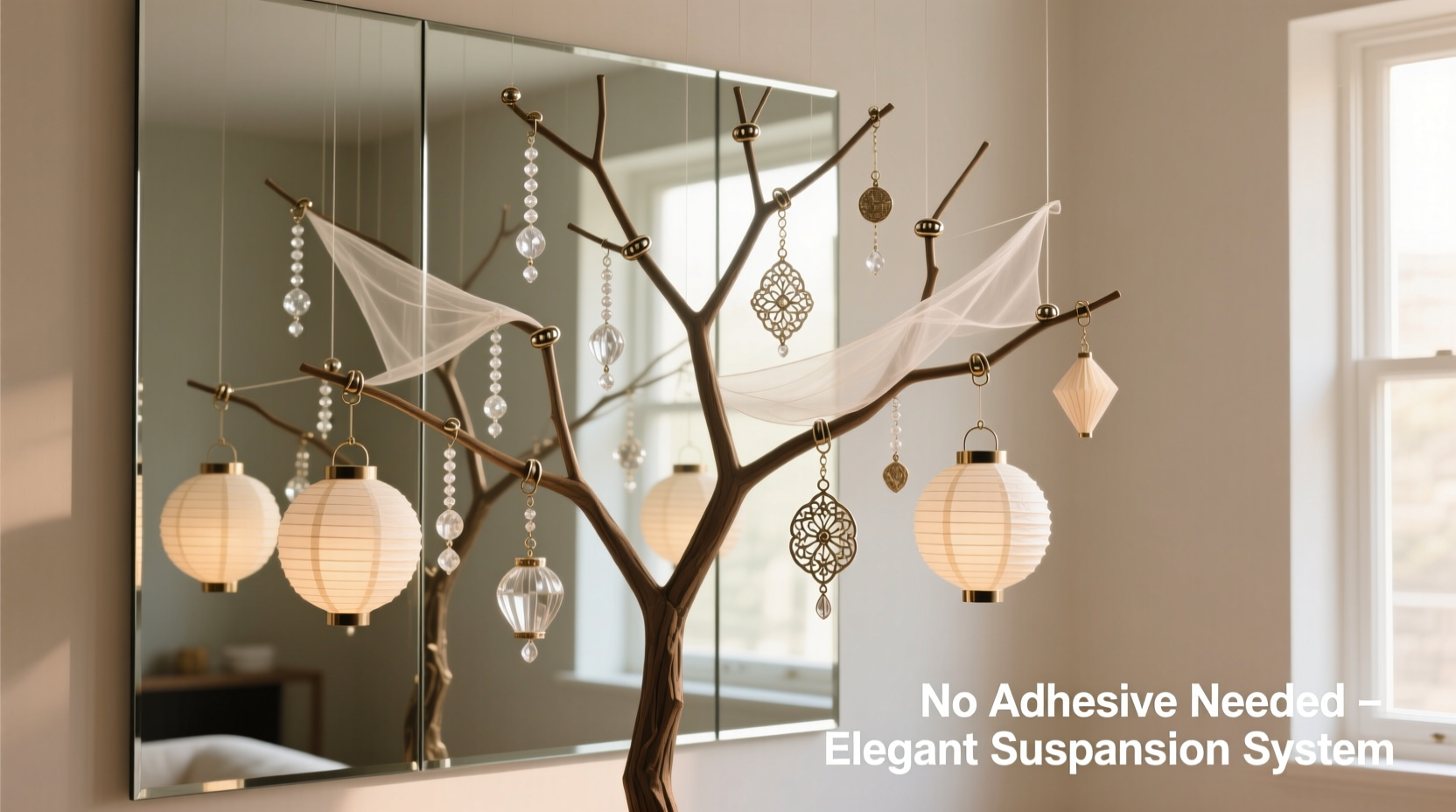
Most people reach for tape, putty, or sticky hooks when hanging lightweight decor. While these may seem convenient, they pose real risks on mirrored surfaces:
- Residue buildup: Even products labeled “residue-free” can leave behind a film, especially after exposure to temperature changes or prolonged use.
- Surface scratching: Aggressive removal can scratch the mirror coating, particularly around the edges where the protective layer is thinner.
- Reduced reflectivity: Oily residues scatter light, dulling the mirror’s shine and creating hazy patches.
- Difficult cleanup: Solvents like alcohol or acetone might remove glue but can damage mirror backing or framing materials.
The goal isn’t just to hang ornaments—it’s to do so in a way that leaves no trace once the season ends. That means avoiding direct adhesion whenever possible and relying on mechanical or tension-based solutions instead.
Safe, Residue-Free Hanging Methods
The key to successful ornament hanging lies in shifting from chemical adhesion (stickiness) to physical support (clamping, draping, or balancing). Below are five reliable methods that protect your mirrored wall tree while keeping decorations secure.
1. Use Decorative Clips with Felt Pads
Small decorative clips—often used for photo displays or fairy lights—can grip the edge of the mirror or frame without touching the glass surface directly. Opt for clips lined with soft felt or silicone to prevent scratching.
Attach lightweight ornaments by tying them to the clip with thin ribbon or clear fishing line. For heavier pieces, ensure the clip has a strong spring mechanism and is rated for the weight.
2. Magnetic Hangers (For Metal-Framed Mirrors)
If your mirrored wall tree has a metal frame or backing, magnetic solutions offer a nearly invisible hold. Use pairs of small, strong neodymium magnets—one placed on the front, one behind the mirror—to sandwich lightweight ornaments attached via thread or wire.
This works best for flat-backed or slim ornaments. Avoid using magnets on full-length glass panels unless you're certain of structural integrity, as excessive pressure can cause cracking.
3. Clear Fishing Line Suspension
Fishing line is virtually invisible under most lighting conditions and can be anchored at the top of the wall tree’s frame or nearby molding. Tie one end securely to a fixed point above, then attach the other end to the ornament’s hook or loop.
This method mimics the look of floating decor and eliminates contact with the mirror entirely. For adjustable height, tie knots at intervals along the line or use micro-knots that can be easily repositioned.
4. Over-the-Door Hooks (Miniature Version)
Repurpose miniature over-the-door hooks designed for jewelry or scarves. These hook over the top edge of the mirror or frame and hang downward, supporting ornaments without touching the glass.
Choose models with rubberized grips to prevent slipping and scratching. They’re ideal for tiered arrangements and allow quick reconfiguration during styling.
5. Ribbon Draping with Tension Loops
Cut narrow satin or velvet ribbon into lengths and drape them diagonally or vertically across the mirror. Secure each end with removable adhesive hooks placed on adjacent walls or molding—not on the mirror itself.
Slide ornament hooks through the ribbon or tie them in place with tiny loops of thread. This creates a cascading effect and adds texture without risking the surface.
“With mirrored decor, invisibility is the goal—not just for the ornament supports, but for the installation process itself. If you can see the method, it breaks the illusion.” — Lena Peterson, Interior Stylist & Holiday Display Consultant
Step-by-Step Guide: Decorating Your Mirrored Wall Tree Safely
Follow this sequence to achieve a professionally styled look without compromising your mirror’s finish.
- Assess the structure: Determine whether your wall tree has a frame, edge thickness, and mounting stability. Note any anchor points like molding, ceiling beams, or adjacent walls.
- Plan the layout: Sketch a rough arrangement of where ornaments will go. Group by size, color, or theme to maintain visual balance.
- Prepare materials: Gather fishing line, ribbon, clips, magnets, and any non-adhesive fasteners. Pre-cut lines to approximate lengths based on your sketch.
- Install anchor points: Attach removable hooks or tension rods to surrounding surfaces—never directly onto the mirror. Use putty only if absolutely necessary, and limit contact area.
- Hang primary supports: Run ribbons or fishing lines from anchors across or above the mirror. Ensure they’re taut but not overly tight.
- Add ornaments: Begin with larger pieces, securing them to lines or clips. Use double-knots or micro-beads to prevent sliding.
- Test stability: Gently nudge each ornament to check for swaying or slipping. Adjust positioning or reinforce supports as needed.
- Final polish: Wipe the mirror with a glass cleaner and lint-free cloth to restore clarity after handling.
Do’s and Don’ts: A Quick Reference Table
| Do | Don’t |
|---|---|
| Use felt-lined clips or rubber-gripped hooks | Apply duct tape, packing tape, or masking tape |
| Anchor fishing line to ceiling or wall molding | Stick adhesive putty directly on glass |
| Test magnet strength before full deployment | Hang heavy ornaments with single-point suspension |
| Clean the mirror before and after decorating | Use ammonia-based cleaners near adhesive residues |
| Label lines or ribbons for easy takedown | Leave decorations up past early January; humidity changes increase residue risk |
Real Example: Decorating a Floor-to-Ceiling Mirrored Panel
Sophie, a graphic designer in Portland, installed a tall mirrored wall tree in her living room—an elegant silver-framed panel reaching from floor to ceiling. She wanted to decorate it for her first holiday season in the new apartment but feared damaging the surface.
Instead of using tape or putty, she opted for a combination of methods: clear fishing line anchored to crown molding above, draped velvet ribbons secured to side walls with removable hooks, and small magnetic clamps for lightweight glass baubles near the metal frame.
The result was a stunning, layered display that appeared to float against the mirror. After the holidays, she removed everything in under 20 minutes—no cleaning required. The mirror looked exactly as it did before decorating.
Checklist: Pre-Decoration Preparation
- ☐ Inspect the mirror and frame for sturdiness
- ☐ Gather all non-adhesive hanging supplies (fishing line, clips, magnets, ribbon)
- ☐ Measure distances between potential anchor points
- ☐ Test magnet compatibility (if applicable)
- ☐ Clean the mirror surface thoroughly
- ☐ Sketch a decoration layout plan
- ☐ Label storage containers for post-holiday organization
Frequently Asked Questions
Can I use Command Strips on a mirrored wall tree?
Command Strips are generally safer than regular tape, but they still rely on adhesive. While designed to remove cleanly, they can leave residue—especially in humid environments or after long-term use. If you must use them, apply only to the frame (not the glass), and remove within the recommended timeframe using the proper pulling technique. For true residue-free results, mechanical alternatives are better.
What should I do if I accidentally leave residue behind?
If a small amount of adhesive remains, try this gentle method: dampen a microfiber cloth with warm water and a drop of dish soap. Hold it over the spot for 30 seconds to soften the residue, then gently rub in a circular motion. Avoid scrubbing. For stubborn spots, use a small amount of rubbing alcohol on a cotton swab—but test it first on an edge, and never spray directly onto the mirror.
Are there any ornaments I should avoid hanging on mirrored trees?
Avoid ornaments with sharp edges, excessive weight, or moisture-prone materials (like dried citrus or pinecones that may shed). Also skip items with built-in adhesives or those requiring direct surface contact. Stick to lightweight, smooth-finished pieces that can be suspended or clipped safely.
Conclusion: Style Without Sacrifice
Decorating a mirrored wall tree doesn’t require compromises between beauty and preservation. By moving beyond traditional adhesives and embracing smart, mechanical hanging solutions, you can create a festive display that enhances your space without risking damage. The techniques outlined here—ranging from fishing line suspension to magnetic supports—offer flexibility, elegance, and peace of mind.
As holiday trends continue to favor minimalist, multifunctional decor, mastering residue-free ornament hanging becomes a valuable skill. It protects your investment, simplifies cleanup, and ensures your mirrored tree remains a year-round asset, not just a seasonal setup.




 浙公网安备
33010002000092号
浙公网安备
33010002000092号 浙B2-20120091-4
Comments
No comments yet. Why don't you start the discussion?