
Decorating a Christmas tree is an art form, and one of the most common challenges decorators face is incorporating large, statement ornaments without overwhelming delicate branches. Oversized baubles, handmade glass spheres, or vintage heirlooms add drama and personality, but their weight and size can cause fragile evergreen limbs to bend, snap, or droop. The solution lies not in avoiding these showstoppers—but in mastering the use of invisible fishing line as a discreet yet strong support system.
Fishing line, often overlooked in holiday decor, is a game-changer. Nearly invisible when properly applied, it provides tensile strength far beyond traditional ornament hooks while preserving the natural silhouette of your tree. When used correctly, it allows even the heaviest ornaments to appear to float gracefully among slender boughs. This guide explores professional-grade techniques for hanging oversized ornaments safely and elegantly, ensuring your tree looks balanced, intentional, and magical.
Why Thin Branches Struggle with Large Ornaments
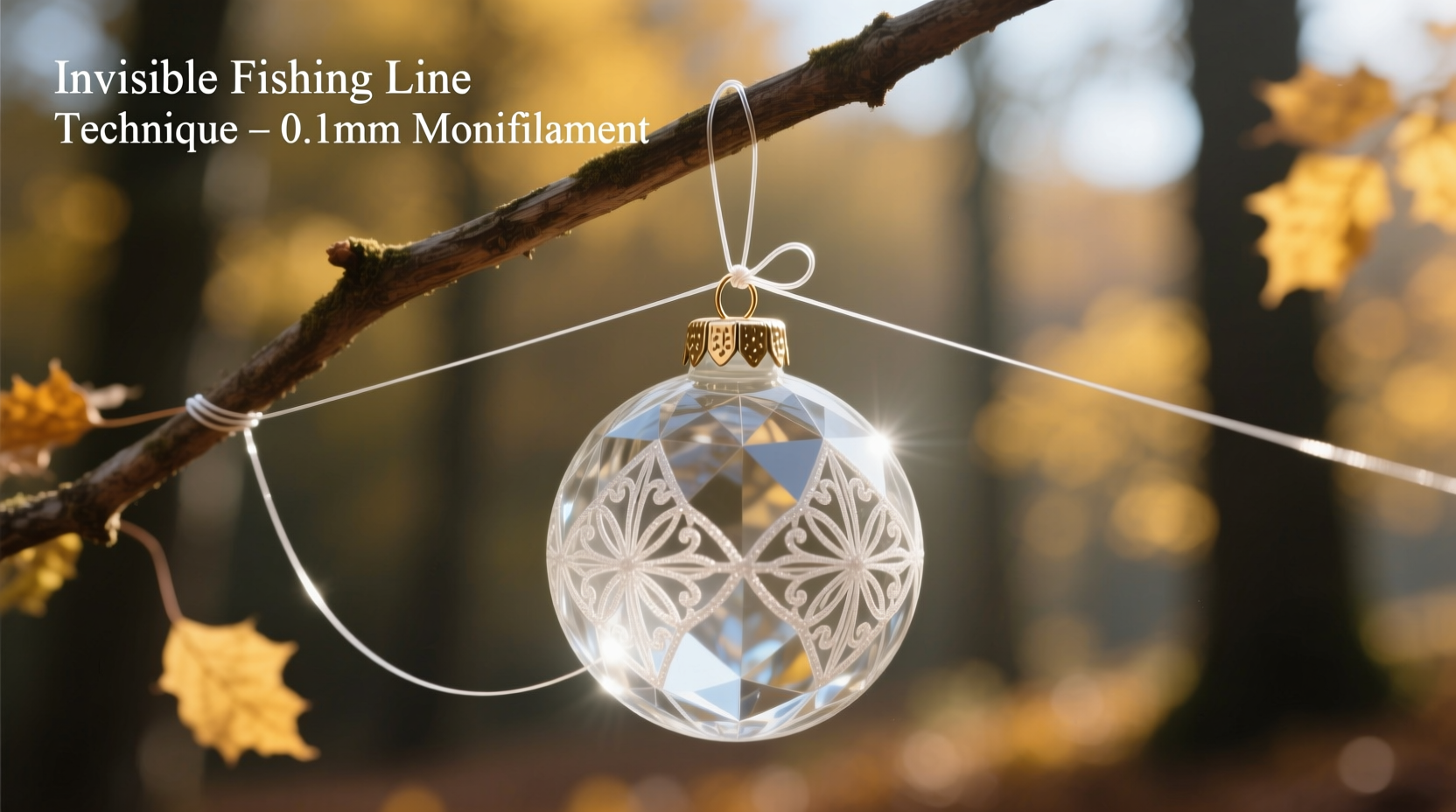
Evergreens like firs, spruces, and pines have varying branch strengths. Outer limbs, especially at the tips, are naturally thinner and more flexible—ideal for lightweight balls or tinsel, but ill-suited for heavier pieces. Attempting to hang a 6-inch diameter glass ornament weighing several ounces on such a branch often leads to:
- Branch breakage under pressure
- Gradual sagging that distorts the tree’s shape
- Ornament instability, increasing the risk of falling and shattering
The issue isn’t just structural—it’s aesthetic. A drooping branch disrupts visual flow, making the tree look unbalanced or poorly decorated. Many decorators resort to placing all large items near the trunk, creating a cluttered center and leaving the outer canopy sparse. But with the right technique, you can distribute weight strategically and maintain fullness throughout.
Selecting the Right Fishing Line for Decorative Use
Not all fishing lines are created equal. For ornament suspension, clarity, strength, and diameter matter most. Here's what to consider when choosing your line:
Material Type
Monofilament is the best choice for holiday decorating. It’s transparent, moderately stretchy (which helps absorb minor shifts), and widely available. Avoid braided line—it’s stronger but visibly textured and harder to conceal.
Test Strength
\"Test strength\" refers to the maximum weight the line can hold before breaking. For ornaments:
- Up to 4 oz: 4–6 lb test
- 4–8 oz: 8–10 lb test
- Over 8 oz: 12 lb test (use sparingly to avoid visibility)
Even 4 lb test monofilament is stronger than it appears—capable of supporting multiple standard ornaments. Higher test lines are thicker and slightly more visible, so reserve them for truly heavy pieces.
Clarity and UV Resistance
Opt for \"high-vis\" or \"crystal clear\" varieties. Some lines develop a slight yellow tint over time, especially under warm lights. UV-resistant options maintain transparency longer, which is ideal for trees displayed in sunlit rooms.
“Fishing line has become a staple in professional holiday installations. Its combination of strength and invisibility allows us to achieve dramatic effects without compromising safety.” — Marcus Bell, Lead Designer at Evergreen Event Styling
Step-by-Step: Hanging an Oversized Ornament with Fishing Line
Follow this method to securely suspend a large ornament from a weak branch using overhead support. This technique transfers the weight to sturdier upper sections or the central trunk, bypassing fragile limbs entirely.
- Gather materials: Clear monofilament (8 lb test recommended), scissors, ornament with a secure hanging loop, and optionally, a small hook or eye-screw for permanent anchor points.
- Cut a length of line: Measure from the desired ornament position up to a stable anchor point (a thick branch above or the trunk). Add 12 inches for tying and adjustments.
- Attach to the ornament: Thread one end through the ornament’s metal loop. Tie a double overhand knot, ensuring it won’t slip. Trim excess, leaving a tiny tail.
- Find an anchor point: Locate a strong, upward-facing branch or section of trunk directly above where you want the ornament to hang. If needed, insert a small decorative hook into the wood for repeated use.
- Tie the second end: Loop the free end around the anchor point or through the hook. Tie a secure knot (improved clinch knot works well). Do not pull tight yet.
- Adjust height and position: Let the ornament dangle. Gently tug the line until the ornament rests at the desired depth and angle. Re-tighten the knot once satisfied.
- Conceal the line: Weave the vertical segment behind existing branches or foliage. Avoid crossing open spaces where light might catch it.
- Test stability: Lightly nudge the ornament. It should swing slightly but remain securely suspended. Ensure no nearby branches are strained.
Advanced Techniques for Multiple Ornaments and Layered Displays
For cohesive arrangements, you can suspend multiple ornaments along a single vertical line—a technique known as “stacking” or “layered hanging.” This works well for themed displays (e.g., snowflakes, birds, or descending crystal teardrops).
Creating a Multi-Tiered Hanging Line
- Cut a long piece of fishing line (24–36 inches) depending on desired spacing.
- Starting from the bottom, tie the first ornament about 4–6 inches from the end.
- Measure up 6–8 inches and tie the second ornament, offsetting its loop so it doesn’t rotate into the one below.
- Repeat for additional levels, ensuring each ornament has room to turn independently.
- Anchoring at the top, adjust so tiers hang evenly and don’t tangle.
This method reduces the number of anchor points needed and creates a sculptural effect. Ideal for narrow trees or minimalist designs.
Lateral Support for Side-Heavy Ornaments
Some ornaments—like wide fan-shaped stars or asymmetrical designs—tend to tilt outward. To correct this, use a secondary fishing line as a “guy wire”:
- Attach a short line from the outer edge of the ornament to a side anchor point (another sturdy branch).
- Keep tension minimal—just enough to stabilize, not pull.
- Weave both lines behind foliage for invisibility.
| Technique | Best For | Line Test Recommendation |
|---|---|---|
| Direct Suspension | Single heavy ornaments | 8–10 lb |
| Stacked Vertical Line | Multiple lightweight ornaments | 6–8 lb |
| Lateral Guy Wire | Unbalanced or wide ornaments | 4–6 lb |
| Doubled Redundant Line | Irreplaceable heirlooms | 2x 6 lb (folded) |
Real Example: Decorating a Fraser Fir with Vintage Glass Ornaments
Sarah, a decorator in Vermont, inherited a collection of 1940s German glass ornaments—some over 7 inches in diameter and surprisingly heavy. Her Fraser fir had lush greenery but thin outer branches. Initially, she tried using traditional hooks, but two ornaments fell within a day, one cracking on impact.
She switched to an invisible fishing line strategy:
- Used 8 lb test monofilament for all ornaments over 5 oz.
- Installed small brass screw eyes into the trunk at various heights as permanent anchors.
- Suspended each large piece from above, adjusting lengths so they appeared to emerge naturally from the foliage.
- Added subtle LED string lights behind them to create a glowing halo effect, further masking any trace of line.
The result was a stunning, museum-quality display. No branches broke, and guests assumed the ornaments were magically floating. Sarah now uses this method every year, even renting her decorated tree for local holiday events.
Common Mistakes to Avoid
Even experienced decorators make errors when working with fishing line. Watch out for these pitfalls:
- Using opaque or colored line: Green or blue fishing line may blend with water but stands out clearly against white walls or soft lighting.
- Over-tightening knots: Excessive tension can cut into bark or stress anchor points. Knots should be snug but allow slight movement.
- Ignoring light angles: What’s invisible from the front may glint under side lighting. View your tree from multiple angles after decorating.
- Reusing old or brittle line: Sunlight and age weaken monofilament. Discard any line that feels stiff or cloudy.
“Perfection in decoration isn’t about hiding the mechanics—it’s about making them irrelevant. When done right, people don’t notice the line; they only see the beauty.” — Lena Choi, Interior Stylist & Holiday Design Consultant
Checklist: Secure Ornament Hanging with Fishing Line
- ✅ Choose clear monofilament (6–10 lb test)
- ✅ Inspect ornament loops for weakness
- ✅ Identify strong anchor points above target area
- ✅ Cut line with extra length for adjustments
- ✅ Tie secure knots (double overhand or improved clinch)
- ✅ Adjust height and angle before final tightening
- ✅ Conceal vertical line behind branches
- ✅ Test gently for stability
- ✅ Step back and view from multiple angles
Frequently Asked Questions
Can I use thread instead of fishing line?
Regular thread lacks the tensile strength and moisture resistance needed for reliable support. Cotton or polyester thread can stretch, fray, or snap under sustained weight. Fishing line is specifically engineered for durability and low visibility, making it far superior for this application.
Will fishing line damage my tree?
When used properly, no. Monofilament is smooth and thin, causing no more harm than a zip tie or ribbon. Avoid wrapping it tightly around live growth for extended periods, but seasonal use during the holidays poses no risk to tree health.
How do I remove fishing line after the holidays?
Cut the line close to each knot rather than pulling it out. This prevents accidental yanking on branches. Save leftover line for next year by wrapping it around a small cardboard spool and storing in a dry place.
Final Thoughts: Elevate Your Holiday Display with Confidence
Hanging oversized ornaments on thin branches doesn’t have to be a compromise between beauty and practicality. With invisible fishing line, you gain the freedom to design boldly, placing statement pieces exactly where they’ll have the most impact. The technique is simple, inexpensive, and instantly elevates your tree from ordinary to extraordinary.
Whether you’re preserving family heirlooms, showcasing artisan crafts, or simply indulging in festive extravagance, mastering this method ensures your decorations remain safe, secure, and stunning throughout the season. The goal isn’t perfection—it’s presence. Let your ornaments shine, unburdened by structural limits.




 浙公网安备
33010002000092号
浙公网安备
33010002000092号 浙B2-20120091-4
Comments
No comments yet. Why don't you start the discussion?