
Balcony string lights create a warm, inviting atmosphere—perfect for evening relaxation or entertaining guests. But many homeowners face two major obstacles: restrictive homeowners association (HOA) regulations and the risk of lights being damaged or torn down by strong winds. The good news is that with thoughtful planning, the right materials, and a respectful approach, you can enjoy your illuminated space without drawing complaints or losing your decor to a gusty night.
The key lies in balancing aesthetics, safety, and compliance. This guide walks through proven methods to install string lights securely and discreetly while staying within community guidelines and ensuring durability against weather.
Understand Your HOA Rules Before You Begin
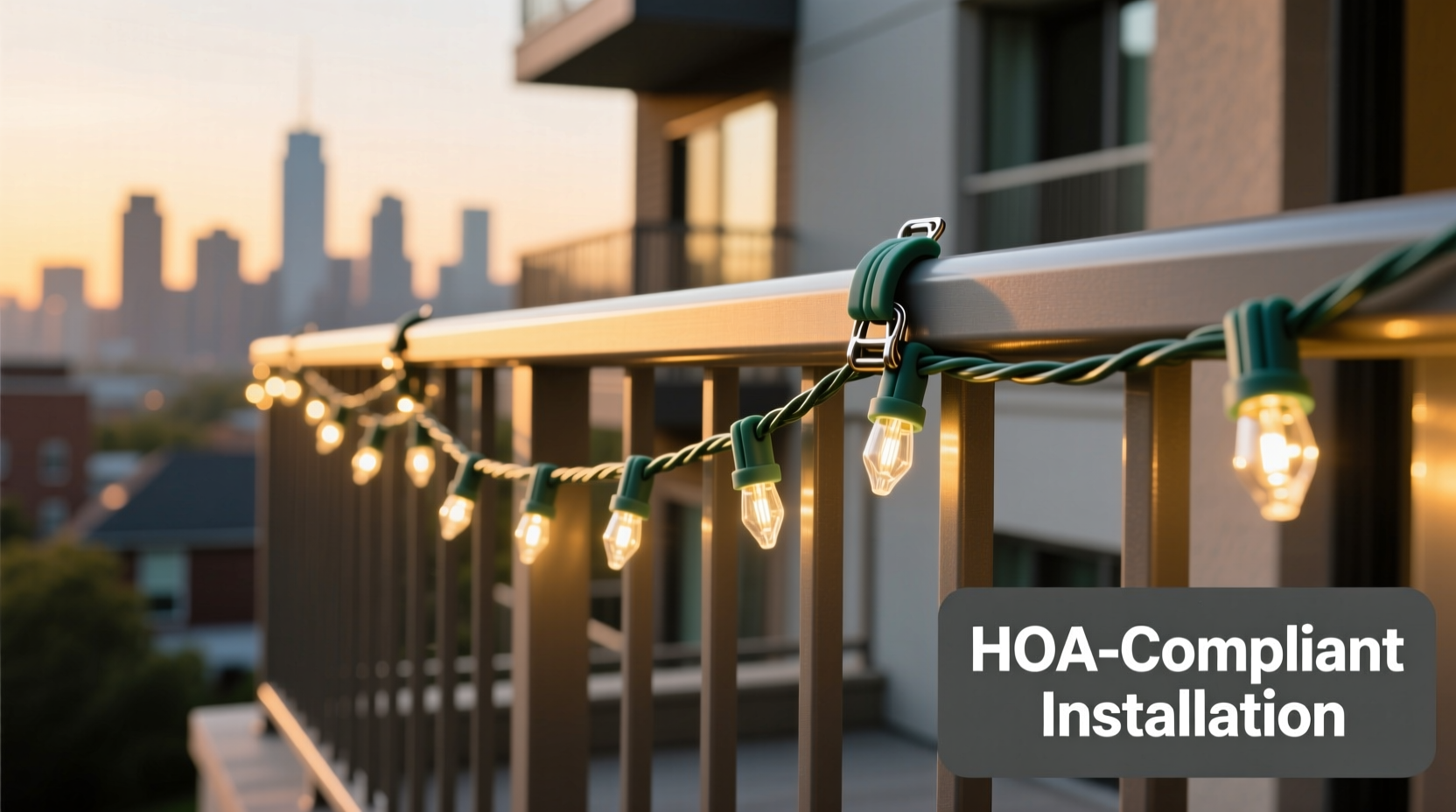
Before purchasing a single strand of lights, review your HOA’s architectural guidelines. Many associations regulate exterior lighting due to concerns about visual clutter, light pollution, fire hazards, or electrical safety. Some prohibit permanent fixtures, while others allow temporary decorative lighting under specific conditions.
Common restrictions include:
- Limits on visible wiring or hardware
- Prohibitions on nails, screws, or drilling into common surfaces
- Restrictions on brightness, color temperature, or light direction
- Seasonal allowances (e.g., only permitted during holidays)
- Requirements for UL-listed, outdoor-rated products
Contact your HOA board or management office to request written guidelines. If none exist, politely ask whether decorative lighting is allowed and what conditions apply. Documenting approval—via email or formal request—protects you if disputes arise later.
Choose the Right Lights and Hardware
Selecting appropriate equipment is crucial for both compliance and longevity. Not all string lights are built for outdoor use, especially on exposed balconies where wind and moisture are constant factors.
Light Specifications to Look For
- Outdoor-rated (UL Wet Location Listed): Ensures resistance to rain, humidity, and temperature changes.
- LED bulbs: More energy-efficient, cooler to the touch, and longer-lasting than incandescent options.
- Low voltage (12V or 24V): Safer for shared structures and often acceptable under stricter HOA policies.
- Warm white (2700K–3000K): Minimizes glare and light trespass into neighboring units.
Attachment Methods That Won’t Damage Surfaces
Avoid anything that permanently alters the railing or building structure. Instead, opt for non-invasive fasteners:
- Hook-and-loop tape (e.g., 3M Command Strips Outdoor): Removable, leaves no residue, supports moderate weight.
- Clear silicone clamps or zip ties: Secure without scratching metal or composite railings.
- Rail-mounted hooks: Designed to sit over railings without adhesives.
- Magnetic clips (for metal railings): Easy to install and reposition.
Always test adhesive strength in an inconspicuous area first, especially in extreme temperatures. Avoid duct tape, staples, or nails—they violate most HOA rules and degrade quickly outdoors.
“Using removable, code-compliant lighting shows respect for community standards while still allowing personal expression.” — Daniel Reeves, Urban Property Management Consultant
Secure Installation Against Wind and Weather
Balconies act like wind tunnels, especially in high-rise buildings. Unsecured lights can flap violently, fray wires, or detach entirely—posing safety risks and potential liability.
Step-by-Step Guide to Wind-Resistant Installation
- Measure your railing perimeter to determine how many strands you need. Avoid overloading one outlet; consider splitting circuits.
- Clean the railing surface thoroughly with rubbing alcohol to ensure proper adhesion for tapes or clips.
- Attach mounting points every 12–18 inches, using outdoor-rated adhesive hooks or soft-lined clamps. On curved sections, place them more frequently.
- String lights loosely but taut enough to prevent flapping. Never stretch tightly—this increases stress during wind events.
- Use wire management sleeves or braided covers to bundle excess cord neatly along the underside of the railing.
- Anchor the plug end securely near the outlet using a weatherproof cover box if available.
- Test stability gently by simulating wind motion—adjust any loose sections immediately.
Reinforcement Strategies for High-Wind Areas
- Add cross-bracing with clear fishing line tied between vertical railing posts to reduce sway.
- Choose shorter strands (25 ft max) instead of one long run—fewer connection points mean less failure risk.
- Use heavier-duty commercial-grade clips designed for patio heating cables—they grip better and resist vibration.
- Install a timer or smart plug to turn lights off automatically during storm watches.
Compliance-Friendly Design Tips
Even if your HOA allows lighting, maintaining a neat, understated appearance reduces the chance of complaints from neighbors or enforcement actions.
| Do | Don’t |
|---|---|
| Use warm white or amber tones to minimize glare | Install bright multicolor or flashing lights |
| Keep cords hidden along railing base or underside | Leave dangling wires or multiple extension cords visible |
| Remove lights when not in use or during off-seasons | Leave lights up year-round without maintenance checks |
| Label your plug with contact info in case of issues | Draw power from outlets not assigned to your unit |
Consider a minimalist layout—such as a single horizontal row along the outer railing edge—rather than crisscrossing patterns that look haphazard. Less is often more when it comes to communal living spaces.
Real Example: A Chicago Condo Owner’s Success Story
Sophie M., a resident of a 14th-floor condo in downtown Chicago, wanted to enhance her narrow balcony for summer evenings. Her HOA had previously denied applications for holiday lights due to “visual inconsistency” with building standards.
Instead of pushing back, Sophie submitted a new proposal outlining her plan:
- Using only warm-white, commercial-grade LED string lights
- Attaching them with removable 3M Outdoor Hooks
- Installing a timer to limit operation to sunset-to-midnight hours
- Providing photos of similar installations in approved renovation cases
The board approved her request with the condition that she remove the lights by October 31. She installed them in June, inspected them monthly, and took them down promptly. Neighbors complimented the subtle glow, and no incidents occurred. The following year, the HOA relaxed its policy slightly, citing her project as a model of responsible decoration.
Checklist: Pre-Installation Review
Before hanging any lights, complete this checklist to ensure safety, compliance, and durability:
- ✅ Reviewed HOA guidelines or obtained written permission
- ✅ Selected UL-listed, outdoor-rated LED string lights
- ✅ Confirmed power source is GFCI-protected and accessible
- ✅ Chosen non-damaging attachment method (no nails/screws)
- ✅ Measured railing and calculated needed length (with 10% extra)
- ✅ Cleaned railing surface for optimal adhesion
- ✅ Purchased spare clips/hooks for future repairs
- ✅ Scheduled seasonal removal date on calendar
Frequently Asked Questions
Can I use battery-powered string lights on my balcony?
Yes, battery-operated lights are often the most HOA-friendly option because they eliminate electrical cords and don’t require outlet access. Just ensure the battery pack is protected from moisture—store it in a sealed plastic container tucked behind planters or furniture.
What should I do if my lights get damaged by wind?
Inspect your setup after every strong storm. Replace frayed wires or broken sockets immediately—don’t attempt to splice outdoor lighting unless it’s specifically designed for it. Most manufacturers advise replacing entire sections for safety. Keep a spare strand on hand for quick swaps.
Are solar string lights a viable alternative?
Solar-powered lights work best in full-sun balconies. If your space is shaded for much of the day, they may not charge sufficiently. Additionally, the solar panel must be positioned where it receives direct sunlight—this isn’t always feasible on small or obstructed balconies. When they do work, they’re an excellent low-impact, code-free solution.
Final Thoughts: Enjoy Your Space Responsibly
Creating a cozy balcony ambiance doesn’t have to come at the cost of community harmony or structural safety. By respecting HOA guidelines, choosing durable materials, and installing with care, you can transform your outdoor space into a personal retreat that enhances both your lifestyle and your building’s aesthetic.
Smart lighting choices reflect consideration for neighbors, adherence to shared rules, and attention to detail—all qualities that contribute to a positive living environment. With the right approach, your string lights won’t just shine—they’ll set an example.




 浙公网安备
33010002000092号
浙公网安备
33010002000092号 浙B2-20120091-4
Comments
No comments yet. Why don't you start the discussion?