
For urban dwellers, studio renters, and families living in compact homes, the holiday season brings a unique logistical challenge: where do you stash dozens of wrapped gifts when square footage is scarce—and curiosity is abundant? Unlike spacious suburban homes with attics, basements, or walk-in closets, small-space residents often contend with open-plan living areas, shared bedrooms, limited storage, and highly observant children (or pets) who treat every unattended box like a personal invitation. The stakes are real: one misplaced tag, an audible rustle behind a sofa cushion, or a suspiciously lumpy laundry basket can unravel months of planning. This isn’t about deception—it’s about preserving wonder, honoring intentionality, and protecting the quiet magic that makes Christmas morning feel like a shared ritual, not a guessing game.
Why “Small-Space Hiding” Requires a Different Mindset
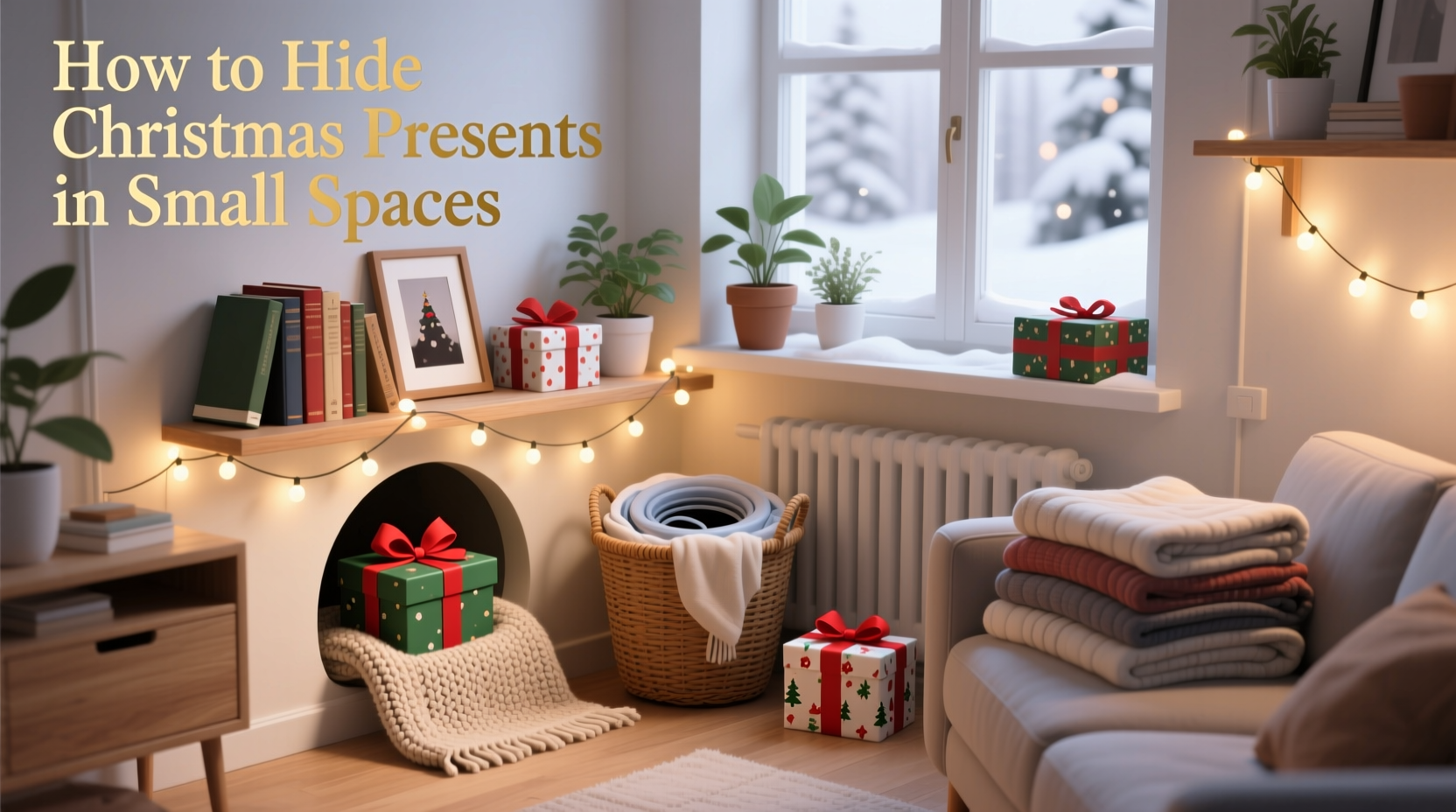
In large homes, gift concealment often relies on volume: fill the garage, stack boxes in the attic, tuck them under the bed. But in studios under 500 sq ft, two-bedroom condos with no dedicated storage, or micro-apartments where the closet doubles as a pantry, traditional methods fail. You can’t simply “put it in the spare room”—because there is no spare room. What works instead is a layered approach: leveraging overlooked zones, repurposing everyday objects, and designing for *behavioral invisibility*—not just physical concealment. That means accounting for how people move through your space, what they routinely touch or open, and where attention naturally lands. A present hidden inside a rarely used filing cabinet may be physically secure—but if your partner opens that drawer every Tuesday to pay bills, it’s functionally exposed.
5 High-Utility, Low-Visibility Hiding Spots (Tested in Real Small Spaces)
These aren’t theoretical suggestions—they’re solutions refined across dozens of studio apartments, tiny houses, and shared rentals. Each has been vetted for accessibility (you need to retrieve gifts later), safety (no fire hazards or structural risks), and spoiler resistance (no telltale bulges, sounds, or scents).
- The Under-Bed Vault (with a twist): Most people slide boxes under the bed—but that’s the first place kids check. Instead, use rigid, flat-bottomed under-bed storage bins with lids that lock or snap shut, then line the bin’s interior with soft fabric (a folded blanket or towel) to muffle crinkling. Place the bin at the foot of the bed—not the head—so it’s visually recessed and harder to reach. Bonus: label the bin “Winter Linens” or “Extra Towels” using a discreet marker on the lid’s underside.
- The Appliance Ambush: Refrigerator-freezers with top-mounted freezers often have unused vertical clearance above the unit. A narrow, shallow shelf installed just above the fridge (secured with heavy-duty L-brackets) holds flat, lightweight gifts—think books, board games, or wrapped CDs—out of sight but within arm’s reach. Ensure the shelf is level and doesn’t obstruct the fridge door’s full opening.
- The Bookshelf Buffer: Remove 3–4 non-essential books from the middle of a shelf. Slide a slim, flat-wrapped gift (e.g., a framed photo, a tablet case, or a set of coasters) into the gap. Then reinsert the books—but stagger their spines so the gap isn’t visible from the front. For added security, choose books with similar heights and colors to minimize visual disruption.
- The Laundry Basket Illusion: Use a deep, lidded wicker or canvas laundry basket—not plastic. Fill the bottom ⅔ with clean, folded towels or blankets. Nestle medium-sized gifts upright among the textiles, then top with more folded linens. The key: ensure the lid closes fully and sits flush. To avoid suspicion, keep the basket in the bathroom or bedroom—not the living room—and rotate its contents weekly (swap out towels) so it feels “in use.”
- The False-Back Drawer: In dressers or desks with shallow top drawers (under 4 inches deep), remove the drawer. Glue a thin, rigid panel (½-inch plywood or MDF) to the back wall of the drawer cavity, creating a 2-inch-deep false compartment. Slide flat or narrow gifts (gift cards, jewelry boxes, scarves) into this space before reinserting the drawer. Works best in furniture with solid backs—not particleboard with pre-drilled holes.
What NOT to Do: The Small-Space Hiding Hall of Shame
Mistakes compound quickly in constrained environments. These tactics look clever until they backfire—often spectacularly.
| Strategy | Why It Fails in Small Spaces | Better Alternative |
|---|---|---|
| Hiding gifts inside suitcases stored under the bed | Suitcases are frequently opened for travel prep—even in off-seasons—and their zippers make distinctive sounds when moved. | Use rigid under-bed bins with silent latches and fabric lining. |
| Stashing boxes in the oven or microwave | Fire hazard; violates appliance safety codes; creates dangerous confusion during cooking prep. | Repurpose vertical space above appliances with secured shelving. |
| Wrapping early and leaving gifts on bookshelves or mantels | Visual clutter triggers questions (“Who’s that for?”); wrapping paper attracts dust and pet hair, making items look suspiciously “aged.” | Wrap only 72 hours before gifting; store unwrapped items in labeled, opaque containers. |
| Using vacuum-sealed bags for bulky items | Plastic bags emit faint chemical odors over time; compressed shapes distort wrapping paper, revealing item outlines. | Opt for rigid cardboard boxes lined with tissue—then wrap the entire box. |
| Leaving gifts in the car trunk | Temperature extremes damage electronics and chocolate; trunk access requires going outside—increasing risk of being seen by neighbors or delivery drivers. | Rent a climate-controlled mini-storage unit (as small as 2.5' x 5') for overflow—costs under $40/month in most cities. |
A Real Example: How Maya, a Brooklyn Studio Resident, Saved Christmas (and Her Sanity)
Maya lives in a 420-square-foot studio apartment in Williamsburg with her 6-year-old daughter, Leo, and a very curious cat named Mochi. Her “closet” is a 24-inch-wide sliding door unit with no shelves—just hanging rods. Last year, she hid gifts in a suitcase under the bed. Leo found them on December 12th while searching for her favorite stuffed rabbit. This year, Maya adopted a three-tier strategy:
- Phase 1 (Early November): She purchased five 22\"x14\"x6\" rigid under-bed storage bins with soft-close latches. Each was labeled with a seasonal theme (“Holiday Tea Towels,” “Stocking Stuffers,” “Cozy Socks”) using removable vinyl labels.
- Phase 2 (Late November): She installed a 12-inch-deep floating shelf above her refrigerator—holding flat gifts like art prints and puzzle boxes. She also converted the top shelf of her IKEA KALLAX unit (normally for decor) into a “book buffer zone,” hiding two medium-sized gifts between hardcover novels.
- Phase 3 (December 18–22): She wrapped all gifts in the bathroom after Leo was asleep, then placed each directly into its designated bin. On Christmas Eve, she moved the bins to the living room floor—still closed—and draped them with festive throws, turning them into impromptu seating cushions.
“The best part wasn’t just that Leo didn’t find anything,” Maya told us. “It was that I stopped feeling anxious every time she opened a drawer or peered behind the couch. I reclaimed mental space—and that made the whole season lighter.”
Step-by-Step: Your 7-Day Small-Space Gift Concealment Timeline
Timing matters. Too early, and exposure risk rises. Too late, and stress spikes. This sequence balances security, practicality, and calm.
- Day 1 (7 days before Christmas): Audit your space. Walk through each room and note every container, shelf, and recessed area. Circle three zones that meet all criteria: (a) accessed ≤1x/week, (b) structurally sound, (c) visually neutral when occupied.
- Day 2: Acquire supplies: rigid bins with latches, fabric liners, shelf brackets, and blank labels. Avoid clear plastic or flimsy cardboard.
- Day 3: Install hardware (shelves, brackets) and test stability. Let adhesives cure overnight if required.
- Day 4: Sort gifts by size and fragility. Group flat items together; separate electronics from liquids or food. Label each group with a coded symbol (e.g., “★” for adult gifts, “●” for kids’ gifts) on the bottom of the item—not the wrapping.
- Day 5: Load bins and shelves. Line interiors with fabric. Close lids securely. Place in designated zones. Photograph each location for retrieval reference.
- Day 6: Conduct a “spoiler audit”: view each hiding spot from your household’s typical eye-level angles. Sit on the sofa, kneel by the bed, stand at the kitchen counter. If you can see or guess the contents, relocate.
- Day 7 (Christmas Eve): Move gifts to staging areas (e.g., under the tree, beside stockings). Keep them wrapped and unopened—no peeking, no rearranging. Breathe.
“The most effective hiding happens when the object disappears not into emptiness, but into ordinary function. A gift isn’t hidden in a drawer—it’s hidden in the rhythm of daily life.” — Javier Ruiz, Spatial Psychologist & Author of Domestic Camouflage: Designing for Attention Economy
FAQ: Small-Space Gifting Questions—Answered Honestly
What if I share a bedroom with my partner or roommate?
Transparency is often safer than secrecy. Have an honest conversation: “I want Christmas morning to feel special for both of us—can we agree not to open drawers or inspect bins in the week before Christmas?” If privacy is non-negotiable, use the false-back drawer method in a piece of furniture they rarely use (e.g., a guest desk or vintage sewing table). Never hide gifts in shared dresser compartments—too high-risk.
Can I hide gifts in my office or remote workspace?
Yes—if your workspace is truly private (a locked home office, not a corner of the living room). Use a filing cabinet with a lockable drawer, or install a small, discrete safe inside a desk compartment. Avoid hiding near tech gear: heat from monitors or routers can warp packaging, and cables create tripping hazards during retrieval.
How do I hide oversized gifts (like bikes or furniture) in a studio?
Don’t. Oversized items break the “small-space” paradigm. Rent a climate-controlled mini-storage unit (5'x5' or smaller) for large purchases. Transport them to your space on Christmas Eve using a cargo bike, foldable dolly, or same-day delivery service. The cost ($35–$60) is far less stressful—and more reliable—than trying to compress a bicycle into a closet.
Conclusion: It’s Not About Secrecy—It’s About Intention
Hiding Christmas presents in small spaces isn’t a game of cat-and-mouse. It’s an act of care—care for the anticipation that makes holidays meaningful, care for the boundaries that protect shared living, and care for your own peace of mind amid seasonal chaos. When every inch counts, the real win isn’t just avoiding spoilers. It’s designing systems that reduce decision fatigue, eliminate last-minute scrambles, and turn constraint into creativity. You don’t need more space—you need smarter thresholds, quieter containers, and the confidence to trust your plan. So this year, skip the frantic midnight stash under the couch cushion. Choose one high-functioning spot from this guide. Test it. Refine it. Then step back and remember: the greatest gift you’re giving isn’t under the tree. It’s the calm, focused presence you bring to the people who matter most.




 浙公网安备
33010002000092号
浙公网安备
33010002000092号 浙B2-20120091-4
Comments
No comments yet. Why don't you start the discussion?