
Mounting a Christmas tree against the wall is a space-saving and stylish alternative to traditional center-stage trees. Whether you're in a small apartment, optimizing floor space, or simply embracing a modern aesthetic, a wall-mounted tree offers charm and versatility. But one challenge remains: managing and concealing the cords that power your lights, ornaments, and other decorations. Visible wiring can disrupt the visual harmony of an otherwise beautifully decorated tree. The good news? With thoughtful planning and a few clever techniques, you can keep cords completely out of sight while maintaining safety and accessibility.
This guide walks through proven methods, expert-approved strategies, and real-world tested approaches to hiding cords on a wall-mounted Christmas tree. From pre-decoration prep to post-installation fixes, you’ll learn how to achieve a polished, professional look—without sacrificing functionality or safety.
Why Cord Management Matters for Wall Trees
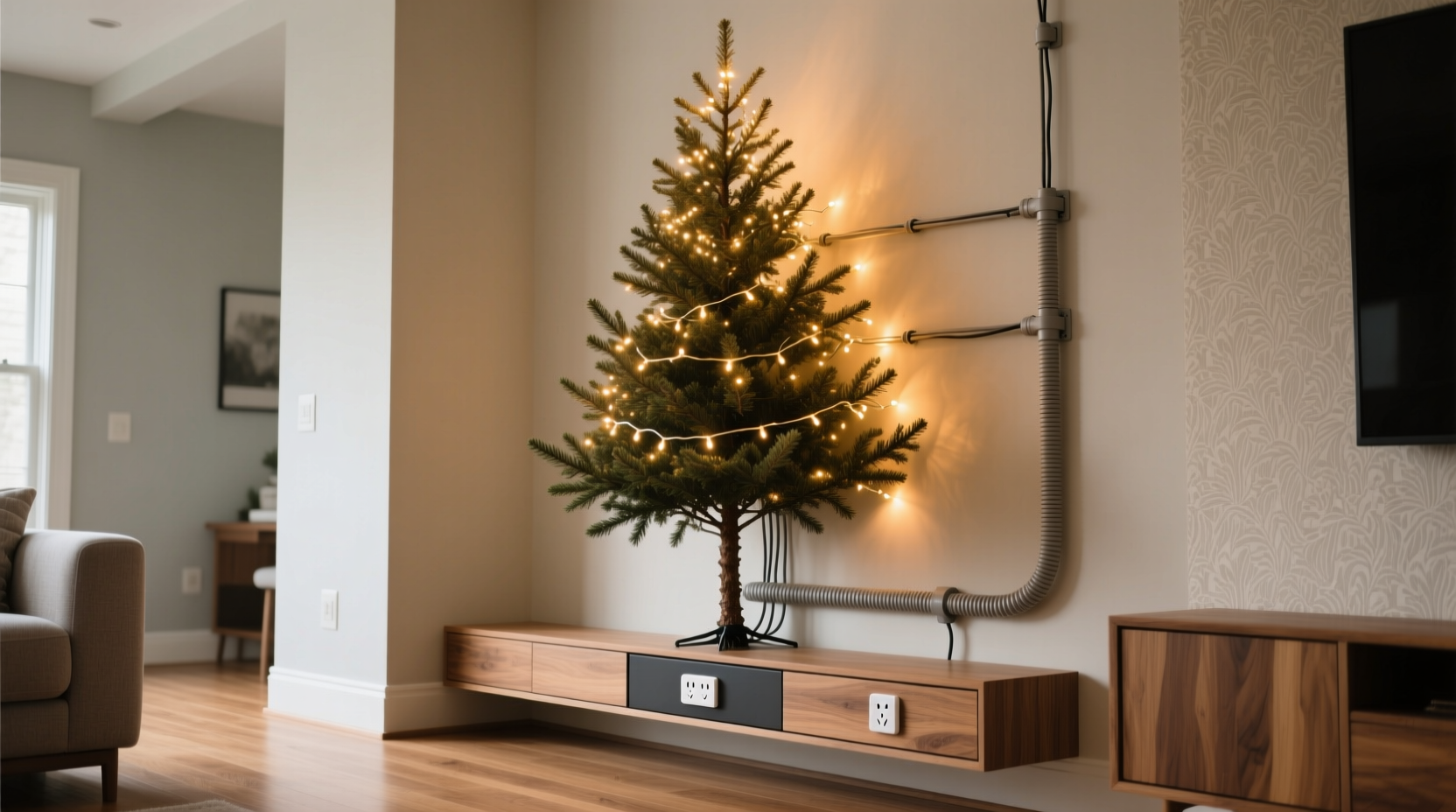
A wall-mounted Christmas tree often serves as a focal point in living rooms, hallways, or even bedrooms. Unlike freestanding trees where cords can drape behind the trunk and disappear into the stand, wall trees expose every inch of their structure. This means any dangling or snaking wires are immediately visible, detracting from the magical ambiance.
Beyond aesthetics, exposed cords pose practical issues:
- Safety risks: Tripping hazards, especially in high-traffic areas or homes with children and pets.
- Durability concerns: Cords dragged across floors or pinched under furniture can fray or short-circuit.
- Visual clutter: Even tasteful lighting setups lose impact when tangled wires distract the eye.
Proper cord concealment enhances both the elegance and safety of your display. It transforms a DIY project into a curated holiday feature.
Step-by-Step Guide to Hiding Cords on a Wall Tree
The key to invisible wiring lies in preparation, routing strategy, and smart materials. Follow this sequence for best results:
- Map Your Power Path
Identify the nearest electrical outlet. Measure the distance from the outlet to the intended top or side of your tree. Use painter’s tape to mark a potential cord route along walls or baseboards. Avoid crossing walkways if possible. - Choose Low-Profile Lighting
Opt for LED string lights with thin, flexible cords. These are easier to conceal than bulky incandescent sets. Consider battery-operated lights for maximum flexibility—no outlet needed. - Route Cords Before Attaching Decorations
If using adhesive-backed hooks or clips, install them first along your planned path. Feed the cord through each clip before adding lights to the tree frame. This prevents tugging and misalignment later. - Secure Cords Along the Frame
For trees made from wire frames, branches, or plywood cutouts, run cords vertically down one edge (preferably the side closest to the wall or corner). Use clear zip ties or fabric-covered twist ties to fasten cords to structural elements. - Conceal Base-Level Wiring
Where the cord meets the floor, use cord covers, baseboard raceways, or fabric runners to hide it. Paintable plastic raceways can be matched to your wall color for near-invisibility. - Label and Test
Once installed, test all lights. Label plugs if using multiple strands. This helps with troubleshooting and simplifies storage next year.
Effective Tools and Materials for Cord Concealment
You don’t need expensive gadgets to hide cords effectively. Many solutions are affordable, reusable, and easy to install. Here’s a comparison of popular options:
| Tool | Best For | Pros | Cons |
|---|---|---|---|
| Cord Covers (Raceways) | Floor-to-wall transitions, baseboard runs | Paintable, durable, child-safe | Visible if not color-matched |
| Adhesive Cable Clips | Vertical wall routing | Inexpensive, clear, removable | May damage delicate paint over time |
| Fabric Cord Sleeves | Blending cords into tree design | Soft, decorative, customizable | Can trap heat if poorly ventilated |
| Zip Ties / Twist Ties | Securing cords to frame | Strong, low-profile, reusable | Permanent if over-tightened |
| Battery Packs | Eliminating cords entirely | No outlet needed, fully portable | Limited runtime, requires charging |
For most wall trees, a combination works best—use adhesive clips to run cords up the wall, then secure them along the tree’s spine with zip ties. Finish with a painted raceway along the baseboard to complete the seamless effect.
Real Example: A Brooklyn Apartment’s Holiday Makeover
In a compact Brooklyn studio, interior designer Lena Tran faced a common challenge: no room for a traditional tree, but a strong desire for seasonal warmth. Her solution? A 6-foot asymmetrical evergreen silhouette mounted on the living room wall using bent steel rods and faux garland.
The initial setup looked festive—but the three strands of white fairy lights created a web of visible blue-gray cords running diagonally across the wall. Guests noticed the wires before the tree itself.
Lena revised her approach:
- She removed the lights and rerouted the cords using clear adhesive clips along the left edge of the tree, aligning them with a vertical seam in the wallpaper.
- She grouped all three cords into a single fabric sleeve dyed forest green, matching the garland.
- At the base, she installed a white plastic raceway painted to match the baseboard, directing the cord 3 feet to the nearest outlet.
- She switched to a single USB-powered strand connected to a power strip hidden inside a decorative basket beneath a side table.
The result was transformative. The tree appeared self-illuminated, with light seeming to glow organically from within. No wires were visible from any viewing angle. “It stopped looking like a project and started feeling like art,” Lena said. “The moment the cords disappeared, the magic returned.”
“Great holiday design isn’t about how much you add—it’s about what you successfully hide. Cords are the last frontier of Christmas stealth.” — Marcus Bell, Residential Stylist & Author of *Modern Holiday Interiors*
Do’s and Don’ts of Cord Management
To avoid common pitfalls, follow this quick-reference guide:
| Do | Don’t |
|---|---|
| Plan cord routes before installing lights | Wait until after decorating to address wiring |
| Use color-matched clips or sleeves | Use black cords on light-colored walls |
| Test all connections before final concealment | Seal cords inside enclosed spaces without ventilation |
| Group multiple cords together neatly | Allow cords to dangle loosely |
| Choose LED lights for lower heat and thinner cords | Overload outlets or daisy-chain too many strands |
One often-overlooked mistake is neglecting future access. While it’s tempting to glue or staple cords permanently, always allow for easy removal. Holiday decor should be enjoyable—not a demolition project come January.
Checklist: Pre-Hanging Cord Preparation
Before you begin decorating, complete this checklist to ensure a smooth, tangle-free installation:
- ✅ Locate the nearest power outlet
- ✅ Measure distance from outlet to tree base/top
- ✅ Choose lighting type (plug-in vs. battery)
- ✅ Select cord concealment method (clips, sleeves, raceways)
- ✅ Gather tools: scissors, zip ties, clips, tape measure
- ✅ Test all light strands for functionality
- ✅ Mark routing path with removable tape
- ✅ Ensure cords are untangled and kink-free
- ✅ Confirm weight limits for adhesives or mounts
- ✅ Have a backup plan for power (extension cord, power strip)
Frequently Asked Questions
Can I hide cords behind the tree if it’s flat against the wall?
Yes, but only if there’s a slight gap between the tree structure and the wall. Use spacers or offset brackets to create half an inch of clearance. Then feed cords behind the tree vertically. Avoid pinching cords tightly, as this can damage insulation over time.
Are battery-operated lights better for wall trees?
They offer greater flexibility since they eliminate the need for outlet proximity. However, they require regular charging or battery replacement. For permanent or long-term displays, plug-in LEDs with concealed cords are more reliable. Some designers use a hybrid approach—battery lights for upper branches, wired for lower sections.
How do I hide cords on a rental-friendly tree?
Focus on non-damaging solutions: use adhesive hooks rated for repositioning, fabric cord wraps, or floor-level raceways secured with removable tape. Avoid nails, screws, or permanent adhesives. Command™ strips and silicone-based mounts work well and leave no residue when removed.
Final Thoughts: Elevate Your Holiday Display with Smart Design
Hiding cords on a wall-mounted Christmas tree isn’t just about neatness—it’s about intentionality. Every detail contributes to the atmosphere you create. When wires vanish, the lights take center stage, glowing like stars in a winter sky rather than reminders of electricity bills.
The most memorable holiday displays aren’t those with the most ornaments, but those that feel effortless. Achieving that illusion takes planning, yes, but also creativity and attention to detail. By integrating cord management into your decorating process—not treating it as an afterthought—you transform a logistical challenge into a design advantage.
Whether you live in a tiny urban loft or simply want a fresh take on tradition, a wall tree can become a signature piece of your seasonal home. And with these strategies, it can shine—literally and figuratively—without a single wire in sight.




 浙公网安备
33010002000092号
浙公网安备
33010002000092号 浙B2-20120091-4
Comments
No comments yet. Why don't you start the discussion?