
A beautifully decorated front porch during the holiday season invites warmth, cheer, and admiration from neighbors and passersby. But behind every dazzling light show is a web of extension cords that, if left exposed, can create tripping hazards, look unsightly, and even shorten the lifespan of your decorations. While many reach for duct tape or zip ties in desperation, these quick fixes often fail under winter weather and draw more attention than they conceal.
The goal isn’t just safety—it’s seamless integration. A well-managed cord system keeps your family and guests secure while preserving the magic of your display. With thoughtful planning and the right techniques, you can eliminate visible clutter, reduce risk, and maintain an elegant outdoor presentation—all without relying on messy adhesives or dangerous improvisations.
Why managing extension cords matters beyond aesthetics
Safety is the primary concern when dealing with outdoor electrical setups. According to the National Fire Protection Association (NFPA), holiday lighting accounts for an estimated 7,000 home fires each year, many linked to improper wiring, overloaded circuits, or damaged cords. Wet conditions, foot traffic, and fluctuating temperatures amplify risks when cords are improperly secured or left exposed.
Beyond fire hazards, tripping over loose cords is one of the most common causes of seasonal injuries on porches and walkways. The U.S. Consumer Product Safety Commission reports that thousands of emergency room visits each December stem from falls related to holiday decor. These incidents are preventable with proper cord management.
Aesthetically, visible cords disrupt visual flow. They pull focus from your精心 arranged wreaths, glowing reindeer, and twinkling trees. When done right, cord concealment enhances rather than distracts—making your display appear professionally installed, not haphazardly assembled.
Step-by-step guide to hiding extension cords safely and invisibly
Effective cord concealment requires planning, the right materials, and attention to detail. Follow this sequence to achieve a clean, professional result:
- Plan your layout before plugging anything in
Sketch a rough diagram of your porch and mark where lights, inflatables, and other powered items will go. Identify the nearest outdoor-rated GFCI outlet. This helps determine how many cords you’ll need and their optimal routing path. - Use only outdoor-rated extension cords
Indoor cords lack UV and moisture resistance. Look for labels like “Suitable for Use with Outdoor Equipment” and ensure the gauge (e.g., 16 AWG or 14 AWG) matches the load. Lower numbers mean thicker wires and higher capacity. - Route cords along natural seams and edges
Run cords along baseboards, under railings, behind columns, or beside steps—anywhere they can follow existing architectural lines. Avoid crossing walkways unless absolutely necessary. - Secure cords using non-adhesive fasteners
Instead of tape, use plastic cable clips, conduit straps, or hook-and-loop wraps designed for outdoor use. These hold cords firmly without damaging surfaces or leaving residue. - Conceal runs with cord covers or raceways
For unavoidable crossings (like driveways or sidewalks), install low-profile cord covers rated for pedestrian and light vehicle traffic. These snap closed over cords and blend into pavement or grass. - Elevate cords off the ground where possible
Attach cords to underside of railings or beneath eaves using standoff mounts. This keeps them clear of snow, slush, and foot traffic. - Test the entire setup before finalizing
Plug everything in at night to check brightness, coverage, and heat buildup. Make sure no cord feels warm—if it does, reduce the load or upgrade the wire gauge.
Smart alternatives to tape and zip ties
Tape fails outdoors. It peels in cold, collects dirt, and leaves sticky residue. Zip ties, while strong, can cut into insulation over time and are difficult to adjust. Here are better solutions:
- Rubber grommet clips: Press into wood or soft siding to hold cords snugly without nails or glue.
- Magnetic cable holders: Ideal for metal surfaces like HVAC units or mailbox posts.
- Hook-and-loop cable sleeves: Wrap around bundles to keep multiple cords together; reusable and weather-resistant.
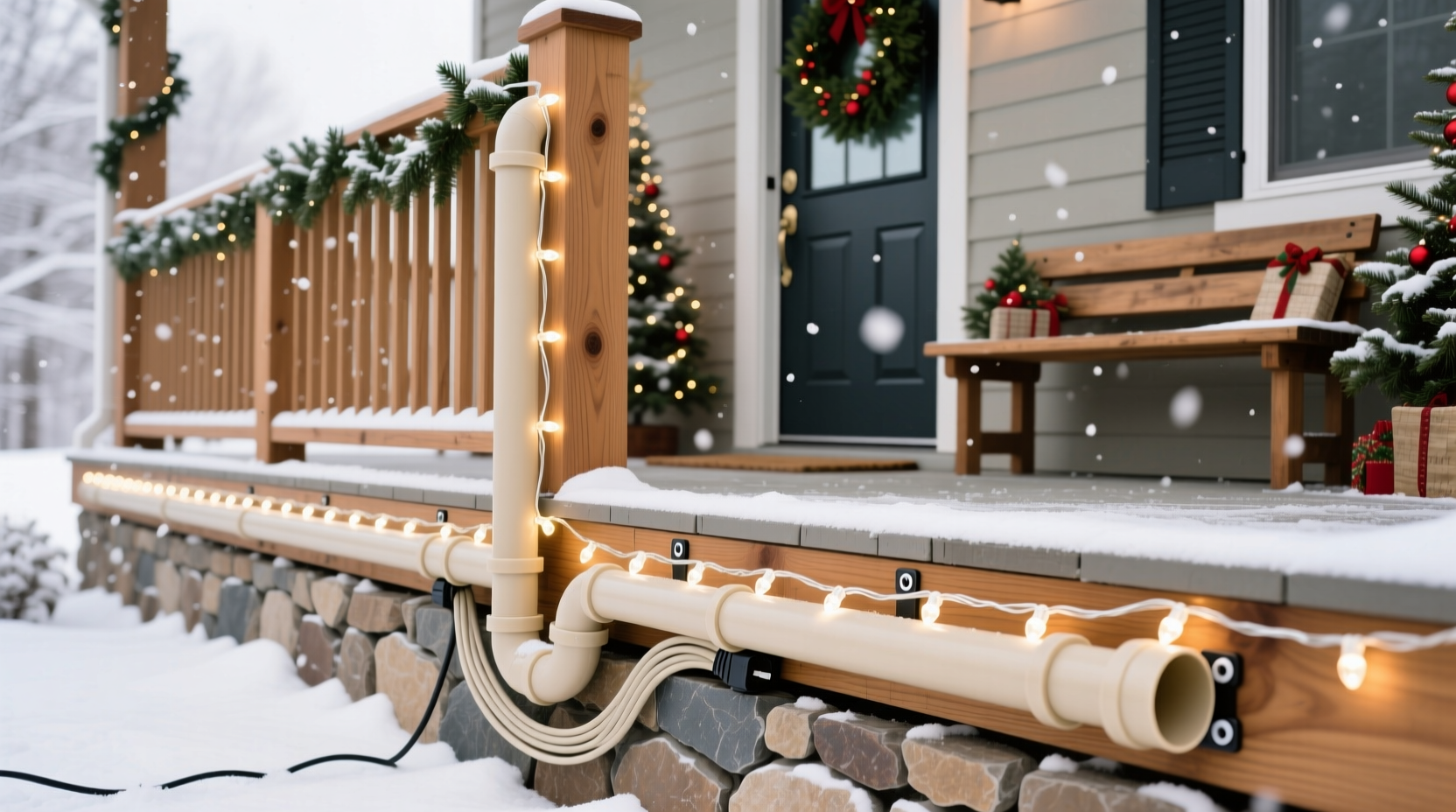
- Flexible PVC conduit: Slip cords inside semi-rigid tubing and secure with UV-resistant zip straps every 18 inches.
- Under-deck clip systems: Designed for deck railing installations, these hide cords beneath floorboards and emerge discreetly near displays.
For renters or those avoiding permanent modifications, consider modular cord covers that lay flat on surfaces and use weighted bases or interlocking designs to stay in place without adhesives.
Do’s and Don’ts of outdoor cord management
| Do’s | Don’ts |
|---|---|
| Use cord covers rated for outdoor and foot traffic use | Run cords under rugs or furniture where heat can build up |
| Bundle excess cord loosely in figure-eights to avoid kinking | Coil cords tightly—this increases resistance and overheating risk |
| Label each cord at both ends for easy troubleshooting | Hide connections in walls, under mulch, or in enclosed spaces |
| Install GFCI outlets or use GFCI-protected power strips | Connect more than three extension cords end-to-end |
| Clean and dry cord storage containers before packing away | Store cords damp or tangled—they degrade faster |
Real-world example: A suburban porch transformation
In Maplewood, NJ, homeowner Linda Tran faced a recurring problem: her elaborate nativity scene and rooftop icicle lights were undermined by a snarl of black cords running across her brick pathway. Each year, a neighbor tripped, and town inspectors flagged her setup as a hazard.
She decided to redesign her system. First, she mapped out a new route: cords now run from a covered side outlet up through a trellis, along a gutter line, and down behind a pillar—using standoff clips and flexible conduit. Where the cord crosses the walkway, she installed a gray rubber ramp-style cord protector that blends with the pavers.
She replaced old indoor cords with 14 AWG outdoor-rated ones, labeled each at both ends, and grouped strands with Velcro sleeves. The result? No visible tape, zero trips, and praise from both neighbors and local electricians. “It looks like it was done by a pro,” one said. “But I did it all myself in two afternoons.”
“Proper cord routing isn’t about hiding wires—it’s about designing a system that supports safety, durability, and beauty.” — Marcus Delgado, Residential Electrical Inspector, 15+ years in code compliance
Expert-recommended tools and materials checklist
To execute a safe, invisible cord setup, gather these essential supplies before starting:
- Outdoor-rated extension cords (16 AWG or 14 AWG depending on load)
- Low-profile cord covers or raceways for walkway crossings
- PVC or nylon cable clips with screws or adhesive backing
- Hook-and-loop wraps or braided sleeve organizers
- Stainless steel standoff mounts or magnetic holders
- Flexible PVC conduit (½ inch diameter)
- Weatherproof outlet cover or GFCI timer box
- Label maker or waterproof tags
- Non-marring ladder and gloves for elevated work
Frequently asked questions
Can I bury extension cords in my garden bed to hide them?
No. Burying standard extension cords—even if labeled “outdoor”—is unsafe and violates electrical codes. Only direct-burial rated cables (UF-B type) can be buried, and they must be protected by conduit and installed at proper depth. For temporary displays, use surface-level cord covers instead.
What’s the safest way to cross a sidewalk with cords?
Use a UL-listed cord cover rated for pedestrian and vehicle traffic. These have textured tops to prevent slipping and snap-shut enclosures. Secure with included stakes or adhesive strips. Never rely on duct tape or plywood—that creates a greater trip risk.
Are wireless solutions viable for porch lighting?
Battery-powered LED strings work well for small accents but aren’t practical for high-draw items like inflatables or spotlights. They also require frequent charging or battery replacement. For full displays, wired systems remain more reliable and cost-effective. However, solar-powered pathway lights can supplement your design without any cords.
Final thoughts: Elevate your display with intelligent design
Hiding extension cords isn’t about covering flaws—it’s about elevating your holiday display through intentional, responsible planning. When cords disappear, the artistry of your lights and decorations takes center stage. More importantly, you protect your household and visitors from preventable accidents.
The methods outlined here don’t require professional skills or expensive gear. They do require attention to detail, respect for electrical safety, and a commitment to quality. By choosing durable materials, routing strategically, and avoiding shortcuts like tape, you create a display that’s not only beautiful but built to last through the season—and the years.
Start early. Test often. And never compromise on safety for the sake of convenience. Your porch should welcome joy, not risk.




 浙公网安备
33010002000092号
浙公网安备
33010002000092号 浙B2-20120091-4
Comments
No comments yet. Why don't you start the discussion?