
A well-decorated front porch can set the tone for your home’s character—welcoming, festive, and thoughtfully designed. Whether you’re illuminating seasonal décor, powering string lights, or running a small outdoor fountain, extension cords are often unavoidable. But exposed wires across walkways not only disrupt visual harmony but also pose safety risks, especially in high-traffic areas. The good news: with careful planning and smart solutions, you can conceal extension cords effectively while maintaining both safety and style.
The goal isn’t just to tuck away unsightly cables—it’s to integrate them seamlessly into your porch design so they’re invisible to guests and harmless underfoot. This guide explores practical, tested methods that balance aesthetics, durability, and compliance with basic electrical safety standards.
Assess Your Setup Before Hiding Cords
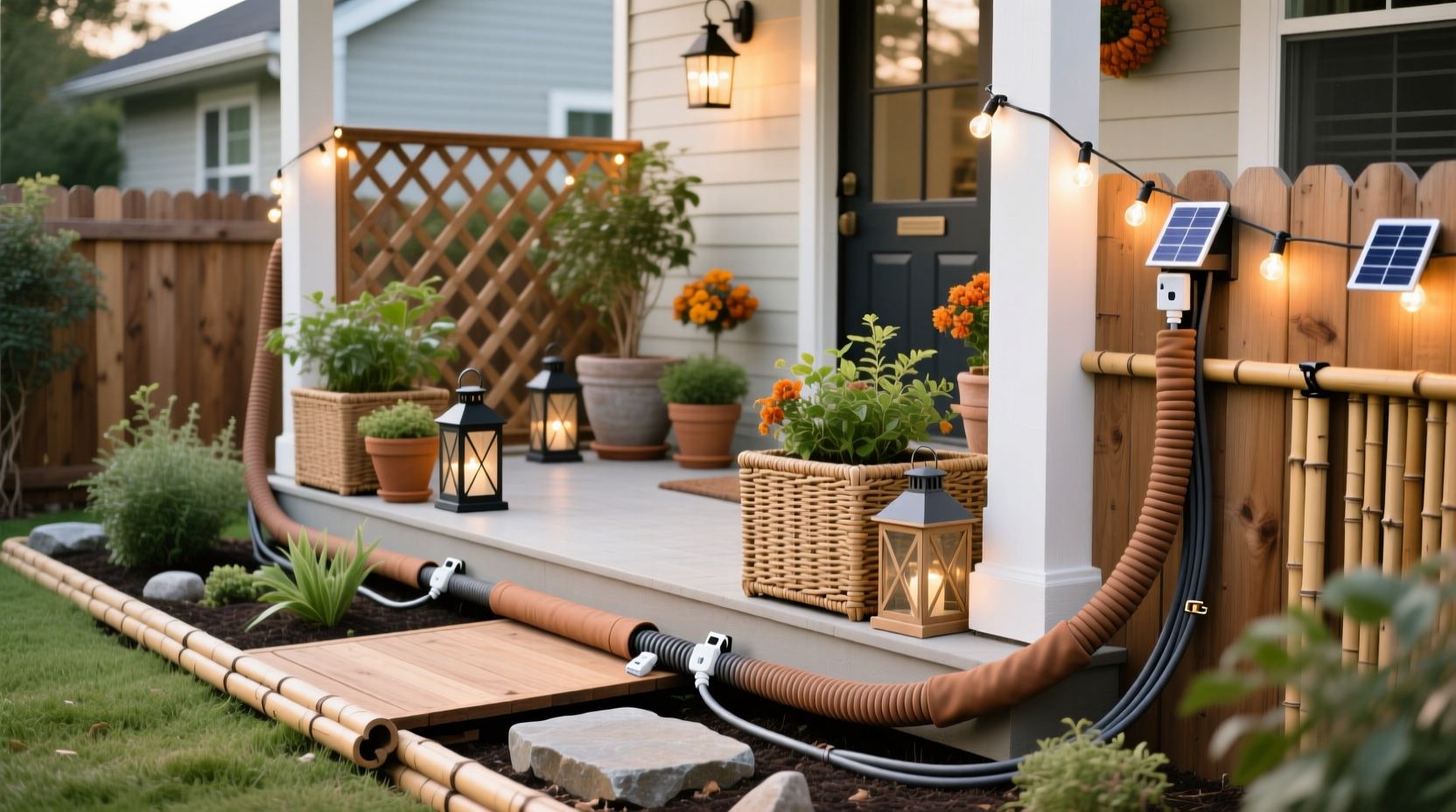
Before choosing a concealment method, evaluate your porch layout, power source location, and intended use of the cord. Ask yourself:
- Where does the outlet sit in relation to my décor?
- Will the cord be permanently installed or changed seasonally?
- What is the total wattage load? (Avoid overloading circuits.)
- Is the area prone to moisture, foot traffic, or weather exposure?
Understanding these factors ensures you select a hiding method that’s both functional and long-lasting. For instance, a temporary Halloween display may require different handling than year-round porch lighting.
Effective Methods to Hide Extension Cords
There are multiple approaches to concealing extension cords, each suited to different porch designs and usage patterns. Choose one—or combine several—for optimal results.
1. Route Cords Along Natural Edges
Use architectural features like baseboards, railing posts, or planter edges to guide cords out of sight. Attach cords discreetly using plastic cable clips or adhesive-backed cord channels painted to match surrounding surfaces.
For example, run the cord vertically down from a light fixture, along the side of a wooden column, then horizontally behind a potted plant. This keeps it off walkways and visually hidden among existing elements.
2. Use Cord Covers and Raceways
Cord covers—also known as wire mold or surface conduit—are hard-shell channels that snap over cords and mount directly to walls or floors. Available in white, brown, gray, and textured finishes, many blend well with wood, stucco, or masonry.
These are ideal when cords must cross open spaces or door thresholds. Opt for low-profile models under ¾ inch tall to reduce trip risk. Secure them with construction adhesive or screws, depending on surface type.
3. Bury Cords in Landscaped Zones
If your porch borders garden beds or mulched areas, consider burying outdoor-rated cords beneath 1–2 inches of mulch or soil. Always use direct-burial rated cable or encase standard outdoor cords in flexible PVC conduit for protection.
“Never bury non-rated cords—even temporarily. Moisture infiltration can lead to short circuits or electrocution.” — Alan Reyes, Licensed Electrician & Outdoor Lighting Contractor
This method works best when connecting to pathway lights or ground-level décor, keeping wires entirely off walking surfaces.
4. Conceal Within Decorative Elements
Integrate cords into your décor rather than fighting against them. Place cords inside hollow columns, behind artificial wreaths, or within faux tree trunks used as light supports. Wicker baskets or decorative lanterns can double as cord organizers if designed with access points.
One homeowner wrapped her holiday lights’ power cord around a fake ivy-covered trellis, threading it through gaps in the foliage. From the street, no wiring was visible—just a lush green accent glowing softly at night.
5. Install Permanent or Semi-Permanent Outlets
For porches frequently used for displays, consider installing a GFCI (Ground Fault Circuit Interrupter) outlet closer to your décor zone. While this involves an upfront cost, it eliminates long cord runs and enhances safety.
A licensed electrician can install a weatherproof exterior outlet in under a day. You’ll gain convenience, reduce clutter, and improve resale appeal. According to the National Electrical Code (NEC), all outdoor outlets must be GFCI-protected to prevent shock hazards.
Step-by-Step Guide: Concealing a Porch Light Cord Safely
Follow this sequence to hide an extension cord powering string lights along a covered front porch:
- Choose the right cord: Select an outdoor-rated, 16-gauge (or thicker) extension cord with a grounding pin.
- Map the route: Trace the path from outlet to light anchor point, favoring vertical drops and wall-hugging turns.
- Prepare mounting surfaces: Clean the wall or floor where clips or raceways will attach. Remove dust and debris.
- Install cord management tools: Apply adhesive cable clips every 12–18 inches, or snap in a continuous raceway.
- Thread the cord: Lay the cord smoothly through the system, avoiding kinks or sharp bends.
- Secure end points: Fasten the plug and receptacle ends to prevent tension on connections.
- Test and inspect: Plug in lights, check for overheating, and ensure no part of the cord protrudes into walkways.
- Add final touches: Camouflage visible segments with faux vines, paint raceways to match trim, or place potted plants strategically.
This process takes less than an hour and pays off in both safety and visual cohesion.
Do’s and Don’ts: Cord Management Best Practices
| Do | Don’t |
|---|---|
| Use UV-resistant, outdoor-rated cords | Use indoor extension cords outdoors |
| Route cords away from door swings and steps | Run cords across main entry paths |
| Anchor cords securely to prevent snagging | Leave loose loops or dangling sections |
| Inspect cords monthly for wear or cracking | Ignore frayed insulation or damaged plugs |
| Use cord covers on driveways or sidewalks | Tape cords directly to pavement |
Real Example: A Seasonal Porch Transformation
Jamila, a homeowner in Portland, Oregon, wanted to create a cozy autumn display featuring pumpkin lights, a flickering LED fireplace, and illuminated cornucopias. Her only nearby outlet was inside the garage, requiring a 25-foot cord to reach the porch.
Instead of laying the cord across the sidewalk, she routed it along the garage wall, down the foundation, and beneath a row of raised flower beds using buried PVC conduit. She surfaced the cord near a decorative scarecrow, feeding it up through its base into a battery-style light box disguised as a harvest basket.
Guests never noticed the cord. Even during rainy weeks, the setup remained dry and functional. By integrating utility into theme, Jamila achieved a magazine-worthy look without compromising safety.
Checklist: Preparing Your Porch Cord System
Use this checklist before finalizing your cord concealment project:
- ☐ Verify all cords are labeled for outdoor use
- ☐ Confirm total connected devices don’t exceed cord or outlet capacity
- ☐ Identify safest routing path—avoiding water pooling and foot traffic
- ☐ Gather necessary tools: clips, raceway, drill, conduit, sealant
- ☐ Test fit all concealment products before permanent installation
- ☐ Label cords if multiple runs exist (e.g., “Front Lights,” “Fountain”)
- ☐ Inspect monthly for damage, pests, or weather degradation
Frequently Asked Questions
Can I paint plastic cord covers to match my porch?
Yes—most rigid plastic raceways accept exterior-grade spray paint. Clean the surface with rubbing alcohol first, apply a plastic primer, then use UV-resistant paint in your desired color. Matte finishes blend better than glossy ones.
Are cord covers slip-resistant when wet?
High-quality outdoor cord covers have textured tops to reduce slipping. However, avoid placing them in primary walking zones, especially near entry doors. If unavoidable, choose low-profile models under ½ inch tall and add anti-slip tape on top.
How do I keep animals from chewing outdoor cords?
Rodents and pets may gnaw on cords, especially if buried. Use metal conduit or rodent-resistant cabling when possible. Alternatively, apply pet-safe deterrent sprays (like bitter apple) near accessible ends. Regular inspection helps catch early damage.
Final Thoughts: Safety Meets Style
A beautiful porch doesn’t have to come at the expense of safety or functionality. With thoughtful planning, the right materials, and attention to detail, extension cords can disappear into your design—not dominate it. The most elegant solutions aren’t about hiding flaws but about designing with intention.
Whether you're preparing for the holidays, enhancing evening curb appeal, or simply adding ambiance, take the time to manage cords responsibly. Your future self—and your visitors—will appreciate the care you took to make your home both inviting and secure.




 浙公网安备
33010002000092号
浙公网安备
33010002000092号 浙B2-20120091-4
Comments
No comments yet. Why don't you start the discussion?