
Extension cords are a necessity in modern homes, powering everything from lamps and TVs to holiday lights and home office setups. But their presence can be unsightly—especially when they cross high-traffic areas. Many people resort to hiding them under area rugs for a cleaner look. While this may seem like a simple fix, doing it improperly can create serious safety hazards, including tripping, cord damage, and even fire risks due to overheating.
The key is not just concealment, but safe, intelligent management of the cord’s placement and environment. With the right approach, you can maintain both aesthetics and safety. This guide provides actionable, code-compliant strategies for concealing extension cords under rugs—without compromising on function or risk.
Why Hiding Extension Cords Under Rugs Is Risky
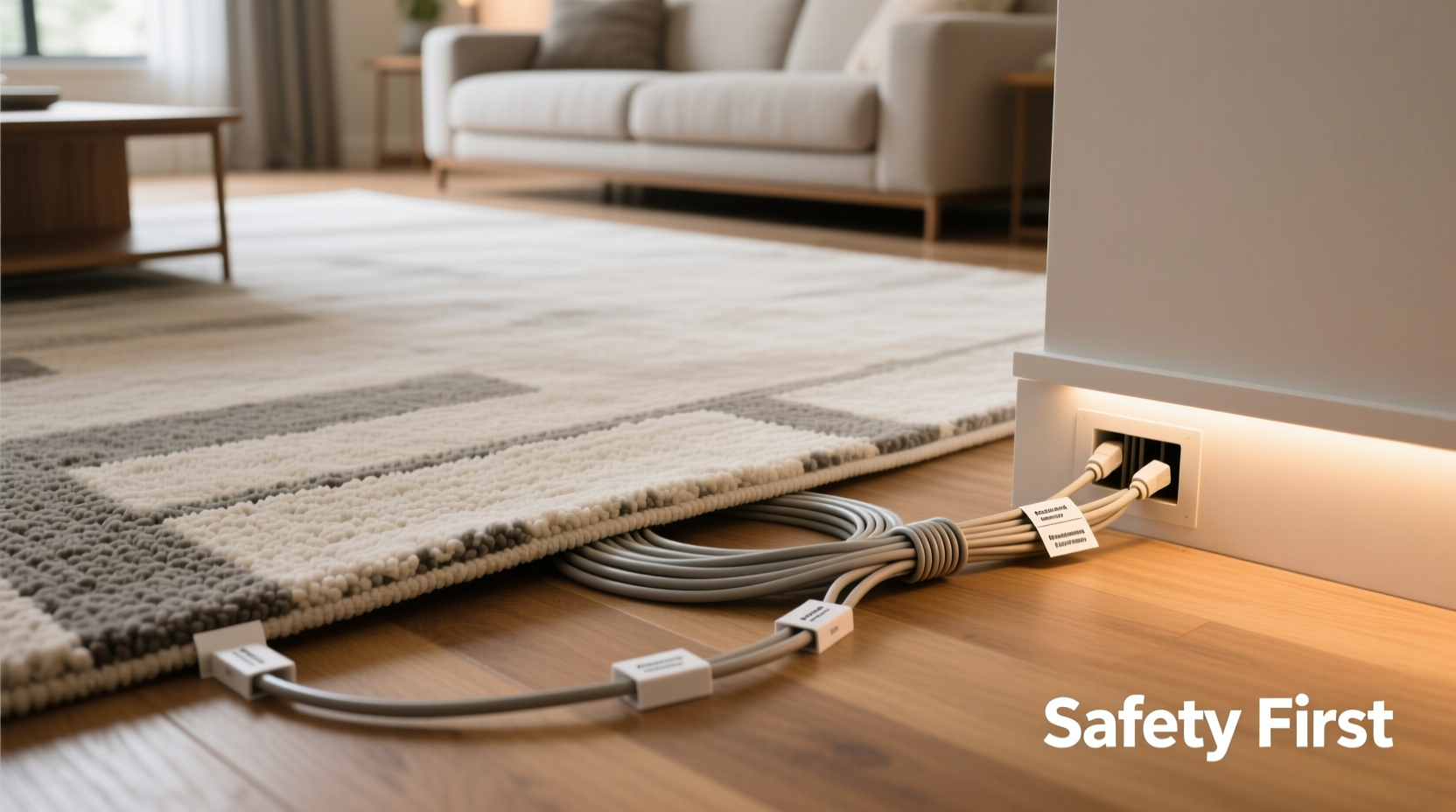
At first glance, tucking an extension cord beneath a rug appears harmless. However, the National Fire Protection Association (NFPA) and the U.S. Consumer Product Safety Commission (CPSC) consistently warn against this practice. The primary dangers include:
- Overheating: When a cord lies under a rug, heat generated during use cannot dissipate effectively. Insulation traps warmth, increasing resistance and raising the risk of insulation melting or fire.
- Physical Damage: Foot traffic and furniture movement crush and abrade cords over time, exposing wires and creating shock or short-circuit hazards.
- Tripping Hazards: Even under a rug, cords can create lumps or ridges that cause people to stumble—particularly dangerous for children and older adults.
- Reduced Lifespan: Constant compression weakens internal wiring, leading to premature failure.
“Placing extension cords under rugs is one of the most common yet preventable electrical hazards in homes. It violates basic principles of electrical safety: visibility, ventilation, and protection.” — James Langston, Certified Electrician & NFPA Safety Consultant
The goal isn’t to eliminate convenience, but to achieve it responsibly. Let’s explore how to do that.
Safer Alternatives to Covering Cords with Rugs
Rather than placing cords directly under rugs, consider these safer, equally effective alternatives:
Use Cord Covers or Raceways
Cord covers (also called cable raceways) are plastic channels designed to hold cords flush against baseboards or across floors. They come in various colors and textures to blend with your decor.
Advantages:
- Allow airflow around cords
- Protect against physical damage
- Easily removable for inspection or reconfiguration
Route Cords Along Baseboards
Instead of crossing open floor space, run cords along the edge of the room. Use adhesive clips or low-profile staples to secure them out of the way but visible.
This method keeps cords accessible, reduces trip risk, and avoids heat buildup. For a polished look, choose white or neutral-colored cords that blend into trim.
Install Floor Outlets or In-Floor Conduits
For permanent or semi-permanent setups (e.g., entertainment centers or workspaces), consider installing floor outlets. These pop-up receptacles provide power directly from the floor, eliminating the need for long cords.
While more expensive and requiring professional installation, they offer a sleek, built-in solution ideal for open-concept living spaces.
Step-by-Step Guide: How to Hide Cords Near Rugs Without Danger
If you must route a cord near or partially under a rug, follow this six-step process to minimize risk:
- Assess the Load: Determine the total wattage of devices plugged into the cord. Never exceed 80% of the cord’s rated capacity. For example, a 15-amp, 120-volt cord handles up to 1,440 watts (15A × 120V × 0.8).
- Choose the Right Cord: Use a heavy-duty, grounded (three-prong) extension cord rated for indoor use. Look for labels like “14 AWG” or “12 AWG”—thicker gauges handle more current safely.
- Plan the Path: Map the shortest, least-trafficked route. Avoid doorways, hallways, and seating areas where people walk frequently.
- Lift the Rug Edge: Only place the cord under the very edge of the rug—no more than 6 inches—and ensure the rug does not compress the cord. Use non-slip rug pads underneath to keep the rug stable and reduce friction.
- Secure with Flat Clips: Use low-profile, flat cord clips on the exposed section to prevent snags. Do not tape cords down; tape degrades and can trap heat.
- Inspect Weekly: Check for warmth, fraying, or discoloration. If the cord feels hot to the touch, unplug immediately and reassess your setup.
This method allows partial concealment while maintaining safety margins. The critical rule: never bury a cord fully under a rug or allow foot traffic directly over it.
Do’s and Don’ts: A Quick Reference Table
| Do’s | Don’ts |
|---|---|
| Use heavy-gauge, indoor-rated extension cords | Use outdoor cords indoors (they’re bulky and less flexible) |
| Run cords along walls or under baseboard edges | Place cords under full rugs or carpeting |
| Use cord covers or raceways for floor crossings | Tape or staple cords to floors (can damage insulation) |
| Check cords monthly for wear or heat | Plug high-wattage appliances (heaters, AC units) into extension cords |
| Lift rug corners slightly to allow airflow | Stack multiple cords under one rug |
Real-World Example: A Living Room Makeover Done Right
Consider Sarah, a homeowner in Portland, who wanted to set up a reading nook in her living room. Her floor lamp required an outlet 10 feet away, forcing a cord across a pathway often used by her toddler. Initially, she placed the cord under a 5x7 area rug. Within weeks, she noticed the rug felt warm near the cord and smelled faintly of rubber.
Alarmed, she consulted an electrician. He explained that the 16 AWG cord was overloaded by the 150-watt bulb and decorative string lights also plugged into it. The rug trapped heat, risking insulation breakdown.
Sarah revised her setup: she switched to a 12 AWG cord, removed the string lights, and rerouted the cord along the baseboard using white plastic raceway. She only tucked the last 4 inches under the rug’s edge, ensuring no foot traffic passed over it. The result? A clean look with zero safety compromise.
Expert-Approved Checklist for Safe Cord Management
Before finalizing any cord installation near rugs, complete this checklist:
- ☐ Confirm the extension cord gauge matches the load (12–14 AWG for most indoor uses)
- ☐ Ensure the cord is labeled for indoor use only
- ☐ Route the majority of the cord along walls or baseboards
- ☐ Limit rug coverage to less than 6 inches at the endpoint
- ☐ Use non-slip rug pads to prevent shifting
- ☐ Install cord covers for any exposed floor crossings
- ☐ Avoid daisy-chaining multiple extension cords
- ☐ Schedule monthly visual and tactile inspections
- ☐ Replace frayed or stiff cords immediately
- ☐ Educate household members about the cord’s location and risks
This checklist ensures compliance with electrical safety standards while preserving design integrity.
Frequently Asked Questions
Can I use a flat cord under a rug if it’s thin?
No. Even flat or braided cords generate heat and are vulnerable to compression damage. Their slim profile doesn’t eliminate risk—it may increase invisibility, making them more likely to be stepped on repeatedly.
Are there rugs designed for use with cords?
Not officially. While some manufacturers market \"cord-friendly\" rugs with slits or loops, these still pose ventilation and damage risks. No major safety organization endorses such products for continuous use with live cords.
What should I do if my cord feels warm under the rug?
Unplug it immediately. Warmth indicates excessive resistance, often due to overload, poor gauge, or restricted airflow. Replace the cord with a higher-rated one, reduce the load, and reroute it outside the rug entirely.
Final Thoughts: Safety First, Always
Hiding extension cords under area rugs might seem like a quick fix for clutter, but it introduces real dangers that far outweigh the aesthetic benefit. Overheating, tripping, and fire hazards are not hypothetical—they’re documented causes of residential incidents every year.
The smarter path is thoughtful planning: use cord covers, route along edges, and limit rug interaction to minimal, monitored sections. By prioritizing safety, you protect your home, your family, and your peace of mind.
Technology should serve convenience without compromise. Apply these strategies today to create living spaces that are both beautiful and safe.




 浙公网安备
33010002000092号
浙公网安备
33010002000092号 浙B2-20120091-4
Comments
No comments yet. Why don't you start the discussion?