
Gift storage doesn’t need to mean cluttered closets, overstuffed under-bed bins, or last-minute panic behind closed doors. In homes where space is tight—or where visual harmony matters as much as practicality—the most elegant solution isn’t hidden away: it’s displayed. Decorative trunks and baskets, long valued for their craftsmanship and design versatility, have quietly evolved into intelligent, dual-purpose storage tools. When chosen with intention and placed with awareness, they become seamless extensions of your decor while discreetly safeguarding wrapped presents, unwrapped items, or even seasonal supplies. This approach isn’t about camouflage; it’s about integration—transforming necessity into narrative, utility into ambiance.
Why “Plain Sight” Storage Works Better Than You Think
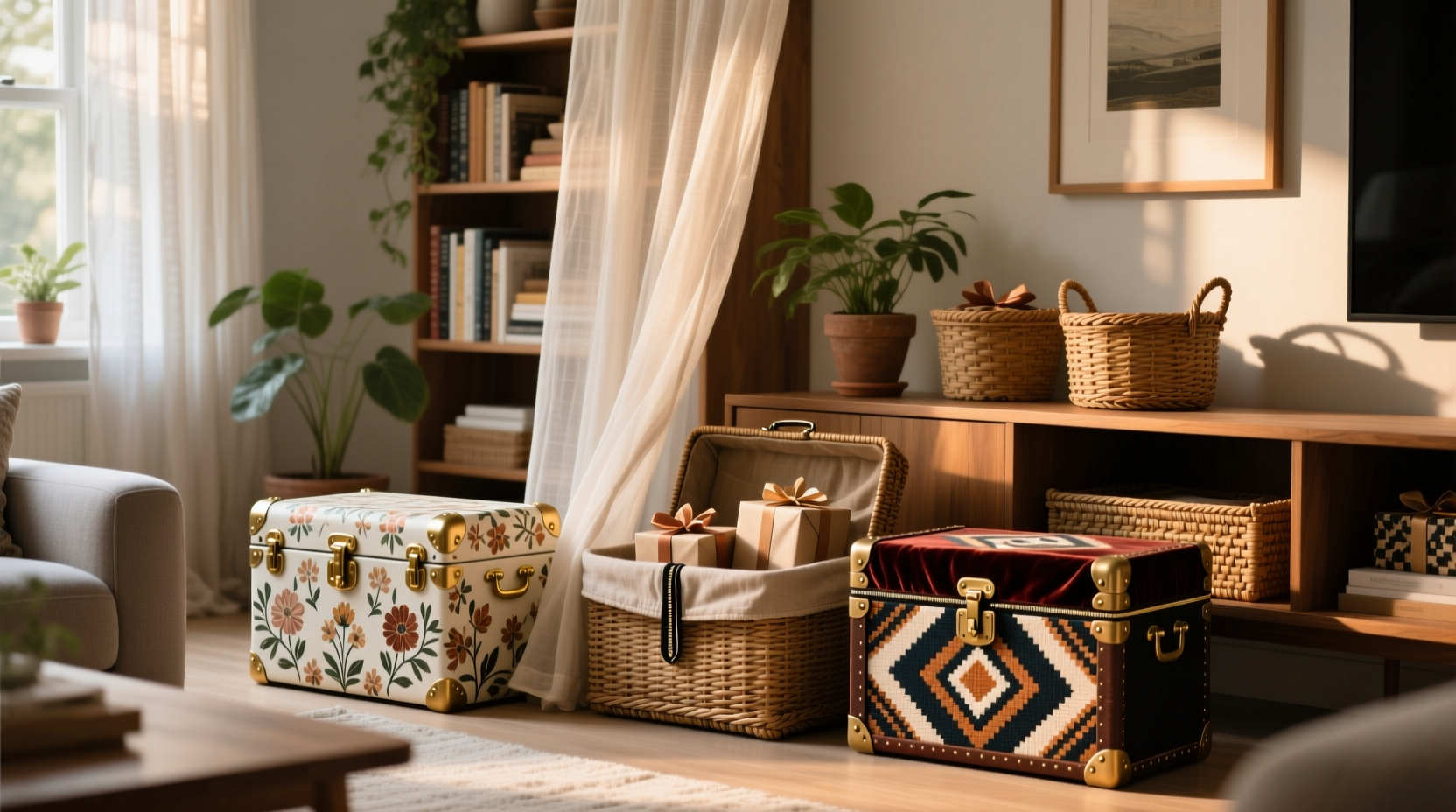
Traditional gift storage relies on concealment: dark corners, sealed containers, or out-of-reach zones. But that strategy often backfires. Forgotten boxes resurface too late. Wrapping paper tangles in damp basements. Last-minute searches turn frantic when items are buried under unrelated clutter. By contrast, storing gifts in view—within beautiful, functional vessels—creates psychological accountability. You see the trunk beside the sofa and remember the toddler’s puzzle set inside. You pass the woven basket by the entryway and recall the hand-knit scarves waiting for December. Visibility encourages regular inventory checks, reduces duplication, and supports thoughtful gifting rhythms rather than rushed decisions.
This method also aligns with modern interior principles. Interior designer Lena Torres notes:
“People underestimate how much visual order reduces daily stress. A well-chosen basket or trunk doesn’t ‘hide’ anything—it organizes intentionality into the room’s language. When the container belongs, the contents feel considered—not concealed.”
Crucially, this isn’t just for holidays. The same trunk holding Christmas ornaments can house summer beach towels in June or back-to-school supplies in August. Its adaptability makes it a year-round asset—not a seasonal compromise.
Selecting the Right Trunk or Basket: Form, Function, and Fit
Not every decorative container serves the purpose equally. Prioritize three interlocking criteria: structural integrity, accessible opening, and aesthetic cohesion.
- Structural integrity: Look for reinforced bases (wood, metal-reinforced wicker, or thick-walled resin), tight weaves (no gaps wider than ¼ inch for small items), and stable lids or flaps that close securely—but not permanently. Avoid lightweight rattan pieces meant purely for display; they’ll sag under weight and fray quickly.
- Accessible opening: Top-opening trunks with hinged or lift-off lids allow full visibility and easy stacking. Side-opening baskets with wide mouths or removable liners simplify restocking. Avoid narrow-necked designs or those requiring disassembly to access contents.
- Aesthetic cohesion: Match material tone and scale to its location. A distressed oak trunk anchors a rustic living room but clashes beside a minimalist white desk. A neutral-toned seagrass basket blends in a nursery; a bold indigo-dyed cotton basket adds energy to a neutral hallway. When in doubt, choose texture over color—natural fibers like jute, willow, or mango wood rarely compete with existing decor.
Strategic Placement: Where to Position Your Gift-Hiding Vessels
Location determines both utility and believability. A trunk shouldn’t look like it’s hiding something—it should look like it belongs. Below are five high-impact placements, each with rationale and real-world application:
- Beside the armchair or reading nook: A low-profile leather-trimmed trunk (18–22 inches wide) doubles as footrest and gift cache. Store wrapped books, small toys, or stocking stuffers here. Its proximity to leisure space subtly signals “thoughtful preparation,” not secrecy.
- Under the console table in the entryway: Choose a shallow, wide basket (under 10 inches tall) with sturdy handles. Tuck in gift cards, small candles, or travel-sized toiletries. Guests see it as part of the welcoming vignette—not a stash.
- At the foot of the bed: A fabric-upholstered trunk (30+ inches long) holds larger items: board games, cozy blankets, or wrapped kitchen gadgets. Its presence reads as intentional bedroom styling, especially when topped with a folded throw or seasonal greenery.
- On open shelving in the living room: Use medium-sized woven baskets (12–15 inches) tucked between books or framed photos. Label them discreetly with linen tags (“Holiday Favorites,” “Handmade Gifts,” “Stocking Fillers”)—the labeling adds authenticity, not exposure.
- In the home office corner: A vintage-style metal-and-wood trunk (with lockable latch, optional) stores professional gifts—custom notebooks, artisan pens, or desk organizers. Its utilitarian look justifies its presence without raising questions.
Placement success hinges on consistency. Rotate items seasonally *within the same vessel*—don’t swap trunks monthly. That continuity builds familiarity: family members know “the walnut trunk by the fireplace” holds winter gifts, and “the ivory basket on the bookshelf” holds spring birthdays. Predictability breeds trust—and reduces search time.
Smart Organization Inside: Systems That Scale
A beautiful container fails if contents devolve into chaos. Implement layered organization that supports both retrieval and discretion:
| Layer | Purpose | Recommended Tools |
|---|---|---|
| Base Layer | Stabilizes shape, protects floor, absorbs moisture | Felt pads, acid-free tissue paper, or breathable cotton liners |
| Primary Dividers | Groups by recipient, occasion, or size | Removable fabric bins (fold-flat for flexibility), labeled kraft boxes, or reusable mesh pouches |
| Item-Level Protection | Prevents scuffs, dust, and accidental unwrapping | Unprinted brown paper wraps, muslin drawstring bags, or clear polypropylene sleeves (BPA-free, archival-grade) |
| Top Layer Cue | Signals content type at a glance; deters casual opening | A single decorative element—a pinecone, ribbon spool, or ceramic figurine—that matches the theme inside |
For families, assign one basket per person or age group. A “Teen Zone” basket might hold headphones, gift cards, and skincare sets—wrapped loosely in reusable cloth wraps. A “Grandparent Stack” trunk could contain photo albums, handwritten letters, and small heirloom pieces, all nestled in soft wool felt dividers. The system works because it mirrors how people naturally think about gifting—not by category, but by relationship.
Real-World Application: The Miller Family’s Living Room Transformation
The Millers live in a 900-square-foot downtown apartment. For years, holiday prep meant clearing a closet shelf, stuffing gifts into black plastic bins, and praying nothing got lost. In November 2023, they replaced two bulky bins with three curated pieces: a 24-inch mid-century walnut trunk beside their sofa, a 16-inch natural seagrass basket on their open shelving unit, and a compact 12-inch velvet-lined box on their coffee table (used only for immediate-use items like hostess gifts).
They organized by timeline: the trunk held all gifts for extended family (wrapped in kraft paper with twine, grouped in labeled linen sacks); the basket held children’s presents (color-coded cloth bags—blue for the son, pink for the daughter); the coffee table box held four pre-wrapped hostess gifts (wine, candles, gourmet chocolates). No item was visible unless intentionally retrieved. Guests admired the trunk’s grain and the basket’s texture—never suspecting either held $1,200 in presents. By New Year’s Eve, they’d gifted every item, reused all wrapping materials, and repurposed the trunk for board games and the basket for remote controls and charging cables.
“It stopped feeling like a chore and started feeling like curating,” says Sarah Miller, who manages household logistics. “We didn’t hide the gifts—we honored them with space that matched their value.”
Step-by-Step: Preparing Your First “In-Plain-Sight” Gift Trunk
- Week 1 — Audit & Declutter: Gather all unsorted gifts. Discard damaged packaging. Return duplicates. Note recipient names, relationships, and approximate sizes.
- Week 2 — Select & Source: Choose one primary vessel based on your most frequent gifting context (e.g., family gifts → large trunk; coworker gifts → medium basket). Buy only what fits your measured needs—not aspirational capacity.
- Week 3 — Line & Layer: Insert base liner. Add primary dividers. Label each divider clearly—but tastefully—with a fine-tip pen on linen tags or engraved wooden markers.
- Week 4 — Pack Thoughtfully: Wrap items in neutral, reusable materials. Place heavier items at the bottom. Nest small items inside larger ones (e.g., socks inside a sweater box). Top with a thematic cue (a sprig of rosemary for food gifts, a mini ornament for kids’ items).
- Week 5 — Integrate & Maintain: Place the trunk in its designated spot. Every Sunday, spend 5 minutes checking contents: restock labels, replace worn liners, remove items already gifted. Reset the top-layer cue weekly.
FAQ
Can I use vintage trunks for gift storage?
Yes—if structurally sound. Inspect hinges, latches, and interior lining. Avoid trunks with musty odors (indicating mold) or brittle leather (which sheds particles onto gifts). Line with acid-free paper and add silica gel packs if storing for more than 60 days.
Won’t kids or guests open the basket if it’s in plain sight?
They might—but that’s manageable. Choose vessels with subtle closures (magnetic flaps, weighted lids, or snug-fitting weaves) and avoid transparent materials. More importantly, establish norms: explain that certain baskets are “special collections” (like “Mom’s Recipe Box” or “Dad’s Tool Caddy”). Children respond to respectful framing—not secrecy. Most adults intuitively respect designated storage when it’s aesthetically resolved.
How do I keep the system from becoming overwhelming across multiple seasons?
Limit yourself to three active vessels year-round: one for upcoming gifting (birthdays, holidays), one for archived items (last year’s unused gift cards, extra wrapping), and one for supplies (tape, tags, ribbons). Rotate the “upcoming” vessel quarterly; archive the prior season’s container after gifting concludes. Never exceed three simultaneously.
Conclusion
Hiding gifts in plain sight isn’t a clever trick—it’s a reflection of mature, intentional living. It acknowledges that preparation deserves beauty, that generosity benefits from organization, and that our homes thrive when function and form coexist without compromise. A well-chosen trunk doesn’t whisper “look away”; it invites appreciation. A thoughtfully placed basket doesn’t obscure—it contextualizes. These objects become quiet witnesses to care: holding not just presents, but presence, patience, and personal rhythm.
You don’t need a renovation or a budget overhaul to begin. Start with one vessel. Choose it for its honesty—not its opacity. Fill it with attention, not anxiety. Place it where you’ll see it daily, and let its calm presence remind you that the best storage solutions don’t vanish—they belong.




 浙公网安备
33010002000092号
浙公网安备
33010002000092号 浙B2-20120091-4
Comments
No comments yet. Why don't you start the discussion?