
Every year, millions of homes light up with the warm glow of a decorated Christmas tree. But behind that festive magic often lies a tangled web of cords, exposed power strips, and electrical clutter that can be both unsightly and hazardous. Concealing your power strip under the tree isn’t just about aesthetics—it’s a critical step in maintaining safety, reducing trip risks, and preserving the holiday ambiance. Done correctly, it keeps electricity accessible while staying invisible to guests and pets alike.
The challenge lies in balancing convenience, safety, and visual appeal. Too often, people shove power strips haphazardly beneath the tree skirt, block ventilation, or overload circuits—all for the sake of hiding cords. This guide walks you through proven methods to tuck away power strips neatly and securely, using real-world-tested strategies that prioritize both form and function.
Why Hiding Power Strips Matters: Safety and Aesthetics Combined
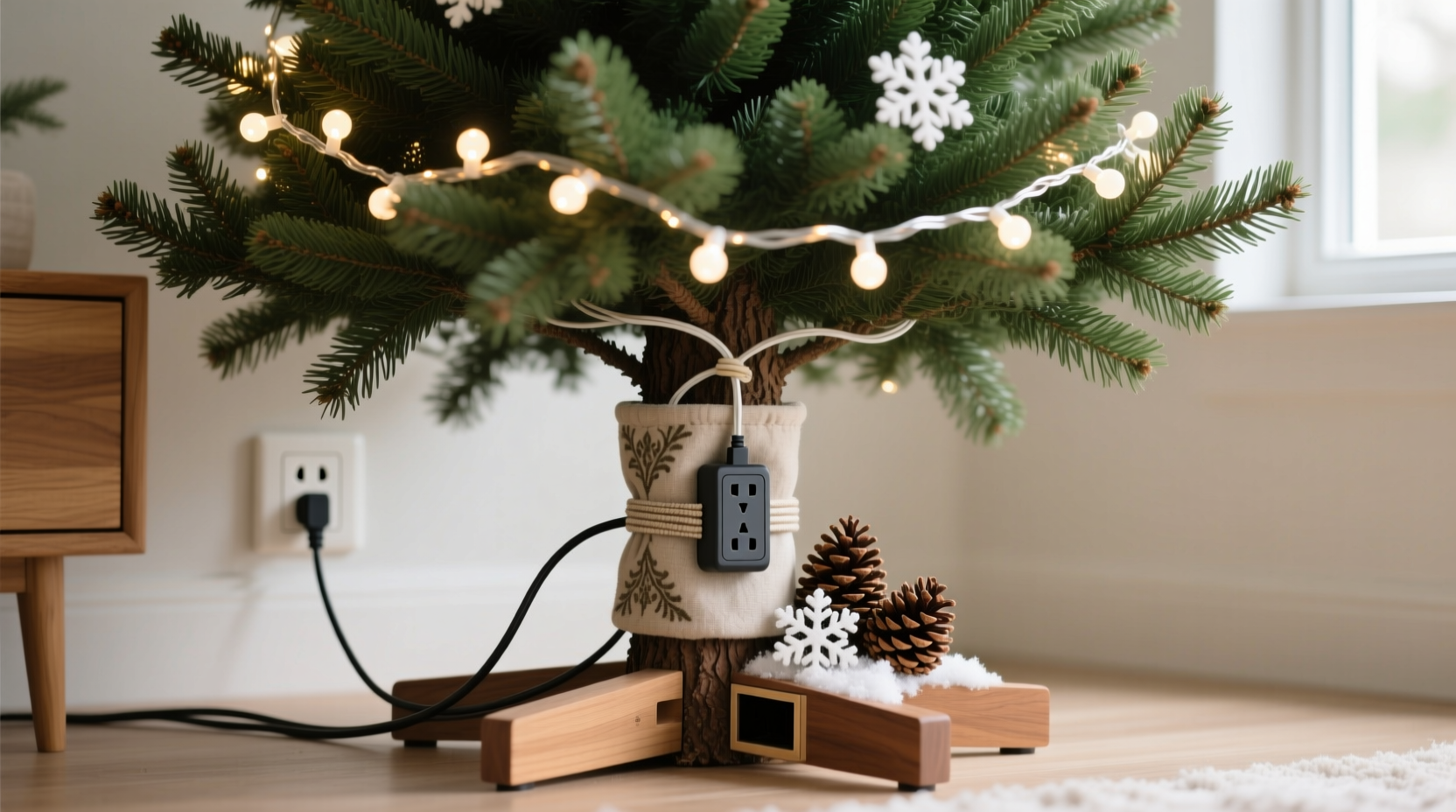
A Christmas tree is more than a decoration—it's a centerpiece. When cords snake across the floor and outlets are visible, the illusion of enchantment breaks. But beyond appearances, improper cord and power strip placement introduces real dangers:
- Fire risk: Overheating due to poor ventilation or overloaded strips.
- Trip hazards: Loose cords near high-traffic areas endanger children and older adults.
- Pet exposure: Curious animals may chew on cords or knock over equipment.
- Moisture issues: If your tree drinks water, nearby electronics could short-circuit.
Proper concealment doesn’t mean burying the strip under fabric or stuffing it into a closed box. It means organizing with intention—keeping airflow open, connections accessible, and cords managed.
Step-by-Step Guide: How to Position and Hide a Power Strip Safely
Follow this detailed process to install and conceal your power strip without compromising safety or accessibility.
- Choose the Right Power Strip
Select one with multiple outlets, surge protection, and an on/off switch. Look for models with right-angle plugs to reduce rear protrusion. Avoid daisy-chaining multiple strips. - Map Your Electrical Needs
List all lights, projectors, motorized decorations, and other devices. Ensure total wattage stays below 80% of the strip’s rated capacity (e.g., don’t exceed 1,440 watts on a 15-amp/120-volt strip). - Test Fit Before Decorating
Place the bare tree where it will stand. Run extension cords from nearby wall outlets to the base. Identify the optimal spot for the power strip—typically behind or beside the tree, not directly underneath. - Elevate the Strip Off the Floor
Use a small plastic tray, non-conductive shelf, or wooden board to raise the power strip 1–2 inches above ground level. This prevents contact with spilled water and improves airflow. - Anchor Cords with Clips or Tape
Use cord clips or painter’s tape to secure cords along the wall or under baseboards. Route them away from walkways. Never nail or staple cords into place. - Use a Tree Skirt Strategically
Drape the skirt so it covers the strip but does not smother it. Cut a small slit in the inner lining (not the decorative top layer) to allow easy access to switches and plugs. - Label Each Cord
Use masking tape or reusable labels to mark which cord powers which item. This simplifies troubleshooting if something fails mid-season.
Once complete, plug everything in and monitor the strip for warmth after 30 minutes of operation. If it feels hot, unplug immediately and reassess your load or placement.
Best Materials and Tools for Neat Concealment
Using the right accessories makes a significant difference in both appearance and safety. Below is a comparison of common materials used to manage cords and hide power strips under Christmas trees.
| Material | Best For | Avoid If… | Safety Rating |
|---|---|---|---|
| Fabric tree skirt (vented) | Cosmetic coverage with breathability | It completely blocks air around the strip | ★★★★☆ |
| Plastic cable management sleeve | Grouping multiple cords neatly | Used near heat sources or overloaded circuits | ★★★★★ |
| Foam cord covers (paintable) | Flattening cords against baseboards | They compress or trap heat | ★★★☆☆ |
| Magnetic cord clips | Securing cords to metal stands or radiators | No magnetic surface available | ★★★★☆ |
| Cardboard box (DIY enclosure) | Budget-friendly shielding | Not ventilated or too close to heat | ★☆☆☆☆ |
For long-term use, invest in a dedicated cord concealer kit with built-in ventilation slots. These resemble flat raceways that mount to baseboards and keep everything flush and tidy.
“Electrical fires during the holidays often start with overlooked details—like a power strip buried under flammable fabric. Visibility and ventilation aren’t optional.” — Mark Delaney, Senior Fire Safety Inspector, NFPA
Real Example: The Johnson Family’s Tidy Tree Transformation
The Johnsons had struggled for years with a chaotic setup beneath their 7-foot Fraser fir. Their previous method involved stacking two power strips under the tree, covering them with a thick velvet skirt, and hoping nothing overheated. One December, the strip began emitting a burning smell by day three.
This year, they redesigned their approach. They purchased a six-outlet surge protector with an LED load indicator and mounted it on a small wooden platform painted green to blend with the decor. They routed all cords through a braided cable sleeve along the edge of the rug, securing them every 18 inches with adhesive-backed clips. A custom slit in the inner layer of the tree skirt allowed full access to the power switch while keeping the exterior looking seamless.
They also labeled each cord with colored tags matching their respective lights. After two weeks of continuous use, the unit remained cool to the touch, and no one even noticed the electronics were there. “It looks like the tree powers itself,” said Mrs. Johnson. “But we know exactly where everything is if we need to unplug.”
Essential Checklist: Pre-Lighting Setup
Before turning on your display, run through this checklist to ensure your power strip setup is safe and hidden properly.
- ☑ Power strip has surge protection and an on/off switch
- ☑ Total connected wattage is under 80% of capacity
- ☑ Strip is elevated off the floor (on tray, board, or stand)
- ☑ At least 2 inches of clearance around the strip for airflow
- ☑ Cords are secured and out of walking paths
- ☑ Tree skirt allows access to outlets and switches
- ☑ No frayed wires or damaged insulation on any cords
- ☑ GFCI outlet is used if near carpet or flooring that may retain moisture
- ☑ Emergency shut-off location is known to all household members
Common Mistakes to Avoid
Even well-intentioned setups can go wrong. Here are frequent errors people make when hiding power strips under Christmas trees—and how to fix them.
- Burying the strip under blankets or fabric: Fabric traps heat and increases fire risk. Instead, drape loosely and leave gaps.
- Using indoor strips outdoors (or vice versa): Outdoor-rated strips have weather-resistant casings. Never substitute indoors-only models outside, even temporarily.
- Overloading with too many strands: Most mini-lights draw 40–100 watts per 100 bulbs. Check packaging and calculate totals before plugging in.
- Ignoring the tree’s water bowl: Place the power strip on the opposite side of the stand from the reservoir. Consider placing a waterproof mat underneath as a precaution.
- Forgetting about pets: Dogs and cats may paw at flickering lights or chew low-hanging cords. Use bitter-taste sprays on exposed sections and elevate connections.
Frequently Asked Questions
Can I use a smart plug under the tree to control my lights remotely?
Yes, but only if the smart plug is part of a ventilated setup. Avoid enclosing it in tight spaces, as Wi-Fi modules generate additional heat. Mount it where signals are strong and airflow is unobstructed. Smart plugs offer excellent convenience for scheduling on/off times and reducing energy use.
Is it safe to place the power strip inside a fake tree’s hollow base?
Only if the manufacturer explicitly states it’s designed for that purpose. Most artificial trees aren’t insulated for electronics. Internal cavities restrict airflow and make monitoring difficult. If you must, use only one low-wattage strand, check temperature daily, and never leave unattended for long periods.
How do I hide cords leading to wall outlets across the room?
Run cords along baseboards using paintable cord covers or flat raceway kits. Alternatively, route them under area rugs—but only if the rug is non-flammable and the cords are not pinched or folded. Never run cords under heavy furniture or across door thresholds where they can fray.
Final Thoughts: Beauty Meets Responsibility
A beautifully lit Christmas tree should inspire joy, not anxiety. By taking the time to hide your power strip thoughtfully, you protect your home, your family, and your holiday peace of mind. The effort invested in planning and execution pays off every time you admire your tree without seeing a mess of black cords or worrying about electrical risks.
Remember: neatness isn’t just about appearance. It reflects care, attention, and respect for the traditions you’re celebrating. Whether you live in a small apartment or a spacious house, these principles apply universally. With the right tools, awareness, and a few simple habits, you can enjoy a magical, mess-free display season after season.




 浙公网安备
33010002000092号
浙公网安备
33010002000092号 浙B2-20120091-4
Comments
No comments yet. Why don't you start the discussion?