
Indoor Christmas lighting transforms a home into a festive wonderland, but managing the infrastructure behind the sparkle—especially multiple power strips—can disrupt the aesthetic. When dozens of light strings converge, so do their cords and power sources. A cluttered strip setup not only looks unsightly but can pose tripping hazards and fire risks if improperly concealed. The good news: with thoughtful planning and simple solutions, you can keep your electrical hubs hidden, organized, and safe while preserving the magic of the season.
Why Hiding Power Strips Matters Beyond Aesthetics
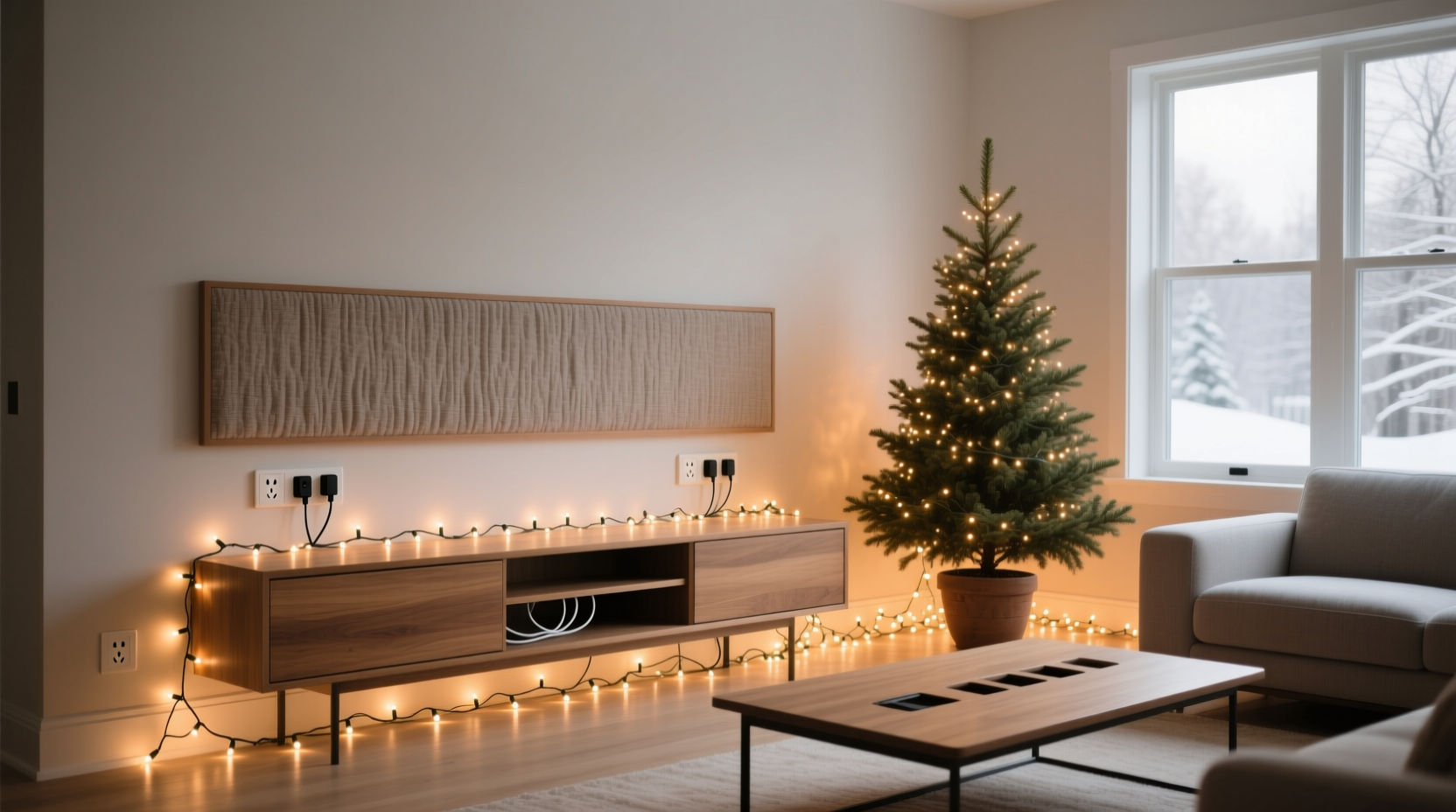
While the primary motivation for concealing power strips is visual appeal, doing it right has deeper implications. Exposed strips under furniture, along baseboards, or tangled behind trees attract dust, increase fire risk from poor ventilation, and are vulnerable to accidental tugs. According to the National Fire Protection Association (NFPA), decorative lighting accounts for an estimated 7% of home holiday fires annually—often due to overloaded circuits or damaged cords.
Proper concealment isn’t about out of sight, out of mind—it’s about strategic placement that enhances safety, accessibility, and long-term usability. A well-hidden power strip should still be reachable for unplugging, inspection, and heat monitoring.
“Electrical safety during the holidays hinges on visibility *and* ventilation. Never bury power strips under rugs or inside sealed boxes.” — Carlos Mendez, Certified Electrician and Home Safety Inspector
Step-by-Step Guide to Conceal Power Strips Safely
Successfully hiding power strips involves more than draping a cloth over them. Follow this five-phase process to ensure both functionality and elegance.
- Assess Your Lighting Load: Count how many strands you’re connecting and check their total wattage. Most standard indoor power strips support up to 1,800 watts. If you exceed this, use multiple strips on separate wall outlets to avoid overloading one circuit.
- Map Outlet Locations and Cord Paths: Sketch a rough layout of where lights will go and trace the most direct, least visible routes back to outlets. This helps determine where strips need to be placed.
- Select the Right Strip Type: Choose flat, low-profile surge protectors instead of bulky ones. Consider models with side-facing outlets—they make stacking easier and reduce protrusion from walls.
- Plan Concealment Zones: Identify natural hiding spots: behind furniture, inside hollow ottomans, under window benches, or within entertainment centers. Avoid areas exposed to moisture or foot traffic.
- Install with Ventilation in Mind: Even when hidden, power strips must have airflow. Leave at least two inches of space around the unit and never cover it completely with fabric or insulation.
Effective Methods to Hide Power Strips Indoors
No single solution works for every room, but these tested techniques offer reliable results across different spaces and decor styles.
Furniture as Functional Covers
Leverage existing furniture to mask power strips. Place a console table behind a garland-draped staircase, then tuck the strip underneath. Or position a narrow bookshelf beside a lit tree, allowing cords to run behind it while keeping the strip accessible from the side.
This method works best when the furniture allows rear access or has open bases. Avoid sealing the strip inside closed cabinets unless ventilation slots are added.
Hollow Decorative Boxes or Baskets
Use wide, breathable baskets made of wicker, fabric-covered cardboard, or ventilated wood. Place the power strip inside, feeding cords through gaps or cut openings at the top and back. Ensure the box sits on a non-flammable surface like tile or hardwood—not carpet.
For a custom look, paint or wrap the box to match your holiday theme. Just remember: never fully enclose the unit. Leave at least 30% of the surface area open for air circulation.
Baseboard and Wall Raceways
Adhesive-mounted plastic raceways (available in white or beige) blend with trim and allow you to run cords—and even small slimline power strips—along baseboards. Some modular kits include compartments large enough to house compact surge protectors.
Secure the strip inside the raceway using Velcro tape, ensuring it doesn’t block the outlet access. This method is ideal for linear displays like stair railings or mantle lighting.
Under-Rug Cord Channels (With Caution)
Flat cord covers designed to sit under area rugs can protect and hide cords leading to power strips. However, place the strip itself *outside* the rug—never underneath. Heat buildup under fabric is a major fire hazard.
Instead, run cords under the rug channel to a strip mounted on the wall just beyond the rug’s edge. Use a wall-mountable power strip with a bracket for stability.
Dual-Purpose Holiday Storage Furniture
Consider investing in multi-functional pieces like storage ottomans or coffee tables with lift-up lids. These serve as seating, decor surfaces, and discreet electrical hubs. Place the power strip inside, feed cords through pre-drilled holes or grommets, and close the lid when not in use.
Ensure the interior is non-flammable and leave the lid slightly ajar during operation for airflow, or opt for models with built-in ventilation slats.
Do’s and Don’ts: Power Strip Concealment Table
| Do | Don’t |
|---|---|
| Use ventilated enclosures like wicker baskets | Seal strips in airtight plastic containers |
| Mount strips on walls with brackets | Place strips under carpets or rugs |
| Use cord management sleeves for neat routing | Daisy-chain multiple power strips together |
| Leave space around the strip for cooling | Cover strips with flammable materials like blankets |
| Inspect strips weekly for warmth or damage | Forget to unplug lights overnight or when away |
Real Example: The Urban Apartment Tree Display
In a 700-square-foot Brooklyn apartment, Sarah decorated her living room with a 7-foot artificial tree, ceiling-mounted starlight strings, and a wrapped staircase railing—all requiring 14 separate light strands. Her challenge: no nearby outlets, and her open-concept layout made cords highly visible.
Solution: She used two slim surge protectors—one mounted behind the tree using a wall bracket, the other tucked inside a woven storage bin beside her entertainment center. Cords were routed through brown adhesive raceways along baseboards, painted to match the trim. The bin had side vents cut into it and was labeled “Holiday Hub” for easy identification.
The result? A seamless display with no visible electronics. Weekly checks ensured neither strip overheated, and she unplugged everything remotely using a smart plug adapter connected to one of the strips.
Checklist: Pre-Installation Safety & Setup
- ✔️ Confirm total wattage of all connected lights is below the strip’s maximum capacity
- ✔️ Test all light strings before connecting to ensure no frayed wires or flickering bulbs
- ✔️ Choose a power strip with an on/off switch and surge protection
- ✔️ Identify the nearest grounded outlet and avoid extension cord chains
- ✔️ Plan cord paths using painter’s tape on floors/walls to visualize routes
- ✔️ Install cable clips or raceways to secure cords and prevent tripping
- ✔️ Position the strip in a location that allows for monthly inspection and quick unplugging
FAQ: Common Questions About Hiding Indoor Power Strips
Can I use a smart power strip to control multiple light sets remotely?
Yes—smart power strips or Wi-Fi-enabled outlets let you schedule on/off times and monitor energy usage via smartphone. These are especially useful when strips are hard to reach. Just ensure the smart device is compatible with your home network and doesn’t exceed load limits.
Is it safe to hide a power strip inside a Christmas gift basket?
Only if the basket is repurposed with safety modifications. Remove any flammable filler (like tissue paper), ensure metal components don’t touch the strip, and maintain open sides for airflow. It’s better to use the basket as a visual screen rather than full enclosure.
How many Christmas light strings can I safely connect to one power strip?
It depends on the lights. Mini incandescent strings often draw 40 watts per 100 bulbs; LED versions use about 5–7 watts. For a 1,800-watt strip, you could run up to 360 LED strings (at 5W each) in theory—but physical outlet space is usually the limiting factor. Most strips have 6–8 outlets, so plan accordingly and use splitters only if they’re part of a surge protector.
Final Thoughts: Balance Beauty, Safety, and Practicality
Hiding power strips when using dozens of indoor Christmas lights isn’t just a matter of tidiness—it’s an essential part of responsible holiday decorating. The goal isn’t invisibility at all costs, but intelligent integration. By combining smart product choices, careful placement, and ongoing maintenance, you create a display that dazzles without danger.
Remember: every strand of light deserves attention, but so does the system powering it. Whether you’re illuminating a cozy reading nook or transforming an entire living space, take the time to manage the backbone of your display with care. A little effort now ensures a safer, cleaner, and more enjoyable holiday season for everyone who walks through your door.




 浙公网安备
33010002000092号
浙公网安备
33010002000092号 浙B2-20120091-4
Comments
No comments yet. Why don't you start the discussion?