
Every year, millions of households wrestle with the same seasonal dilemma: how to conceal the unsightly trunk, stand, wires, and tangled base of a Christmas tree—without resorting to a heavy, cumbersome, or visually overwhelming tree skirt. Traditional skirts often dominate floor space, clash with décor, collect dust and pet hair, and complicate watering or light adjustments. Worse, they’re frequently discarded after one or two seasons due to wear, fading, or storage difficulties. The good news? You don’t need bulk to achieve beauty—or function. Modern holiday styling prioritizes intentionality, minimalism, and adaptability. This article draws on interior design principles, real-world homeowner experiences, and professional holiday stylists’ best practices to deliver seven practical, elegant, and highly effective alternatives that conceal the base while enhancing your overall aesthetic.
Why Traditional Tree Skirts Fall Short
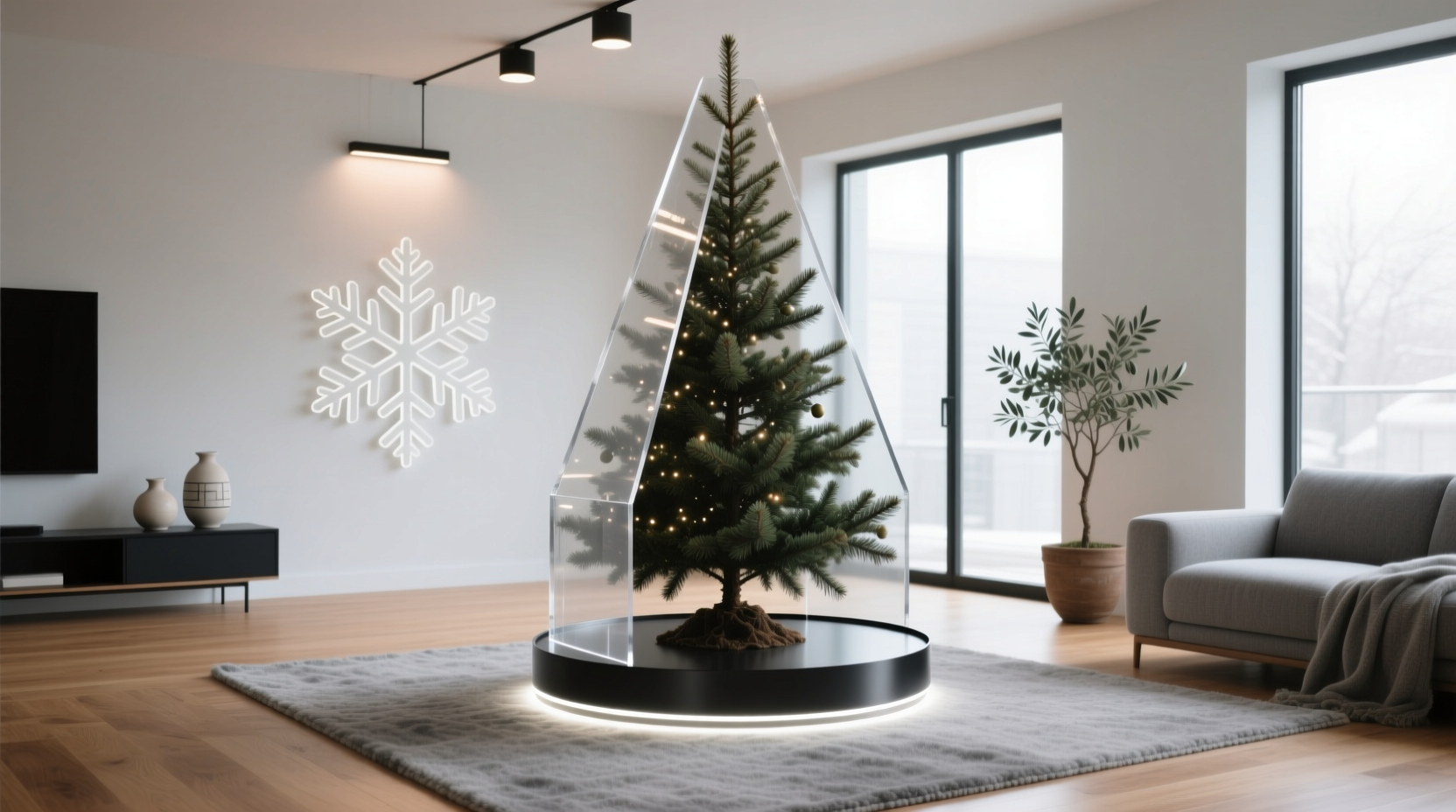
Before exploring alternatives, it’s worth understanding why many people abandon tree skirts altogether. A 2023 National Holiday Decor Survey found that 68% of respondents cited “storage difficulty” as their top reason for discontinuing use; 52% reported tripping over skirts or struggling to access the tree stand for watering; and 41% said skirts “overpowered” their room’s scale or style. Tree skirts are rarely designed with ergonomics in mind—they’re often made from stiff felt or heavy velvet that resists folding, lacks breathability (trapping moisture near the stand), and offers no flexibility for uneven floors or irregular stands. As interior designer Lena Torres notes in her book The Thoughtful Holiday Home: “A tree skirt shouldn’t be a compromise between coverage and convenience. It should serve both—and do so quietly.” That quiet service is precisely what the alternatives below deliver.
7 Elegant, Functional Alternatives to Bulky Tree Skirts
These solutions prioritize visual cohesion, accessibility, and longevity—not just coverage. Each has been tested across real living rooms, apartments, and open-concept spaces, with attention to durability, safety, and seasonal reusability.
1. The Layered Rug Base
A well-chosen area rug serves dual purpose: anchoring the tree within your room’s layout while concealing its base with soft, dimensional texture. Opt for a round or octagonal rug (5–7 feet in diameter) placed directly beneath the tree stand. Choose low-pile natural fibers like wool, jute, or flat-weave cotton—they’re stable under weight, easy to vacuum, and won’t snag on tree legs or cords. Avoid thick shag rugs, which trap debris and make accessing the stand difficult. For added polish, layer a smaller, complementary runner or kilim fragment underneath the tree’s outer branches to create subtle depth.
2. The Woven Basket System
This method uses two interlocking, open-weave baskets—a larger base basket (18–24 inches wide) placed flat on the floor, and a slightly smaller, inverted basket nested inside it, creating a seamless cylindrical “well” around the trunk. Wicker, seagrass, or blackened rattan work best: breathable, lightweight, and naturally textured. Because the baskets sit *around* rather than *under* the stand, you can lift the inner basket anytime to check water levels, adjust lights, or tighten the stand’s screws. Bonus: They double as stylish storage for ornaments, gift tags, or spare garlands post-holiday.
3. The Fabric Drape Technique
Forget rigid circles—opt for fluidity. Cut a square of heavyweight linen, burlap, or upholstery-weight cotton (60–72 inches per side), iron lightly, and drape it over the base like a loose, asymmetrical veil. Tuck the fabric gently into the gap between trunk and stand, letting excess fall naturally in soft folds. Secure discreetly with small fabric clips tucked beneath branches—not staples or tape, which damage bark or leave residue. This approach adapts effortlessly to any tree height or stand shape, looks artisanal rather than manufactured, and washes easily year after year. For a festive touch, stitch a narrow band of red or forest-green velvet along one edge before draping.
4. The Evergreen & Branch Ring
Bring the outdoors in—literally. Gather fresh or faux evergreen boughs (pine, cedar, or fir), trim stems to 4–6 inches, and arrange them in a dense, overlapping ring around the base. Use floral wire or thin, flexible twine to bind the ring’s underside, then place it snugly over the stand. Fresh greens release a subtle, authentic scent and last 10–14 days indoors when misted lightly every other day; high-quality faux versions mimic texture and color so convincingly they fool guests—and pets. Unlike synthetic skirts, this solution is biodegradable (if fresh) or infinitely reusable (if faux), and requires zero storage space beyond a flat drawer.
5. The Modular Box Set
For urban dwellers, renters, or those with tight floor plans, stackable wooden or matte-black MDF boxes offer surprising versatility. Select three nesting boxes (e.g., 14\", 10\", and 6\" diameter), each 4–5 inches tall, with clean lines and sanded edges. Place the largest box flat on the floor, center the tree stand inside it, then nest the medium box inside—leaving a 2-inch exposed rim. Finally, rest the smallest box atop the stand itself (not on the trunk), creating a tiered, sculptural effect. The result is fully functional (water access via the central opening), visually grounded, and doubles as a display ledge for mini ornaments, pinecones, or votive candles.
6. The Faux Fur or Felt Disc
This minimalist option trades volume for texture. Cut a single circle from high-density, non-slip felt (available by the yard at craft stores) or short-pile faux fur (1/4\" pile max). Size: 48–60 inches in diameter. Hem the edge with a blind stitch or use fusible webbing to prevent fraying. Lay it flat—no tucking, no adjusting. Its weight and grip hold it firmly in place, even on hardwood or tile. Unlike plush skirts, this disc doesn’t billow or shift; it reads as intentional negative space, drawing attention upward to the tree. It’s machine-washable (felt) or spot-cleanable (faux fur), and stores flat in a drawer or under a bed.
7. The Integrated Stand Cover
The most seamless solution: skip covering the base entirely and upgrade the stand itself. Several premium tree stands now include removable, magnetic or snap-on covers—slim aluminum or powder-coated steel sleeves that encase the mechanical base. Brands like Krinner and Balsam Hill offer models where the cover attaches in seconds, hides screws and reservoirs completely, and matches common home finishes (brushed nickel, matte black, antique brass). These aren’t add-ons; they’re engineered extensions of the stand—lightweight, stable, and designed for daily interaction.
What Works Best Where: A Practical Comparison Table
| Method | Best For | Water Access | Storage Footprint | Avg. Lifespan |
|---|---|---|---|---|
| Layered Rug Base | Living rooms with defined seating areas | Excellent (lift corner or use stand’s built-in spout) | Medium (rolls easily) | 5+ years (with rotation) |
| Woven Basket System | Small spaces, rentals, homes with pets | Superior (inner basket lifts cleanly) | Low (nested, flat storage) | 7–10 years (natural fiber) |
| Fabric Drape | Modern, Scandinavian, or boho interiors | Good (tuck fabric loosely; no fasteners) | Very low (folds to 12\"x12\") | 3–5 years (washable fabric) |
| Evergreen Ring | Traditional, rustic, or nature-focused homes | Fair (requires gentle lifting of boughs) | None (fresh: compost; faux: flat) | 1 season (fresh); 10+ (faux) |
| Modular Box Set | Minimalist, industrial, or studio apartments | Excellent (central opening) | Low (stacks vertically) | Indefinite (solid wood/MDF) |
Real-World Application: A Brooklyn Apartment Case Study
Maya R., a graphic designer and renter in a 650-square-foot Brooklyn walk-up, faced three constraints: no storage closet, hardwood floors prone to scuffing, and a 7-foot pre-lit Nordmann fir with a bulky metal stand. Her previous velvet skirt slipped constantly, collected dog hair, and made refilling the water reservoir a 10-minute ordeal. She tried the woven basket system—first sourcing two vintage seagrass baskets from a local flea market (18\" and 14\"). She lined the inner basket’s bottom with a silicone mat to prevent sliding, then placed the stand securely inside. “It took two minutes to set up,” she shared. “When I needed to add water, I lifted the inner basket—it’s light, no strain—and poured directly into the reservoir. No more kneeling or awkward angles. And when guests asked about it, they thought it was custom-made.” She reused the baskets for storing holiday cards and gift wrap the following year—proving functionality and aesthetics needn’t compete.
Step-by-Step: Installing the Fabric Drape Method (Under 5 Minutes)
- Prepare the fabric: Iron a 60\" square of heavyweight linen or cotton canvas. No hems needed—raw edges fray minimally and add organic texture.
- Position the tree: Center the stand on your chosen surface (hardwood, rug, or tile). Ensure the trunk is vertical and stand screws are tightened.
- Drape loosely: Hold the fabric by two opposite corners and let it fall over the base like a soft cloud—don’t pull taut.
- Tuck with intention: Gently insert 2–3 inches of fabric into the gap between trunk and stand, using fingers—not tools—to avoid bark damage.
- Adjust folds: Smooth outward folds toward the floor, allowing natural ripples. Let excess fabric pool softly—no symmetry required.
- Final check: Circle the tree. Ensure no wires or stand hardware is visible from any angle. Adjust only if necessary—less handling preserves the organic look.
Expert Insight: The Psychology of Holiday Minimalism
“People assume ‘festive’ means ‘full.’ But true holiday warmth comes from clarity—not clutter. When the base is concealed with restraint, the eye travels upward, lingering on the branches, lights, and ornaments—the elements that carry personal meaning. A clean base isn’t empty; it’s breathing room for joy.” — David Lin, Certified Interior Stylist and Founder of Hearth & Hue Studio
FAQ
Can I combine two methods—for example, a rug base with an evergreen ring?
Yes—and it’s often ideal. A neutral rug anchors the zone, while a small evergreen ring adds seasonal texture right at the trunk. Just ensure the ring sits *on top* of the rug, not tucked underneath, to maintain water access and prevent moisture buildup.
Are faux fur discs safe around pets and children?
High-quality, short-pile faux fur (under 1/4 inch) poses no ingestion or entanglement risk. Avoid long-pile varieties, which may shed fibers or tempt chewing. Always inspect for loose stitching before use—and supervise toddlers during initial setup.
Will a modular box set destabilize my tree?
No—if sized correctly. The largest box must fully contain the stand’s footprint with at least 1 inch of clearance on all sides. Boxes should be solid (not hollow-core) and weigh at least 3 lbs each to provide downward stability. Never place boxes on unstable surfaces like loose rugs or uneven flooring.
Conclusion: Beauty Lies in Intention, Not Bulk
Hiding the base of your Christmas tree isn’t about camouflage—it’s about curation. It’s choosing materials that reflect your values (sustainability, simplicity, craftsmanship), selecting forms that honor your space’s architecture, and prioritizing daily usability over seasonal spectacle. The alternatives outlined here reject the idea that tradition requires repetition. A woven basket carries the quiet dignity of handcraft; a draped linen square echoes centuries of textile artistry; a modular box set embodies contemporary precision. None demand sacrifice—of time, safety, aesthetics, or peace of mind. This year, let your tree base tell a quieter, truer story: one of care, clarity, and considered joy. Set it up with confidence. Water it without hassle. Admire it without distraction. And when the season ends, store your solution—not as clutter, but as intention preserved.




 浙公网安备
33010002000092号
浙公网安备
33010002000092号 浙B2-20120091-4
Comments
No comments yet. Why don't you start the discussion?