
Creating a magical holiday atmosphere often comes down to details—and few transformations are as striking as making a Christmas tree appear to float. The illusion of levitation, where the tree seems suspended above the floor without visible support, adds a whimsical and modern touch to seasonal decor. Achieving this effect hinges on one crucial element: concealing the tree stand completely. While most people simply drape a tree skirt over the base, true visual magic requires more deliberate design choices. This guide explores proven methods, materials, and setups that effectively hide the stand while enhancing the overall aesthetic of your tree display.
Why the Floating Illusion Matters in Modern Decor
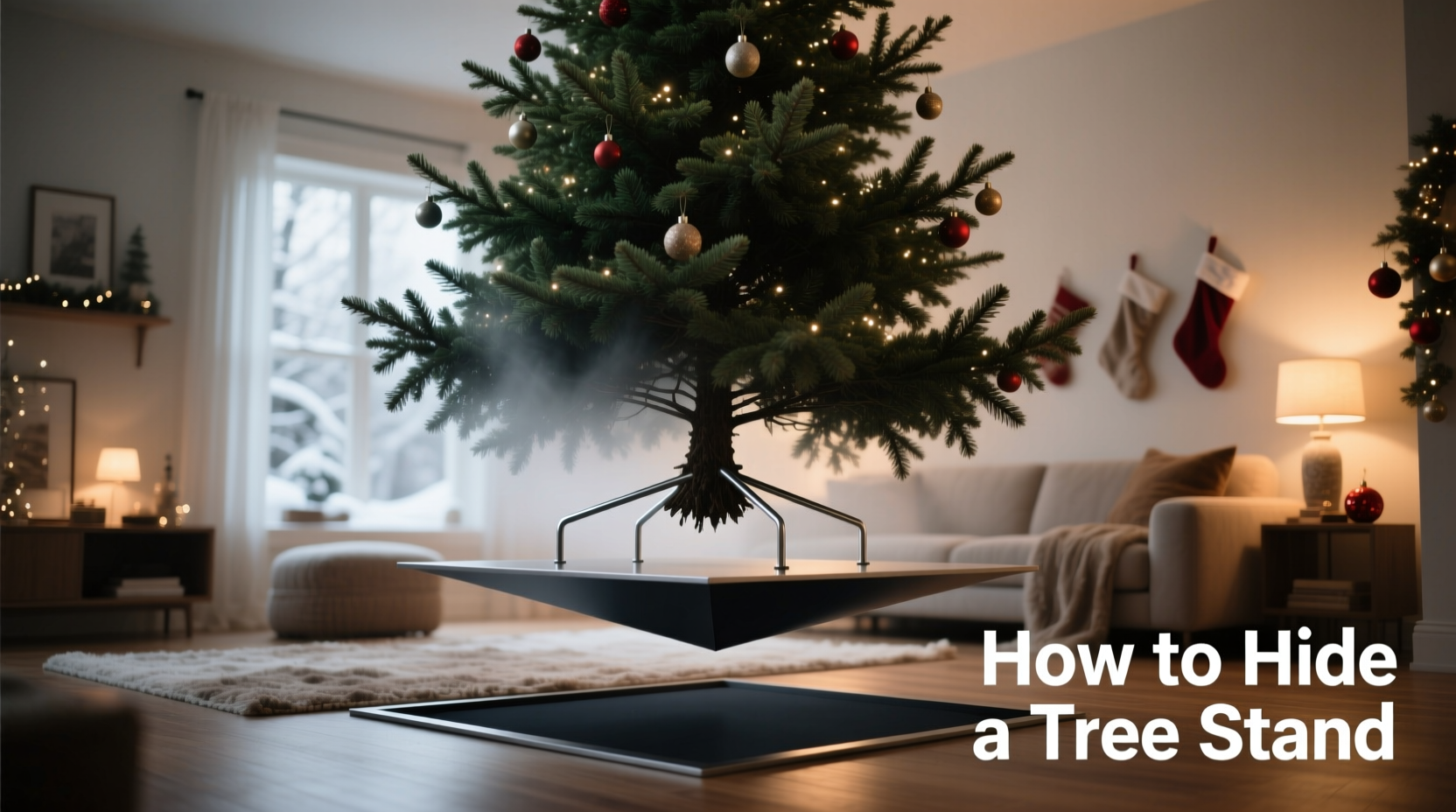
The concept of a \"floating\" Christmas tree has gained popularity not just for its novelty, but because it aligns with contemporary interior design principles—minimalism, clean lines, and intentional focal points. By removing visual clutter at the base, attention stays on the tree’s shape, lights, and ornaments. This illusion works especially well in small spaces, apartments, or modern homes where traditional bulky stands can feel out of place.
Interior designers increasingly recommend this technique for clients who want a curated, gallery-like presentation of their holiday centerpiece. As Brooklyn-based stylist Naomi Reed explains:
“A floating tree shifts the narrative from ‘seasonal decoration’ to ‘artistic statement.’ It challenges expectations and draws people in—especially children, who often believe in the magic a little longer.” — Naomi Reed, Interior Stylist & Holiday Design Consultant
The psychological impact is subtle but real: when the mechanics of support vanish, the tree feels lighter, more ethereal, and somehow more festive.
Materials and Tools You’ll Need
To successfully hide a tree stand, you need more than just fabric. The right combination of structural concealment and visual distraction ensures the illusion holds from multiple viewing angles. Below is a list of essential and optional materials:
- Christmas tree with stand (standard water-holding type)
- Opaque box or cylindrical cover (cardboard, wood, or fabric-wrapped)
- Faux snow mat, textured rug, or decorative base platform
- Decorative skirts or cascading fabric (velvet, burlap, faux fur)
- Adhesive Velcro strips or double-sided tape
- LED string lights (battery-powered, for internal glow)
- Ornamental filler (pinecones, faux presents, moss, or mini figurines)
- Measuring tape and utility knife (for custom fitting)
Step-by-Step Guide to Achieving the Floating Effect
Follow this sequence to ensure a seamless result. Each step builds on the last, focusing on both function and aesthetics.
- Measure the tree stand dimensions. Note height, width, and depth. Most stands range from 18 to 24 inches in diameter. Accuracy prevents gaps that break the illusion.
- Build or source a concealment shell. A simple square or round box made from lightweight plywood or thick cardboard works. Paint or wrap it to match your decor—white, black, or metallic finishes integrate best.
- Elevate the tree slightly (optional). Place the entire tree-and-stand unit on a low platform (1–3 inches high). This creates a gap between the real floor and the base of the tree, allowing the concealment box to sit flush underneath like a plinth.
- Position the concealment box around the stand. Slide it up from below so it fully encloses the metal or plastic base. Secure it lightly with adhesive Velcro if needed, ensuring it won’t shift.
- Add a textured ground layer. Cover the floor area around the tree with faux snow carpet, woven jute, or a patterned runner. This visually separates the “real” floor from the tree’s implied base.
- Drape a tiered skirt or flowing fabric. Use a long, ruffled tree skirt that extends beyond the concealment box and pools slightly on the floor. Choose fabrics with volume—velvet, tulle, or pleated organza—to obscure edges.
- Incorporate strategic lighting. Wrap micro LED lights around the inner rim of the concealment box or embed them beneath the textured ground layer. A soft upward glow blurs the boundary between object and surface.
- Fill the perimeter with thematic décor. Arrange wrapped gifts, pine branches, or frosted lanterns around the tree’s base. These items naturally draw the eye away from the bottom.
Alternative Method: The Mirror Tray Illusion
For a more advanced optical trick, place the tree on a large mirror tray or mirrored acrylic sheet. The reflection duplicates the lower branches, creating the impression that the tree continues downward into infinity. When combined with a fully hidden stand, this enhances the sense of weightlessness.
Comparison of Concealment Methods
| Method | Effectiveness | Cost | Difficulty |
|---|---|---|---|
| Standard Tree Skirt Only | Low – stand often visible | $ | Easy |
| Cardboard Box + Fabric Drape | High – full coverage | $$ | Moderate |
| Custom Wooden Plinth | Very High – seamless integration | $$$ | Advanced |
| Mirror Tray + Hidden Stand | Exceptional – creates depth illusion | $$$ | Advanced |
Real Example: A Minimalist Apartment Transformation
Sophie, a graphic designer in Portland, wanted her studio apartment’s Christmas tree to feel like part of her curated living space. With limited square footage, she disliked how the traditional green plastic stand clashed with her white oak floors and monochrome palette.
She measured her stand (20-inch diameter), built a matte-black cylindrical sleeve from foam board, and mounted it around the base. She then placed the tree on a 2-inch white platform and surrounded it with a floor-length charcoal velvet skirt that puddled softly. Battery-powered fairy lights were tucked beneath the fabric edge, casting a gentle halo. Finally, she arranged six identically wrapped black boxes around the perimeter.
The result? Guests consistently asked, “How is it standing?” Several assumed it was anchored to the ceiling. The illusion held even during video calls—proof that thoughtful concealment can spark wonder.
Common Mistakes to Avoid
Even small oversights can disrupt the floating effect. Be mindful of these pitfalls:
- Leaving gaps between the concealment and the tree trunk. Shadows in this space reveal the structure. Ensure the cover fits snugly but doesn’t press against the trunk.
- Using transparent or shiny materials near the base. Reflective surfaces expose seams and hardware. Opt for matte finishes.
- Ignoring access to the water reservoir. If your tree needs watering, build a discreet access panel or use a funnel with a long spout to refill without removing the cover.
- Over-lighting the base. Too many bright lights draw attention downward. Use subtle, diffused illumination instead.
- Choosing a skirt that’s too short. The fabric must extend beyond the concealment box and touch the floor to blur the boundary.
Checklist: Achieve the Floating Tree Effect in 7 Steps
- ✅ Measure your tree stand precisely
- ✅ Select or build a concealment box/sleeve
- ✅ Elevate the tree slightly (optional but effective)
- ✅ Position the concealment around the stand
- ✅ Add a textured floor covering around the base
- ✅ Use a long, flowing tree skirt to blend edges
- ✅ Incorporate soft lighting and decorative distractions
Frequently Asked Questions
Can I still water my tree if the stand is hidden?
Yes. Design your concealment with access in mind. Options include a removable side panel, a top-loading funnel system, or leaving a small opening behind the skirt. Alternatively, use a self-watering tree stand with a fill tube that extends above the cover.
Will this work with an artificial tree?
Absolutely—and often more easily. Artificial trees typically have slimmer, less obtrusive stands. Many come with foldable bases that are easier to conceal. The same principles apply: hide the structure, mask the edges, and distract with texture and light.
Is the floating effect safe? Could the tree tip over?
The illusion does not compromise stability if done correctly. Never remove or modify the actual stand. The concealment is purely cosmetic and should surround—not replace—the support base. Always secure tall trees to a wall anchor, especially in homes with pets or children.
Final Thoughts: Elevate Your Holiday Experience
The desire to make a Christmas tree appear to float isn’t just about aesthetics—it’s about recapturing a sense of wonder. In a world dominated by predictability, small illusions remind us that magic can be crafted with intention and care. Hiding the stand is not merely a decorating trick; it’s an act of storytelling. You’re not just displaying a tree—you’re inviting people into a moment of belief.
Whether you opt for a simple fabric-draped box or a mirrored infinity base, the key lies in attention to detail. Every choice, from fabric texture to light temperature, contributes to the final impression. And when someone walks into the room and pauses, squinting slightly at the base, wondering how it stays upright—that’s when you know you’ve succeeded.




 浙公网安备
33010002000092号
浙公网安备
33010002000092号 浙B2-20120091-4
Comments
No comments yet. Why don't you start the discussion?