
Transformer boxes are essential for electrical infrastructure, but their industrial appearance can clash with the charm of a well-landscaped yard. When you're planning an elegant outdoor lighting display—especially during seasonal celebrations—the last thing you want is a bulky gray metal box stealing attention. The good news: with thoughtful landscaping and strategic lighting, you can effectively conceal these necessary fixtures while maintaining full access, ventilation, and safety compliance.
The key lies in blending functionality with aesthetics. Rather than building permanent enclosures or violating utility regulations, smart homeowners use living plants, layered textures, and creative illumination to soften the box’s presence. This approach not only hides eyesores but enhances your property's curb appeal year-round.
Why natural landscaping works better than artificial covers
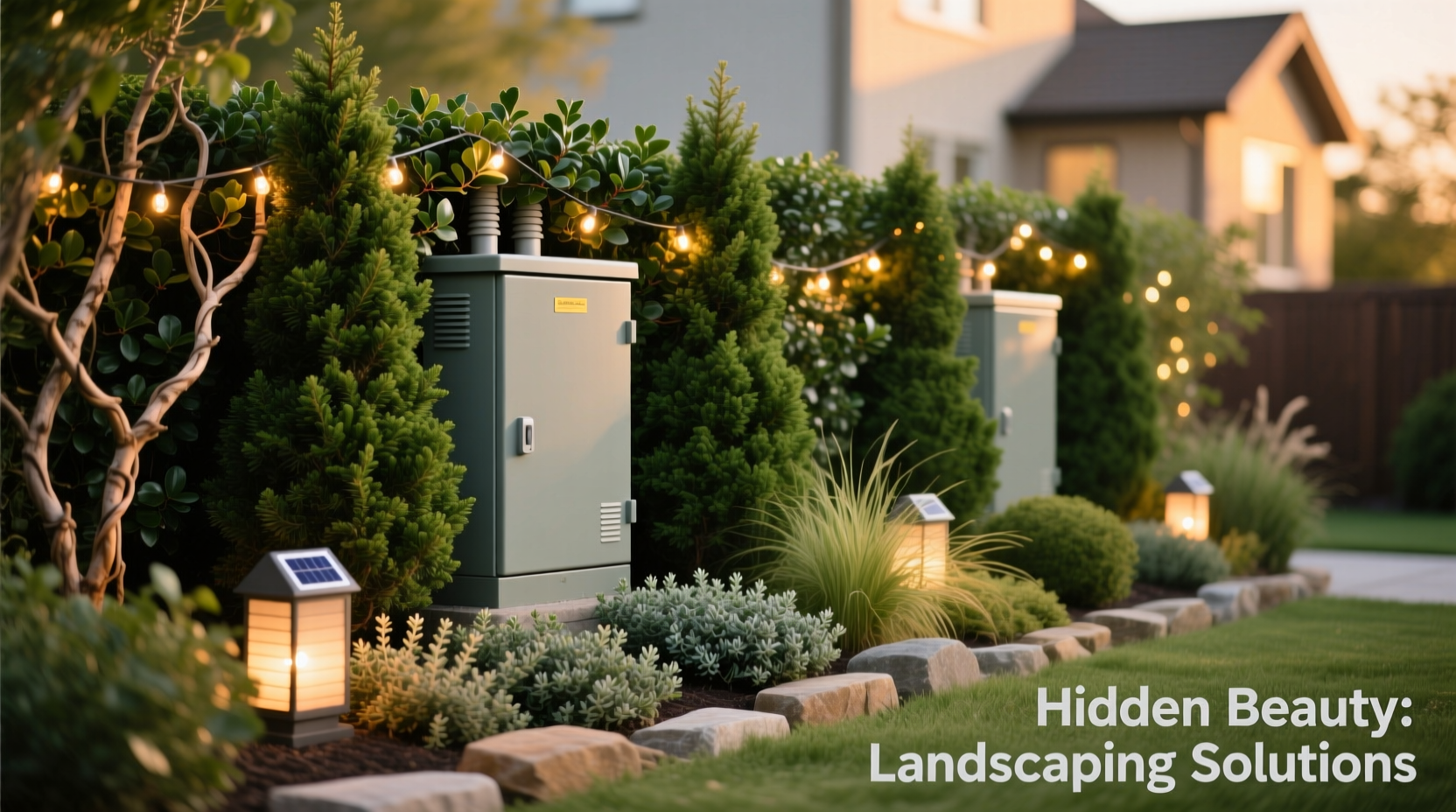
Many people consider fencing, decorative panels, or fabric wraps to mask utility boxes. While these may seem like quick fixes, they often fall short. Artificial materials degrade under sun exposure, require frequent maintenance, and may violate local codes if they restrict airflow or block emergency access. In contrast, natural landscaping integrates seamlessly into your garden design and improves over time.
Plants provide dynamic coverage that changes with the seasons. Evergreens offer consistent screening, flowering perennials add color, and climbing vines create vertical interest. When paired with tasteful lighting, these elements transform a utilitarian object into part of a cohesive outdoor scene.
“Landscaping around utility infrastructure should never compromise safety or serviceability. Nature offers the most flexible, compliant way to screen eyesores.” — Dr. Linda Ruiz, Urban Horticulture Specialist, University of California Cooperative Extension
Selecting the right plants for concealment and safety
Not all plants are suitable for hiding transformer boxes. You need species that grow densely enough to obscure the structure without trapping heat, blocking vents, or attracting pests. Consider growth habits, mature size, root systems, and maintenance needs when choosing your greenery.
Best plant categories for transformer box screening:
- Evergreen shrubs – Provide year-round coverage; ideal for colder climates.
- Dwarf conifers – Low-maintenance and compact; perfect for tight spaces.
- Perennial grasses – Add movement and texture; excellent for softening hard edges.
- Climbing vines on freestanding trellises – Offer vertical screening without touching the box.
- Ornamental bamboos (clumping types) – Fast-growing but non-invasive; create tall, narrow screens.
Avoid plants with aggressive root systems (like willows or bamboo runners), heavy leaf litter (which can clog vents), or high water demands that might encourage mold near electrical components.
Top 5 recommended plants for transformer box camouflage
| Plant | Mature Height | Light Needs | Special Features |
|---|---|---|---|
| Boxwood (Buxus spp.) | 3–5 ft | Full sun to partial shade | Dense foliage, easily shaped, evergreen |
| Dwarf Alberta Spruce | 4–6 ft | Full sun | Slow-growing, conical shape, low maintenance |
| Fountain Grass (Pennisetum alopecuroides) | 2–4 ft | Full sun | Soft texture, rustles in wind, drought-tolerant |
| Clematis (on nearby trellis) | 6–10 ft (vertical) | Sun face, shade roots | Showy flowers, climbs vertically without crowding |
| Japanese Painted Fern | 1–2 ft | Shade to partial shade | Colorful foliage, thrives in moist, shaded microclimates |
Layer your plantings by height: shorter groundcovers or ferns in front, medium shrubs in the middle, and taller grasses or trellised vines at the back. This creates depth and ensures the box disappears from view even at close range.
Using outdoor lighting to redirect attention
Strategic lighting doesn’t just highlight your landscaping—it actively shifts focus away from undesirable features. By illuminating attractive elements nearby, you guide the eye past the transformer box rather than toward it.
Use a combination of uplighting, downlighting, and grazing techniques to enhance texture and dimension. For example:
- Uplighting – Place LED spotlights at the base of trees or large shrubs to cast dramatic shadows upward.
- Grazing – Position lights close to textured walls or stone features to emphasize surface detail.
- Path lighting – Draw attention along walkways leading away from the box.
- String lights – Drape softly above or between trees to create ambient overhead sparkle.
Avoid placing lights directly on or inside any enclosure around the transformer. Heat buildup from improper fixtures can be hazardous. Instead, use low-voltage LED systems installed at a safe distance, ideally on a separate circuit with a timer or motion sensor.
Step-by-step guide to concealing a transformer box naturally
Hiding a transformer box isn't about hiding it overnight—it's a thoughtful process that balances beauty, safety, and long-term sustainability. Follow this timeline to achieve professional results.
- Week 1: Assess and plan
Measure the box dimensions and note required clearances. Take photos from multiple angles. Sketch a rough layout showing where plants and lights will go. - Week 2: Contact your utility company
Call to confirm planting restrictions and request a site inspection if needed. Never dig within 18 inches of marked utility lines. - Spring or Fall: Prepare the site
Remove weeds and improve soil drainage if necessary. Install a freestanding wooden or metal trellis 18–24 inches behind the box for climbing plants. - Planting phase: Install layered vegetation
Begin with background plants (taller shrubs or trellis climbers), then mid-layer (evergreens or ornamental grasses), finishing with foreground (groundcovers or shade-loving perennials). - One month after planting: Establish irrigation
Set up drip lines or soaker hoses to deliver water directly to roots without wetting the box exterior. - Final phase: Install lighting system
Bury low-voltage cables following local codes. Position lights to highlight focal points—such as a flowering shrub or birdbath—while leaving the box area subtly shaded.
Maintain symmetry and proportion. Don’t overcrowd the space—allow room for air circulation and technician access. Prune regularly to prevent overgrowth and inspect monthly for signs of pest infestation or moisture accumulation.
Real-world example: A suburban front yard transformation
In Portland, Oregon, homeowner Maria Thompson struggled with a large green transformer box located just off her front porch. “It was the first thing guests saw,” she said. “Even with holiday lights, it looked out of place.”
Working with a landscape designer, Maria implemented a three-tiered solution. First, she installed a cedar trellis 20 inches behind the box and trained variegated ivy and clematis to climb it. Next, she planted dwarf boxwoods on either side and added fountain grass in front for seasonal movement. Finally, she embedded small LED path lights along the edge of her sidewalk, directing attention toward her entryway.
Within one growing season, the box was nearly invisible during daylight. At night, the glowing pathway and softly lit vines created a welcoming ambiance—without drawing attention to the utility equipment. “Now people compliment my garden,” Maria said. “They don’t even realize what’s back there.”
Common mistakes to avoid
Even well-intentioned landscaping efforts can backfire if basic guidelines are ignored. Steer clear of these frequent errors:
- Blocking access – Never plant so densely that utility workers can’t reach the box quickly.
- Ignoring heat dissipation – Transformers generate heat; dense foliage pressed against metal can trap warmth and cause malfunctions.
- Using flammable mulch too close – Keep wood chips or straw at least 12 inches away; opt for gravel or stone near the base.
- Overwatering – Excess moisture promotes rust and electrical hazards. Water plants at the root zone, not near the box.
- Installing permanent structures – Avoid building sheds, benches, or fixed enclosures over or around the box.
“Every year, we respond to calls about overheated transformers caused by overgrown shrubs. A little greenery is fine—but nature must respect engineering limits.” — Mark Delaney, Senior Field Technician, Pacific Northwest Energy Co.
Checklist: Preparing your transformer box camouflage project
- ☐ Confirm local utility clearance requirements
- ☐ Call 811 to mark underground lines before digging
- ☐ Choose non-invasive, low-maintenance plants
- ☐ Design layered planting scheme (front, middle, back)
- ☐ Install freestanding trellis (if using vines)
- ☐ Plan lighting layout to highlight other features
- ☐ Use only low-voltage, weatherproof lighting fixtures
- ☐ Schedule regular pruning and inspection times
Frequently asked questions
Can I paint or decorate the transformer box itself?
No. Painting,张贴 stickers, or attaching decorations to utility boxes is prohibited in most areas. These actions can interfere with equipment function, violate municipal codes, and result in fines. Focus instead on surrounding landscaping and lighting.
What if the utility company needs to access the box after I’ve landscaped?
Design with access in mind. Leave a clear path (minimum 3 feet wide) to the front and sides. Use removable mulch or stepping stones rather than permanent hardscaping. Inform your provider of your landscaping plans—they may appreciate the effort as long as safety isn’t compromised.
Are solar lights safe to use near transformer boxes?
Yes, solar lights are generally safe because they operate independently and produce no direct electrical connection to the grid. Place them a few feet away to illuminate nearby plants without casting glare on the box.
Final thoughts: Beauty through balance
Concealing a transformer box isn’t about deception—it’s about harmony. With careful planning, you can turn a functional necessity into an invisible part of your landscape. The goal isn’t to hide something shameful, but to elevate your outdoor space so every element supports a unified aesthetic.
Natural solutions grow more effective over time. As your shrubs thicken and vines climb, the disguise becomes more seamless. Meanwhile, intelligent lighting ensures your yard shines at night without highlighting what shouldn’t be seen.
Start small. Choose one or two plants and a single lighting feature. Observe how they perform across seasons. Adjust as needed. Within a year, you’ll likely forget the box was ever an issue.




 浙公网安备
33010002000092号
浙公网安备
33010002000092号 浙B2-20120091-4
Comments
No comments yet. Why don't you start the discussion?