
Crushes are among the most universal yet mysterious experiences in human emotion. They can spark joy, anxiety, distraction, and even self-doubt. Unlike romantic relationships with established patterns, a crush exists in a liminal space—charged with potential but often lacking clear signals. Recognizing the subtle signs isn’t just about decoding someone else’s behavior; it’s also about understanding your own emotional landscape. What does it mean when you can’t stop thinking about someone? When your heart races at the sound of their voice? These aren’t just fleeting attractions—they’re psychological cues worth interpreting.
Understanding a crush requires both external observation and internal reflection. This article breaks down the nuanced behaviors that may indicate mutual interest, explores the psychology behind attraction, and helps you distinguish between infatuation and deeper emotional resonance.
Subtle Behavioral Signs Your Crush Might Feel the Same Way
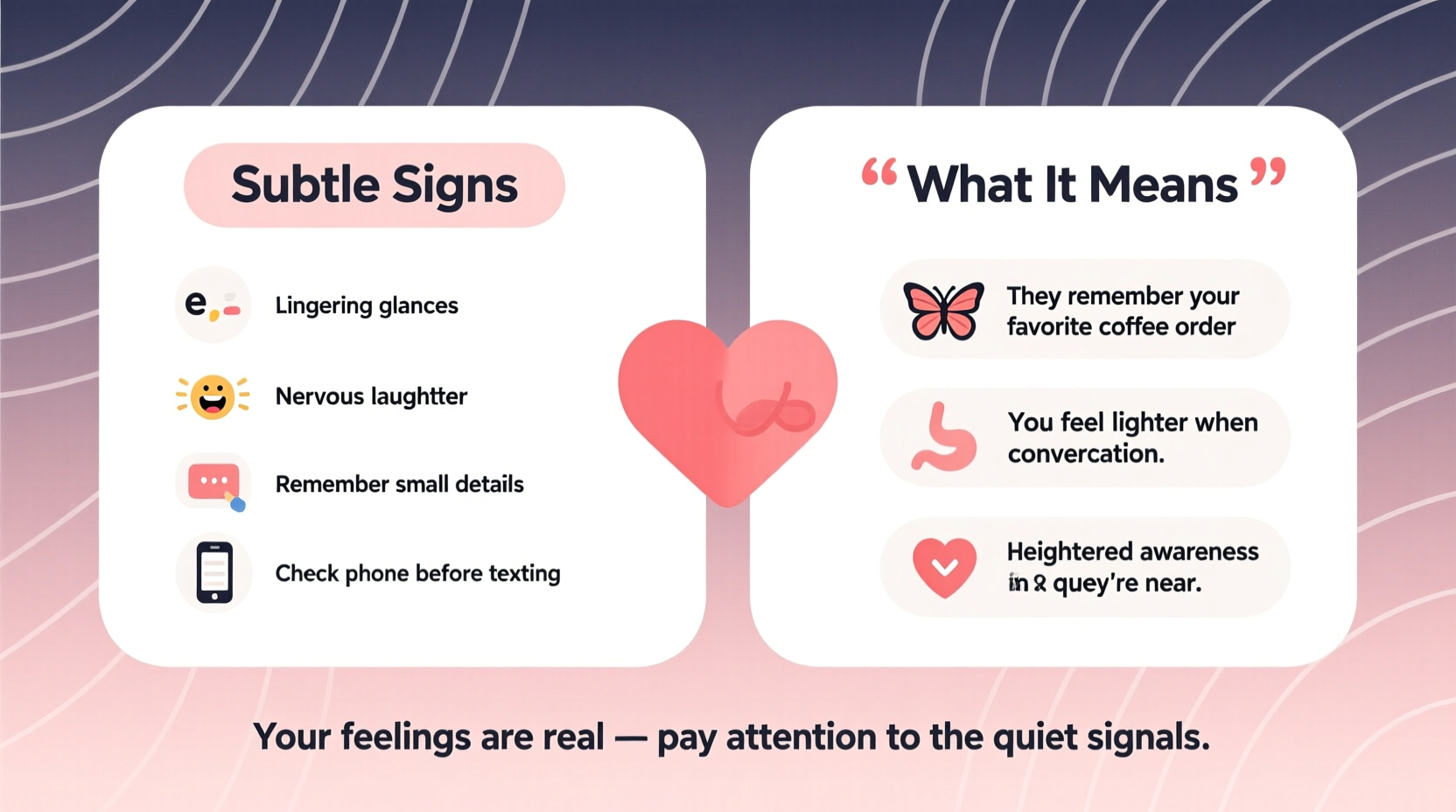
People rarely declare their interest outright. Instead, they communicate through micro-behaviors—small, often unconscious actions that reveal emotional investment. Paying attention to these cues increases your chances of accurately reading the situation.
- Prolonged eye contact: If they frequently catch your gaze and hold it—even briefly—it’s a strong indicator of interest. The eyes are involuntary messengers of attraction.
- Mirroring your movements: Subconsciously mimicking your posture, gestures, or speech patterns is a well-documented sign of rapport and liking.
- Initiating casual contact: A light touch on the arm during laughter, brushing shoulders in a crowd, or “accidentally” bumping into you suggest a desire for physical closeness.
- Remembering small details: Recalling your favorite coffee order, mentioning a book you once referenced, or asking follow-up questions shows active listening and emotional engagement.
- Increased availability: Suddenly being “around more,” responding quickly to messages, or making time despite a busy schedule often signals prioritization.
What Your Feelings Are Telling You: Beyond Butterflies
The emotional experience of a crush goes beyond surface-level excitement. It taps into deeper psychological mechanisms tied to reward, identity, and attachment. Understanding your internal reactions helps determine whether your feelings are based on genuine connection or projection.
Infatuation typically involves obsessive thoughts, mood swings dependent on the other person’s attention, and idealization—focusing only on positive traits while ignoring red flags. In contrast, authentic attraction includes curiosity about the whole person, respect for boundaries, and emotional stability even when apart.
“Attraction becomes meaningful when it moves from fantasy to fascination—with all its complexities.” — Dr. Lena Torres, Clinical Psychologist specializing in interpersonal dynamics
Ask yourself: Are you drawn to who this person actually is, or who you hope they could be? Are your feelings enhancing your life, or causing persistent anxiety? These reflections help separate fleeting crushes from potentially significant connections.
Do’s and Don’ts When Navigating a Crush
| Do’s | Don’ts |
|---|---|
| Observe consistently: Track behavioral patterns over weeks, not single interactions. | Overanalyze every text: One delayed reply doesn’t equal disinterest. |
| Engage naturally: Initiate low-pressure conversations about shared interests. | Change your personality: Don’t mimic their tastes just to impress. |
| Respect boundaries: If they seem distant, give space without guilt-tripping. | Confess too soon: Premature declarations can pressure the other person. |
| Reflect on your motives: Is this about connection, validation, or loneliness? | Compare yourself to others: Jealousy distorts perception and damages self-worth. |
A Closer Look: Real-Life Example
Sophie, a 28-year-old project manager, noticed her colleague Mark began sitting near her in meetings, laughing at her jokes more than others, and occasionally bringing her a tea “just because.” At first, she dismissed it as friendliness. But when he started referencing a podcast she mentioned in passing—and later asked if she wanted to grab lunch after work—she reconsidered.
Rather than jumping to conclusions, Sophie observed consistency. Over three weeks, Mark initiated conversation daily, remembered her weekend plans, and made an effort to walk her to her car during rainy evenings. She also reflected on her own feelings: Was she excited by his attention, or truly interested in him as a person? After journaling for a few days, she realized she enjoyed his thoughtfulness and humor beyond the thrill of being liked.
She responded by matching his energy—initiating chats, sharing personal anecdotes, and accepting the lunch invite. Their dynamic evolved organically, leading to a date two weeks later. The key wasn’t grand gestures, but sustained, reciprocal behavior and honest self-assessment.
Step-by-Step Guide to Decoding Your Crush
- Document observations: Keep a brief mental or written log of interactions—tone, frequency, body language.
- Assess reciprocity: Are they engaging as much as you are, or are you carrying the conversation?
- Test comfort levels: Share a minor personal story and see if they reciprocate vulnerability.
- Introduce light flirtation: Use playful teasing or warm compliments to gauge responsiveness.
- Evaluate consistency: Do their actions remain steady over 2–3 weeks, or fluctuate unpredictably?
- Have a low-stakes meetup: Suggest a group activity or casual coffee to observe behavior in relaxed settings.
- Decide next steps: Based on evidence and your emotional clarity, choose whether to express interest or step back.
Frequently Asked Questions
Can a crush turn into real love?
Yes, but not automatically. A crush can evolve into a meaningful relationship when both parties move beyond initial attraction to build emotional intimacy, shared values, and mutual respect. Many long-term relationships begin as crushes—but require intentional effort to grow beyond infatuation.
What if I’m wrong about the signs?
Misreading signals is common and not catastrophic. If your advances aren’t reciprocated, respond with grace. Say, “I’ve enjoyed getting to know you—no pressure, just wanted to be honest.” Most people appreciate sincerity, and maintaining dignity preserves your self-respect and the relationship dynamic.
How long does a typical crush last?
Research suggests the intense phase of a crush lasts between 4 to 6 months. Without reciprocation or development into a relationship, feelings often fade. However, some crushes persist longer if fueled by unmet emotional needs or fantasy rather than real interaction.
Final Thoughts: From Awareness to Action
Recognizing a crush isn’t just about spotting glances or nervous smiles. It’s about cultivating emotional intelligence—reading both external cues and internal motivations with honesty and care. The most powerful insight isn’t whether someone likes you, but whether pursuing that connection aligns with your well-being and values.
If the signs point to mutual interest, consider taking a small, courageous step. A thoughtful message, an invitation to talk outside of routine settings, or simply expressing appreciation can open doors. If the evidence is unclear or one-sided, redirect your energy inward. Sometimes the most transformative outcome of a crush isn’t romance, but greater self-understanding.




 浙公网安备
33010002000092号
浙公网安备
33010002000092号 浙B2-20120091-4
Comments
No comments yet. Why don't you start the discussion?