
Diamonds have long symbolized enduring love and luxury. But as technology advances, the jewelry market has evolved—now, nearly 40% of all diamonds sold in the U.S. are lab grown. While these stones share the same physical and chemical properties as mined diamonds, their origin significantly affects value, ethics, and pricing. Whether you're shopping for an engagement ring or verifying a piece in your collection, knowing how to identify a lab grown diamond is essential. This guide provides clear, actionable insights from gemologists and industry professionals to help you make informed choices.
Understanding Lab Grown vs. Natural Diamonds
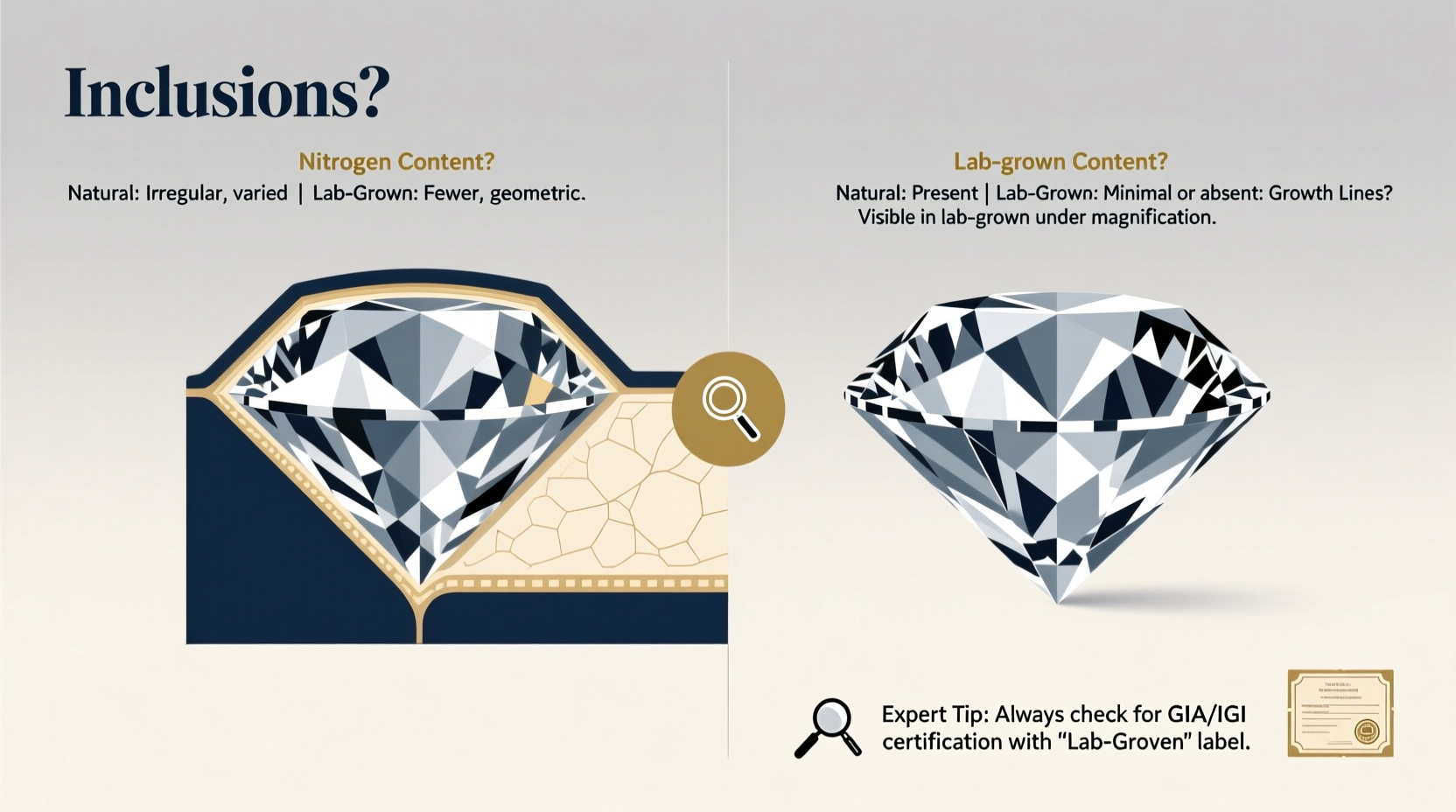
At first glance, lab grown and natural diamonds appear identical. Both are composed of pure carbon arranged in a cubic crystal structure, scoring a perfect 10 on the Mohs hardness scale. The key difference lies in origin: natural diamonds form over billions of years under high pressure and temperature deep within the Earth, while lab grown diamonds are created in controlled environments using two primary methods—High Pressure High Temperature (HPHT) and Chemical Vapor Deposition (CVD).
Despite their shared composition, subtle differences exist in trace elements and internal structures. These distinctions, invisible to the naked eye, become apparent under specialized equipment. For consumers, understanding this foundation helps demystify identification and prevents misrepresentation.
“Lab diamonds aren’t ‘fake’—they’re real diamonds made above ground. The challenge is transparency, not authenticity.” — Dr. Lena Torres, Gemological Institute Researcher
Key Visual and Physical Indicators
While no single visual trait guarantees a diamond is lab grown, certain clues can raise questions. These require close inspection, often with magnification, and should be followed up with professional verification.
- Color distribution: Some HPHT-grown diamonds exhibit uneven color zoning, particularly hints of brown or yellow that fade toward the edges. Natural diamonds typically show more uniform coloration unless heavily included.
- Fluorescence patterns: Lab diamonds may display strong blue fluorescence under UV light, sometimes in geometric patterns. Natural diamonds vary widely, but consistent grid-like fluorescence is more common in CVD stones.
- Surface texture: CVD diamonds can have a slightly grainy or waxy luster compared to the sharp, glassy finish of many natural stones, especially when viewed under 10x magnification.
- Inclusion types: Natural diamonds often contain mineral inclusions like garnet or olivine. Lab diamonds may show metallic flux residues (in HPHT) or parallel striations (in CVD), which are rare in nature.
Step-by-Step Guide to Verification
Accurate identification requires more than visual inspection. Follow this sequence to assess a diamond confidently:
- Check for laser inscriptions: Most lab grown diamonds are micro-laser-inscribed on the girdle with phrases like “lab grown” or “GIA LAB GROWN.” View with a 10x loupe or digital microscope.
- Use a diamond tester: Basic thermal testers distinguish diamonds from simulants like moissanite but cannot differentiate lab from natural. However, newer dual-mode testers (thermal + electrical conductivity) can flag potential lab stones due to slight conductivity differences.
- Inspect under magnification: Look for growth patterns, metallic inclusions, or strain patterns. HPHT diamonds may show crosshatch twinning; CVD stones often have needle-like inclusions aligned in one direction.
- Request certification: Reputable sellers provide grading reports from labs like GIA, IGI, or GCAL. IGI explicitly labels lab grown diamonds and includes growth method (HPHT or CVD).
- Seek advanced testing: If uncertainty remains, consult a gemological lab. Instruments like photoluminescence spectrometers detect nitrogen-vacancy centers more prevalent in natural stones.
Comparison Table: Lab Grown vs. Natural Diamond Traits
| Trait | Lab Grown Diamond | Natural Diamond |
|---|---|---|
| Origin | Synthesized in weeks | Formed over millions of years |
| Price (1ct, D-color, VVS1) | $2,500–$3,500 | $12,000–$18,000 |
| Common Inclusions | Metallic flux (HPHT), striations (CVD) | Mineral crystals, feathers, clouds |
| Fluorescence Pattern | Strong, geometric blue | Variable, rarely structured |
| Certification Markings | “Lab Grown” on report and girdle | No such designation |
| Environmental Impact | Lower mining footprint, higher energy use | Significant land disruption, lower energy per carat |
Real Example: A Cautionary Purchase
Sophie, a first-time ring buyer in Austin, fell in love with a 1.2-carat round brilliant at a local boutique. Priced at $4,200—far below market rate for a natural D-color—the jeweler claimed it was a “rare ethical find.” She took it to an independent appraiser before proposing. Using a portable spectrometer, the appraiser detected silicon impurities and a growth pattern consistent with CVD synthesis. The stone was confirmed lab grown. Though still beautiful, Sophie renegotiated the price accordingly, saving over $1,800. Her experience underscores the importance of third-party verification, even from trusted retailers.
Expert Tips for Buyers and Collectors
Industry professionals emphasize diligence over assumptions. Here are proven strategies to protect your investment:
- Always ask: “Is this diamond lab grown or natural?” Reputable sellers disclose upfront.
- Verify the grading report matches the stone. Cross-check the report number with the lab’s online database.
- Avoid sellers who use terms like “ethical diamond” without specifying origin—this can be misleading.
- Be wary of deals that seem too good to be true. A 2-carat flawless diamond for $5,000 is almost certainly lab grown—or misrepresented.
“The most common mistake buyers make is trusting appearance alone. Certification and provenance matter more than sparkle.” — Marcus Reed, Certified Gemologist, American Gem Society
Frequently Asked Questions
Can a regular jeweler tell if a diamond is lab grown?
Many traditional jewelers lack the advanced equipment needed to reliably distinguish lab grown from natural diamonds. While they can spot obvious signs like laser inscriptions, definitive identification often requires spectroscopic analysis available only at specialized labs.
Do lab grown diamonds get cloudy over time?
No. Lab grown diamonds have the same durability and clarity stability as natural diamonds. They do not cloud or degrade with age under normal conditions. Any haziness is likely due to surface residue, which cleaning can resolve.
Are lab grown diamonds resalable?
Yes, but with caveats. Resale value is typically 20–40% of the original price, compared to 40–60% for natural diamonds. The secondary market for lab grown stones is growing but remains limited by perception and oversupply.
Essential Checklist Before Buying
Before finalizing any diamond purchase, ensure you’ve completed the following:
- Confirmed whether the diamond is lab grown or natural with written documentation.
- Verified the grading report from a recognized lab (IGI, GIA, GCAL).
- Inspected the stone under magnification for laser inscriptions.
- Compared the price to current market rates for both lab and natural equivalents.
- Consulted an independent appraiser if purchasing secondhand or outside major retailers.
Conclusion: Make Informed Choices with Confidence
Identifying a lab grown diamond isn’t about dismissing its beauty or value—it’s about ensuring transparency and making intentional decisions. Whether you choose a lab grown stone for its affordability and sustainability, or a natural diamond for its rarity and heritage, knowledge is your strongest asset. With the right tools, awareness of key indicators, and access to expert verification, you can navigate the modern diamond market with confidence and clarity.




 浙公网安备
33010002000092号
浙公网安备
33010002000092号 浙B2-20120091-4
Comments
No comments yet. Why don't you start the discussion?