
Panic attacks can strike without warning, leaving individuals feeling overwhelmed, terrified, or even convinced they are having a heart attack. While these episodes are not life-threatening, their intensity can be deeply distressing. Recognizing the signs early and understanding when to take action can make a significant difference in managing symptoms and preventing future occurrences. This guide breaks down the core symptoms of a panic attack, explains how to respond in the moment, and outlines when professional intervention becomes essential.
Understanding Panic Attacks: What They Are and How They Happen
A panic attack is a sudden surge of intense fear or discomfort that reaches a peak within minutes. It occurs when the body’s “fight-or-flight” response activates in the absence of real danger. This physiological reaction floods the system with adrenaline, triggering a cascade of physical and emotional symptoms. Unlike general anxiety, which builds gradually, panic attacks are acute and often feel unpredictable.
They can happen to anyone—even those without a diagnosed anxiety disorder. Stress, sleep deprivation, caffeine, or major life changes can act as triggers. Some people experience isolated attacks, while others develop panic disorder, characterized by recurring attacks and persistent worry about future episodes.
“Panic attacks are the body’s alarm system misfiring. The fear is real, but the threat isn’t.” — Dr. Lena Torres, Clinical Psychologist
Key Symptoms of a Panic Attack
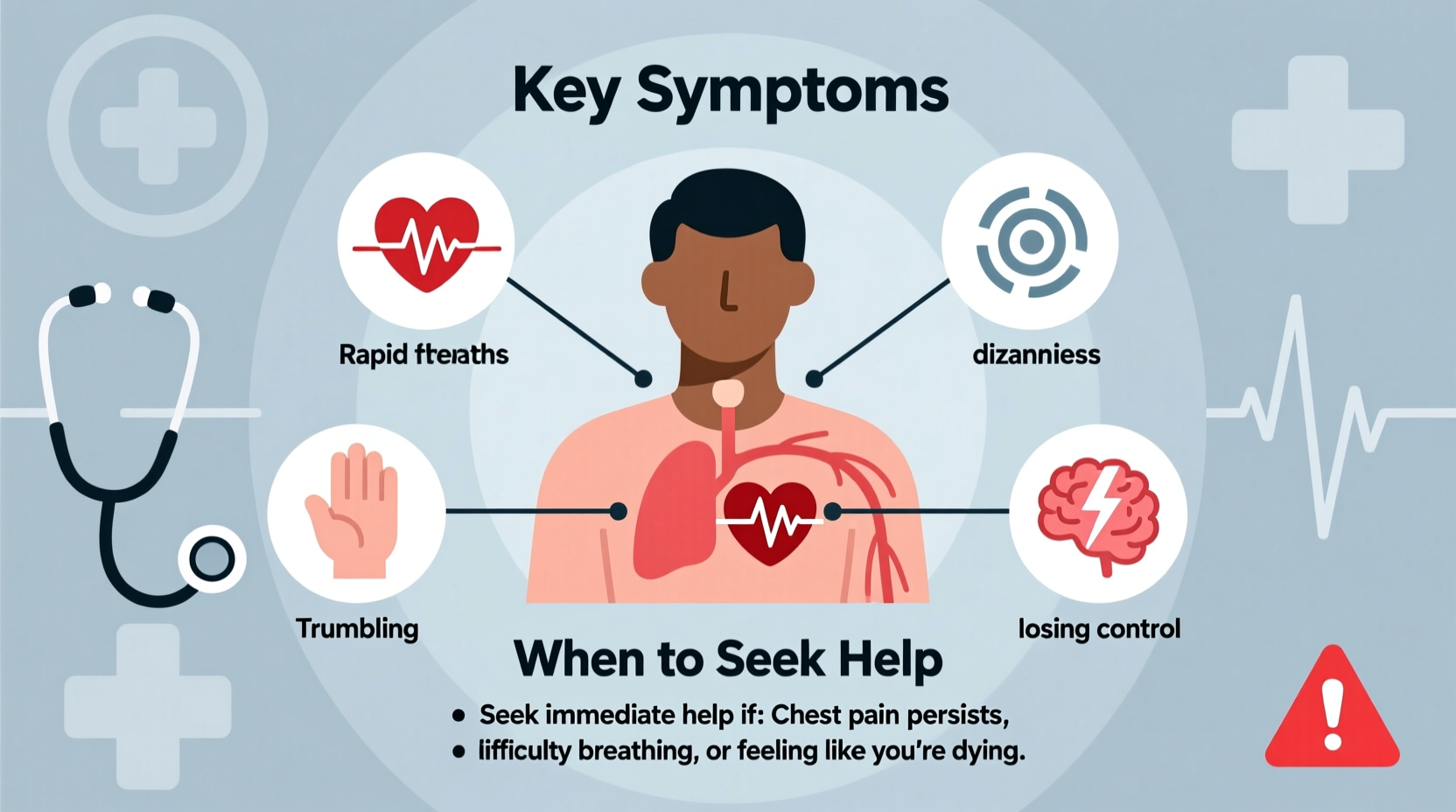
Symptoms vary between individuals, but most panic attacks involve a combination of physical, cognitive, and emotional reactions. The Diagnostic and Statistical Manual of Mental Disorders (DSM-5) identifies 13 possible symptoms; experiencing four or more strongly suggests a panic attack.
- Racing or pounding heartbeat (palpitations)
- Sweating or chills
- Trembling or shaking
- Shortness of breath or a feeling of being smothered
- Feelings of choking
- Chest pain or discomfort
- Nausea or abdominal distress
- Dizziness, lightheadedness, or faintness
- Chills or heat sensations
- Numbness or tingling sensations (paresthesia)
- Derealization (feeling detached from reality) or depersonalization (feeling detached from oneself)
- Fear of losing control or “going crazy”
- Fear of dying
These symptoms typically escalate rapidly, peaking within 10 minutes. Most attacks subside within 20 to 30 minutes, though the aftermath—such as lingering fatigue or unease—can last hours.
How to Respond During a Panic Attack: A Step-by-Step Guide
When a panic attack begins, the instinct may be to flee or suppress the feelings. Instead, grounding techniques can reduce symptom severity and shorten duration.
- Pause and acknowledge: Say to yourself, “This is a panic attack. It will pass.” Labeling the experience reduces fear of the unknown.
- Focus on breathing: Inhale slowly through the nose for four counts, hold for four, exhale through the mouth for six. Repeat for several cycles.
- Engage your senses: Use the 5-4-3-2-1 technique: Identify five things you see, four you can touch, three you hear, two you smell, and one you taste.
- Ground your body: Press your feet firmly into the floor or grip a textured object. Physical sensation helps anchor you in the present.
- Repeat a calming phrase: Choose a simple affirmation like “I am safe” or “This will pass.” Repeat it silently until tension eases.
Avoid checking your pulse or obsessively monitoring symptoms, as this can amplify anxiety. Instead, redirect attention outward—focus on ambient sounds or describe objects around you in detail.
When to Seek Professional Help
Occasional panic attacks don’t always require treatment, especially if they’re tied to a temporary stressor. However, certain patterns indicate it’s time to consult a healthcare provider:
| Warning Sign | Action Recommended |
|---|---|
| Attacks occur weekly or more frequently | Consult a mental health professional |
| You avoid places or activities due to fear of an attack | Evaluate for agoraphobia or panic disorder |
| Symptoms interfere with work, relationships, or daily routines | Seek therapy or medical assessment |
| You rely on substances (alcohol, sedatives) to cope | Immediate professional support needed |
| You have chronic chest pain, dizziness, or palpitations between attacks | Rule out cardiovascular or neurological conditions |
Untreated panic disorder can lead to long-term avoidance behaviors, depression, or substance use disorders. Early intervention improves outcomes significantly.
Real Example: Sarah’s Experience with Recurring Panic Attacks
Sarah, a 34-year-old project manager, began experiencing panic attacks after a high-pressure presentation at work. At first, she thought she was having a heart issue—her chest tightened, her hands went numb, and she struggled to breathe. She visited the ER twice before a primary care physician suggested anxiety. After a referral to a therapist, Sarah learned to identify her triggers: sleep deprivation and perfectionism. Through cognitive behavioral therapy (CBT), she developed tools to reframe catastrophic thoughts and regulate her nervous system. Within four months, her attacks decreased from weekly to rare occurrences.
Her story highlights a crucial point: panic attacks are treatable. But recognition and willingness to seek help are the first steps.
Checklist: What to Do After a Panic Attack
Recovery doesn’t end when symptoms fade. Use this checklist to support long-term resilience:
- ✅ Reflect on potential triggers (stress, caffeine, lack of sleep)
- ✅ Journal the experience: note timing, symptoms, and environment
- ✅ Practice self-compassion—don’t criticize yourself for reacting
- ✅ Rehydrate and rest; panic depletes energy reserves
- ✅ Reach out to someone you trust to talk it through
- ✅ Review coping strategies that worked (and which didn’t)
- ✅ Schedule a follow-up with a therapist if attacks persist
FAQ: Common Questions About Panic Attacks
Can a panic attack cause you to pass out?
No. While dizziness is common during a panic attack, actual fainting is rare. Blood pressure typically rises during panic (increasing alertness), whereas fainting is caused by a drop in blood pressure. If you’ve fainted repeatedly, consult a doctor to rule out other conditions.
Is there a difference between panic attacks and anxiety attacks?
Yes. “Anxiety attack” is not a clinical term—it generally refers to escalating anxiety over time. Panic attacks are defined medical events with sudden onset and specific symptoms. They can occur without ongoing anxiety, making them distinct in diagnosis and treatment.
Can children have panic attacks?
Yes. Though less common, children and teens can experience panic attacks, often mistaken for stomachaches or school refusal. Parents should watch for sudden physical complaints paired with emotional distress and consult a pediatric psychologist if concerned.
Conclusion: Taking Control Starts with Awareness
Recognizing a panic attack for what it is—a surge of false alarm signals—empowers you to respond effectively. Understanding the symptoms allows you to apply calming techniques instead of succumbing to fear. More importantly, knowing when to seek help prevents isolation and opens the door to proven treatments like CBT, medication, or mindfulness-based therapies.




 浙公网安备
33010002000092号
浙公网安备
33010002000092号 浙B2-20120091-4
Comments
No comments yet. Why don't you start the discussion?